How to Compare a Truck Trailer Supplier Beyond Unit Price
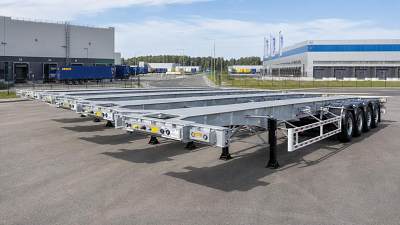
When evaluating a truck trailer supplier, unit price is only one part of the decision. For business assessors, long-term value depends on production capacity, quality control, compliance, delivery reliability, and after-sales support.
This guide explains how to compare suppliers more strategically, helping you reduce procurement risk and choose a partner that supports stable operations and sustainable cost performance.
Why the Lowest Quotation Often Becomes the Highest Real Cost
Many buyers begin supplier comparison with unit price because it is visible, measurable, and easy to benchmark. However, a low quotation can hide major risks that increase total procurement cost later.
For business assessors, the real question is not which truck trailer supplier offers the cheapest trailer today. The better question is which supplier can support reliable operations, predictable delivery, and lower lifecycle expense.
A cheaper trailer may require more maintenance, suffer longer downtime, or create compliance problems in destination markets. Once those costs are added, the initial price advantage often disappears quickly.
This is especially important in commercial transport, logistics, construction, and industrial applications. In these sectors, equipment reliability affects fleet utilization, customer commitments, and the financial performance of the whole operation.
That is why supplier evaluation should move from price comparison to value comparison. A strong supplier helps you protect margins, reduce disruption, and build a more dependable sourcing strategy.
Start with Total Cost of Ownership, Not Unit Price
The most practical way to compare suppliers beyond quotation is to calculate total cost of ownership. This approach gives business assessors a more realistic picture of long-term purchasing value.
Total cost of ownership includes the purchase price, transport cost, import duties, spare parts availability, service expense, fuel efficiency impact, maintenance frequency, and expected resale or residual value.
It should also include indirect costs. These may include delivery delays, production interruptions, downtime, operator complaints, warranty disputes, and internal labor required to solve supplier-related problems.
For example, a trailer with weaker structural quality may cost less upfront but lead to earlier tire wear, more suspension repairs, and more frequent workshop visits. Those costs can exceed the initial savings.
When comparing each truck trailer supplier, create a simple scoring model. Include price, expected service life, repair rate, parts supply speed, warranty coverage, and delivery performance to support an objective decision.
This method is especially helpful when procurement teams must justify supplier selection to management. It transforms the discussion from “Which offer is cheaper?” to “Which option creates better business value?”
How to Verify Manufacturing Capability and Production Stability
A supplier may present an attractive catalog and competitive price, but business assessors need to know whether the company can manufacture consistently at the required standard and volume.
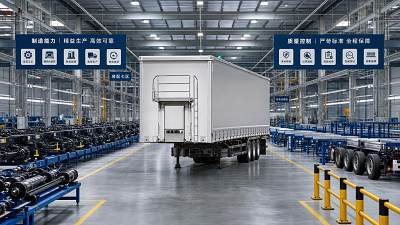
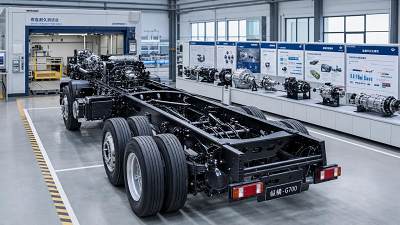
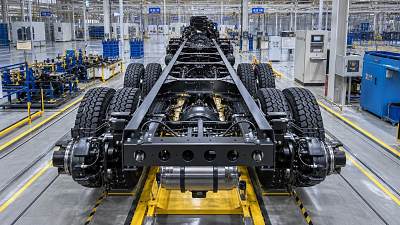
Start by reviewing factory scale, production lines, equipment condition, workforce skills, and monthly output capacity. A capable supplier should be able to explain how it manages both standard and customized orders.
Ask whether key processes are handled in-house or outsourced. Welding, axle integration, painting, chassis assembly, and final inspection are critical stages that directly affect trailer durability and quality consistency.
Production stability is just as important as capacity. A supplier may handle one sample order well but struggle when order volumes increase or when raw material supply becomes volatile.
Request evidence such as factory audit reports, production schedules, export records, and delivery performance history. If possible, arrange a video audit or on-site visit to confirm operational reality.
Also examine lead time control. A dependable truck trailer supplier should provide realistic timelines for production, testing, and shipment, rather than promising unusually fast delivery without clear operational support.
Quality Control Is More Important Than Marketing Claims
In trailer sourcing, brochures do not guarantee product quality. Business assessors should focus on how quality is controlled before, during, and after production.
Ask the supplier to explain its quality management system in detail. Important checkpoints include raw material inspection, dimensional checks, weld inspection, axle and suspension testing, paint adhesion checks, and final roadworthiness review.
It is useful to understand whether the supplier follows documented inspection procedures or relies mainly on operator experience. Standardized processes usually deliver better repeatability across multiple orders.
You should also ask for records, not just promises. Inspection reports, non-conformance logs, corrective action procedures, and historical defect rates can reveal whether quality management is active or only formal.
For higher-value orders, consider sample inspection by a third party. Independent verification is often worthwhile when trailers will be used in demanding logistics, mining, construction, or cross-border transport environments.
A strong truck trailer supplier is usually transparent about steel grades, component brands, testing methods, and failure-prevention measures. Transparency often signals confidence in real manufacturing standards.
Compliance and Certification Can Protect You from Expensive Mistakes
Compliance is often underestimated during early supplier screening. Yet certification and regulatory alignment can determine whether a trailer is accepted, registered, insured, and legally operated in the target market.
Different countries and regions may require different standards for braking systems, dimensions, axle loads, lighting, reflective markings, emissions-related towing compatibility, or road safety performance.
Before selecting a truck trailer supplier, confirm whether the supplier has experience exporting to your market or to markets with similar requirements. Familiarity with destination rules reduces the risk of redesign and rejection.
Request copies of relevant certifications, homologation documents, and test reports. Verify whether they are current, market-applicable, and issued by recognized bodies rather than simply listed in marketing materials.
Business assessors should also confirm documentation quality. In international procurement, incomplete technical files, inconsistent invoices, and inaccurate packing information can delay customs clearance and raise administrative costs.
A compliant supplier is not only a manufacturer. It is also a partner that understands export documentation, product traceability, and the legal expectations of cross-border trade.
Delivery Reliability Matters More Than Promised Lead Time
Many suppliers promise short lead times to win orders. The real issue is whether they can deliver on time consistently across changing production conditions and shipping constraints.
For fleet operators, distributors, and project buyers, delayed trailer delivery can affect revenue planning, tender execution, customer contracts, and seasonal transport schedules. This makes delivery reliability a major evaluation factor.
Ask each truck trailer supplier for historical on-time delivery performance, not just current promises. Reliable suppliers can usually explain average production time, peak-season capacity, and contingency planning for bottlenecks.
You should also review how the supplier manages procurement of major components such as axles, tires, landing gear, braking systems, and electrical parts. Weak upstream control often causes downstream delays.
In international trade, delivery reliability also depends on packaging, port handling preparation, and shipping coordination. A supplier that lacks export discipline may create delays even after production is complete.
Assessors should favor suppliers that communicate early about risks, capacity changes, and shipment milestones. Predictable communication is often a strong indicator of dependable operational management.
After-Sales Support and Parts Availability Affect Operational Continuity
The supplier relationship does not end when the trailer is shipped. For many buyers, the real test begins after the equipment enters service.
Ask what warranty terms are included and how claims are handled. A useful warranty is specific, documented, and supported by a practical process for diagnosis, approval, and replacement.
Spare parts support is equally important. Even a well-built trailer will require wear parts and maintenance items over time. If parts are difficult to identify, order, or receive, downtime can become expensive.
Business assessors should understand whether the supplier maintains parts inventory, publishes parts lists, supports serial number tracking, and provides technical guidance for field servicing.
If your business operates across multiple regions, ask whether the truck trailer supplier has distributor support, service partners, or overseas response capability. Local support can significantly reduce maintenance disruption.
A supplier with strong after-sales systems helps protect asset uptime. That benefit may not appear in the quotation, but it often has a direct financial effect on fleet productivity.
Supplier Communication and Commercial Transparency Are Strategic Indicators
Soft factors are often dismissed during procurement, but communication quality and commercial transparency can reveal how a supplier will behave once the contract is signed.
Pay attention to quotation clarity. Does the supplier clearly define specifications, included components, Incoterms, lead times, warranty boundaries, and payment conditions? Or are key details vague and easy to dispute later?
Strong suppliers answer technical questions directly, provide revised drawings when needed, and explain limitations honestly. Weak suppliers often avoid specifics and rely on general assurances.
Transparency also matters in change management. If material costs, specification updates, or production issues arise, will the supplier communicate early and provide evidence-based options?
For business assessors, responsive and structured communication reduces decision risk. It also supports internal coordination with engineering, finance, logistics, legal, and operations teams.
In many international sourcing projects, supplier communication quality becomes one of the clearest predictors of future cooperation success.
Use a Weighted Evaluation Framework to Compare Suppliers Objectively
To avoid decisions driven by price alone, create a weighted evaluation framework. This helps procurement and assessment teams compare suppliers using business priorities rather than subjective impressions.
A practical model may assign weights to total cost of ownership, manufacturing capability, quality control, compliance, delivery performance, after-sales service, and communication effectiveness.
For example, unit price might represent 20 percent of the final score, while quality and reliability account for 30 percent, delivery and capacity 20 percent, compliance 15 percent, and service support 15 percent.
The exact weighting depends on your business model. A distributor may prioritize margin and marketability, while a logistics fleet may prioritize uptime, maintenance cost, and standardized parts supply.
Document the rationale behind each score. This is useful for auditability, internal approvals, and future supplier reviews. It also creates a repeatable method for evaluating new sourcing opportunities.
When applied consistently, a structured framework helps identify the truck trailer supplier that offers the strongest overall fit, not merely the lowest opening quotation.
Red Flags That Business Assessors Should Not Ignore
Some warning signs appear early in supplier discussions and should be taken seriously. Ignoring them can lead to expensive procurement mistakes later.
One red flag is unusually low pricing without a clear cost explanation. This may indicate lower material quality, omitted components, weak process control, or unrealistic assumptions about production scope.
Another concern is inconsistent documentation. If specifications, certifications, or commercial terms keep changing without explanation, internal control may be weak.
Poor responsiveness is also significant. Slow or unclear answers during pre-sales often become worse after payment, especially when technical or warranty issues arise.
Be cautious if a supplier resists audits, avoids showing production lines, or cannot explain quality procedures in detail. Lack of transparency often signals underlying operational risk.
Finally, assess whether the supplier understands your application. A capable supplier asks about payload, road conditions, regulations, operating cycles, and maintenance expectations before recommending a solution.
Conclusion: Choose a Supplier That Lowers Risk and Supports Long-Term Value
Comparing a truck trailer supplier beyond unit price is not a theoretical exercise. It is a practical way to protect procurement outcomes, operational continuity, and long-term asset performance.
For business assessors, the best supplier is rarely defined by quotation alone. The better partner combines sound manufacturing, stable quality, compliance readiness, reliable delivery, and dependable after-sales support.
By using total cost of ownership and a weighted evaluation framework, you can make supplier selection more objective and more aligned with actual business needs.
In a competitive transport and equipment market, the right supplier does more than sell a trailer. It helps your organization reduce risk, improve efficiency, and create stronger long-term purchasing value.
That is the standard worth applying whenever you compare your next truck trailer supplier.
Trending News
- Truck Tipper Exporter Compliance Risks in Cross-Border Deliveries
- Truck Trailer Distributor Trends Shaping Regional Market Growth in 2026
- Crane Truck for Sale: 7 Checks Before You Choose a Model
- How to Compare a Truck Trailer Supplier Beyond Unit Price
- Bulldozer for Construction: Key Specs That Affect Earthmoving Efficiency
Tag
Recommended News
 Buying GuideCrane Truck for Sale: 7 Checks Before You Choose a ModelCrane truck for sale: discover 7 essential checks to compare models, reduce procurement risk, control total cost, and choose the right truck for safer, more efficient operations.
 Buying GuideHow to Compare a Truck Trailer Supplier Beyond Unit PriceTruck trailer supplier comparison should go beyond unit price. Learn how to assess quality, compliance, delivery, and after-sales support to reduce risk and secure long-term value.
 Buying GuideSemi Trailer Bulk Order Checklist for Delivery Risk and Lead TimeSemi trailer bulk order success starts with a clear checklist. Learn how to reduce delivery risk, control lead time, compare suppliers, and keep large trailer procurement on schedule.
 Buying GuideTruck Tipper OEM vs Standard Models: Which Lowers Project Costs?Truck tipper OEM vs standard models: discover which option cuts total project costs through better uptime, compliance, payload fit, and lower lifecycle expenses.
 Buying GuideHow to Evaluate a Heavy Truck Chassis Manufacturer with R&D CapabilityHeavy truck chassis manufacturer with R&D capability: learn how to assess engineering strength, validation, customization, and compliance to choose a reliable supplier with confidence.
 Buying GuideLogging Truck Price Guide: Spec Choices That Change Total Ownership CostLogging truck price is more than the upfront quote. Discover how axle setup, engine sizing, durability, and service support shape total ownership cost and smarter buying decisions.
 Buying GuideLogging Truck Supplier Selection: Load Capacity, Terrain Fit, and DowntimeLogging truck supplier selection guide: compare load capacity, terrain fit, parts support, and downtime risk to choose reliable forestry trucks and cut operating costs.
 Buying GuideCrane Truck Manufacturer Comparison: Boom Stability, Payload, and SupportCrane truck manufacturer comparison guide covering boom stability, payload, chassis integration, and support to help buyers choose safer, more efficient trucks with long-term value.
 Buying GuideHow to Evaluate a Heavy Truck Chassis Manufacturer With R&D CapabilityHeavy truck chassis manufacturer with R&D capability: learn how to assess engineering strength, testing, customization, and long-term support to choose a reliable partner.
 Buying GuideDump Truck Supplier With Quick Delivery: What to Verify FirstDump truck supplier with quick delivery: learn what to verify first, from factory credibility and capacity to compliance, landed cost, and after-sales support before you buy.
 Buying GuideCab Chassis Truck for Fire Department: Key Fitment PointsCab chassis truck for fire department selection starts with fitment. Learn key points on GVWR, wheelbase, PTO, safety, and body integration to improve uptime and response performance.
 Buying GuideHow to Evaluate a Heavy Truck Chassis Manufacturer With R&D CapabilityLearn how to evaluate a heavy truck chassis manufacturer with R&D capability using practical criteria for design, testing, customization, and long-term fleet value.
 Buying GuideCost-Effective Delivery Truck Supply: What Low Price May Leave OutDelivery truck supplier with cost-effective solutions: learn what low prices may leave out, from compliance and after-sales support to lifecycle value, so you can source smarter and avoid hidden costs.
 Buying GuideHow to Choose a Truck Trailer Distributor for Stable After-Sales SupportTruck trailer distributor selection starts with after-sales strength. Learn how to compare service networks, parts support, warranty response, and technical help for long-term uptime.
 Buying GuideWhat to Check Before Choosing a Truck Cement Mixer SupplierTruck cement mixer supplier selection starts with the right checks. Learn how to compare quality, compliance, delivery, and after-sales support to reduce risk and choose with confidence.
 Buying GuideBulldozer Price Guide: What Affects Cost Across Jobsite TypesBulldozer price guide for construction, mining, roadwork, and municipal projects. Compare key cost drivers, avoid overbuying, and source the right dozer with confidence.
 Buying GuideLogging Truck Supplier Selection: Durability Points That Matter in Tough TerrainLogging truck supplier selection starts with durability. Discover the key strength, traction, braking, and support factors that reduce downtime in tough terrain.
 Buying GuideWhat Makes a Delivery Truck Supplier Suitable for School TransportationDelivery truck supplier for school transportation: learn how to assess safety, compliance, body design, and after-sales support for urban, rural, and school logistics needs.
 Buying GuideHow to Plan a Semi Trailer Bulk Order Without Costly Specification MistakesSemi trailer bulk order planning starts with the right specs. Learn how to avoid costly mistakes, compare suppliers wisely, and secure compliant, fleet-ready trailers.
![]() Buying GuideFlatbed Trailer Supplier for Logistics Transportation: What to Check Before OrderingFlatbed trailer supplier for logistics transportation: learn what to check before ordering, from load capacity and compliance to customization and supplier reliability.
Buying GuideFlatbed Trailer Supplier for Logistics Transportation: What to Check Before OrderingFlatbed trailer supplier for logistics transportation: learn what to check before ordering, from load capacity and compliance to customization and supplier reliability.![]() Buying GuideBulldozer Price Guide: What Changes the Final Cost MostBulldozer price explained for finance buyers: compare size, brand, used vs. new, shipping, and service factors that shape total cost and smarter budget decisions.
Buying GuideBulldozer Price Guide: What Changes the Final Cost MostBulldozer price explained for finance buyers: compare size, brand, used vs. new, shipping, and service factors that shape total cost and smarter budget decisions. Buying GuideChoosing a Truck Cement Mixer Supplier for Stable Long-Term OperationTruck cement mixer supplier selection affects uptime, parts access, and lifecycle cost. Use this practical checklist to compare suppliers and choose reliable equipment for stable long-term operation.
 Buying GuideHow to Shortlist a Water Truck Supplier for Municipal ContractsWater truck supplier shortlist guide for municipal contracts: compare compliance, chassis reliability, service support, and lifecycle value to choose with confidence.
 Buying GuideDump Truck Wholesale: How to Balance Price, Spec, and Lead TimeDump truck wholesale buyers must balance price, spec, and lead time. Learn how to compare suppliers, reduce sourcing risk, and secure trucks that fit project demands.
 Buying GuideTruck Tipper Wholesale vs Direct Factory Supply: A Practical ComparisonTruck tipper wholesale vs direct factory supply: compare cost, lead time, customization, and risk to choose the best sourcing model for reliable, high-value fleet procurement.