Logging Truck Supplier Selection: Load Capacity, Terrain Fit, and Downtime
Choosing the right logging truck supplier shapes payload, traction, uptime, and repair costs across every timber route. In forestry transport, truck selection is never only about price.
Steep grades, muddy access roads, seasonal weather, and long service distances create demanding working conditions. A reliable logging truck supplier must provide equipment that fits the jobsite, not just the brochure.
This guide explains how to compare suppliers by load capacity, terrain fit, parts support, and downtime risk. It also shows how the Global Heavy Truck Industry Platform helps identify dependable options worldwide.
Why forestry transport scenarios require different supplier decisions
A highway-ready truck may fail quickly in forests. Deep ruts, narrow bends, and overloaded haul cycles change the ideal chassis, axle setup, suspension, and service strategy.
That is why a logging truck supplier should be judged by scenario fit. Good selection starts with where the truck works, how far it travels, and what delays cost each day.
For some operations, maximum payload is the priority. For others, flotation, traction, and low-speed durability matter more than top-road efficiency. Supplier evaluation should reflect that difference.
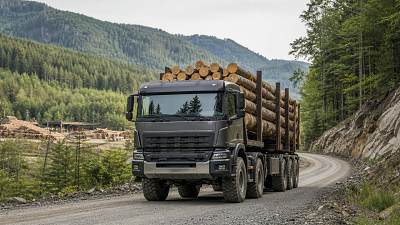
Scenario 1: Steep mountain roads need traction, braking, and frame strength
Mountain logging routes place constant stress on driveline components. Long climbs, sharp turns, and downhill braking quickly expose weak cooling systems, underpowered engines, or poor retarder matching.
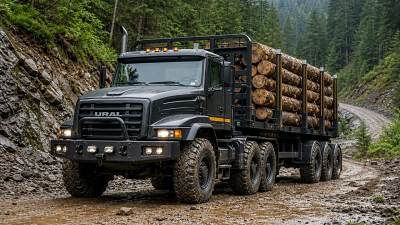
In this setting, the best logging truck supplier usually offers high-torque engines, reinforced frames, multi-axle traction, and dependable braking support. Engine brake integration is especially important.
Key checks for mountain operations
- Axle configuration suited to steep gradients, often 6x6 or 8x8 in harsher terrain.
- Low-speed torque delivery for loaded starts on loose surfaces.
- Retarder, engine brake, and cooling system capacity for repeated downhill cycles.
- High ground clearance and protection for vulnerable underbody components.
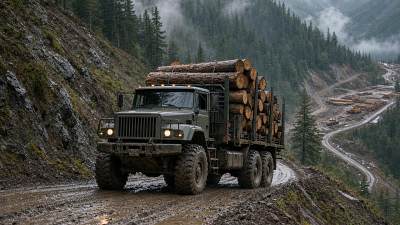
Scenario 2: Soft ground and wet forests demand flotation and weight balance
In rainy regions, the wrong truck sinks, spins, and loses hours. Tire choice, axle spacing, suspension travel, and tare weight all affect mobility over soft, unstable ground.
A capable logging truck supplier should explain how chassis layout affects ground pressure. Suppliers that only promote maximum rated load may increase stuck events and recovery expenses.
What to confirm before ordering
- Tire specification matched to mud, slash roads, and seasonal moisture.
- Balanced empty weight to reduce rutting without sacrificing useful payload.
- Differential locks and driveline protection for repeated low-traction starts.
- Suspension setup that supports articulation on uneven forest tracks.
Scenario 3: Long haul from remote forests requires uptime planning first
Some timber routes combine rough extraction roads with long paved transfers. Here, fuel economy, service intervals, and parts availability become as important as off-road durability.
A strong logging truck supplier should document maintenance intervals, common wear parts, remote diagnostic options, and regional service access. Downtime often costs more than a higher purchase price.
The right truck for this scenario balances road speed, legal axle loading, cabin comfort, and repair simplicity. Over-specialized off-road units may reduce transport efficiency on longer paved segments.
Scenario 4: High-volume timber yards need fast cycle time and loading compatibility
At organized timber yards, delay often comes from loading mismatch, turning radius limits, or unstable body design. Supplier evaluation should include body configuration and handling flow.
An experienced logging truck supplier will discuss bunk design, stake strength, loader reach, and unloading safety. These details influence cycle time more than headline horsepower.
Operational fit points
- Body dimensions aligned with average log length and loader method.
- Turning performance suited to yard layout and staging zones.
- Stable loading geometry to reduce shift risk during transport.
- Fast inspection access for daily checks between cycles.
How load capacity, terrain fit, and downtime needs change by scenario
How to evaluate a logging truck supplier beyond price
Price matters, but total operating value matters more. A low-cost offer can become expensive if the truck needs frequent recovery, parts imports, or long workshop stays.
Use this supplier checklist
- Request application cases in terrain similar to your route profile.
- Compare rated payload against real legal and operational loading limits.
- Ask for component brands for axles, gearbox, suspension, and brakes.
- Verify spare parts lead time for high-wear items.
- Check whether service manuals and technical support are available in usable formats.
- Review warranty scope for off-road and forestry conditions.
- Confirm whether the supplier can customize bunk, stake, and chassis details.
A trustworthy logging truck supplier answers specific route and load questions clearly. Vague claims about toughness or efficiency are not enough for a demanding forestry fleet.
Practical supplier matching suggestions for better scenario fit
- For steep extraction roads: prioritize powertrain durability, downhill control, and reinforced suspension.
- For muddy lowland forests: favor lower ground pressure, tire flexibility, and traction aids.
- For mixed road and forest duty: balance payload with fuel efficiency and easy maintenance.
- For dense production zones: optimize loading flow, stability, and short inspection time.
The Global Heavy Truck Industry Platform supports this process by connecting buyers with verified international sources across complete trucks, truck chassis, trailers, and spare parts.
Its digital marketplace also helps compare product categories, supplier capabilities, and market information. That makes early-stage screening faster and reduces blind sourcing decisions.
Common mistakes when choosing a logging truck supplier
One common mistake is buying for maximum nominal payload only. If terrain reduces mobility, actual daily tonnage may drop despite a higher rated capacity.
Another mistake is ignoring service geography. Even a durable truck becomes a weak asset when a failed seal, brake chamber, or shaft takes weeks to replace.
Some buyers also underestimate body and loading compatibility. Poor stake spacing, weak bunks, or awkward loader access can create repeated safety and handling problems.
Finally, many evaluations skip lifecycle cost analysis. Fuel burn, tire wear, downtime, and recovery frequency often reveal the true performance of a logging truck supplier.
Next steps for selecting the right logging truck supplier
Start with a route map, payload target, road condition summary, and yearly operating window. These details make supplier comparison objective and scenario-based.
Then build a short list of each logging truck supplier by drivetrain options, terrain suitability, body compatibility, and parts support. Request evidence, not general claims.
Using the Global Heavy Truck Industry Platform can simplify that search. It provides access to global truck resources, supplier discovery, and buying information for heavy-duty transport equipment.
When load capacity, terrain fit, and downtime planning are aligned, the final choice becomes clearer. The right logging truck supplier delivers not just a truck, but dependable timber transport performance.
Trending News
- Construction Machinery Cost Control: 7 Hidden Expenses in Project Planning
- Logging Truck Price Guide: Spec Choices That Change Total Ownership Cost
- Crane Truck Cost Breakdown: Chassis, Crane Unit, and Compliance Fees
- How to Vet a Logging Truck Distributor Before Entering a New Market
- Logging Truck Supplier Selection: Load Capacity, Terrain Fit, and Downtime
Tag
Recommended News
 Buying GuideLogging Truck Price Guide: Spec Choices That Change Total Ownership CostLogging truck price is more than the upfront quote. Discover how axle setup, engine sizing, durability, and service support shape total ownership cost and smarter buying decisions.
 Buying GuideLogging Truck Supplier Selection: Load Capacity, Terrain Fit, and DowntimeLogging truck supplier selection guide: compare load capacity, terrain fit, parts support, and downtime risk to choose reliable forestry trucks and cut operating costs.
 Buying GuideCrane Truck Manufacturer Comparison: Boom Stability, Payload, and SupportCrane truck manufacturer comparison guide covering boom stability, payload, chassis integration, and support to help buyers choose safer, more efficient trucks with long-term value.
 Buying GuideHow to Evaluate a Heavy Truck Chassis Manufacturer With R&D CapabilityHeavy truck chassis manufacturer with R&D capability: learn how to assess engineering strength, testing, customization, and long-term support to choose a reliable partner.
 Buying GuideDump Truck Supplier With Quick Delivery: What to Verify FirstDump truck supplier with quick delivery: learn what to verify first, from factory credibility and capacity to compliance, landed cost, and after-sales support before you buy.
 Buying GuideCab Chassis Truck for Fire Department: Key Fitment PointsCab chassis truck for fire department selection starts with fitment. Learn key points on GVWR, wheelbase, PTO, safety, and body integration to improve uptime and response performance.
 Buying GuideHow to Evaluate a Heavy Truck Chassis Manufacturer With R&D CapabilityLearn how to evaluate a heavy truck chassis manufacturer with R&D capability using practical criteria for design, testing, customization, and long-term fleet value.
 Buying GuideCost-Effective Delivery Truck Supply: What Low Price May Leave OutDelivery truck supplier with cost-effective solutions: learn what low prices may leave out, from compliance and after-sales support to lifecycle value, so you can source smarter and avoid hidden costs.
 Buying GuideHow to Choose a Truck Trailer Distributor for Stable After-Sales SupportTruck trailer distributor selection starts with after-sales strength. Learn how to compare service networks, parts support, warranty response, and technical help for long-term uptime.
 Buying GuideWhat to Check Before Choosing a Truck Cement Mixer SupplierTruck cement mixer supplier selection starts with the right checks. Learn how to compare quality, compliance, delivery, and after-sales support to reduce risk and choose with confidence.
 Buying GuideBulldozer Price Guide: What Affects Cost Across Jobsite TypesBulldozer price guide for construction, mining, roadwork, and municipal projects. Compare key cost drivers, avoid overbuying, and source the right dozer with confidence.
 Buying GuideLogging Truck Supplier Selection: Durability Points That Matter in Tough TerrainLogging truck supplier selection starts with durability. Discover the key strength, traction, braking, and support factors that reduce downtime in tough terrain.
 Buying GuideWhat Makes a Delivery Truck Supplier Suitable for School TransportationDelivery truck supplier for school transportation: learn how to assess safety, compliance, body design, and after-sales support for urban, rural, and school logistics needs.
 Buying GuideHow to Plan a Semi Trailer Bulk Order Without Costly Specification MistakesSemi trailer bulk order planning starts with the right specs. Learn how to avoid costly mistakes, compare suppliers wisely, and secure compliant, fleet-ready trailers.
![]() Buying GuideFlatbed Trailer Supplier for Logistics Transportation: What to Check Before OrderingFlatbed trailer supplier for logistics transportation: learn what to check before ordering, from load capacity and compliance to customization and supplier reliability.
Buying GuideFlatbed Trailer Supplier for Logistics Transportation: What to Check Before OrderingFlatbed trailer supplier for logistics transportation: learn what to check before ordering, from load capacity and compliance to customization and supplier reliability.![]() Buying GuideBulldozer Price Guide: What Changes the Final Cost MostBulldozer price explained for finance buyers: compare size, brand, used vs. new, shipping, and service factors that shape total cost and smarter budget decisions.
Buying GuideBulldozer Price Guide: What Changes the Final Cost MostBulldozer price explained for finance buyers: compare size, brand, used vs. new, shipping, and service factors that shape total cost and smarter budget decisions. Buying GuideChoosing a Truck Cement Mixer Supplier for Stable Long-Term OperationTruck cement mixer supplier selection affects uptime, parts access, and lifecycle cost. Use this practical checklist to compare suppliers and choose reliable equipment for stable long-term operation.
 Buying GuideHow to Shortlist a Water Truck Supplier for Municipal ContractsWater truck supplier shortlist guide for municipal contracts: compare compliance, chassis reliability, service support, and lifecycle value to choose with confidence.
 Buying GuideDump Truck Wholesale: How to Balance Price, Spec, and Lead TimeDump truck wholesale buyers must balance price, spec, and lead time. Learn how to compare suppliers, reduce sourcing risk, and secure trucks that fit project demands.
 Buying GuideTruck Tipper Wholesale vs Direct Factory Supply: A Practical ComparisonTruck tipper wholesale vs direct factory supply: compare cost, lead time, customization, and risk to choose the best sourcing model for reliable, high-value fleet procurement.
 Buying GuideWater Truck Manufacturer Checklist for Harsh Jobsite ConditionsWater truck manufacturer checklist for harsh jobsites: compare chassis, tank strength, spray control, safety, and service support to choose a durable, reliable truck.
 Buying GuideWhen Semi Trailer OEM Makes Sense for Special Cargo OperationsSemi trailer OEM makes sense when special cargo demands safer loading, better stability, and route-ready design. Learn when custom trailers reduce risk and improve transport efficiency.
 Buying GuideWhat to Check Before Choosing a Truck Tipper SupplierTruck tipper supplier selection starts with safety, quality, and compliance. Discover key checks for design, manufacturing, documentation, and after-sales support before you buy.
 Buying GuideDump Truck OEM or Standard Model: Which Fit Makes More SenseDump truck OEM or standard model? Compare cost, customization, uptime, and long-term value to choose the best fit for your fleet and boost operational efficiency.
 Buying GuideTruck Trailer Sourcing: 7 Mistakes That Raise Total Landing CostTruck trailer sourcing is not just about the lowest quote. Discover 7 costly mistakes that raise total landing cost and learn how to source smarter, cut risk, and improve fleet ROI.