Crane Truck Manufacturer Comparison: Boom Stability, Payload, and Support
Choosing a crane truck manufacturer is not only about price or lifting charts.
It affects site safety, daily efficiency, maintenance planning, and long-term fleet value.
In road transport equipment, crane trucks serve construction, logistics, utilities, mining, and municipal operations.
That makes a structured crane truck manufacturer comparison essential before any sourcing decision.
This guide explains how to compare boom stability, payload performance, chassis integration, and support quality with practical evaluation points.
Core Definition of a Crane Truck Manufacturer Comparison
A crane truck manufacturer comparison reviews complete lifting vehicle capability rather than crane specifications alone.
The most useful comparison covers the crane, truck chassis, hydraulic system, control interface, safety devices, and service network.
A strong crane truck manufacturer usually offers balanced performance across lifting reach, stability, payload retention, and operating reliability.
By contrast, some suppliers focus on headline lifting tonnage while underperforming in structural durability or spare parts response.
For road-based lifting equipment, the best evaluation method combines technical data with lifecycle support evidence.
Main comparison dimensions
- Boom stability under different load radii
- Rated payload after crane installation
- Chassis and subframe compatibility
- Hydraulic efficiency and control smoothness
- Safety systems and compliance documentation
- After-sales support, spare parts, and training
Current Industry Focus in Crane Truck Selection
Global demand for crane trucks continues to grow with infrastructure expansion and regional logistics upgrades.
At the same time, buyers are paying closer attention to transport compliance, uptime, and cross-border parts availability.
This shift changes how a crane truck manufacturer is evaluated in international trade.
A modern crane truck manufacturer comparison should therefore look beyond brochure capacity.
It should measure operating practicality in real transport and lifting conditions.
Boom Stability as a Primary Performance Indicator
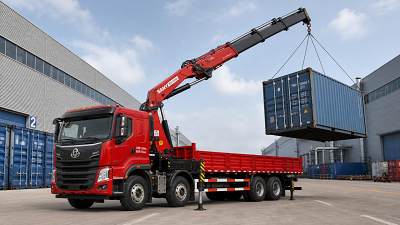
Boom stability is often the clearest difference between one crane truck manufacturer and another.
Two units may show similar rated lifting capacity, yet behave very differently during extension, slewing, or uneven ground positioning.
Stability depends on boom design, steel grade, outrigger span, frame rigidity, and hydraulic response.
What to check in stability performance
- Deflection at maximum horizontal reach
- Oscillation control during load movement
- Outrigger footprint and leveling convenience
- Smoothness of proportional hydraulic controls
- Performance under partial load and repeated cycles
A reputable crane truck manufacturer should provide real load charts, stability limits, and operating angle data.
If the supplier cannot explain dynamic behavior, the technical offering may be incomplete.
Field video, test reports, and user references are valuable for validating stability claims.
Payload Retention and Transport Efficiency
Payload is a commercial issue as much as a technical one.
A crane truck with heavy superstructure may reduce usable cargo capacity and limit route flexibility.
That is why payload retention should be central in any crane truck manufacturer comparison.
The best crane truck manufacturer balances crane strength with compact weight, smart subframe engineering, and proper axle distribution.
Payload-related questions
- What is the curb weight after full crane installation?
- How much legal payload remains under local axle limits?
- Does the body design reduce center-of-gravity problems?
- Is the truck optimized for both lifting and cargo delivery tasks?
Payload losses often become visible only after vehicle registration or route deployment.
Detailed weight breakdowns should be requested before order confirmation.
Chassis Integration and Structural Compatibility
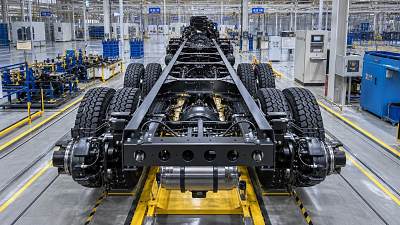
A crane truck is a combined machine, not a simple truck plus a mounted crane.
Poor chassis integration can create cracking, premature tire wear, weak braking balance, and unstable lifting behavior.
An experienced crane truck manufacturer understands frame reinforcement, axle loading, PTO matching, and suspension impact.
This area is especially important for export orders involving different road laws and axle standards.
The Global Heavy Truck Industry Platform helps compare such configurations across multiple suppliers and product categories.
Support Capacity and Lifecycle Service Value
Support quality can separate a dependable crane truck manufacturer from a risky one.
Even well-built units require hydraulic seals, wear parts, calibration, and operator guidance over time.
When service is slow or parts are hard to source, downtime can exceed any initial purchase savings.
Key support checkpoints
- Spare parts lead time and warehouse coverage
- Remote technical assistance and documentation quality
- Warranty scope for crane, chassis, and hydraulic components
- Operator training and maintenance manuals
- Ability to support exported units in target markets
A capable crane truck manufacturer should also provide serial traceability and recommended maintenance intervals.
These details improve fleet planning and reduce unplanned service interruptions.
Typical Application Scenarios and Manufacturer Fit
Different applications require different strengths from a crane truck manufacturer.
The right choice depends on job frequency, terrain, cargo type, and transport distance.
Practical Evaluation Steps Before Supplier Selection
A practical process improves the quality of any crane truck manufacturer comparison.
It also makes quotations easier to compare on equal terms.
- Define lifting radius, load type, road limits, and body requirements.
- Request load charts, curb weight, axle data, and compliance documents.
- Verify support capability in the destination country or region.
- Compare total ownership cost, not only factory selling price.
- Review platform references, product ranges, and supplier responsiveness.
Using a specialized B2B sourcing channel can simplify this work.
The Global Heavy Truck Industry Platform connects buyers with verified heavy truck, trailer, construction machinery, and parts suppliers worldwide.
It also supports product discovery, supplier comparison, and industry insight for more informed equipment decisions.
Conclusion and Next-Step Sourcing Direction
A reliable crane truck manufacturer should deliver more than rated capacity on paper.
The real benchmark is stable lifting, usable payload, durable integration, and dependable support.
When comparing suppliers, prioritize technical transparency, application fit, and lifecycle service evidence.
For broader global sourcing, use the Global Heavy Truck Industry Platform to compare crane truck manufacturer options, review product categories, and identify suitable international partners.
A disciplined comparison process leads to safer operations, better transport economics, and stronger long-term equipment value.
Trending News
- Construction Machinery Cost Control: 7 Hidden Expenses in Project Planning
- Logging Truck Price Guide: Spec Choices That Change Total Ownership Cost
- Crane Truck Cost Breakdown: Chassis, Crane Unit, and Compliance Fees
- How to Vet a Logging Truck Distributor Before Entering a New Market
- Logging Truck Supplier Selection: Load Capacity, Terrain Fit, and Downtime
Tag
Recommended News
 Buying GuideLogging Truck Price Guide: Spec Choices That Change Total Ownership CostLogging truck price is more than the upfront quote. Discover how axle setup, engine sizing, durability, and service support shape total ownership cost and smarter buying decisions.
 Buying GuideLogging Truck Supplier Selection: Load Capacity, Terrain Fit, and DowntimeLogging truck supplier selection guide: compare load capacity, terrain fit, parts support, and downtime risk to choose reliable forestry trucks and cut operating costs.
 Buying GuideCrane Truck Manufacturer Comparison: Boom Stability, Payload, and SupportCrane truck manufacturer comparison guide covering boom stability, payload, chassis integration, and support to help buyers choose safer, more efficient trucks with long-term value.
 Buying GuideHow to Evaluate a Heavy Truck Chassis Manufacturer With R&D CapabilityHeavy truck chassis manufacturer with R&D capability: learn how to assess engineering strength, testing, customization, and long-term support to choose a reliable partner.
 Buying GuideDump Truck Supplier With Quick Delivery: What to Verify FirstDump truck supplier with quick delivery: learn what to verify first, from factory credibility and capacity to compliance, landed cost, and after-sales support before you buy.
 Buying GuideCab Chassis Truck for Fire Department: Key Fitment PointsCab chassis truck for fire department selection starts with fitment. Learn key points on GVWR, wheelbase, PTO, safety, and body integration to improve uptime and response performance.
 Buying GuideHow to Evaluate a Heavy Truck Chassis Manufacturer With R&D CapabilityLearn how to evaluate a heavy truck chassis manufacturer with R&D capability using practical criteria for design, testing, customization, and long-term fleet value.
 Buying GuideCost-Effective Delivery Truck Supply: What Low Price May Leave OutDelivery truck supplier with cost-effective solutions: learn what low prices may leave out, from compliance and after-sales support to lifecycle value, so you can source smarter and avoid hidden costs.
 Buying GuideHow to Choose a Truck Trailer Distributor for Stable After-Sales SupportTruck trailer distributor selection starts with after-sales strength. Learn how to compare service networks, parts support, warranty response, and technical help for long-term uptime.
 Buying GuideWhat to Check Before Choosing a Truck Cement Mixer SupplierTruck cement mixer supplier selection starts with the right checks. Learn how to compare quality, compliance, delivery, and after-sales support to reduce risk and choose with confidence.
 Buying GuideBulldozer Price Guide: What Affects Cost Across Jobsite TypesBulldozer price guide for construction, mining, roadwork, and municipal projects. Compare key cost drivers, avoid overbuying, and source the right dozer with confidence.
 Buying GuideLogging Truck Supplier Selection: Durability Points That Matter in Tough TerrainLogging truck supplier selection starts with durability. Discover the key strength, traction, braking, and support factors that reduce downtime in tough terrain.
 Buying GuideWhat Makes a Delivery Truck Supplier Suitable for School TransportationDelivery truck supplier for school transportation: learn how to assess safety, compliance, body design, and after-sales support for urban, rural, and school logistics needs.
 Buying GuideHow to Plan a Semi Trailer Bulk Order Without Costly Specification MistakesSemi trailer bulk order planning starts with the right specs. Learn how to avoid costly mistakes, compare suppliers wisely, and secure compliant, fleet-ready trailers.
![]() Buying GuideFlatbed Trailer Supplier for Logistics Transportation: What to Check Before OrderingFlatbed trailer supplier for logistics transportation: learn what to check before ordering, from load capacity and compliance to customization and supplier reliability.
Buying GuideFlatbed Trailer Supplier for Logistics Transportation: What to Check Before OrderingFlatbed trailer supplier for logistics transportation: learn what to check before ordering, from load capacity and compliance to customization and supplier reliability.![]() Buying GuideBulldozer Price Guide: What Changes the Final Cost MostBulldozer price explained for finance buyers: compare size, brand, used vs. new, shipping, and service factors that shape total cost and smarter budget decisions.
Buying GuideBulldozer Price Guide: What Changes the Final Cost MostBulldozer price explained for finance buyers: compare size, brand, used vs. new, shipping, and service factors that shape total cost and smarter budget decisions. Buying GuideChoosing a Truck Cement Mixer Supplier for Stable Long-Term OperationTruck cement mixer supplier selection affects uptime, parts access, and lifecycle cost. Use this practical checklist to compare suppliers and choose reliable equipment for stable long-term operation.
 Buying GuideHow to Shortlist a Water Truck Supplier for Municipal ContractsWater truck supplier shortlist guide for municipal contracts: compare compliance, chassis reliability, service support, and lifecycle value to choose with confidence.
 Buying GuideDump Truck Wholesale: How to Balance Price, Spec, and Lead TimeDump truck wholesale buyers must balance price, spec, and lead time. Learn how to compare suppliers, reduce sourcing risk, and secure trucks that fit project demands.
 Buying GuideTruck Tipper Wholesale vs Direct Factory Supply: A Practical ComparisonTruck tipper wholesale vs direct factory supply: compare cost, lead time, customization, and risk to choose the best sourcing model for reliable, high-value fleet procurement.
 Buying GuideWater Truck Manufacturer Checklist for Harsh Jobsite ConditionsWater truck manufacturer checklist for harsh jobsites: compare chassis, tank strength, spray control, safety, and service support to choose a durable, reliable truck.
 Buying GuideWhen Semi Trailer OEM Makes Sense for Special Cargo OperationsSemi trailer OEM makes sense when special cargo demands safer loading, better stability, and route-ready design. Learn when custom trailers reduce risk and improve transport efficiency.
 Buying GuideWhat to Check Before Choosing a Truck Tipper SupplierTruck tipper supplier selection starts with safety, quality, and compliance. Discover key checks for design, manufacturing, documentation, and after-sales support before you buy.
 Buying GuideDump Truck OEM or Standard Model: Which Fit Makes More SenseDump truck OEM or standard model? Compare cost, customization, uptime, and long-term value to choose the best fit for your fleet and boost operational efficiency.
 Buying GuideTruck Trailer Sourcing: 7 Mistakes That Raise Total Landing CostTruck trailer sourcing is not just about the lowest quote. Discover 7 costly mistakes that raise total landing cost and learn how to source smarter, cut risk, and improve fleet ROI.