Best Semi Trailer Manufacturer for Logistics in 2026
Choosing the best semi trailer manufacturer for logistics in 2026 is no longer just about price. It is about uptime, delivery consistency, fleet flexibility, and dependable global supply support.
In road transport equipment, trailer selection now affects fuel cost, cargo safety, regulatory compliance, and asset life. A poor sourcing decision can weaken the entire logistics chain.
That is why comparing every semi trailer manufacturer for logistics through real operating scenarios matters more than reviewing brochures alone. The right choice depends on route type, cargo profile, climate, and service expectations.
The Global Heavy Truck Industry Platform supports this process by connecting buyers with verified suppliers, product categories, market information, and cross-border sourcing resources across the commercial vehicle ecosystem.
Why 2026 logistics conditions change how a semi trailer manufacturer is evaluated
Logistics operations in 2026 face tighter delivery windows, more route volatility, and stronger pressure to reduce maintenance disruptions. Trailer choice now influences business continuity more directly than before.
A capable semi trailer manufacturer for logistics must offer more than standard production. It should provide engineering consistency, part availability, compliance options, and adaptable configurations for different transport tasks.
Evaluation should include structural durability, axle and suspension matching, tare weight control, corrosion protection, lead time reliability, and after-sales coordination across regions.
This is especially important when fleets serve mixed industries such as e-commerce distribution, container transport, construction supply, agricultural haulage, and industrial bulk delivery.
When regional distribution is the main scenario, lightweight and uptime become the priority
Regional logistics usually involves high trip frequency, loading variability, and repeated stop-and-go driving. In this setting, trailer weight and maintenance simplicity directly affect route efficiency.
The best semi trailer manufacturer for logistics for this scenario should focus on lightweight design without sacrificing frame integrity. Reliable braking systems and easy-wear component replacement are essential.
Key judgment points for regional operations
- Low tare weight for better payload efficiency
- Frequent-door or side-access options for faster unloading
- Common spare parts for quick service turnaround
- Stable suspension for mixed urban and highway surfaces
For this scenario, a supplier with modular trailer options often delivers better long-term value than one offering only a low initial price.
When long-haul trunk transport dominates, structural endurance matters most
Long-distance freight places constant stress on chassis, kingpin connection points, axles, and tires. Small design weaknesses become expensive after thousands of kilometers.
A strong semi trailer manufacturer for logistics in this scenario should demonstrate welding quality control, tested load distribution, and stable performance under sustained heavy operation.
It is also important to check whether the manufacturer supports different road regulations, axle arrangements, and cargo securing standards for cross-border or multi-country routes.
Best-fit trailer features for trunk logistics
- High-strength steel or optimized structural material selection
- Reinforced frame design for repetitive heavy loading
- Durable landing gear and dependable air brake systems
- Fuel-saving aerodynamic details where applicable
For heavy trunk freight, lifecycle cost usually outweighs acquisition cost. Fewer failures and longer service intervals can reshape total logistics performance.
When ports and intermodal routes are involved, compatibility becomes the deciding factor
Container movement between ports, inland depots, and warehouses requires precise dimensional compatibility. Here, operational delays often come from mismatched specifications rather than weak payload capacity.
A suitable semi trailer manufacturer for logistics should offer compliant container chassis, locking systems, and optimized layouts for 20ft, 40ft, or mixed-container operations.
Corrosion resistance is another key issue. Port environments expose trailers to moisture, salt, and frequent loading equipment contact, accelerating wear if protection is poor.
Questions worth checking in intermodal use
- Are twist locks durable and easy to maintain?
- Does the chassis support local container movement regulations?
- Is the frame coating suitable for humid and saline conditions?
- Can spare parts be sourced quickly in port regions?
When bulk materials or construction cargo are transported, reinforcement and unloading efficiency matter more
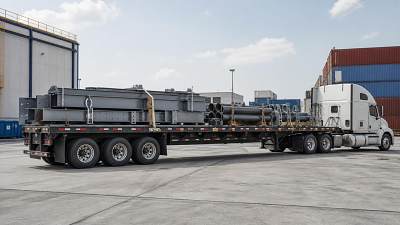
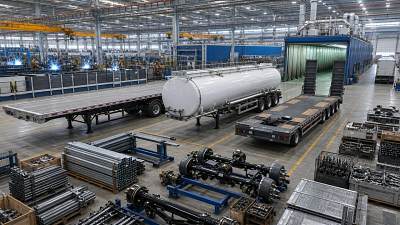
Construction aggregates, steel products, cement materials, and mining-related cargo generate concentrated stress. In these scenarios, body design and wear resistance need special attention.
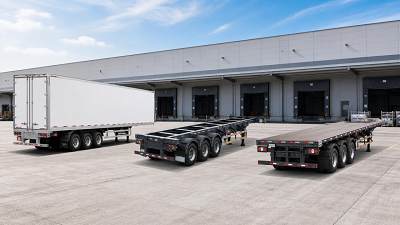
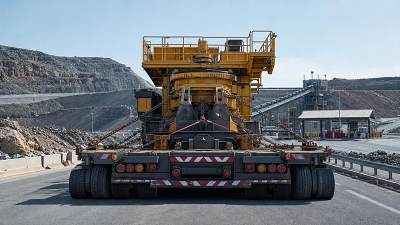
The right semi trailer manufacturer for logistics should provide heavy-duty dump, flatbed, or low-bed solutions with reinforced floors, side structures, and durable suspension systems.
Operating terrain also changes the requirement. Rough roads, site ramps, and uneven surfaces demand stronger understructure protection and more robust braking confidence.
Core judgment points for industrial and construction logistics
- Floor and wall abrasion resistance
- Axle capacity matched to concentrated cargo loads
- Stable tipping or unloading structure where needed
- Frame clearance suitable for jobsite conditions
How different logistics scenarios change trailer requirements
Practical ways to choose the best semi trailer manufacturer for logistics
A high-quality selection process should begin with route and cargo mapping. Without this step, even a reputable supplier may still be a poor operational fit.
- Define route distance, road condition, and average load profile.
- Match trailer type to cargo handling and unloading requirements.
- Review manufacturing capability, not just catalog range.
- Check certifications, export experience, and regional compliance familiarity.
- Confirm spare parts support and service response commitment.
- Compare lifecycle value using maintenance, payload, and downtime data.
The Global Heavy Truck Industry Platform helps streamline this comparison. It brings together trailers, semi-trailers, truck systems, and supplier information in one searchable environment.
This matters when evaluating a semi trailer manufacturer for logistics across multiple countries, especially where product specifications and supplier strengths vary significantly.
Common mistakes when comparing semi trailer manufacturers for logistics
One frequent mistake is choosing by unit price only. Lower purchase cost can hide weaker materials, inconsistent welding, or poor spare parts support.
Another mistake is ignoring route reality. A trailer optimized for smooth highways may underperform in regional delivery or construction-linked logistics networks.
Some buyers also overlook future scaling. If fleet growth, route expansion, or export operation is expected, supplier capacity and documentation quality become critical.
A final misjudgment is treating all suppliers as equal after basic specification matching. The best semi trailer manufacturer for logistics usually stands out in consistency, communication, and support depth.
What to do next when sourcing for 2026 logistics projects
Start with a shortlist built around actual operating scenarios, not generic product names. Separate regional, trunk, intermodal, and heavy-duty transport needs before requesting quotations.
Then compare each semi trailer manufacturer for logistics on engineering fit, production reliability, export readiness, and after-sales support. Ask for specification details linked to your transport conditions.
Using an industry-focused sourcing platform can improve visibility and reduce risk. The Global Heavy Truck Industry Platform offers access to suppliers, product categories, and market information relevant to road transport equipment.
In 2026, the best sourcing decision will come from matching the right trailer solution to the right logistics scenario. That is how durable performance and better commercial results are built.
Trending News
Tag
Recommended News
 Logistics & FreightBest Semi Trailer Manufacturer for Logistics in 2026Find the best semi trailer manufacturer for logistics in 2026. Compare durable, compliant, cost-efficient trailer solutions for regional, long-haul, port, and heavy-duty transport.
 Logistics & FreightLow Bed Trailer Export for Mining: Load Limits and Route PlanningLow bed trailer export for mining: learn load limits, axle distribution, and route planning tips to reduce delays, improve compliance, and choose the right trailer for safer project delivery.
 Logistics & Freight24-Hour Full-Truckload Delivery Now Standard for Global Buyers24-hour full-truckload delivery is now standard for global buyers — enabling JIT reliability, API-driven visibility, and up to 40% safety stock reduction across陆路运输设备 supply chains.
 Logistics & FreightChina-Mongolia-Russia Trucking Pact Upgraded with e-CMR & Cold Chain Data SharingChina-Mongolia-Russia trucking pact upgrades cold chain logistics with e-CMR adoption and real-time temperature data sharing—boost compliance, cut delays, and future-proof cross-border road transport.
 Logistics & FreightChina Launches 24-Hour Full-Load Freight for 'Next-Day Delivery'China's 24-hour full-load freight enables guaranteed T+1 next-day delivery for exporters — boosting reliability, cutting air freight costs, and transforming cross-border supply chain planning.
 Logistics & FreightAll 27 Bridges Across Pinglu Canal CompletedAll 27 bridges across Pinglu Canal completed — unlocking a game-changing inland waterway route for heavy-duty road transport equipment from Southwest China to global markets.
 Logistics & FreightChoosing Commercial Vehicle Parts for Cold Storage ReliabilityCommercial vehicle parts for cold storage are key to reefer reliability. Learn how to choose durable, compatible parts that reduce downtime, protect cargo, and improve fleet performance.
 Logistics & Freight27 Bridges Over Pinglu Canal Completed, Accelerating Southwest Equipment ExportsPinglu Canal's 27 bridges completed—boosting陆路运输设备 exports to ASEAN, Middle East & Africa. Discover logistics advantages for heavy machinery, mining vehicles & concrete mixers.
 Logistics & FreightChina Launches 24-Hour Full-Truckload Delivery for Overseas BuyersFull-truckload delivery from China now guarantees 24-hour land transport for overseas buyers — transforming procurement, inventory, and supply chain resilience for陆路运输设备 exporters and importers.
 Logistics & FreightSix New Iran-Pakistan Land Crossings Opened, Land Clearance Cut to 6 HoursSix new Iran-Pakistan land crossings slash cargo clearance to just 6 hours—boosting efficiency for heavy-duty trucks, semi-trailers & CKD/SKD kits export.
 Logistics & FreightNanjing Launches First Wind Power Equipment Shipping Route to PakistanWind power equipment shipping route from Nanjing to Pakistan launched—key logistics upgrade for CPEC renewable projects, heavy transport & EPC contractors.
 Logistics & FreightIran-Pakistan Launch 6 Cross-Border Roads, 3 New Land PortsIran-Pakistan launch 6 cross-border roads & 3 new land ports—boosting overland logistics, heavy-duty truck demand, and Central Asia–Gulf corridor efficiency.
 Logistics & FreightTruck Spare Parts Supplier in Europe: How to Avoid Cross-Border DelaysTruck spare parts supplier in Europe guide: learn how to reduce cross-border delays, improve parts sourcing, and keep fleet repairs fast with smarter supplier selection.
 Logistics & FreightFlatbed Trailer Supplier for Logistics Transportation: Key Load FactorsFlatbed trailer supplier for logistics transportation: learn key load factors like weight distribution, cargo size, and road conditions to choose safer, cost-efficient trailers.
 Logistics & FreightHuanggang Port Freight Operations Cease, Shenzhen-Hong Kong Cross-Border Logistics Shifts to 'East-In-East-Out, West-In-West-Out'Huanggang Port freight operations cease May 2026—Shenzhen-Hong Kong logistics shifts to 'East-In-East-Out, West-In-West-Out'. Key for陆路运输设备 stakeholders: update vehicle specs, optimize routes, ensure compliance now.
 Logistics & FreightAll 27 Cross-River Bridges of the Pinglu Canal CompletedAll 27 cross-river bridges of the Pinglu Canal are now complete — enabling 49-ton heavy-duty truck transport 24/7 between Yangtze manufacturing hubs and Beibu Gulf Port.
 Logistics & FreightNew Railway Cargo Transport Rules Effective May 1, 2026New Railway Cargo Transport Rules (2026): 72-hour advance submission required for oversized, overweight & special-purpose freight — ensure compliance & avoid delays.
 Logistics & FreightSemi Trailer Manufacturer for Logistics: What Impacts Turnaround EfficiencySemi trailer manufacturer for logistics selection shapes turnaround efficiency through build quality, customization, lead time control, and after-sales support—learn what drives faster, more reliable fleet deployment.
 Logistics & FreightHong Kong–Shenzhen Cross-Border Freight Shifts: Huanggang Closure Marks New EraHong Kong–Shenzhen cross-border freight shifts: Huanggang Port closure reshapes road transport logistics—discover impacts, alternatives & smart clearance must-dos.
 Logistics & FreightPinglu Canal Bridges Completed: 55-Ton Trucks Now PermittedPinglu Canal Bridges completed: 55-ton trucks now permitted—unlock faster, cost-efficient land transport for RCEP exporters, heavy-truck makers & logistics providers in Southwest China.
 Logistics & FreightErenhot-Mongolia 24-Hour Freight Clearance Boosts Auto & Fresh Produce TransitErenhot-Mongolia 24-hour freight clearance slashes auto & fresh produce transit time to <15 mins—boosting JIT delivery for OEMs, parts suppliers & cold-chain logistics.
 Logistics & FreightSemi Trailer OEM Lead Times: What Affects Delivery More Than CapacitySemi trailer OEM lead times depend on sourcing, engineering changes, compliance, and shipping—not just capacity. Learn what delays delivery and how to choose a reliable OEM partner.
 Logistics & FreightHow a Truck Cement Supplier Affects Site Delivery EfficiencyTruck cement supplier performance can make or break site delivery efficiency. Learn how reliable dispatch, fleet control, and coordination reduce delays, cut costs, and keep projects on schedule.
 Logistics & FreightPinglu Canal Bridges Completed: Heavy-Duty Transport UpgradedPinglu Canal Bridges completed: Heavy-duty transport upgraded to 49-ton capacity—boosting logistics for mining trucks, concrete mixers & port tractors to Qinzhou Port and ASEAN.
 Logistics & FreightHuanggang Port Freight Operations Cease, Shenzhen-HK Logistics Shifts to Zoned ModelHuanggang Port freight operations cease Dec 2025—Shenzhen-HK land logistics shifts to zoned model. Critical for automotive, NEV, and cross-border supply chains.