Pinglu Canal Bridges Completed: Heavy-Duty Transport Upgraded
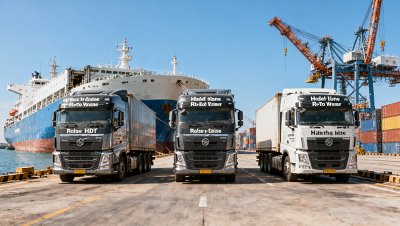
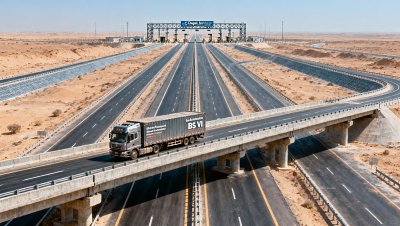
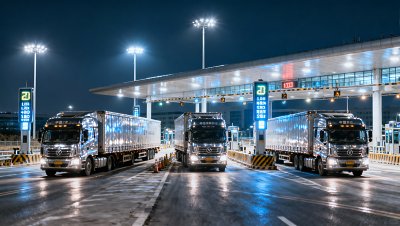
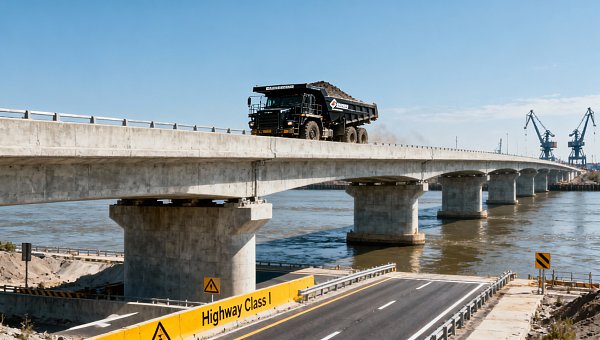
On May 5, 2026, all 27 river-crossing bridges along the Pinglu Canal were completed, with design load capacity upgraded to China’s Highway Class I standard (supporting 49-ton heavy-duty vehicles). This milestone directly impacts industries involved in inland-to-port logistics, heavy equipment manufacturing, and ASEAN-bound export supply chains — particularly those handling mining dump trucks, concrete mixers, and port tractor units.
Event Overview
On May 5, 2026, the construction of all 27 river-crossing bridges on the Pinglu Canal was finalized. Each bridge meets China’s Highway Class I load standard, enabling passage of 49-ton standard heavy-duty vehicles. The project aims to resolve land–sea transport bottlenecks between Southwest China, the Beibu Gulf, and ASEAN markets, facilitating combined inland waterway and road transport from Southwest production bases to Qinzhou Port.
Industries Affected
Heavy Equipment Manufacturing Enterprises
Manufacturers of mining dump trucks, concrete mixer trucks, and port tractor units are directly affected because the upgraded bridge load rating enables full-weight road transport from inland factories to Qinzhou Port without transshipment or axle-load reduction. This eliminates a key constraint previously limiting shipment efficiency and increasing compliance complexity for oversized/overweight cargo.
Export-Oriented Logistics & Freight Forwarding Firms
Firms managing Southwest China–ASEAN freight corridors now face revised routing economics. With seamless inland–road connectivity to Qinzhou Port, multimodal transit time and handling costs for heavy equipment shipments are expected to decline. However, actual cost savings depend on coordinated scheduling between waterway operators, highway authorities, and port terminals — not yet fully disclosed.
Raw Material Suppliers to Heavy Equipment Sector
Suppliers of structural steel, axles, braking systems, and other weight-critical components may see shifting demand signals. Higher permissible gross vehicle weights could influence downstream specifications — e.g., demand for lighter high-strength alloys or fatigue-resistant chassis components — though no official technical updates have been released.
Inland Port Operators & Terminal Service Providers
Terminals along the Pinglu Canal corridor — especially those interfacing with Qinzhou Port — must prepare for increased volume of heavy-vehicle arrivals. Bridge completion does not automatically imply full operational readiness; synchronization with navigation channel depth, lock operation schedules, and port berth allocation remains pending confirmation.
What Enterprises and Practitioners Should Monitor and Act On
Track official implementation timelines for integrated operations
Bridge completion is a structural milestone, not an operational go-live signal. Stakeholders should monitor announcements from Guangxi Transport Department and Qinzhou Port Authority regarding synchronized launch of canal navigation, toll policies, and weight inspection protocols — all essential for real-world deployment.
Validate route-specific weight certification and documentation requirements
Highway Class I rating applies to bridge design, but actual enforcement depends on regional road administration rules. Exporters must verify whether existing vehicle registration, cargo manifests, and over-dimensional transport permits require revision — especially for cross-provincial legs beyond the canal zone.
Assess near-term logistics cost models against pre-canal benchmarks
While theoretical cost reductions exist, current inland waterway tariffs, fuel surcharges, and port handling fees at Qinzhou remain unchanged. Companies should model end-to-end landed costs using verified 2026 Q1–Q2 rates before adjusting long-term contracts or tender terms.
Prepare for phased integration — not immediate substitution
The Pinglu Canal is a complementary corridor, not a full replacement for existing rail or expressway routes. Early adopters should treat it as a new lane for specific high-volume, low-frequency heavy equipment consignments — not a blanket shift across all export SKUs.
Editorial Perspective / Industry Observation
Observably, this development functions primarily as an infrastructure enabler — not an immediate market disruptor. Bridge completion confirms physical readiness, but commercial impact hinges on three interdependent variables: (1) sustained minimum navigable depth in the canal, (2) harmonized weight enforcement across provincial highways, and (3) terminal capacity expansion at Qinzhou Port. Analysis shows that while the upgrade lowers technical barriers, it does not eliminate regulatory, scheduling, or coordination frictions inherent in multimodal heavy freight. From an industry perspective, this milestone is best understood as a necessary precondition — not a sufficient trigger — for systemic logistics optimization.
Conclusion
Completion of the 27 bridges marks a critical infrastructure achievement for Southwest China’s outward logistics architecture, but its practical effect remains conditional on synchronized operational rollout. It is more accurately interpreted as a foundational upgrade than a standalone transformation — one that expands optionality for heavy equipment exporters and logistics providers, rather than mandating immediate strategic pivots. Current readiness is better measured by local coordination progress than by structural completion alone.
Information Sources
Main source: Official announcement issued by Guangxi Zhuang Autonomous Region Department of Transportation on May 5, 2026.
Note: Operational parameters — including canal draft limits, toll structures, and port integration plans — remain under observation and are not yet publicly confirmed.
Trending News
- Crane Truck for Sale: Key Checks Before Comparing Price and Load Capacity
- How to Choose a Reliable Truck Cement Distributor for Stable Supply
- Truck Cement OEM vs Standard Supply: Which Lowers Quality Risk?
- Truck Cement Bulk Order: Cost Factors and Delivery Risks in 2026
- How to Evaluate a Heavy Truck Chassis Manufacturer With R&D Capability
Tag
Recommended News
 Logistics & FreightTruck Cement Wholesale: What Determines Stable Delivery and Margin?Truck cement wholesale success depends on reliable supply, transport capacity, quality consistency, and landed cost control. Learn what protects delivery stability and margin.
 Logistics & FreightYangtze River Delta Rail-Sea Freight Exceeds 1M TEUsYangtze River Delta rail-sea freight exceeds 1M TEUs — unlocking cost-efficient, reliable intermodal logistics for heavy-duty truck exporters and ASEAN supply chains.
 Logistics & FreightTianjin–Shanghai Express Multimodal Train LaunchesTianjin–Shanghai Express Multimodal Train slashes chassis transit to 36 hours — boosting OEM export speed, reducing demurrage, and redefining just-in-time logistics for陆路运输设备.
 Logistics & FreightTongjiang Waterway Port Resumes Summer Passenger-Cargo Transport to RussiaTongjiang Waterway Port resumes summer passenger-cargo transport to Russia — a cost-effective, weather-resilient Ro-Ro solution for heavy-duty truck exporters and cross-border logistics providers.
 Logistics & FreightAsia's First Dedicated Cargo Airport Launches Two Intercontinental Freight RoutesAsia's first dedicated cargo airport launches intercontinental freight routes—boosting speed & reliability for land-transport equipment components like ADAS controllers and steer-by-wire ECUs.
 Logistics & FreightChina Captures 90% of Global VLCC Newbuilding OrdersVLCC newbuilding orders surge: China secures 90% globally—impacting HDT exports, KD kit shipments, and Ro-Ro capacity from Ningbo, Shanghai, Qingdao. Act now.
 Logistics & FreightTurkey Launches AI HS Classifier for Heavy-Duty Vehicle PartsTurkey's new AI HS Classifier boosts accuracy to 99.2% for heavy-duty vehicle parts — air suspension, disc brakes & hydraulic retarders. Streamline Turkish customs clearance now.
 Logistics & FreightTurkey Launches AI System for Heavy-Duty Vehicle Parts ClassificationAI system for heavy-duty vehicle parts classification launched in Turkey — boost HS code accuracy to 99.2% and cut customs clearance to 1.3 days for brake discs, air suspension & more.
 Logistics & FreightNXP S32G3 Chip Output Up 35% for Heavy-Duty TrucksNXP S32G3 chip output up 35% for heavy-duty trucks—boosting V2X-ready T-Box production, EU/MENA export readiness, and L2+/L3 automation deployment.
 Logistics & FreightAsia's First Dedicated Cargo Airport Launches Two Intercontinental Freight RoutesLand transport equipment exporters: Ezhou’s new cargo airport launches Chicago & Frankfurt air routes—7-day delivery for heavy-duty truck components, modular air freight, green channel access.
 Logistics & FreightPakistan Opens 6 Iran-Bound Land Corridors, Cutting China Heavy-Truck Transit to 6 HoursPakistan opens 6 Iran-bound land corridors—cutting China heavy-truck transit to just 6 hours. Boost BS VI truck exports, slash logistics costs & accelerate CPEC freight.
 Hits 103 Trains in One Month") Logistics & FreightCentral Asia Railway (Wuhan) Hits 103 Trains in One MonthCentral Asia Railway (Wuhan) hits 103 trains in April 2026 — traction vehicles, concrete mixer chassis & low-bed semi-trailers drive 37% of exports. Fast, reliable overland transport for Central Asia & Caspian markets.
Logistics & FreightCentral Asia Railway (Wuhan) Hits 103 Trains in One MonthCentral Asia Railway (Wuhan) hits 103 trains in April 2026 — traction vehicles, concrete mixer chassis & low-bed semi-trailers drive 37% of exports. Fast, reliable overland transport for Central Asia & Caspian markets. Logistics & FreightErenhot Highway Port Launches 24-Hour Freight ClearanceErenhot Highway Port now offers 24-hour freight clearance—boosting speed & reliability for heavy-duty truck exporters, cross-border logistics, and Mongolian distributors.
 Logistics & FreightErlianhot Highway Port Launches 24-Hour Freight ClearanceErlianhot Highway Port now offers 24-hour freight clearance — China’s first round-the-clock land port for Mongolia-bound heavy-duty vehicles and construction equipment. Faster, more predictable cross-border logistics await.
 Hits 103 Trains in One Month") Logistics & FreightCentral Asia Railway (Wuhan) Hits 103 Trains in One MonthCentral Asia Railway (Wuhan) hits 103 trains in April 2026 — a record boost for land transport equipment exporters, freight forwarders & EU/Central Asian buyers.
Logistics & FreightCentral Asia Railway (Wuhan) Hits 103 Trains in One MonthCentral Asia Railway (Wuhan) hits 103 trains in April 2026 — a record boost for land transport equipment exporters, freight forwarders & EU/Central Asian buyers. Logistics & FreightBest Flatbed Trailer Supplier Options for Logistics TransportationFind the best flatbed trailer supplier for logistics transportation with expert tips on load capacity, durability, compliance, and supplier support to improve fleet efficiency.
 Logistics & FreightErenhot Highway Port Launches 24-Hour Freight Clearance for MongoliaErenhot Highway Port launches 24-hour freight clearance for Mongolia — boosting speed, reliability & TIR-compliant exports of heavy vehicles and machinery.
 Logistics & FreightChina–Central Asia Customs Sign E-Release Mutual Recognition MOUChina–Central Asia e-release MOU streamlines road transport equipment clearance—tractors, semi-trailers & special vehicles now benefit from mutual recognition, faster borders & lower logistics costs.
 Logistics & FreightPakistan Opens 6 Land Routes to Iran, Cutting China Heavy-Truck Transit to 6 HoursPakistan opens 6 new land routes to Iran—cutting China heavy-truck transit to just 6 hours. Transform logistics, slash clearance time & boost supply chain resilience.
 Logistics & FreightChina-Central Asia Customs Sign E-Release Mutual Recognition MOUChina-Central Asia e-release MOU streamlines land transport equipment clearance—cutting costs 11% and enabling single-declaration, five-country mutual recognition for tractors, trailers & chassis.
 Logistics & FreightPakistan Activates 6 Land Freight Corridors to IranPakistan’s 6 new land freight corridors to Iran — including Gwadar–Gabd — enable sub-6-hour cross-border heavy freight. Boost efficiency, bypass Hormuz, and future-proof your陆路运输设备 logistics.
 Logistics & FreightBest Semi Trailer Manufacturer for Logistics in 2026Find the best semi trailer manufacturer for logistics in 2026. Compare durable, compliant, cost-efficient trailer solutions for regional, long-haul, port, and heavy-duty transport.
 Logistics & FreightLow Bed Trailer Export for Mining: Load Limits and Route PlanningLow bed trailer export for mining: learn load limits, axle distribution, and route planning tips to reduce delays, improve compliance, and choose the right trailer for safer project delivery.
 Logistics & Freight24-Hour Full-Truckload Delivery Now Standard for Global Buyers24-hour full-truckload delivery is now standard for global buyers — enabling JIT reliability, API-driven visibility, and up to 40% safety stock reduction across陆路运输设备 supply chains.
 Logistics & FreightChina-Mongolia-Russia Trucking Pact Upgraded with e-CMR & Cold Chain Data SharingChina-Mongolia-Russia trucking pact upgrades cold chain logistics with e-CMR adoption and real-time temperature data sharing—boost compliance, cut delays, and future-proof cross-border road transport.