China Captures 90% of Global VLCC Newbuilding Orders
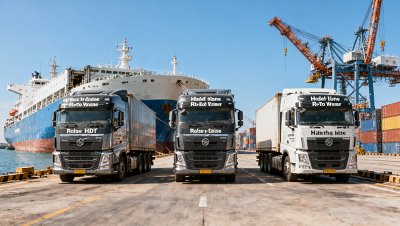
Global shipowners have surged new orders for very large crude carriers (VLCCs), with China securing 90% of all new VLCC orders as of May 21, 2026, according to China Water Transport Network. This shift is tightening container and roll-on/roll-off (Ro-Ro) vessel capacity at major Chinese ports—particularly Ningbo, Shanghai, and Qingdao—impacting heavy-duty truck (HDT) exports and knock-down (KD) kit shipments. Stakeholders in international trade, automotive logistics, and maritime supply chains should monitor resulting delays, freight volatility, and scheduling adjustments.
Event Overview
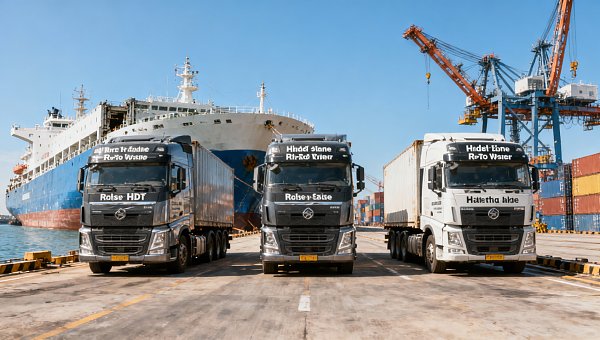
On May 21, 2026, China Water Transport Network reported that Chinese shipyards have received 90% of global newbuilding orders for very large crude carriers (VLCCs). This concentration of orders has led to heightened demand for container and Ro-Ro vessel space at key Chinese ports. As a result, lead times for HDT整车 and KD part exports from Ningbo, Shanghai, and Qingdao ports have extended by 7–12 days on average. Spot freight rates on select Europe-bound routes rose 14% week-on-week. Overseas importers are now advised to book cargo space 6–8 weeks in advance and track potential adjustments to delivery windows from Chinese OEMs.
Impact on Specific Industry Segments
Direct Exporters of Heavy-Duty Trucks and KD Kits
These exporters face direct pressure from port congestion and reduced vessel availability. Delays stem not from production bottlenecks but from constrained Ro-Ro and container slot access—especially on Europe-bound services. The extension of shipping lead times directly compresses order-to-delivery cycles and may trigger contractual penalties or customer dissatisfaction if not proactively managed.
Automotive Logistics & Ro-Ro Service Providers
Road-to-port haulage, terminal handling, and vessel slot allocation are under strain. With limited Ro-Ro capacity and rising competition for shared container slots, service providers report longer dwell times, increased pre-booking requirements, and tighter documentation deadlines. Rate negotiations with carriers are becoming more time-sensitive, and flexibility in routing (e.g., transshipment via alternative hubs) is diminishing.
International Importers and Distributors of Chinese-Made Trucks
Importers relying on just-in-time inventory models face higher working capital requirements and planning uncertainty. The 6–8 week advance booking window implies earlier financial commitments and less responsiveness to demand fluctuations. Additionally, shifts in OEM delivery schedules—potentially triggered by vessel availability constraints—may disrupt local assembly timelines or marketing launch plans.
Maritime Freight Forwarders and NVOCCs
Forwarders serving the China–Europe heavy vehicle corridor must now manage heightened volatility in both capacity allocation and spot pricing. The 14% weekly freight increase on some routes reflects short-term market tightening—not structural rate changes—and underscores the need for dynamic quoting tools and closer carrier relationship management. Visibility into vessel deployment schedules (especially Ro-Ro and multipurpose vessels) has become a critical differentiator.
What Relevant Enterprises or Practitioners Should Monitor and Do
Track official updates on port throughput capacity and vessel scheduling advisories
Monitor announcements from port authorities in Ningbo, Shanghai, and Qingdao—including any published guidance on Ro-Ro priority windows or container slot reservation protocols. These may signal temporary operational adjustments affecting booking eligibility or documentation cutoffs.
Review and adjust shipment planning for Europe-bound HDT and KD consignments
Extend internal lead time buffers by at least 10 days beyond historical norms. Reassess whether partial consolidation (e.g., mixing KD kits with non-urgent components) or staggered dispatch across multiple ports can improve slot accessibility—while verifying Ro-Ro compatibility and customs classification implications.
Engage proactively with Chinese OEMs on delivery window alignment
Request updated production-to-loading calendars from OEMs, especially those citing vessel availability as a constraint. Document any revised handover dates formally and assess contractual force majeure clauses related to maritime logistics disruptions—not manufacturing delays.
Secure freight contracts or fixed-rate agreements where feasible
Given observed week-on-week spot rate volatility, evaluate the feasibility of locking in rates for Q3–Q4 2026 shipments—particularly for high-volume, predictable lanes. Note that such agreements may require minimum volume commitments or early payment terms, and their enforceability depends on carrier capacity visibility.
Editorial Perspective / Industry Observation
Observably, this development is less a one-off surge and more a structural inflection point in global shipbuilding order flow—driven by competitive yard pricing, financing terms, and delivery certainty from Chinese builders. Analysis shows the VLCC order concentration is amplifying secondary bottlenecks in non-tanker segments, particularly Ro-Ro and general cargo capacity supporting industrial exports. From an industry standpoint, it is better understood not as a transient port congestion event, but as an early indicator of cascading capacity reallocation across vessel types. Current freight volatility reflects immediate market response; sustained impact will depend on how quickly non-VLCC tonnage (especially Ro-Ro and multipurpose ships) is added to order books—or redeployed from other trades.
Conclusion
This VLCC order trend signals a tightening in specialized maritime capacity supporting China’s heavy industrial exports—not merely a headline about shipbuilding dominance. Its primary consequence lies in compressed logistics windows and elevated coordination complexity for stakeholders moving large, unitized cargo like trucks and KD kits. It is more accurately interpreted as a supply-chain synchronization challenge than a demand-side issue, requiring cross-functional alignment between export sales, production planning, and freight procurement teams.
Source Attribution
Main source: China Water Transport Network, May 21, 2026.
Note: Ongoing monitoring is recommended for updates on port-level operational measures, carrier slot allocation policies, and OEM delivery calendar revisions—none of which were detailed in the original report.
Trending News
- Truck Tipper Sourcing Checklist: Specs, Lead Time, and Compliance
- What Makes a Reliable Truck Tipper Distributor in New Export Markets
- Truck Tipper OEM or Standard Model: Which Lowers Lifetime Cost?
- Truck Tipper Bulk Order: 5 Cost Risks to Check Before Signing
- How to Vet a Heavy Truck Chassis Manufacturer With R&D Capability in 2026
Tag
Recommended News
 Logistics & FreightChina Captures 90% of Global VLCC Newbuilding OrdersVLCC newbuilding orders surge: China secures 90% globally—impacting HDT exports, KD kit shipments, and Ro-Ro capacity from Ningbo, Shanghai, Qingdao. Act now.
 Logistics & FreightTurkey Launches AI HS Classifier for Heavy-Duty Vehicle PartsTurkey's new AI HS Classifier boosts accuracy to 99.2% for heavy-duty vehicle parts — air suspension, disc brakes & hydraulic retarders. Streamline Turkish customs clearance now.
 Logistics & FreightTurkey Launches AI System for Heavy-Duty Vehicle Parts ClassificationAI system for heavy-duty vehicle parts classification launched in Turkey — boost HS code accuracy to 99.2% and cut customs clearance to 1.3 days for brake discs, air suspension & more.
 Logistics & FreightNXP S32G3 Chip Output Up 35% for Heavy-Duty TrucksNXP S32G3 chip output up 35% for heavy-duty trucks—boosting V2X-ready T-Box production, EU/MENA export readiness, and L2+/L3 automation deployment.
 Logistics & FreightAsia's First Dedicated Cargo Airport Launches Two Intercontinental Freight RoutesLand transport equipment exporters: Ezhou’s new cargo airport launches Chicago & Frankfurt air routes—7-day delivery for heavy-duty truck components, modular air freight, green channel access.
 Logistics & FreightPakistan Opens 6 Iran-Bound Land Corridors, Cutting China Heavy-Truck Transit to 6 HoursPakistan opens 6 Iran-bound land corridors—cutting China heavy-truck transit to just 6 hours. Boost BS VI truck exports, slash logistics costs & accelerate CPEC freight.
 Hits 103 Trains in One Month") Logistics & FreightCentral Asia Railway (Wuhan) Hits 103 Trains in One MonthCentral Asia Railway (Wuhan) hits 103 trains in April 2026 — traction vehicles, concrete mixer chassis & low-bed semi-trailers drive 37% of exports. Fast, reliable overland transport for Central Asia & Caspian markets.
Logistics & FreightCentral Asia Railway (Wuhan) Hits 103 Trains in One MonthCentral Asia Railway (Wuhan) hits 103 trains in April 2026 — traction vehicles, concrete mixer chassis & low-bed semi-trailers drive 37% of exports. Fast, reliable overland transport for Central Asia & Caspian markets. Logistics & FreightErenhot Highway Port Launches 24-Hour Freight ClearanceErenhot Highway Port now offers 24-hour freight clearance—boosting speed & reliability for heavy-duty truck exporters, cross-border logistics, and Mongolian distributors.
 Logistics & FreightErlianhot Highway Port Launches 24-Hour Freight ClearanceErlianhot Highway Port now offers 24-hour freight clearance — China’s first round-the-clock land port for Mongolia-bound heavy-duty vehicles and construction equipment. Faster, more predictable cross-border logistics await.
 Hits 103 Trains in One Month") Logistics & FreightCentral Asia Railway (Wuhan) Hits 103 Trains in One MonthCentral Asia Railway (Wuhan) hits 103 trains in April 2026 — a record boost for land transport equipment exporters, freight forwarders & EU/Central Asian buyers.
Logistics & FreightCentral Asia Railway (Wuhan) Hits 103 Trains in One MonthCentral Asia Railway (Wuhan) hits 103 trains in April 2026 — a record boost for land transport equipment exporters, freight forwarders & EU/Central Asian buyers. Logistics & FreightBest Flatbed Trailer Supplier Options for Logistics TransportationFind the best flatbed trailer supplier for logistics transportation with expert tips on load capacity, durability, compliance, and supplier support to improve fleet efficiency.
 Logistics & FreightErenhot Highway Port Launches 24-Hour Freight Clearance for MongoliaErenhot Highway Port launches 24-hour freight clearance for Mongolia — boosting speed, reliability & TIR-compliant exports of heavy vehicles and machinery.
 Logistics & FreightChina–Central Asia Customs Sign E-Release Mutual Recognition MOUChina–Central Asia e-release MOU streamlines road transport equipment clearance—tractors, semi-trailers & special vehicles now benefit from mutual recognition, faster borders & lower logistics costs.
 Logistics & FreightPakistan Opens 6 Land Routes to Iran, Cutting China Heavy-Truck Transit to 6 HoursPakistan opens 6 new land routes to Iran—cutting China heavy-truck transit to just 6 hours. Transform logistics, slash clearance time & boost supply chain resilience.
 Logistics & FreightChina-Central Asia Customs Sign E-Release Mutual Recognition MOUChina-Central Asia e-release MOU streamlines land transport equipment clearance—cutting costs 11% and enabling single-declaration, five-country mutual recognition for tractors, trailers & chassis.
 Logistics & FreightPakistan Activates 6 Land Freight Corridors to IranPakistan’s 6 new land freight corridors to Iran — including Gwadar–Gabd — enable sub-6-hour cross-border heavy freight. Boost efficiency, bypass Hormuz, and future-proof your陆路运输设备 logistics.
 Logistics & FreightBest Semi Trailer Manufacturer for Logistics in 2026Find the best semi trailer manufacturer for logistics in 2026. Compare durable, compliant, cost-efficient trailer solutions for regional, long-haul, port, and heavy-duty transport.
 Logistics & FreightLow Bed Trailer Export for Mining: Load Limits and Route PlanningLow bed trailer export for mining: learn load limits, axle distribution, and route planning tips to reduce delays, improve compliance, and choose the right trailer for safer project delivery.
 Logistics & Freight24-Hour Full-Truckload Delivery Now Standard for Global Buyers24-hour full-truckload delivery is now standard for global buyers — enabling JIT reliability, API-driven visibility, and up to 40% safety stock reduction across陆路运输设备 supply chains.
 Logistics & FreightChina-Mongolia-Russia Trucking Pact Upgraded with e-CMR & Cold Chain Data SharingChina-Mongolia-Russia trucking pact upgrades cold chain logistics with e-CMR adoption and real-time temperature data sharing—boost compliance, cut delays, and future-proof cross-border road transport.
 Logistics & FreightChina Launches 24-Hour Full-Load Freight for 'Next-Day Delivery'China's 24-hour full-load freight enables guaranteed T+1 next-day delivery for exporters — boosting reliability, cutting air freight costs, and transforming cross-border supply chain planning.
 Logistics & FreightAll 27 Bridges Across Pinglu Canal CompletedAll 27 bridges across Pinglu Canal completed — unlocking a game-changing inland waterway route for heavy-duty road transport equipment from Southwest China to global markets.
 Logistics & FreightChoosing Commercial Vehicle Parts for Cold Storage ReliabilityCommercial vehicle parts for cold storage are key to reefer reliability. Learn how to choose durable, compatible parts that reduce downtime, protect cargo, and improve fleet performance.
 Logistics & Freight27 Bridges Over Pinglu Canal Completed, Accelerating Southwest Equipment ExportsPinglu Canal's 27 bridges completed—boosting陆路运输设备 exports to ASEAN, Middle East & Africa. Discover logistics advantages for heavy machinery, mining vehicles & concrete mixers.
 Logistics & FreightChina Launches 24-Hour Full-Truckload Delivery for Overseas BuyersFull-truckload delivery from China now guarantees 24-hour land transport for overseas buyers — transforming procurement, inventory, and supply chain resilience for陆路运输设备 exporters and importers.