How a Truck Cement Supplier Affects Site Delivery Efficiency
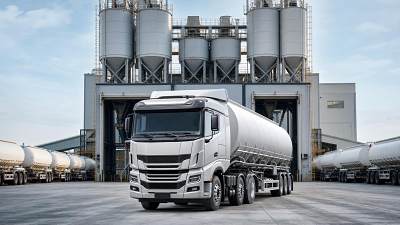
In construction and infrastructure projects, the right truck cement supplier can directly influence delivery speed, site coordination, and overall project efficiency. For project managers, choosing a reliable supplier means more than securing materials—it helps reduce downtime, improve scheduling accuracy, and keep heavy transport operations running smoothly. Understanding this impact is essential to building a more efficient and dependable supply chain.
Why does a truck cement supplier matter so much to site delivery efficiency?
A truck cement supplier affects far more than the arrival of cement at the gate. In real project conditions, supply performance shapes equipment utilization, labor planning, pour sequencing, vehicle movement, and even site safety. If trucks arrive too early, unloading space becomes congested and crews wait for the workface to open. If deliveries arrive too late, pumps, mixers, and labor teams remain idle while the schedule slips. For project managers overseeing concrete-intensive operations, this timing gap translates directly into higher costs and weaker productivity.
The best truck cement supplier works as a logistics partner rather than a simple material vendor. That means coordinating dispatch windows, understanding road access restrictions, planning route alternatives, monitoring fleet readiness, and responding quickly when site conditions change. In road transport equipment and construction supply chains, delivery efficiency depends on the interaction between trucks, loading facilities, traffic conditions, and site receiving capability. A capable supplier helps align all of these moving parts.
This is especially important on infrastructure, municipal engineering, mining support, and industrial construction projects where heavy transport equipment must operate in narrow time slots. A weak supplier may still offer a competitive unit price, but poor dispatch discipline can cause cumulative delays that cost far more than any initial savings.
What does an efficient truck cement supplier actually do differently?
Project managers often ask whether delivery efficiency comes from truck quantity alone. The answer is no. Fleet size matters, but efficiency usually comes from process control. A high-performing truck cement supplier typically stands out in five areas.
- Dispatch accuracy: Trucks are scheduled according to pour sequence, unloading capacity, and traffic realities rather than rough estimates.
- Fleet availability: Backup vehicles, maintenance planning, and driver rotation reduce the chance of missed loads.
- Communication speed: The supplier provides real-time updates when routes, weather, or site access conditions change.
- Load consistency: Material quality, volume control, and documentation are handled reliably, reducing disputes and rework.
- Site coordination: The supplier understands entry procedures, queuing space, unloading equipment, and operating restrictions.
In practice, these differences determine whether your site runs in a smooth rhythm or in a constant state of recovery. For example, when a heavy truck supplier can stagger arrivals to match crane, pump, or batching demand, the site gains flow. When the supplier cannot control intervals, bottlenecks appear quickly.
Which delivery problems usually indicate that your truck cement supplier is limiting project performance?
Not every delay is caused by the supplier, but recurring patterns often reveal supplier-side weaknesses. Project leaders should watch for symptoms rather than isolated incidents. If the same issues repeat across multiple deliveries, the truck cement supplier may be reducing site efficiency more than expected.
These warning signs matter because delivery inefficiency compounds across the project lifecycle. One delayed shipment may seem manageable, but repeated disruption affects labor productivity, subcontractor confidence, and resource planning. On large-scale sites, that can also interfere with heavy truck circulation and adjacent material handling activities.
How should project managers evaluate a truck cement supplier before awarding work?
A practical evaluation should go beyond pricing, basic capacity claims, or sales promises. Project managers need evidence that the truck cement supplier can perform under actual delivery conditions. The most useful approach is to assess the supplier across operational fit, logistics capability, and risk control.
Start with fleet and transport readiness. Ask how many vehicles are dedicated to cement transport, how dispatch priorities are set during peak demand, and what backup plan exists for breakdowns or route closure. In the road transport equipment sector, truck condition and maintenance discipline are not minor details; they directly shape reliability.
Next, review route knowledge and local access experience. A supplier that regularly serves urban construction zones, infrastructure corridors, or restricted industrial sites will usually handle timing and compliance better than one with only general transport exposure. Ask for examples of projects with similar site conditions, delivery volumes, and access constraints.
Then examine communication systems. Can the truck cement supplier provide live dispatch updates? Is there a single contact person during active delivery windows? How quickly are exceptions escalated? Reliable information flow allows the project team to reallocate crews, adjust unloading sequence, and avoid on-site confusion.
Finally, verify performance discipline through measurable indicators. These may include on-time delivery rate, average response time to schedule changes, rejected-load ratio, and incident frequency. A supplier that can report these metrics transparently is often more mature operationally than one relying only on verbal assurances.
Is the lowest-cost truck cement supplier ever the right choice?
Sometimes, but only when low price does not come at the expense of delivery certainty. For project managers, the key issue is total project cost rather than purchase price alone. A cheaper truck cement supplier may look attractive on paper, yet a pattern of late arrivals, poor coordination, or inconsistent vehicle availability can generate far more expensive consequences.
Those hidden costs include idle labor, equipment stand-by time, pour interruption, schedule compression, and emergency rebooking with alternative carriers. If the project depends on tightly planned heavy transport operations, the disruption can spread beyond cement delivery and affect aggregate supply, reinforcement movement, or site traffic sequencing.
This does not mean buyers should automatically choose the highest-priced supplier. Instead, compare price against service reliability, dispatch capability, and operational transparency. A moderately priced truck cement supplier with strong process control often delivers the best value because it protects schedule performance. In complex projects, schedule protection is often worth more than a small unit-price reduction.
What are the most common mistakes when selecting a truck cement supplier?
Many supplier selection problems come from treating cement transport as a routine commodity service. In reality, project delivery conditions differ sharply by terrain, traffic, unloading method, and work sequencing. The following mistakes are especially common.
- Choosing based only on price: This ignores schedule risk and can lead to repeated operational loss.
- Not checking site compatibility: A supplier may have trucks available, but not vehicles suited to narrow access roads, axle limits, or restricted unloading points.
- Assuming capacity equals reliability: A large fleet does not guarantee disciplined dispatch or responsive support.
- Skipping trial coordination: Without a pilot run or test delivery process, communication gaps often appear too late.
- Failing to define delivery windows clearly: Vague scheduling creates confusion between supplier dispatch and site readiness.
Avoiding these errors requires structured procurement thinking. The right truck cement supplier should be evaluated like a logistics partner whose performance touches schedule, safety, cost control, and equipment utilization.
What should be confirmed before starting cooperation with a truck cement supplier?
Before awarding orders, project managers should align on operating details that are often overlooked during early negotiation. These confirmations reduce execution risk and make supplier accountability clearer from day one.
It is also wise to agree on basic performance review points after the first phase of deliveries. Early review helps both sides correct dispatch intervals, document flow, and site receiving procedures before small problems become chronic inefficiencies.
How can digital sourcing platforms help identify a better truck cement supplier?
For buyers in the heavy truck and commercial vehicle sector, digital B2B platforms can improve supplier discovery and comparison. Instead of relying only on local contacts or limited vendor lists, project teams can explore a wider pool of transport and equipment-related suppliers, compare service capabilities, and access structured industry information. This is especially useful when projects involve cross-region procurement, specialized transport requirements, or integrated heavy equipment sourcing.
A professional industry platform can help project managers review supplier profiles, product categories, fleet-related resources, and market insights in one place. That supports faster prequalification and more informed decision-making. For companies operating across logistics transportation, infrastructure development, and municipal engineering, this wider visibility can reduce supplier risk and uncover better-fit partners for time-sensitive delivery tasks.
What is the key takeaway for project managers?
A truck cement supplier influences delivery efficiency through timing, fleet reliability, communication quality, and site coordination discipline. For project managers, the right choice is rarely the vendor with the lowest quote alone. It is the supplier that can protect flow across the entire delivery process, from dispatch to unloading. In heavy transport and construction operations, dependable delivery often creates more value than nominal cost savings.
If you need to confirm a suitable truck cement supplier for an upcoming project, start by discussing delivery volume, site access limits, vehicle type, dispatch visibility, contingency planning, and performance metrics. If the project also involves broader heavy truck, trailer, construction machinery, or spare parts sourcing, it is useful to compare suppliers through a specialized global industry platform that connects buyers with qualified manufacturers and logistics-related partners. That way, procurement decisions support not only material supply, but overall site efficiency and long-term project reliability.
Trending News
- Crane Truck for Sale: Key Checks Before Comparing Price and Load Capacity
- How to Choose a Reliable Truck Cement Distributor for Stable Supply
- Truck Cement OEM vs Standard Supply: Which Lowers Quality Risk?
- Truck Cement Bulk Order: Cost Factors and Delivery Risks in 2026
- How to Evaluate a Heavy Truck Chassis Manufacturer With R&D Capability
Tag
Recommended News
 Logistics & FreightTruck Cement Wholesale: What Determines Stable Delivery and Margin?Truck cement wholesale success depends on reliable supply, transport capacity, quality consistency, and landed cost control. Learn what protects delivery stability and margin.
 Logistics & FreightYangtze River Delta Rail-Sea Freight Exceeds 1M TEUsYangtze River Delta rail-sea freight exceeds 1M TEUs — unlocking cost-efficient, reliable intermodal logistics for heavy-duty truck exporters and ASEAN supply chains.
 Logistics & FreightTianjin–Shanghai Express Multimodal Train LaunchesTianjin–Shanghai Express Multimodal Train slashes chassis transit to 36 hours — boosting OEM export speed, reducing demurrage, and redefining just-in-time logistics for陆路运输设备.
 Logistics & FreightTongjiang Waterway Port Resumes Summer Passenger-Cargo Transport to RussiaTongjiang Waterway Port resumes summer passenger-cargo transport to Russia — a cost-effective, weather-resilient Ro-Ro solution for heavy-duty truck exporters and cross-border logistics providers.
 Logistics & FreightAsia's First Dedicated Cargo Airport Launches Two Intercontinental Freight RoutesAsia's first dedicated cargo airport launches intercontinental freight routes—boosting speed & reliability for land-transport equipment components like ADAS controllers and steer-by-wire ECUs.
 Logistics & FreightChina Captures 90% of Global VLCC Newbuilding OrdersVLCC newbuilding orders surge: China secures 90% globally—impacting HDT exports, KD kit shipments, and Ro-Ro capacity from Ningbo, Shanghai, Qingdao. Act now.
 Logistics & FreightTurkey Launches AI HS Classifier for Heavy-Duty Vehicle PartsTurkey's new AI HS Classifier boosts accuracy to 99.2% for heavy-duty vehicle parts — air suspension, disc brakes & hydraulic retarders. Streamline Turkish customs clearance now.
 Logistics & FreightTurkey Launches AI System for Heavy-Duty Vehicle Parts ClassificationAI system for heavy-duty vehicle parts classification launched in Turkey — boost HS code accuracy to 99.2% and cut customs clearance to 1.3 days for brake discs, air suspension & more.
 Logistics & FreightNXP S32G3 Chip Output Up 35% for Heavy-Duty TrucksNXP S32G3 chip output up 35% for heavy-duty trucks—boosting V2X-ready T-Box production, EU/MENA export readiness, and L2+/L3 automation deployment.
 Logistics & FreightAsia's First Dedicated Cargo Airport Launches Two Intercontinental Freight RoutesLand transport equipment exporters: Ezhou’s new cargo airport launches Chicago & Frankfurt air routes—7-day delivery for heavy-duty truck components, modular air freight, green channel access.
 Logistics & FreightPakistan Opens 6 Iran-Bound Land Corridors, Cutting China Heavy-Truck Transit to 6 HoursPakistan opens 6 Iran-bound land corridors—cutting China heavy-truck transit to just 6 hours. Boost BS VI truck exports, slash logistics costs & accelerate CPEC freight.
 Hits 103 Trains in One Month") Logistics & FreightCentral Asia Railway (Wuhan) Hits 103 Trains in One MonthCentral Asia Railway (Wuhan) hits 103 trains in April 2026 — traction vehicles, concrete mixer chassis & low-bed semi-trailers drive 37% of exports. Fast, reliable overland transport for Central Asia & Caspian markets.
Logistics & FreightCentral Asia Railway (Wuhan) Hits 103 Trains in One MonthCentral Asia Railway (Wuhan) hits 103 trains in April 2026 — traction vehicles, concrete mixer chassis & low-bed semi-trailers drive 37% of exports. Fast, reliable overland transport for Central Asia & Caspian markets. Logistics & FreightErenhot Highway Port Launches 24-Hour Freight ClearanceErenhot Highway Port now offers 24-hour freight clearance—boosting speed & reliability for heavy-duty truck exporters, cross-border logistics, and Mongolian distributors.
 Logistics & FreightErlianhot Highway Port Launches 24-Hour Freight ClearanceErlianhot Highway Port now offers 24-hour freight clearance — China’s first round-the-clock land port for Mongolia-bound heavy-duty vehicles and construction equipment. Faster, more predictable cross-border logistics await.
 Hits 103 Trains in One Month") Logistics & FreightCentral Asia Railway (Wuhan) Hits 103 Trains in One MonthCentral Asia Railway (Wuhan) hits 103 trains in April 2026 — a record boost for land transport equipment exporters, freight forwarders & EU/Central Asian buyers.
Logistics & FreightCentral Asia Railway (Wuhan) Hits 103 Trains in One MonthCentral Asia Railway (Wuhan) hits 103 trains in April 2026 — a record boost for land transport equipment exporters, freight forwarders & EU/Central Asian buyers. Logistics & FreightBest Flatbed Trailer Supplier Options for Logistics TransportationFind the best flatbed trailer supplier for logistics transportation with expert tips on load capacity, durability, compliance, and supplier support to improve fleet efficiency.
 Logistics & FreightErenhot Highway Port Launches 24-Hour Freight Clearance for MongoliaErenhot Highway Port launches 24-hour freight clearance for Mongolia — boosting speed, reliability & TIR-compliant exports of heavy vehicles and machinery.
 Logistics & FreightChina–Central Asia Customs Sign E-Release Mutual Recognition MOUChina–Central Asia e-release MOU streamlines road transport equipment clearance—tractors, semi-trailers & special vehicles now benefit from mutual recognition, faster borders & lower logistics costs.
 Logistics & FreightPakistan Opens 6 Land Routes to Iran, Cutting China Heavy-Truck Transit to 6 HoursPakistan opens 6 new land routes to Iran—cutting China heavy-truck transit to just 6 hours. Transform logistics, slash clearance time & boost supply chain resilience.
 Logistics & FreightChina-Central Asia Customs Sign E-Release Mutual Recognition MOUChina-Central Asia e-release MOU streamlines land transport equipment clearance—cutting costs 11% and enabling single-declaration, five-country mutual recognition for tractors, trailers & chassis.
 Logistics & FreightPakistan Activates 6 Land Freight Corridors to IranPakistan’s 6 new land freight corridors to Iran — including Gwadar–Gabd — enable sub-6-hour cross-border heavy freight. Boost efficiency, bypass Hormuz, and future-proof your陆路运输设备 logistics.
 Logistics & FreightBest Semi Trailer Manufacturer for Logistics in 2026Find the best semi trailer manufacturer for logistics in 2026. Compare durable, compliant, cost-efficient trailer solutions for regional, long-haul, port, and heavy-duty transport.
 Logistics & FreightLow Bed Trailer Export for Mining: Load Limits and Route PlanningLow bed trailer export for mining: learn load limits, axle distribution, and route planning tips to reduce delays, improve compliance, and choose the right trailer for safer project delivery.
 Logistics & Freight24-Hour Full-Truckload Delivery Now Standard for Global Buyers24-hour full-truckload delivery is now standard for global buyers — enabling JIT reliability, API-driven visibility, and up to 40% safety stock reduction across陆路运输设备 supply chains.
 Logistics & FreightChina-Mongolia-Russia Trucking Pact Upgraded with e-CMR & Cold Chain Data SharingChina-Mongolia-Russia trucking pact upgrades cold chain logistics with e-CMR adoption and real-time temperature data sharing—boost compliance, cut delays, and future-proof cross-border road transport.