Cold Storage Vehicle Parts That Reduce Failure Rates
For aftermarket maintenance teams, reducing breakdowns in refrigerated fleets starts with choosing the right commercial vehicle parts for cold storage. From thermal insulation components to reliable door seals, cooling units, and electrical systems, every part affects uptime, cargo safety, and repair frequency. This guide explores the key cold storage vehicle parts that help lower failure rates and improve long-term operating performance.
In road transport equipment, cold storage vehicles operate under harsher conditions than standard freight units. Daily door openings, long engine hours, vibration, humidity, and strict temperature targets can turn a minor component defect into a cargo loss event within 2 to 6 hours.
For maintenance personnel, the main goal is not only to replace failed parts, but to select commercial vehicle parts for cold storage that reduce repeat repairs, stabilize temperature control, and keep vehicles available for dispatch across 12-month operating cycles.
Why Failure Rates Are Higher in Cold Storage Vehicles
Refrigerated trucks combine two systems in one asset: the road vehicle and the temperature-controlled body. That means maintenance teams must manage chassis wear, refrigeration load, insulation integrity, and electrical reliability at the same time.
A standard delivery truck may tolerate minor seal wear for weeks. A cold storage vehicle often cannot. A 3 mm gap in a door gasket, for example, may increase compressor cycling frequency and raise energy demand during each route segment.
Common failure patterns seen in service fleets
- Temperature drift caused by damaged insulation panels or aging door seals
- Cooling unit overload linked to poor airflow, dirty condensers, or refrigerant leaks
- Electrical faults from moisture ingress, connector corrosion, or unstable voltage supply
- Premature hardware wear on hinges, locks, and latches due to frequent opening cycles
- Condensation-related floor and wall damage that weakens body structure over 18 to 36 months
Why parts selection matters more than low unit price
Maintenance teams often face pressure to minimize immediate repair cost. However, in cold chain transport, a low-cost component that fails after 60 days can create labor repetition, secondary damage, and delivery delays that exceed the original savings by 3 to 5 times.
This is why commercial vehicle parts for cold storage should be evaluated by lifecycle value. A gasket, relay, evaporator fan, or panel fastener may appear small, but each part directly affects failure frequency and route reliability.
Four service conditions that accelerate breakdowns
- High door-open frequency, often 20 to 50 times per day in urban distribution
- Temperature differentials of 20°C to 45°C between cargo space and ambient air
- Continuous vibration over mixed road surfaces, especially in regional delivery corridors
- Water exposure during washdown, rain, and defrost cycles
Core Commercial Vehicle Parts for Cold Storage That Reduce Failures
The most effective cold storage parts strategy focuses on the components with the highest influence on temperature retention, mechanical durability, and service intervals. Maintenance teams should prioritize parts that reduce hidden load, not only visible breakdowns.
1. Door seals and gasket systems
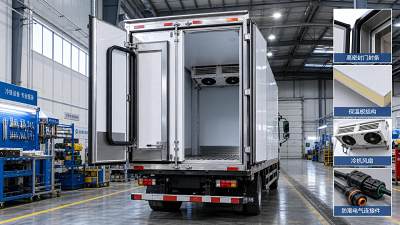
Door seals are among the highest-impact commercial vehicle parts for cold storage. They control air leakage, moisture entry, and compressor workload. In multi-drop operations, seals may compress and recover hundreds of times per week.
Good replacement seals should resist cracking in low temperatures, maintain elasticity across seasonal shifts, and fit door geometry tightly. Teams should inspect compression set, tear points, and corner bonding every 30 to 45 days.
2. Insulation panels, joints, and thermal barriers
A refrigeration unit cannot compensate efficiently for poor insulation. Wall panels, roof sections, floor insulation, and joint sealing materials determine how quickly the box gains heat. Even localized damage can create hot spots around edges and fastener penetrations.
Panels should be checked for water ingress, delamination, and impact damage. If moisture enters insulation, thermal resistance drops and structural deterioration often follows. In many fleets, inspection every 90 days is a practical minimum.
3. Cooling unit service parts
Compressors, evaporator fans, condenser fans, filters, belts, and hoses are central to uptime. Many avoidable failures begin with minor airflow restriction or gradual refrigerant loss. These issues increase run time and push components beyond normal duty cycles.
For fleets operating at -18°C frozen cargo or 0°C to 4°C chilled cargo, preventive replacement of high-wear refrigeration service parts is usually more economical than waiting for seasonal failure peaks.
The table below shows which parts usually have the strongest effect on failure reduction and what maintenance teams should monitor during routine service.
The key takeaway is that the most effective commercial vehicle parts for cold storage are not always the largest assemblies. High-frequency wear parts, especially seals, fans, and connectors, often deliver the fastest reduction in repeat service events.
4. Electrical systems and moisture-resistant connectors
Cold storage vehicles rely on sensors, controllers, relays, wiring, battery supply, and sometimes telematics modules to maintain stable operation. Moisture and vibration make electrical reliability a major weak point in refrigerated fleets.
Aftermarket teams should prioritize sealed connectors, abrasion-resistant harness protection, and terminals that tolerate repeated thermal cycling. A low-cost connector may fail not because of load rating, but because of water intrusion after 8 to 12 washdowns.
5. Hinges, locks, latches, and door hardware
When door alignment shifts, gasket performance declines even if the seal material is still usable. That makes hinges, cams, latches, and locking bars essential parts in failure prevention. Misalignment increases closing force, accelerates seal wear, and creates leak paths.
Hardware should be selected for corrosion resistance, repeat cycle durability, and field-adjustable installation. In heavy route applications, visible wear can appear in as little as 6 to 9 months if lubrication and alignment checks are ignored.
How Aftermarket Teams Should Evaluate and Source Parts
Effective sourcing is not just about finding a supplier with stock. It requires matching parts to operating temperature, body type, route intensity, maintenance capability, and replacement frequency. This is where a specialized B2B platform adds practical value.
The Global Heavy Truck Industry Platform helps buyers compare suppliers across truck bodies, refrigeration-related accessories, spare parts, and supporting equipment. For maintenance teams, this shortens supplier screening time and supports more consistent procurement decisions.
Five buying criteria that reduce long-term failure risk
- Material suitability for low-temperature and high-humidity service
- Dimensional consistency to reduce fitment errors during installation
- Availability of replacement cycles, lead times, and batch traceability
- Compatibility with existing truck body configuration and cooling unit layout
- Supplier responsiveness for technical clarification and repeat orders
Questions to ask before placing an order
- What temperature range is the part designed to handle, such as -25°C to +30°C?
- Is the part used in urban multi-drop fleets, line-haul routes, or mixed applications?
- What is the usual delivery time, such as 7 to 15 days for standard stock items?
- Can the supplier provide photos, dimensions, and installation references before shipment?
The comparison table below can help maintenance buyers assess commercial vehicle parts for cold storage more systematically during RFQ and supplier review.
A structured review process reduces emergency purchases and improves standardization across the fleet. Over a 6- to 12-month period, this often results in fewer repeat interventions and better spare parts planning.
How digital sourcing supports maintenance efficiency
For buyers serving multiple regions, digital B2B sourcing improves visibility across supplier options, replacement part categories, and supporting market information. It also helps identify alternative suppliers when lead times for critical items become unstable.
Because the Global Heavy Truck Industry Platform covers trucks, trailers, spare parts, and related heavy equipment sectors, maintenance teams can use one channel to review both core vehicle components and cold storage support parts with greater procurement control.
Installation, Inspection, and Preventive Maintenance Practices
Even the best commercial vehicle parts for cold storage will underperform if installation and inspection are inconsistent. Failure reduction depends on three linked steps: correct fitment, regular condition checks, and timely replacement before secondary damage appears.
A practical 5-step maintenance routine
- Inspect seals, hinges, and latch pressure for visible gaps and uneven compression
- Check cooling unit airflow, fan condition, and coil cleanliness every service cycle
- Test electrical connectors for corrosion, looseness, and moisture traces
- Review floor, wall, and roof surfaces for dents, cracks, or water intrusion points
- Record repeat failures by vehicle number to identify weak parts and sourcing issues
Typical warning signs that should not be delayed
- Compressor running longer than normal under similar ambient conditions
- Frost accumulation near door edges or evaporator sections
- Door closing force increasing over a 2- to 3-week period
- Intermittent controller alarms after rain, washdown, or overnight parking
In many fleets, these signs appear before major failure. Responding during the early stage may convert an unscheduled breakdown into a planned 1-hour service stop instead of a route disruption and cargo risk event.
Common mistakes in aftermarket replacement
One frequent mistake is replacing only the visibly failed part while ignoring related wear points. A new gasket installed on a misaligned door, for example, may fail early because the root cause is hardware deformation rather than rubber aging.
Another mistake is mixing different grades of commercial vehicle parts for cold storage across the same fleet. This complicates maintenance procedures, creates inconsistent service life, and makes stocking forecasts less reliable over 3 to 4 quarters.
Building a Lower-Failure Parts Strategy for Refrigerated Fleets
The most resilient fleets treat parts selection as a system decision. They map high-failure components, standardize approved replacements, and review supplier performance by lead time, fitment success, and repeat defect rate rather than purchase price alone.
For aftermarket maintenance teams, that usually means focusing first on the 20% of parts responsible for the majority of cold storage service interruptions: seals, hardware, airflow components, connectors, and insulation-related repair items.
When supported by a specialized sourcing channel, maintenance teams can compare suppliers more efficiently, reduce uncertainty in cross-border procurement, and align their spare parts plan with actual operating conditions in road transport equipment.
If you are looking for reliable commercial vehicle parts for cold storage, the Global Heavy Truck Industry Platform can help you explore suppliers, compare product options, and identify suitable partners for refrigerated truck maintenance. Contact us today to get tailored sourcing support, discuss product details, and learn more solutions for your fleet.
Trending News
Tag
Recommended News
 Truck Parts IndustryHeavy Truck Parts for Construction: Durability vs Replacement CostHeavy truck parts manufacturer for construction insights: learn how to balance durability, replacement cost, and uptime across rough ground, urban projects, and severe-duty fleets.
 Truck Parts IndustryCold Storage Vehicle Parts That Reduce Failure RatesCommercial vehicle parts for cold storage that cut failure rates: explore seals, insulation, cooling, and electrical upgrades to protect cargo, reduce downtime, and improve fleet uptime.
 Truck Parts IndustryGermany Heavy Truck Parts Manufacturers: Quality and Supply RisksHeavy truck parts manufacturer in Germany: learn how to assess quality, certifications, and supply risks to secure safer sourcing, stable deliveries, and long-term fleet performance.
 Truck Parts IndustryVietnam to Enforce New Used Truck Import Rules from Q4 2026Vietnam's new used truck import rules (Q4 2026) require OEM remanufacturing certification & traceability—key for Chinese exporters, assemblers & logistics providers.
 Truck Parts IndustryChoosing a Truck Parts Exporter: Lead Time, Compliance, and Quality RisksTruck parts exporter selection affects uptime, compliance, and cost. Learn how to compare lead time, certification, and quality control to avoid delays, claims, and fleet-wide failures.
 Truck Parts IndustryGermany Heavy Truck Parts Manufacturers: Quality and Supply RisksHeavy truck parts manufacturer in Germany selection guide: compare quality systems, traceability, testing, and supply risks to secure reliable truck parts sourcing.
 Truck Parts IndustryIrkeshtam Port’s 24-Hour Freight Clearance Boosts Exports to KyrgyzstanIrkeshtam Port’s 24-hour freight clearance slashes heavy-truck component clearance to <15 mins—boosting road transport equipment exports to Kyrgyzstan.
 Truck Parts IndustryHeavy Truck Parts for Construction: Which Components Fail Most OftenHeavy truck parts manufacturer for construction insights: discover which brake, suspension, filter, and drivetrain components fail most often—and how smarter sourcing cuts downtime and repair costs.
 Truck Parts IndustryBulk Order Discounts on Truck Spare Parts: When Savings Become RiskTruck spare parts supplier with bulk order discounts: learn when lower prices increase downtime, quality, and inventory risk—and how to source smarter for reliable fleet performance.
 Truck Parts IndustryTruck Parts Wholesale: How to Balance Price, Quality, and Stock RiskTruck parts wholesale success depends on balancing price, quality, and inventory risk. Learn practical sourcing checks to protect margins, reduce dead stock, and choose reliable suppliers.
 Truck Parts IndustryHow OEM Services Reduce Downtime in Heavy Truck Parts SupplyHeavy truck parts manufacturer with OEM services helps cut downtime with accurate fit, faster lead times, and stable supply—discover smarter sourcing for fleet maintenance.
 Truck Parts IndustryErenhot-Mongolia 24-Hour Freight Clearance Boosts Trucking EfficiencyErenhot-Mongolia 24-hour freight clearance slashes truck clearance time by 40%—boosting efficiency for auto parts, cold-chain & cross-border trucking.
 Truck Parts IndustryKazakhstan Extends Zero-Tariff for Truck Parts on China-Europe Rail Routes to 2027Kazakhstan extends zero-tariff for truck parts—including ADAS controllers, ECUs & T-BOX units—on China-Europe rail routes until 2027. Boost your logistics & export strategy now!
 Truck Parts IndustryHow Low-Maintenance Truck Spare Parts Reduce Downtime Over TimeTruck spare parts supplier with low maintenance solutions help fleets cut downtime, reduce repair frequency, and improve workshop efficiency. Discover how durable parts boost long-term truck performance.
![]() Truck Parts IndustryHeavy Truck Parts Manufacturer for Construction: How to Judge Product ConsistencyHeavy truck parts manufacturer for construction selection starts with consistency. Learn how to judge batch stability, traceability, and quality control to reduce risk and improve fleet safety.
Truck Parts IndustryHeavy Truck Parts Manufacturer for Construction: How to Judge Product ConsistencyHeavy truck parts manufacturer for construction selection starts with consistency. Learn how to judge batch stability, traceability, and quality control to reduce risk and improve fleet safety.![]() Truck Parts IndustryTruck Parts Price in 2026: What Is Driving Replacement Cost HigherTruck parts price in 2026 is rising fast. Discover the key cost drivers, category risks, and sourcing tips buyers need to reduce replacement costs and make smarter purchasing decisions.
Truck Parts IndustryTruck Parts Price in 2026: What Is Driving Replacement Cost HigherTruck parts price in 2026 is rising fast. Discover the key cost drivers, category risks, and sourcing tips buyers need to reduce replacement costs and make smarter purchasing decisions. Truck Parts IndustryHow to Compare Truck Tipper Distributors by Parts Response TimeTruck tipper distributor comparison starts with parts response time. Learn how to assess stock speed, technical support, and supply reliability to cut downtime and choose the right partner.
 Truck Parts IndustryCommercial Vehicle Parts for Cold Storage: What Improves ReliabilityCommercial vehicle parts for cold storage that boost uptime, temperature stability, and fleet reliability. Learn which components reduce breakdowns and protect cargo in demanding cold-chain transport.
 Truck Parts IndustryTruck Parts Wholesale: How to Balance Price, Lead Time, and QualityTruck parts wholesale guide for distributors: learn how to balance price, lead time, and quality to reduce risk, protect margins, and choose suppliers with confidence.
 Truck Parts IndustryChoosing a Heavy Truck Parts Manufacturer in Germany for Stable SupplyHeavy truck parts manufacturer in Germany: learn how to compare suppliers by scenario, secure stable supply, reduce sourcing risk, and improve fleet uptime with smarter procurement decisions.
 Truck Parts IndustryAre Low-Maintenance Truck Spare Parts Suppliers Worth Switching ToIs a truck spare parts supplier with low maintenance worth the switch? Learn how better fitment, fewer failures, and reliable delivery can cut downtime and lower fleet service costs.
 Truck Parts IndustryTruck Parts Wholesale: How to Balance Price, Stock, and ReliabilityTruck parts wholesale success depends on balancing price, stock, and reliability. Learn how to compare suppliers, reduce risk, protect margins, and make smarter buying decisions.
 Truck Parts IndustryNew Railway Cargo Transport Rules Take Effect May 1, 2026New Railway Cargo Transport Rules (2026): 72-hour certified load-securing plans required for oversized rail freight—key for wind, tunneling & crane transport equipment.
 Truck Parts IndustryYerkeshkan Port 24-Hour Freight: +87.4% Truck Parts Export to KyrgyzstanYerkeshkan Port 24-hour freight boosts truck parts exports to Kyrgyzstan by +87.4% — optimize JIT logistics, customs compliance & aftermarket supply chains now.
 Truck Parts IndustryBulk Order Discounts on Truck Spare Parts: Savings vs Supply RiskTruck spare parts supplier with bulk order discounts: learn how to cut procurement costs without raising supply risk, downtime, or inventory pressure in road transport operations.