New Railway Cargo Transport Rules Take Effect May 1, 2026
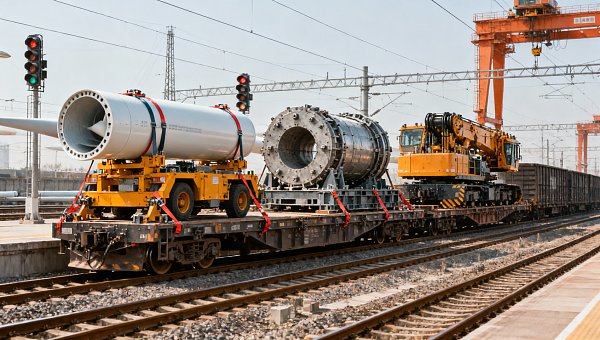
Starting May 1, 2026, the revised Railway Cargo Transport Rules come into force in China, mandating a 72-hour advance submission of certified load-securing and operational safety plans for all oversized, overweight, or extra-long freight—including wind turbine blade transporters, tunnel boring machine carriers, and large crane chassis—before rail transit on national railway lines. This change directly affects manufacturers and logistics providers involved in heavy-duty and special-purpose road-rail intermodal transport.
Event Overview
Effective May 1, 2026, the newly implemented Railway Cargo Transport Rules require that shippers of oversized, overweight, or extra-long cargo submit, at least 72 hours prior to scheduled rail departure, a load-securing and operational safety plan reviewed and certified by an authorized institution. The rule applies specifically to land-based transport equipment moving via China State Railway Group’s network, including but not limited to wind turbine blade transport vehicles, shield tunneling machine carriers, and large mobile crane undercarriages.
Industries Affected by the Rule
Specialized Heavy Equipment Manufacturers
Manufacturers producing transport-specific chassis, modular trailers, or integrated hauling systems for wind, tunneling, or lifting applications are directly impacted because their products must now be designed and validated against rail-compatible securing standards. The requirement introduces upstream engineering constraints: structural simulation, dynamic load testing, and compliance documentation must align with rail-safety expectations—not just road regulations.
Rail Freight Forwarders & Intermodal Service Providers
Companies coordinating rail-leg execution for oversized cargo face tighter scheduling windows and higher pre-approval dependency. A 72-hour lead time reduces flexibility in last-minute adjustments and increases coordination overhead with both equipment owners and railway bureaus. Failure to meet the deadline may result in shipment delays or rejection at rail access points.
Wind Power Project Developers & EPC Contractors
For onshore wind projects, timely delivery of blades (often exceeding 90 meters) is critical to construction sequencing. The new rule adds a formalized, non-negotiable planning checkpoint before rail loading—potentially affecting logistics timelines, permitting handoffs, and contingency buffer allocation across multi-modal legs (road-to-rail-to-site).
Certification & Engineering Consultancy Firms
Firms offering load-securing validation, structural assessment, or EN 12195-compliant design services will see increased demand—but only if they hold recognized accreditation for railway transport safety evaluation. The rule effectively raises the bar for third-party verification scope beyond standard road transport norms.
What Enterprises and Practitioners Should Focus On Now
Monitor official guidance on certification criteria and approved review bodies
The rule references “certified institutions” but does not yet publish a unified list of accredited entities or clarify whether existing EN 12195 or GB/T 38947 certifications qualify. Enterprises should track updates from China State Railway Group and the National Railway Administration regarding eligibility and process transparency.
Identify high-risk cargo categories requiring immediate internal protocol updates
Not all oversized shipments are equally affected. Entities should map current transport profiles against the rule’s scope—especially those involving articulated low-bed trailers, extendable frame systems, or asymmetric loads—to prioritize internal revision of engineering checklists, documentation templates, and cross-departmental handoff procedures.
Distinguish between regulatory signal and operational readiness
While the rule takes effect May 1, 2026, railway bureaus may implement phased enforcement or pilot reporting channels ahead of full rollout. Companies should treat early communications (e.g., bureau-level notices, trial portals) as indicators of actual workflow integration—not just policy announcements.
Align pre-submission workflows with existing rail booking systems
Submitting a 72-hour plan requires integration with current rail reservation platforms. Enterprises should verify whether supporting documents (e.g., CAD load diagrams, restraint force calculations, certified engineer sign-offs) can be uploaded natively—or whether manual coordination with local railway stations remains necessary.
Editorial Perspective / Industry Observation
Observably, this regulation marks a structural shift toward formalizing technical accountability in China’s heavy cargo rail logistics—not merely tightening administrative controls. Analysis shows the emphasis on pre-validated securing schemes reflects growing alignment with international best practices (e.g., EN 12195), though local adaptation remains uneven across regional bureaus. It is better understood as a procedural signal than an immediate operational disruption: implementation maturity, certification capacity, and inter-bureau consistency will determine real-world impact over the next 6–12 months. Continued attention is warranted—not because the rule itself changes daily, but because its execution reveals how deeply rail infrastructure governance is converging with engineering-led logistics standards.
Conclusion
This rule signals a maturing phase in China’s specialized freight rail governance, where safety assurance moves upstream into product design and pre-transit engineering. Its significance lies less in immediate compliance burden and more in its long-term implication: transport equipment must increasingly demonstrate verifiable, rail-aware structural integrity—not just roadworthiness. For stakeholders, it is best interpreted not as a one-time regulatory hurdle, but as a catalyst for integrating simulation-driven validation, standardized securing documentation, and cross-sector engineering collaboration into core logistics planning.
Information Source:
Main source: Official release of the Railway Cargo Transport Rules, effective May 1, 2026, issued by China State Railway Group Co., Ltd.
Note: Certification authority lists, bureau-level implementation guidelines, and EN 12195 localization details remain pending official publication and are subject to ongoing observation.
Trending News
- Truck Cement Wholesale: What Determines Stable Delivery and Margin?
- Truck Trailer Bulk Order Cost Breakdown for 2026 Budget Planning
- Truck Trailer Sourcing: 7 Checks Before You Compare Suppliers
- Truck Trailer OEM vs ODM: Which Model Lowers Supply Risk?
- How to Evaluate a Heavy Truck Chassis Manufacturer With R&D Capability in 2026
Tag
Recommended News
 Truck Parts IndustryHow a Truck Cement Manufacturer Ensures Consistent Load QualityTruck cement manufacturer standards directly affect load consistency, safety, and efficiency. Learn how top suppliers control design, sealing, batching, and testing for reliable transport.
 Truck Parts IndustryTruck Parts Price Trends in 2026: What Is Driving Cost Changes?Truck parts price trends in 2026 are driven by steel, energy, freight, currency, and compliance costs. Discover what raises prices, which parts face the most pressure, and how buyers can source smarter.
 Truck Parts IndustryTruck Parts Wholesale: How to Balance Price, Quality, and Lead TimeTruck parts wholesale made smarter: learn how to balance price, quality, and lead time by application to cut downtime, reduce hidden costs, and source with more confidence.
 Truck Parts IndustryTruck Spare Parts Supplier with Bulk Order Discounts: Savings vs Stock RiskTruck spare parts supplier with bulk order discounts: learn when bulk buying cuts fleet costs and when stock risk hurts cash flow, uptime, and sourcing efficiency.
 Truck Parts IndustryTruck Spare Parts Supplier in Europe: Compliance Checks Before OrderingTruck spare parts supplier in Europe selection starts with compliance. Learn the key checks for safety, fitment, traceability, and import documents before you order.
 Truck Parts IndustryChoosing a Heavy Truck Parts Manufacturer with OEM Services for Stable SupplyHeavy truck parts manufacturer with OEM services: learn how to secure stable supply, consistent quality, and lower sourcing risk with practical buyer evaluation tips.
 Truck Parts IndustryHeavy Truck Parts for Construction: Durability vs Replacement CostHeavy truck parts manufacturer for construction insights: learn how to balance durability, replacement cost, and uptime across rough ground, urban projects, and severe-duty fleets.
 Truck Parts IndustryCold Storage Vehicle Parts That Reduce Failure RatesCommercial vehicle parts for cold storage that cut failure rates: explore seals, insulation, cooling, and electrical upgrades to protect cargo, reduce downtime, and improve fleet uptime.
 Truck Parts IndustryGermany Heavy Truck Parts Manufacturers: Quality and Supply RisksHeavy truck parts manufacturer in Germany: learn how to assess quality, certifications, and supply risks to secure safer sourcing, stable deliveries, and long-term fleet performance.
 Truck Parts IndustryVietnam to Enforce New Used Truck Import Rules from Q4 2026Vietnam's new used truck import rules (Q4 2026) require OEM remanufacturing certification & traceability—key for Chinese exporters, assemblers & logistics providers.
 Truck Parts IndustryChoosing a Truck Parts Exporter: Lead Time, Compliance, and Quality RisksTruck parts exporter selection affects uptime, compliance, and cost. Learn how to compare lead time, certification, and quality control to avoid delays, claims, and fleet-wide failures.
 Truck Parts IndustryGermany Heavy Truck Parts Manufacturers: Quality and Supply RisksHeavy truck parts manufacturer in Germany selection guide: compare quality systems, traceability, testing, and supply risks to secure reliable truck parts sourcing.
 Truck Parts IndustryIrkeshtam Port’s 24-Hour Freight Clearance Boosts Exports to KyrgyzstanIrkeshtam Port’s 24-hour freight clearance slashes heavy-truck component clearance to <15 mins—boosting road transport equipment exports to Kyrgyzstan.
 Truck Parts IndustryHeavy Truck Parts for Construction: Which Components Fail Most OftenHeavy truck parts manufacturer for construction insights: discover which brake, suspension, filter, and drivetrain components fail most often—and how smarter sourcing cuts downtime and repair costs.
 Truck Parts IndustryBulk Order Discounts on Truck Spare Parts: When Savings Become RiskTruck spare parts supplier with bulk order discounts: learn when lower prices increase downtime, quality, and inventory risk—and how to source smarter for reliable fleet performance.
 Truck Parts IndustryTruck Parts Wholesale: How to Balance Price, Quality, and Stock RiskTruck parts wholesale success depends on balancing price, quality, and inventory risk. Learn practical sourcing checks to protect margins, reduce dead stock, and choose reliable suppliers.
 Truck Parts IndustryHow OEM Services Reduce Downtime in Heavy Truck Parts SupplyHeavy truck parts manufacturer with OEM services helps cut downtime with accurate fit, faster lead times, and stable supply—discover smarter sourcing for fleet maintenance.
 Truck Parts IndustryErenhot-Mongolia 24-Hour Freight Clearance Boosts Trucking EfficiencyErenhot-Mongolia 24-hour freight clearance slashes truck clearance time by 40%—boosting efficiency for auto parts, cold-chain & cross-border trucking.
 Truck Parts IndustryKazakhstan Extends Zero-Tariff for Truck Parts on China-Europe Rail Routes to 2027Kazakhstan extends zero-tariff for truck parts—including ADAS controllers, ECUs & T-BOX units—on China-Europe rail routes until 2027. Boost your logistics & export strategy now!
 Truck Parts IndustryHow Low-Maintenance Truck Spare Parts Reduce Downtime Over TimeTruck spare parts supplier with low maintenance solutions help fleets cut downtime, reduce repair frequency, and improve workshop efficiency. Discover how durable parts boost long-term truck performance.
![]() Truck Parts IndustryHeavy Truck Parts Manufacturer for Construction: How to Judge Product ConsistencyHeavy truck parts manufacturer for construction selection starts with consistency. Learn how to judge batch stability, traceability, and quality control to reduce risk and improve fleet safety.
Truck Parts IndustryHeavy Truck Parts Manufacturer for Construction: How to Judge Product ConsistencyHeavy truck parts manufacturer for construction selection starts with consistency. Learn how to judge batch stability, traceability, and quality control to reduce risk and improve fleet safety.![]() Truck Parts IndustryTruck Parts Price in 2026: What Is Driving Replacement Cost HigherTruck parts price in 2026 is rising fast. Discover the key cost drivers, category risks, and sourcing tips buyers need to reduce replacement costs and make smarter purchasing decisions.
Truck Parts IndustryTruck Parts Price in 2026: What Is Driving Replacement Cost HigherTruck parts price in 2026 is rising fast. Discover the key cost drivers, category risks, and sourcing tips buyers need to reduce replacement costs and make smarter purchasing decisions. Truck Parts IndustryHow to Compare Truck Tipper Distributors by Parts Response TimeTruck tipper distributor comparison starts with parts response time. Learn how to assess stock speed, technical support, and supply reliability to cut downtime and choose the right partner.
 Truck Parts IndustryCommercial Vehicle Parts for Cold Storage: What Improves ReliabilityCommercial vehicle parts for cold storage that boost uptime, temperature stability, and fleet reliability. Learn which components reduce breakdowns and protect cargo in demanding cold-chain transport.
 Truck Parts IndustryTruck Parts Wholesale: How to Balance Price, Lead Time, and QualityTruck parts wholesale guide for distributors: learn how to balance price, lead time, and quality to reduce risk, protect margins, and choose suppliers with confidence.