Pinglu Canal Bridges Completed: Heavy-Duty Transport Upgrade
All 27 bridges spanning the Pinglu Canal have been completed and opened to traffic as of April 24, 2026. Designed to China’s Grade-I Highway standard—with a design load capacity of Highway-I (55 tonnes)—the infrastructure resolves long-standing bottlenecks for multimodal transport of oversized equipment in Southwest China. This development is especially relevant for manufacturers and exporters of wind power components, mining trucks, and large construction machinery, as well as firms engaged in cross-border trade with RCEP countries—particularly Vietnam and Thailand.
Event Overview
On April 24, 2026, the construction of all 27 bridges crossing the Pinglu Canal was officially completed and put into operation. The bridges are uniformly designed to China’s Grade-I Highway standard, supporting a design axle load equivalent to Highway-I class (55 tonnes). No further details regarding commissioning timelines for individual bridges or operational protocols were released in the source information.
Impact on Specific Industry Segments
Direct Exporters & Trade Enterprises
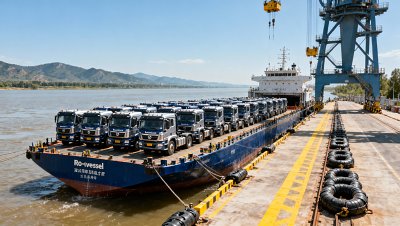
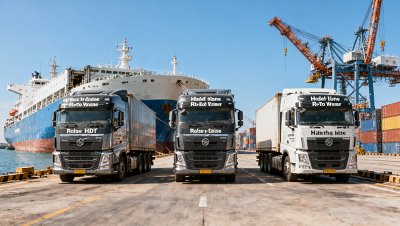
These enterprises—especially those exporting complete heavy machinery or wind turbine modules via roll-on/roll-off (Ro-Ro) or segmented transport—face reduced transshipment friction. The upgraded bridge load capacity enables direct road-to-water transfer of fully assembled units previously requiring disassembly, lowering handling costs and damage risk.
Manufacturers of Oversized Equipment
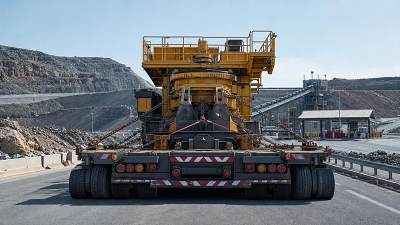
Producers of mining trucks, tower cranes, wind turbine nacelles, and blade carriers benefit from improved inland haulage flexibility. Previously constrained by low-load bridges along inland waterway corridors, they can now plan integrated logistics routes connecting production bases in Guangxi, Yunnan, and Guizhou directly to the canal’s terminals.
Logistics & Multimodal Service Providers
Firms offering inland transport, port coordination, and customs-bonded warehousing may see increased demand for end-to-end planning services. The ability to move 55-tonne loads across bridges without detours or axle-load redistribution reshapes routing economics and intermodal handover points.
Component Suppliers & Tier-1 Assemblers
Suppliers serving OEMs in wind energy or mining equipment sectors may experience tighter delivery windows and revised packaging requirements. With heavier loads permitted on fixed routes, just-in-time delivery schedules could shift toward larger batch sizes and fewer transit legs—impacting inventory planning and loading specifications.
What Stakeholders Should Monitor and Act On
Track official operational guidelines and weight enforcement policies
Completion of construction does not automatically imply unrestricted access. Stakeholders should monitor announcements from the Ministry of Transport and Guangxi provincial authorities regarding permissible gross vehicle weights, axle configuration rules, and mandatory pre-clearance procedures for oversize/overweight (OSOW) movements.
Assess route viability for priority product categories and target markets
Focus initial evaluation on shipments destined for Vietnam and Thailand—especially Ro-Ro exports of construction machinery and modular wind turbine sections. Confirm terminal handling capabilities at Qinzhou and Nanning hubs, including crane reach, storage duration limits, and documentation turnaround times.
Distinguish between policy intent and physical readiness
The 55-tonne design load reflects structural capacity—not necessarily immediate regulatory approval for such loads in practice. Until formal OSOW permits and enforcement frameworks are published, assume interim restrictions may apply; treat the bridge completion as an enabler—not a green light—for full-scale deployment.
Prepare logistics documentation and carrier coordination protocols
Update internal transport SOPs to reflect new corridor options. Engage certified carriers familiar with Guangxi’s inland waterway–road interface. Pre-validate required permits (e.g., temporary road use, bridge passage authorization) and align with customs brokers experienced in RCEP origin certification for heavy equipment.
Editorial Perspective / Industry Observation
Observably, this milestone represents a structural upgrade—not an immediate market shift. While the physical constraint has been removed, commercial adoption hinges on downstream factors: harmonized permitting, terminal integration, and carrier readiness. Analysis shows that the Pinglu Canal bridges are best understood as a foundational enabler for Southwest China’s export logistics—not yet a self-sustaining channel. From an industry perspective, the value lies less in day-one throughput and more in long-term corridor reliability and scalability. Continued attention is warranted as operational protocols mature and early adopter feedback emerges.
This development signals growing alignment between infrastructure investment and regional industrial strategy—particularly for capital-intensive, export-oriented manufacturing. However, its near-term impact remains contingent on implementation fidelity rather than engineering completion alone.
Conclusion
The completion of the 27 Pinglu Canal bridges marks a critical step in decongesting Southwest China’s land-sea transport network—but it is not a standalone solution. Its significance lies in enabling future scalability of heavy-equipment exports to RCEP markets, not in triggering immediate volume shifts. Currently, it is more accurate to view this as a necessary infrastructure prerequisite—one that lowers technical barriers but does not eliminate procedural or commercial ones.
Source Attribution
Main source: Official announcement dated April 24, 2026, concerning completion of all 27 bridges on the Pinglu Canal. No additional background data, financial figures, or third-party verification were included in the input material. Ongoing observation is recommended for updates on operational regulations, permit frameworks, and terminal service standards.
Trending News
- Truck Cement Wholesale: What Determines Stable Delivery and Margin?
- Truck Trailer Bulk Order Cost Breakdown for 2026 Budget Planning
- Truck Trailer Sourcing: 7 Checks Before You Compare Suppliers
- Truck Trailer OEM vs ODM: Which Model Lowers Supply Risk?
- How to Evaluate a Heavy Truck Chassis Manufacturer With R&D Capability in 2026
Tag
Recommended News
 Logistics & FreightTruck Cement Wholesale: What Determines Stable Delivery and Margin?Truck cement wholesale success depends on reliable supply, transport capacity, quality consistency, and landed cost control. Learn what protects delivery stability and margin.
 Logistics & FreightYangtze River Delta Rail-Sea Freight Exceeds 1M TEUsYangtze River Delta rail-sea freight exceeds 1M TEUs — unlocking cost-efficient, reliable intermodal logistics for heavy-duty truck exporters and ASEAN supply chains.
 Logistics & FreightTianjin–Shanghai Express Multimodal Train LaunchesTianjin–Shanghai Express Multimodal Train slashes chassis transit to 36 hours — boosting OEM export speed, reducing demurrage, and redefining just-in-time logistics for陆路运输设备.
 Logistics & FreightTongjiang Waterway Port Resumes Summer Passenger-Cargo Transport to RussiaTongjiang Waterway Port resumes summer passenger-cargo transport to Russia — a cost-effective, weather-resilient Ro-Ro solution for heavy-duty truck exporters and cross-border logistics providers.
 Logistics & FreightAsia's First Dedicated Cargo Airport Launches Two Intercontinental Freight RoutesAsia's first dedicated cargo airport launches intercontinental freight routes—boosting speed & reliability for land-transport equipment components like ADAS controllers and steer-by-wire ECUs.
 Logistics & FreightChina Captures 90% of Global VLCC Newbuilding OrdersVLCC newbuilding orders surge: China secures 90% globally—impacting HDT exports, KD kit shipments, and Ro-Ro capacity from Ningbo, Shanghai, Qingdao. Act now.
 Logistics & FreightTurkey Launches AI HS Classifier for Heavy-Duty Vehicle PartsTurkey's new AI HS Classifier boosts accuracy to 99.2% for heavy-duty vehicle parts — air suspension, disc brakes & hydraulic retarders. Streamline Turkish customs clearance now.
 Logistics & FreightTurkey Launches AI System for Heavy-Duty Vehicle Parts ClassificationAI system for heavy-duty vehicle parts classification launched in Turkey — boost HS code accuracy to 99.2% and cut customs clearance to 1.3 days for brake discs, air suspension & more.
 Logistics & FreightNXP S32G3 Chip Output Up 35% for Heavy-Duty TrucksNXP S32G3 chip output up 35% for heavy-duty trucks—boosting V2X-ready T-Box production, EU/MENA export readiness, and L2+/L3 automation deployment.
 Logistics & FreightAsia's First Dedicated Cargo Airport Launches Two Intercontinental Freight RoutesLand transport equipment exporters: Ezhou’s new cargo airport launches Chicago & Frankfurt air routes—7-day delivery for heavy-duty truck components, modular air freight, green channel access.
 Logistics & FreightPakistan Opens 6 Iran-Bound Land Corridors, Cutting China Heavy-Truck Transit to 6 HoursPakistan opens 6 Iran-bound land corridors—cutting China heavy-truck transit to just 6 hours. Boost BS VI truck exports, slash logistics costs & accelerate CPEC freight.
 Hits 103 Trains in One Month") Logistics & FreightCentral Asia Railway (Wuhan) Hits 103 Trains in One MonthCentral Asia Railway (Wuhan) hits 103 trains in April 2026 — traction vehicles, concrete mixer chassis & low-bed semi-trailers drive 37% of exports. Fast, reliable overland transport for Central Asia & Caspian markets.
Logistics & FreightCentral Asia Railway (Wuhan) Hits 103 Trains in One MonthCentral Asia Railway (Wuhan) hits 103 trains in April 2026 — traction vehicles, concrete mixer chassis & low-bed semi-trailers drive 37% of exports. Fast, reliable overland transport for Central Asia & Caspian markets. Logistics & FreightErenhot Highway Port Launches 24-Hour Freight ClearanceErenhot Highway Port now offers 24-hour freight clearance—boosting speed & reliability for heavy-duty truck exporters, cross-border logistics, and Mongolian distributors.
 Logistics & FreightErlianhot Highway Port Launches 24-Hour Freight ClearanceErlianhot Highway Port now offers 24-hour freight clearance — China’s first round-the-clock land port for Mongolia-bound heavy-duty vehicles and construction equipment. Faster, more predictable cross-border logistics await.
 Hits 103 Trains in One Month") Logistics & FreightCentral Asia Railway (Wuhan) Hits 103 Trains in One MonthCentral Asia Railway (Wuhan) hits 103 trains in April 2026 — a record boost for land transport equipment exporters, freight forwarders & EU/Central Asian buyers.
Logistics & FreightCentral Asia Railway (Wuhan) Hits 103 Trains in One MonthCentral Asia Railway (Wuhan) hits 103 trains in April 2026 — a record boost for land transport equipment exporters, freight forwarders & EU/Central Asian buyers. Logistics & FreightBest Flatbed Trailer Supplier Options for Logistics TransportationFind the best flatbed trailer supplier for logistics transportation with expert tips on load capacity, durability, compliance, and supplier support to improve fleet efficiency.
 Logistics & FreightErenhot Highway Port Launches 24-Hour Freight Clearance for MongoliaErenhot Highway Port launches 24-hour freight clearance for Mongolia — boosting speed, reliability & TIR-compliant exports of heavy vehicles and machinery.
 Logistics & FreightChina–Central Asia Customs Sign E-Release Mutual Recognition MOUChina–Central Asia e-release MOU streamlines road transport equipment clearance—tractors, semi-trailers & special vehicles now benefit from mutual recognition, faster borders & lower logistics costs.
 Logistics & FreightPakistan Opens 6 Land Routes to Iran, Cutting China Heavy-Truck Transit to 6 HoursPakistan opens 6 new land routes to Iran—cutting China heavy-truck transit to just 6 hours. Transform logistics, slash clearance time & boost supply chain resilience.
 Logistics & FreightChina-Central Asia Customs Sign E-Release Mutual Recognition MOUChina-Central Asia e-release MOU streamlines land transport equipment clearance—cutting costs 11% and enabling single-declaration, five-country mutual recognition for tractors, trailers & chassis.
 Logistics & FreightPakistan Activates 6 Land Freight Corridors to IranPakistan’s 6 new land freight corridors to Iran — including Gwadar–Gabd — enable sub-6-hour cross-border heavy freight. Boost efficiency, bypass Hormuz, and future-proof your陆路运输设备 logistics.
 Logistics & FreightBest Semi Trailer Manufacturer for Logistics in 2026Find the best semi trailer manufacturer for logistics in 2026. Compare durable, compliant, cost-efficient trailer solutions for regional, long-haul, port, and heavy-duty transport.
 Logistics & FreightLow Bed Trailer Export for Mining: Load Limits and Route PlanningLow bed trailer export for mining: learn load limits, axle distribution, and route planning tips to reduce delays, improve compliance, and choose the right trailer for safer project delivery.
 Logistics & Freight24-Hour Full-Truckload Delivery Now Standard for Global Buyers24-hour full-truckload delivery is now standard for global buyers — enabling JIT reliability, API-driven visibility, and up to 40% safety stock reduction across陆路运输设备 supply chains.
 Logistics & FreightChina-Mongolia-Russia Trucking Pact Upgraded with e-CMR & Cold Chain Data SharingChina-Mongolia-Russia trucking pact upgrades cold chain logistics with e-CMR adoption and real-time temperature data sharing—boost compliance, cut delays, and future-proof cross-border road transport.