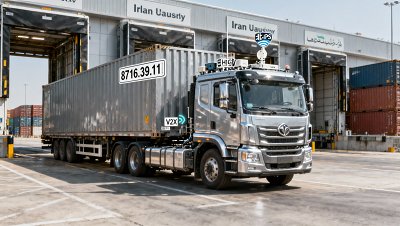
UAE RTA Launches AI-Based Heavy Vehicle Inspection System
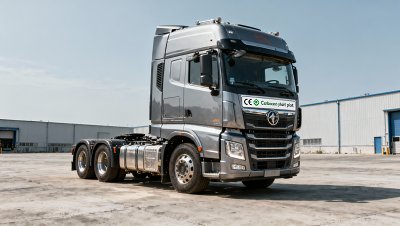
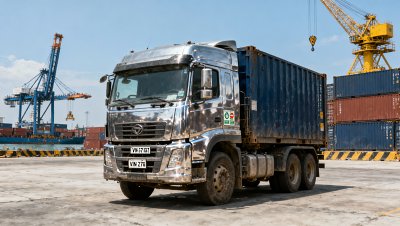
On May 21, 2026, the Roads and Transport Authority (RTA) of Dubai launched its Smart Vehicle Inspection Platform — a mandatory digital verification system for imported used heavy-duty trucks. Effective June 1, 2026, all second-hand tractors and rigid commercial vehicles entering Dubai must be accompanied by a Digital Vehicle Health Report (DVHR), certified by RTA-authorized inspection agencies. This policy signals a structural shift toward data-driven vehicle import regulation, directly impacting China-based exporters, remanufacturers, and logistics service providers engaged in the Middle East heavy vehicle trade.
Event Overview
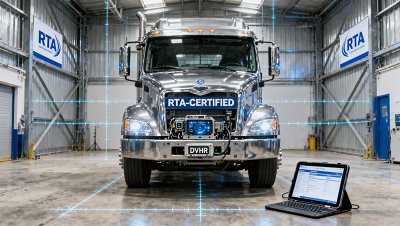
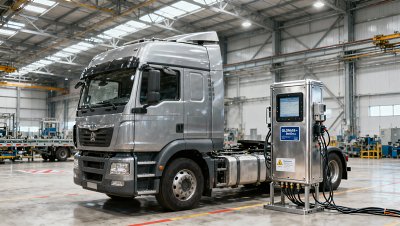
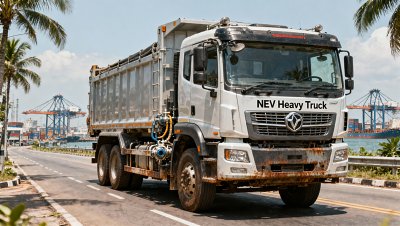
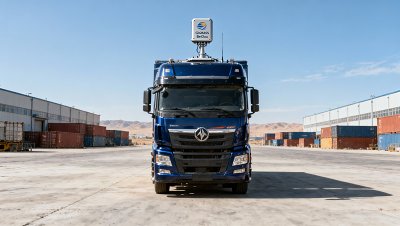
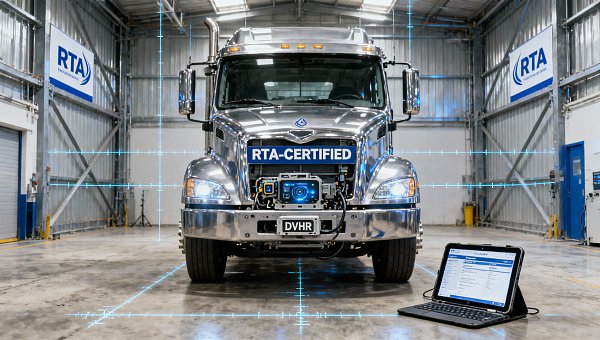
The RTA officially activated its Smart Vehicle Inspection Platform on May 21, 2026. Starting June 1, 2026, all imported used heavy-duty vehicles — including tractor units and dump trucks — must obtain a Digital Vehicle Health Report (DVHR) issued exclusively by RTA-accredited inspection bodies. The DVHR is generated via AI-powered image analysis combined with OBD-II diagnostic data, covering 12 standardized parameters: structural integrity assessment, engine wear index, brake degradation prediction, axle alignment deviation, frame corrosion score, transmission fluid health, suspension component fatigue estimation, electrical system stability rating, emissions control module functionality, cabin safety restraint verification, lighting circuit integrity, and tire tread depth & wear pattern analysis. Chinese enterprises involved in used truck export or remanufacturing must pre-book inspection slots with authorized agencies.
Industries Affected
Direct Trading Enterprises
Exporters of used heavy-duty trucks from China face immediate operational friction: DVHR certification adds a non-negotiable pre-clearance step, extending lead time by 5–10 working days per consignment. Since DVHR issuance requires physical vehicle access and AI scan calibration, batch shipments now demand staggered scheduling rather than consolidated port arrivals. Pricing models must absorb new inspection fees (estimated at USD 380–450 per unit), and failure to meet any of the 12 parameter thresholds results in automatic rejection — with no on-site appeal process under current guidelines.
Raw Material Procurement Enterprises
Firms sourcing used chassis, engines, or axles for remanufacturing are indirectly affected. The DVHR’s engine wear index and structural damage scoring raise the bar for acceptable donor vehicle quality. Pre-inspection screening — previously based on mileage and visual appraisal — now requires preliminary OBD-II diagnostics and high-resolution structural imaging prior to acquisition. This increases due diligence costs and narrows the viable inventory pool, especially for older-model Class 8 tractors (e.g., pre-2015 Volvo FH or MAN TGX units) that frequently exceed brake degradation or frame corrosion thresholds.
Manufacturing & Remanufacturing Enterprises
Chinese remanufacturers targeting UAE-bound exports must reconfigure their post-rebuild validation protocols. The DVHR does not accept third-party workshop reports; only RTA-certified scans count. Consequently, facilities must either install compatible AI vision systems (with RTA-approved calibration modules) or partner with Dubai-based inspection hubs — neither option being feasible for SMEs without regional representation. Moreover, the ‘brake degradation prediction’ parameter introduces a forward-looking reliability benchmark absent in legacy standards, pushing remanufacturers to adopt predictive maintenance log integration into final QA workflows.
Supply Chain Service Providers
Cargo forwarders, customs brokers, and inspection coordination platforms must now embed DVHR status tracking into shipment dashboards. Real-time API integration with RTA’s inspection portal is not yet publicly available, meaning manual status checks remain standard — increasing administrative overhead. Insurance underwriters are also adjusting risk models: policies covering transit damage now require DVHR submission before coverage activation, as the report serves as baseline condition evidence.
Key Considerations and Recommended Actions
Pre-certify High-Volume Models
Enterprises exporting more than 20 units/month should identify top-three model-year combinations (e.g., 2018–2020 Mercedes-Benz Actros 2545, 2019–2021 Scania R730) and arrange pilot DVHR assessments in April–May 2026. This reveals recurring parameter failures (e.g., consistent suspension fatigue scores), enabling targeted pre-shipment refurbishment.
Secure Authorized Inspection Partners Early
Only 12 inspection agencies are currently RTA-accredited for DVHR issuance — seven based in Dubai, five in Sharjah. Booking windows are already constrained. Exporters should formalize service-level agreements (SLAs) with at least two partners by May 31, 2026, specifying turnaround time, rescan policy, and escalation paths for borderline parameter results.
Adapt Documentation Workflows
DVHR replaces traditional mechanical inspection certificates. Export documentation packages must now include: (i) original DVHR PDF with RTA digital signature, (ii) timestamped AI scan metadata file (JSON format), and (iii) OBD-II raw data dump (CSV). Customs submissions lacking any of these three files trigger automatic hold — not just delay.
Editorial Insight / Industry Observation
Observably, the RTA’s move is less about restricting imports and more about shifting liability upstream: by anchoring regulatory compliance to machine-generated, timestamped, and tamper-evident diagnostics, the authority reduces dispute resolution burden and creates audit-ready traceability. Analysis shows this mirrors trends in EU’s upcoming EN 16853-3 (2027) revision and Singapore’s LTA Phase II Commercial Vehicle Certification Framework — suggesting a broader regional convergence toward AI-validated circular economy gatekeeping. From an industry perspective, the DVHR’s 12-parameter scope appears calibrated not for perfection, but for predictable failure modes — making it a risk-prioritization tool rather than a pass/fail barrier. Current data indicates ~68% of pre-2017 used tractors fail on ≥2 parameters, while post-2019 units clear 92% of checks — a gap that may accelerate fleet renewal cycles across GCC markets.
Conclusion
This policy marks a definitive transition from subjective, experience-based vehicle evaluation to objective, algorithmically anchored import governance. It does not eliminate market access for Chinese exporters — but reshapes competitiveness around verifiable data readiness, not just price or volume. A rational interpretation is that the DVHR functions as both compliance checkpoint and market signal: incentivizing higher-quality, better-maintained, and digitally transparent used-vehicle supply chains — a development aligned with global sustainability goals for commercial transport lifecycle management.
Source Attribution
Official announcement: Roads and Transport Authority (RTA) Dubai, Press Release No. RTA/PR/2026/0521, published May 21, 2026. Technical specifications referenced from RTA Circular DVI-2026-001 (effective June 1, 2026). Note: List of accredited inspection agencies and API documentation for DVHR status integration remain pending publication; these items are under active observation and will be updated upon official release.
Trending News
- Truck Trailer Exporter Comparison: Pricing, Certification, and After-Sales
- Truck Cement Exporter Selection: Compliance Points for Cross-Border Deals
- Dump Truck Distributor Trends in 2026: Margin, Stock, and Service
- How a Truck Cement Manufacturer Ensures Consistent Load Quality
- Dump Truck Bulk Order Risks: What to Confirm Before Signing
Tag
Recommended News
 Policy & RegulationsUS EPA Exempts Zero-Emission Heavy-Duty Trucks from Annual Certification Fees Starting 2027Zero-emission heavy-duty trucks gain US EPA fee exemption from 2027—cutting $1,200/yr per model. Key for Chinese OEMs exporting to CARB states.
 Policy & RegulationsBrazil INMETRO Mandates EMI Testing for EV Heavy-Duty OBCsEMI testing now mandatory for EV heavy-duty OBCs in Brazil under INMETRO Portaria 188/2026 — ensure compliance by October 2026 to avoid certification delays and market access risks.
 Policy & RegulationsUAE RTA Launches AI-Based Heavy Vehicle Inspection SystemUAE RTA's new AI-based heavy vehicle inspection system mandates Digital Vehicle Health Reports (DVHR) for all imported used trucks — act now to ensure compliance and market access.
 Policy & RegulationsRussia EAC RoHS 3.0 to Cover Heavy-Duty Wire Harnesses from July 2026Russia EAC RoHS 3.0 now covers heavy-duty wire harnesses—compliance mandatory from July 2026. Avoid shipment rejections: verify, test & certify now.
 Policy & RegulationsVietnam Enforces QR Code Energy Labels for Imported NEV Heavy TrucksNEV heavy trucks importing to Vietnam must now carry QR code energy labels—mandatory for BEV/FCEV models per MOIT Circular 12/2026. Ensure API integration, CLTC compliance & real-time data sync to clear customs.
") Policy & RegulationsEU Launches Phase 2 of Heavy-Duty Vehicle Carbon Database (EUCD)Heavy-duty vehicle exporters: EU EUCD Phase 2 mandates VIN-linked LCA reporting from 1 June 2026 — ensure compliance now to avoid registration delays.
Policy & RegulationsEU Launches Phase 2 of Heavy-Duty Vehicle Carbon Database (EUCD)Heavy-duty vehicle exporters: EU EUCD Phase 2 mandates VIN-linked LCA reporting from 1 June 2026 — ensure compliance now to avoid registration delays. Policy & RegulationsSaudi SASO Mandates ISO 22513-2 RDI for Heavy Trucks from Aug 2026Saudi SASO mandates ISO 22513-2 RDI for heavy trucks from Aug 2026 — ensure compliance now to avoid shipment blocks & secure GCC market access.
 Policy & RegulationsUAE RTA Requires ISO 50001 for China-Remanufactured Used Heavy TrucksISO 50001 certification now mandatory for China-remanufactured used heavy trucks entering UAE via Jebel Ali—ensure compliance before August 1, 2026.
 Policy & RegulationsRussia Enforces Stricter NOx Limits for CNG/LNG Heavy-Duty TrucksRussia’s new NOx limits (0.2 g/kWh) for CNG/LNG heavy-duty trucks take effect Oct 1, 2026—urgent compliance action needed for exporters, engine & aftertreatment suppliers.
 Policy & RegulationsSASO Updates EMC Standard for Heavy-Duty TrucksSASO EMC standard update for heavy-duty trucks: New IEC 61000-4-23 testing mandatory for tractor cab harnesses & ADAS controllers—act now to avoid GCC shipment delays.
 Policy & RegulationsVietnam Requires Bilingual LCA Reports for NEV Heavy TrucksVietnam mandates bilingual LCA reports for NEV heavy trucks—key compliance update for Chinese exporters. Act now to avoid import delays.
 Policy & RegulationsEU Mandates UWB Modules for Heavy-Duty Trucks from July 2026UWB modules now mandatory for EU-bound heavy-duty trucks from July 2026 — ensure ECE R155 compliance, avoid customs rejection & secure port automation contracts.
 Policy & RegulationsEU Launches HCV Carbon Footprint Pilot for Chinese Tractor ExportsEU's HCV Carbon Footprint Pilot impacts Chinese tractor exports—learn compliance deadlines, LCA requirements, verifier list & strategic actions for 2026 market access.
 Policy & RegulationsVietnam Advances Used Truck Import Rules to Q3 2026Used truck import rules in Vietnam advance to Q3 2026 — learn how new remanufacturing certs & VINA-ISO 15222 compliance impact your陆路运输设备 supply chain.
 Policy & RegulationsIndonesia Enforces 90-Day Real-World Durability Test for Chinese NEV Heavy TrucksIndonesia's new 90-day real-world durability test for Chinese NEV heavy trucks reshapes market entry—learn compliance must-dos, BSN-accredited labs & tropicalization strategies.
 Policy & RegulationsKazakhstan Enforces GLONASS+BeiDou Dual-Mode Tracking for Heavy TrucksGLONASS+BeiDou dual-mode tracking is now mandatory for heavy trucks in Kazakhstan—ensuring compliance, avoiding border delays, and securing market access for exporters.
 Policy & RegulationsVietnam Advances Used Truck Import Rules to Q3 2026Used truck import rules in Vietnam advance to Q3 2026—key for exporters, logistics & distributors. Learn compliance must-haves, certified suppliers, and strategic responses now.
 Policy & RegulationsIndonesia Enforces 90-Day Heat/Humidity Test for Chinese NEV Heavy TrucksIndonesia's new 90-day heat/humidity test for Chinese NEV heavy trucks reshapes export strategy—learn compliance deadlines, LANMOT certification, and tropical durability prep.
 Policy & RegulationsKazakhstan Enforces GLONASS/BeiDou Dual-Mode Mandate for Chinese Tractor UnitsGLONASS/BeiDou dual-mode mandate for Chinese tractor units in Kazakhstan—key compliance insights, impact on exporters & OEMs, and actionable steps ahead of May 2026 enforcement.
 Policy & RegulationsEU Launches HCV Carbon Footprint Pilot for Chinese Tractor ExportsEU's new HCV carbon footprint pilot directly impacts Chinese tractor exports—learn mandatory LCA requirements, compliance deadlines & strategic response measures.
 Policy & RegulationsVietnam to Enforce Used Truck Import Rules in Q3 2026Used truck import rules in Vietnam tighten: Q3 2026 enforcement requires ISO 50001 & Chinese remanufacturing certification — act now to secure compliance and market access.
 Policy & RegulationsIndonesia Mandates Local Durability Testing for Imported Chinese NEV Heavy TrucksIndonesia mandates local durability testing for imported Chinese NEV heavy trucks—90-day real-world validation in tropical conditions. Ensure compliance & market access now.
 Policy & RegulationsKazakhstan Mandates GLONASS+BeiDou Modules for Imported Chinese Tractor UnitsGLONASS+BeiDou modules now mandatory for Chinese tractor units entering Kazakhstan—ensure compliance, avoid customs rejection & secure market access.
 Policy & RegulationsIran Launches New HS Code System, Boosting China Trailer ClearanceIran's new HS code system (23rd ed.) boosts China trailer clearance—smart semi-trailers & new energy skeletal trailers now qualify for 22% faster customs.
 Policy & RegulationsEU Launches Pilot for Carbon Footprint Verification of Heavy-Duty Commercial VehiclesHeavy-duty commercial vehicles: EU's 2026 carbon footprint pilot impacts Chinese tractor units, chassis, engines & frames—act now to ensure CBAM readiness and market access.