Erlianhot Highway Port Launches 24-Hour Freight Clearance
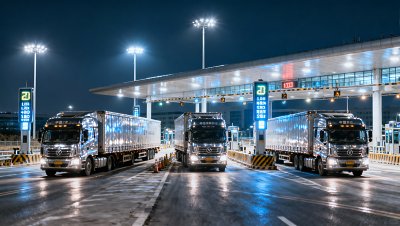
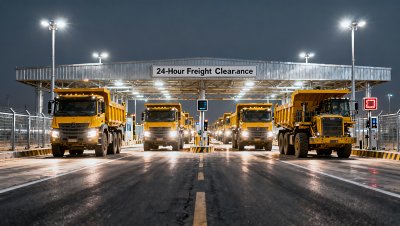
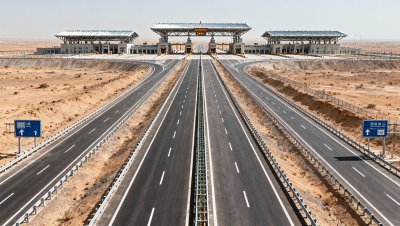
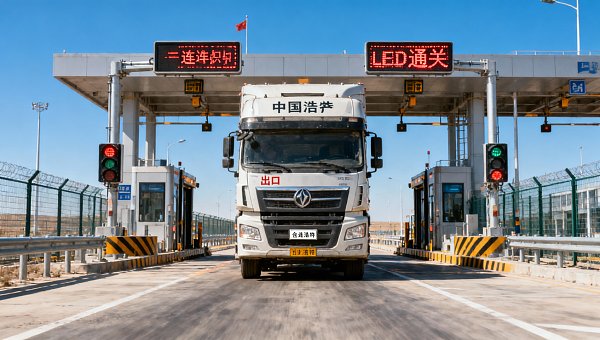
On May 2, 2026, the Erlianhot Highway Port officially commenced常态化 24-hour freight clearance for trucks — a milestone following its trial operation since April 1, 2024. This upgrade directly impacts cross-border logistics operators, heavy-duty vehicle exporters, Mongolian import distributors, and supply chain service providers supporting China–Mongolia trade corridors.
Event Overview
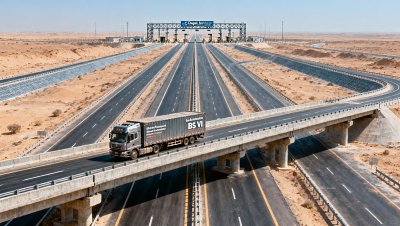
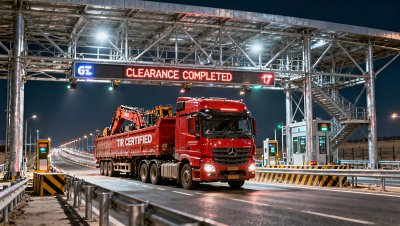
Effective May 2, 2026, the Erlianhot Highway Port completed its transition to fully operational 24-hour freight clearance for commercial vehicles. Customs data confirms that daily vehicle clearance has reached a peak of 623 trucks, with average clearance time stabilized at under 12 minutes per truck. The port handles over 70% of Mongolia’s daily consumer goods and construction vehicle imports, and serves as the primary export channel for Chinese-made heavy trucks, chassis, and special-purpose vehicles to Mongolia.
Industries Affected
Direct Trading Enterprises
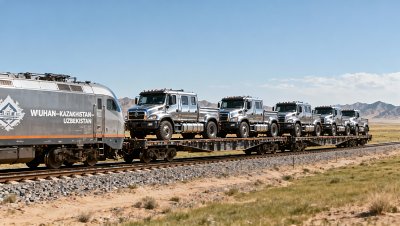
Exporters of heavy trucks, chassis, and specialized work vehicles face reduced transit uncertainty and lower demurrage exposure. With clearance time compressed to under 12 minutes, shipment predictability improves significantly — especially for time-sensitive orders tied to Mongolian infrastructure projects or seasonal demand cycles.
Channel Distribution Enterprises
Mongolian importers and regional distributors benefit from shortened lead times and reduced inventory holding costs. Faster border clearance enables leaner stock planning and more responsive replenishment — particularly relevant for distributors handling high-value engineering vehicles or spare parts with limited local warehousing capacity.
Supply Chain Service Providers
Firms offering cross-border trucking coordination, customs brokerage, and documentation support must adapt to tighter scheduling windows. The shift to 24-hour operations increases demand for night-shift-capable staff, real-time tracking integration, and pre-clearance documentation validation — especially for standardized vehicle categories with known HS codes and compliance profiles.
What Relevant Enterprises or Practitioners Should Monitor and Do
Track official updates on operational scope and eligibility criteria
While 24-hour clearance is now active, current customs announcements do not specify whether all vehicle types or cargo classifications are equally covered. Enterprises should monitor further guidance from the General Administration of Customs of China and the Erlianhot Customs Sub-Administration regarding permitted commodities, required certifications (e.g., CCC for certain vehicles), and potential pilot expansions.
Assess impact on key export categories and delivery commitments
Heavy trucks, chassis, and special-purpose vehicles represent the core export flow through this port. Exporters should review existing delivery terms (e.g., DAP Ulaanbaatar) in light of the new clearance benchmark — especially where contractual penalties apply for late arrival. A 12-minute average clearance does not eliminate inland delays; origin loading, documentation accuracy, and Mongolian-side release remain critical path items.
Distinguish between policy implementation and actual throughput consistency
The reported 623-vehicle daily peak reflects capacity under optimal conditions. Observably, sustained volume depends on coordinated readiness across Chinese export documentation, Mongolian import inspection protocols, and road infrastructure maintenance on both sides. Enterprises should treat the 12-minute average as a baseline under favorable conditions — not a guaranteed SLA across all shifts or seasons.
Prepare documentation and dispatch workflows for extended operating hours
24-hour clearance requires alignment across internal teams (logistics, compliance, finance) and external partners (freight forwarders, Mongolian agents). Firms should verify document readiness for nighttime submissions, test electronic customs declaration systems during off-peak hours, and confirm Mongolian partner availability for post-clearance handover — especially for oversized or non-standard vehicle shipments requiring physical inspection.
Editorial Observation / Industry Insight
Analysis shows this upgrade is less a standalone policy breakthrough and more a formalization of operational maturity achieved during the two-year trial period. It signals growing institutional confidence in process standardization, digital customs integration (e.g., single-window declarations), and bilateral coordination — but does not yet imply automatic scalability to other China–Mongolia land ports. From an industry perspective, it functions primarily as a reliability signal: confirming that predictable, low-latency truck movement is now institutionally supported for this specific corridor. Continued monitoring is warranted for evidence of spillover effects — such as increased use by third-country exporters routing via Mongolia, or shifts in multimodal routing preferences (e.g., reduced reliance on rail for mid-volume truck shipments).
Conclusion
This development marks a consolidation of operational efficiency rather than a radical change in trade access. For stakeholders, it represents an opportunity to refine execution — not restructure strategy. It is better understood as a tightening of the critical path in an already-active corridor, enabling incremental gains in responsiveness and cost control — provided supporting processes on both sides remain aligned and resilient.
Source Attribution
Main source: Official customs clearance statistics and operational timeline released by Erlianhot Customs Sub-Administration (as of May 2026).
Points requiring ongoing observation: Eligibility scope for 24-hour clearance across vehicle types; Mongolian-side processing timelines; frequency of peak-day performance (623 vehicles); and any future extension to non-truck freight categories.
Trending News
- Truck Trailer Exporter Comparison: Pricing, Certification, and After-Sales
- Truck Cement Exporter Selection: Compliance Points for Cross-Border Deals
- Dump Truck Distributor Trends in 2026: Margin, Stock, and Service
- How a Truck Cement Manufacturer Ensures Consistent Load Quality
- Dump Truck Bulk Order Risks: What to Confirm Before Signing
Tag
Recommended News
 Logistics & FreightTurkey Launches AI HS Classifier for Heavy-Duty Vehicle PartsTurkey's new AI HS Classifier boosts accuracy to 99.2% for heavy-duty vehicle parts — air suspension, disc brakes & hydraulic retarders. Streamline Turkish customs clearance now.
 Logistics & FreightTurkey Launches AI System for Heavy-Duty Vehicle Parts ClassificationAI system for heavy-duty vehicle parts classification launched in Turkey — boost HS code accuracy to 99.2% and cut customs clearance to 1.3 days for brake discs, air suspension & more.
 Logistics & FreightNXP S32G3 Chip Output Up 35% for Heavy-Duty TrucksNXP S32G3 chip output up 35% for heavy-duty trucks—boosting V2X-ready T-Box production, EU/MENA export readiness, and L2+/L3 automation deployment.
 Logistics & FreightAsia's First Dedicated Cargo Airport Launches Two Intercontinental Freight RoutesLand transport equipment exporters: Ezhou’s new cargo airport launches Chicago & Frankfurt air routes—7-day delivery for heavy-duty truck components, modular air freight, green channel access.
 Logistics & FreightPakistan Opens 6 Iran-Bound Land Corridors, Cutting China Heavy-Truck Transit to 6 HoursPakistan opens 6 Iran-bound land corridors—cutting China heavy-truck transit to just 6 hours. Boost BS VI truck exports, slash logistics costs & accelerate CPEC freight.
 Hits 103 Trains in One Month") Logistics & FreightCentral Asia Railway (Wuhan) Hits 103 Trains in One MonthCentral Asia Railway (Wuhan) hits 103 trains in April 2026 — traction vehicles, concrete mixer chassis & low-bed semi-trailers drive 37% of exports. Fast, reliable overland transport for Central Asia & Caspian markets.
Logistics & FreightCentral Asia Railway (Wuhan) Hits 103 Trains in One MonthCentral Asia Railway (Wuhan) hits 103 trains in April 2026 — traction vehicles, concrete mixer chassis & low-bed semi-trailers drive 37% of exports. Fast, reliable overland transport for Central Asia & Caspian markets. Logistics & FreightErenhot Highway Port Launches 24-Hour Freight ClearanceErenhot Highway Port now offers 24-hour freight clearance—boosting speed & reliability for heavy-duty truck exporters, cross-border logistics, and Mongolian distributors.
 Logistics & FreightErlianhot Highway Port Launches 24-Hour Freight ClearanceErlianhot Highway Port now offers 24-hour freight clearance — China’s first round-the-clock land port for Mongolia-bound heavy-duty vehicles and construction equipment. Faster, more predictable cross-border logistics await.
 Hits 103 Trains in One Month") Logistics & FreightCentral Asia Railway (Wuhan) Hits 103 Trains in One MonthCentral Asia Railway (Wuhan) hits 103 trains in April 2026 — a record boost for land transport equipment exporters, freight forwarders & EU/Central Asian buyers.
Logistics & FreightCentral Asia Railway (Wuhan) Hits 103 Trains in One MonthCentral Asia Railway (Wuhan) hits 103 trains in April 2026 — a record boost for land transport equipment exporters, freight forwarders & EU/Central Asian buyers. Logistics & FreightBest Flatbed Trailer Supplier Options for Logistics TransportationFind the best flatbed trailer supplier for logistics transportation with expert tips on load capacity, durability, compliance, and supplier support to improve fleet efficiency.
 Logistics & FreightErenhot Highway Port Launches 24-Hour Freight Clearance for MongoliaErenhot Highway Port launches 24-hour freight clearance for Mongolia — boosting speed, reliability & TIR-compliant exports of heavy vehicles and machinery.
 Logistics & FreightChina–Central Asia Customs Sign E-Release Mutual Recognition MOUChina–Central Asia e-release MOU streamlines road transport equipment clearance—tractors, semi-trailers & special vehicles now benefit from mutual recognition, faster borders & lower logistics costs.
 Logistics & FreightPakistan Opens 6 Land Routes to Iran, Cutting China Heavy-Truck Transit to 6 HoursPakistan opens 6 new land routes to Iran—cutting China heavy-truck transit to just 6 hours. Transform logistics, slash clearance time & boost supply chain resilience.
 Logistics & FreightChina-Central Asia Customs Sign E-Release Mutual Recognition MOUChina-Central Asia e-release MOU streamlines land transport equipment clearance—cutting costs 11% and enabling single-declaration, five-country mutual recognition for tractors, trailers & chassis.
 Logistics & FreightPakistan Activates 6 Land Freight Corridors to IranPakistan’s 6 new land freight corridors to Iran — including Gwadar–Gabd — enable sub-6-hour cross-border heavy freight. Boost efficiency, bypass Hormuz, and future-proof your陆路运输设备 logistics.
 Logistics & FreightBest Semi Trailer Manufacturer for Logistics in 2026Find the best semi trailer manufacturer for logistics in 2026. Compare durable, compliant, cost-efficient trailer solutions for regional, long-haul, port, and heavy-duty transport.
 Logistics & FreightLow Bed Trailer Export for Mining: Load Limits and Route PlanningLow bed trailer export for mining: learn load limits, axle distribution, and route planning tips to reduce delays, improve compliance, and choose the right trailer for safer project delivery.
 Logistics & Freight24-Hour Full-Truckload Delivery Now Standard for Global Buyers24-hour full-truckload delivery is now standard for global buyers — enabling JIT reliability, API-driven visibility, and up to 40% safety stock reduction across陆路运输设备 supply chains.
 Logistics & FreightChina-Mongolia-Russia Trucking Pact Upgraded with e-CMR & Cold Chain Data SharingChina-Mongolia-Russia trucking pact upgrades cold chain logistics with e-CMR adoption and real-time temperature data sharing—boost compliance, cut delays, and future-proof cross-border road transport.
 Logistics & FreightChina Launches 24-Hour Full-Load Freight for 'Next-Day Delivery'China's 24-hour full-load freight enables guaranteed T+1 next-day delivery for exporters — boosting reliability, cutting air freight costs, and transforming cross-border supply chain planning.
 Logistics & FreightAll 27 Bridges Across Pinglu Canal CompletedAll 27 bridges across Pinglu Canal completed — unlocking a game-changing inland waterway route for heavy-duty road transport equipment from Southwest China to global markets.
 Logistics & FreightChoosing Commercial Vehicle Parts for Cold Storage ReliabilityCommercial vehicle parts for cold storage are key to reefer reliability. Learn how to choose durable, compatible parts that reduce downtime, protect cargo, and improve fleet performance.
 Logistics & Freight27 Bridges Over Pinglu Canal Completed, Accelerating Southwest Equipment ExportsPinglu Canal's 27 bridges completed—boosting陆路运输设备 exports to ASEAN, Middle East & Africa. Discover logistics advantages for heavy machinery, mining vehicles & concrete mixers.
 Logistics & FreightChina Launches 24-Hour Full-Truckload Delivery for Overseas BuyersFull-truckload delivery from China now guarantees 24-hour land transport for overseas buyers — transforming procurement, inventory, and supply chain resilience for陆路运输设备 exporters and importers.
 Logistics & FreightSix New Iran-Pakistan Land Crossings Opened, Land Clearance Cut to 6 HoursSix new Iran-Pakistan land crossings slash cargo clearance to just 6 hours—boosting efficiency for heavy-duty trucks, semi-trailers & CKD/SKD kits export.