China Launches New Freight Hub Initiative Targeting Smart EV Truck Swapping
On April 9, 2026, the Ministry of Finance and the Ministry of Transport jointly launched a new round of the National Comprehensive Freight Hub Chain-Strengthening Action, explicitly prioritizing smart electric truck battery-swap hubs and multimodal transport terminals. This policy shift signals a strategic acceleration in standardizing China’s heavy-duty EV swap infrastructure — with implications for domestic manufacturers, battery-chassis integrators, and emerging markets lacking robust grid infrastructure.
Event Overview
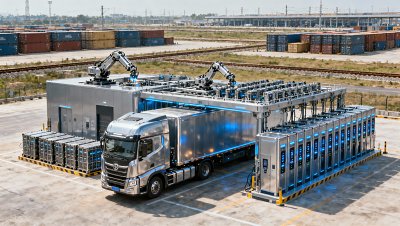
On April 9, 2026, the Ministry of Finance and the Ministry of Transport issued a joint notice initiating the latest phase of the National Comprehensive Freight Hub Chain-Strengthening Action. The notice identifies ‘truck smart battery-swap hubs’ and ‘multimodal transport stations’ as key supported infrastructure types. No further implementation details, funding amounts, or regional rollout timelines were publicly disclosed at launch.
Industries Affected
Heavy-Duty EV Original Equipment Manufacturers (OEMs)
Impact arises from the explicit policy endorsement of standardized swap architecture for Class 8 trucks. OEMs with pre-certified or modular swap-compatible chassis designs gain early alignment with national infrastructure planning — potentially influencing procurement preferences in state-backed logistics projects and provincial pilot zones.
Battery-Chassis Integration Suppliers
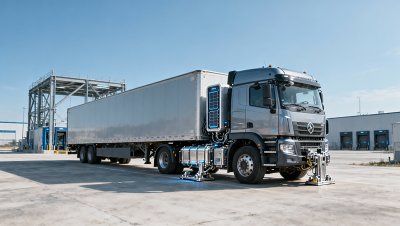
Suppliers offering integrated battery-swappable platforms (e.g., skid-mounted battery modules, standardized mechanical/electrical interfaces) face direct demand tailwinds. Policy emphasis on ‘swap hub’ deployment implies growing need for interoperable hardware — not just batteries, but mounting systems, thermal management interfaces, and communication protocols compliant with upcoming national standards.
Logistics Operators Serving Cross-Border Corridors (e.g., ASEAN, Middle East, Latin America)
The notice states that the initiative aims to provide “replicable low-carbon transport solutions for electricity infrastructure-deficient regions” — naming Southeast Asia, the Middle East, and Latin America. Operators active in these corridors may see accelerated adoption of Chinese-designed swap-enabled fleets, especially where grid upgrades lag behind EV deployment targets.
Infrastructure Developers & Public-Private Consortiums
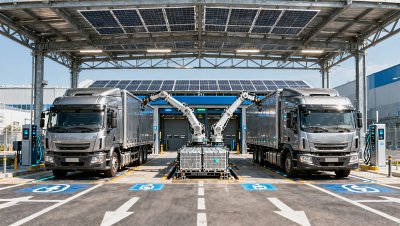
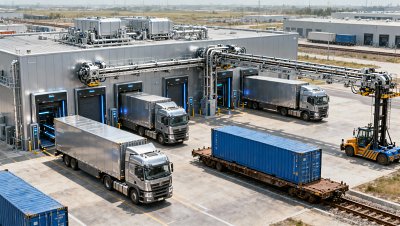
Entities developing freight hubs — particularly those bidding on central or provincial transportation infrastructure tenders — now face stronger incentives to incorporate dedicated, scalable swap bays, automated handling systems, and energy storage buffers. Design specifications may soon reflect national swap interface standards currently under development.
What Enterprises and Practitioners Should Monitor and Do Now
Track official technical standard drafts and pilot selection criteria
Current guidance names priority infrastructure types but does not define technical parameters (e.g., voltage, connector type, cycle life thresholds). Stakeholders should monitor announcements from the Ministry of Transport’s Standardization Technical Committee and provincial implementation notices — especially regarding interoperability requirements for swap hubs.
Assess compatibility of existing or planned vehicle platforms against likely national swap interface norms
While no formal standard is yet published, industry consensus points toward 1,000–1,200 kWh modular packs, ISO/IEC-aligned communication protocols, and mechanical interfaces aligned with GB/T 40032–2021 extensions. OEMs and integrators should audit current designs for adaptability to such parameters before finalizing 2026–2027 production plans.
Distinguish between policy signaling and near-term procurement impact
This initiative sets strategic direction, not immediate tender mandates. Most infrastructure funding will flow through multi-year provincial implementation plans. Companies should avoid assuming automatic eligibility; instead, prepare documentation demonstrating compliance readiness (e.g., test reports, interface schematics) for future bid submissions.
Engage with provincial transport authorities in early-pilot provinces
Implementation will be decentralized. Provinces with high freight volumes and strong EV policy alignment (e.g., Guangdong, Sichuan, Xinjiang) are likely first movers. Logistics firms and suppliers should initiate technical coordination with local transport bureaus — particularly around land use planning, grid connection feasibility, and shared data platform integration.
Editorial Observation / Industry Perspective
Observably, this initiative functions primarily as a strategic signal — not an operational mandate. It confirms national-level prioritization of battery swapping over plug-in charging for heavy freight applications, reinforcing China’s distinct infrastructure pathway. Analysis shows the language deliberately links domestic hub development with export-ready solution packaging, suggesting coordinated industrial diplomacy. However, actual deployment pace remains contingent on provincial budget execution, grid upgrade progress, and resolution of inter-provincial swap network governance (e.g., billing, battery pooling, maintenance liability). The initiative is better understood as a framework-setting step than a near-term revenue catalyst.
Conclusion: This policy marks a formal institutional commitment to standardize and scale smart swap infrastructure for freight — with cascading effects across EV manufacturing, battery integration, and cross-border logistics. Its significance lies less in immediate financial disbursement and more in its role as a coordination mechanism across ministries, provinces, and industries. For stakeholders, it is best interpreted as a directional anchor: validating long-term technology bets while demanding disciplined, standards-aware preparation for phased implementation.
Source: Joint notice issued by the Ministry of Finance and the Ministry of Transport of the People’s Republic of China, dated April 9, 2026. No supplementary data, implementation guidelines, or funding allocations have been published as of the notice release. Continued observation is required for provincial rollout plans and technical standard drafts.
Trending News
- Truck Cement Wholesale: What Determines Stable Delivery and Margin?
- Truck Trailer Bulk Order Cost Breakdown for 2026 Budget Planning
- Truck Trailer Sourcing: 7 Checks Before You Compare Suppliers
- Truck Trailer OEM vs ODM: Which Model Lowers Supply Risk?
- How to Evaluate a Heavy Truck Chassis Manufacturer With R&D Capability in 2026
Tag
Recommended News
 New Energy TrucksYantai Port Aluminum Ore Logistics Boosts NEV Dump Truck OrdersYantai Port aluminum ore logistics surge drives NEV dump truck orders—42% short-haul haulage rise, 35% QoQ EV demand spike. Act now.
 New Energy TrucksChina Adds Tractor-Trailer Battery-Swap Systems to Subsidy ProgramTractor-trailer battery-swap systems now qualify for China’s new energy subsidy—up to ¥32,000 per unit. Key update for陆路运输设备 manufacturers, logistics fleets, and EV infrastructure providers.
 New Energy TrucksChina Introduces Subsidies for EV Bus & Battery ReplacementEV bus & battery replacement subsidies now live in China—up to ¥12,000/unit for medium/heavy-duty tractors & refrigerated semi-trailers. Act now!
 New Energy TrucksWorld's Largest Methanol-Fueled Container Ship NamedWorld's largest methanol-fueled container ship named — accelerating green adoption across land-based port handling equipment, yard tractors, stacker cranes & reach stackers.
 New Energy TrucksKunming Launches Jacaranda-Themed EV Buses; Design Draws Interest from South AmericaKunming's jacaranda-themed EV buses showcase China's design-led electric bus innovation — drawing strong interest from South America's transport operators.
 New Energy TrucksNanning IRP Launches Smart EV Freight Charging & Swapping StationNanning IRP’s smart EV freight charging & swapping station — China’s first for cross-border heavy-duty trucks — boosts efficiency, cuts downtime, and sets a new benchmark for China–ASEAN green logistics.
 New Energy TrucksNanning IRP Launches First Cross-Border EV Heavy-Duty Charging HubNanning IRP launches China’s first cross-border EV heavy-duty charging hub—enabling 3-min battery swaps, V2G, and TMS integration for China–ASEAN freight.
 New Energy TrucksNanning IRP Launches RCEP-Focused EV Freight Charging HubNanning IRP launches China’s first RCEP-focused EV freight charging hub—300kW fast charge, battery swap & AI dispatch for China–Vietnam/Laos cross-border logistics.
 New Energy TrucksKunming's Blue Jacaranda Themed Buses Launch with Domestic Smart Scheduling & New Energy ChassisKunming's blue jacaranda buses debut with domestic smart scheduling & new energy LFMP chassis—key benchmark for global urban transit equipment exporters and smart mobility integrators.
 New Energy TrucksNanning IRP Launches Smart EV Charging Hub for ASEAN FreightNanning IRP's Smart EV Charging Hub powers ASEAN freight with intelligent charging, maintenance & green refueling — a game-changing infrastructure leap for cross-border electric truck operators.
 New Energy TrucksChina Launches New Freight Hub Initiative Targeting Smart EV Truck SwappingSmart EV truck battery-swap hubs take center stage in China’s new National Freight Hub Initiative—unlocking opportunities for OEMs, integrators & global logistics operators.
 New Energy TrucksChina Launches New Freight Hub Strengthening ActionChina's new Freight Hub Strengthening Action prioritizes intelligent battery-swap hubs & multimodal terminals—key for EV truck OEMs, logistics providers, and global supply chain enablers.
 New Energy TrucksGermany Launches H2-Truck Corridor Tender: Chinese OEMs Eligible as PartnersH2-Truck Corridor tender launched in Germany—Chinese OEMs invited as technology partners. €180M cross-border hydrogen freight initiative with EU CBAM credit potential.
 New Energy TrucksUS CBP Launches Traceability Review for EV Heavy-Duty Truck Battery ComponentsEV heavy-duty truck battery components now face US CBP traceability review—learn how firmware hashes, Battery Passports & Tier-3 docs impact your exports.
 New Energy TrucksHebei Launches H2 Heavy-Duty Truck Export Channel to EUH2 heavy-duty truck export channel launched: Hebei opens EU test route for green hydrogen trucks — key for OEMs, certifiers & hydrogen infrastructure.
 New Energy TrucksHebei Unveils '15th Five-Year' Transport Plan: Hydrogen Heavy-Duty Truck Corridor and Export Test ChannelsHydrogen heavy-duty truck manufacturers & international fleet operators: Hebei launches Beijing–Tianjin–Shijiazhuang corridor and Tangshan/Caofeidian export test channels — accelerate global validation and market entry.
 New Energy TrucksNanning IRP Launches EV Freight Charging Station for W. Sea-Air CorridorNanning IRP's new EV freight charging station boosts W. Sea-Air Corridor logistics — 300 V2G terminals, ASEAN-standard support, and cold-chain readiness. Discover how it reshapes cross-border EV freight viability.
 New Energy TrucksHebei's 15th Five-Year Transport Plan Launches Hydrogen Heavy-Duty Truck CorridorHydrogen heavy-duty truck corridor launched in Hebei—key opportunity for manufacturers, logistics operators & clean energy developers targeting Mongolia/Russia markets.
 New Energy TrucksJining, Shandong Builds 132 E-Heavy-Duty Truck Charging StationsJining, Shandong’s 132 e-heavy-duty truck charging stations set a new benchmark for GB/T 20234.3–2025 compliance—key for global exporters, OEMs & infrastructure integrators.
 New Energy TrucksHebei's 15th Five-Year Plan Launches Beijing-Tianjin-Hebei H2 Truck CorridorHebei's 15th Five-Year Plan launches the Beijing-Tianjin-Hebei H2 truck corridor — a strategic gateway for hydrogen heavy-duty vehicle exporters, OEMs, and green transport partners to validate GB/T 34592-compliant trucks in real port logistics environments.
 New Energy TrucksJining, Shandong Builds 132 EV Heavy-Duty Truck Charging StationsEV heavy-duty truck charging stations in Jining, Shandong: 132 sites deployed + local standard launched — a scalable model driving global EPC-plus-operations exports.
 New Energy TrucksNanning Rail Port Builds EV Charging Hub for Western Land-Sea CorridorNanning Rail Port's new EV charging hub accelerates green freight along the Western Land-Sea Corridor — vital for cross-border logistics, EV exporters & ESG-compliant shippers.
 New Energy TrucksChina's First 10,000-Ton Pure-Electric Smart Container Ship Enters ServiceChina's first 10,000-ton pure-electric smart container ship launches—driving urgent 800V/V2G and IEC 62196-3:2025 compliance for port terminal tractors and logistics equipment suppliers.
 New Energy TrucksChina's First 10,000-Ton Pure Electric Smart Container Ship Enters ServiceElectric port tractor & battery-swap systems gain global momentum as China’s first 10,000-ton pure electric smart container ship enters service—key for zero-carbon terminals and overseas green port projects.
 New Energy TrucksGuangxi Xijiang Waterway Enforces Zero Discharge for Vessel PollutantsGuangxi Xijiang Waterway enforces zero discharge for vessel pollutants—impacting LNG-powered transport, electric short-haul trucks & green port infrastructure. Key for陆路运输设备 stakeholders.