China Introduces Subsidies for EV Bus & Battery Replacement
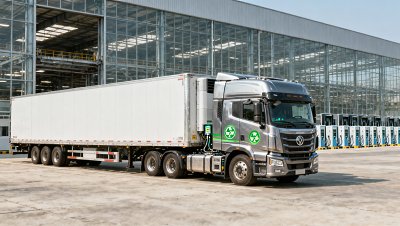
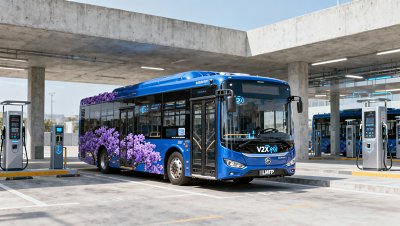
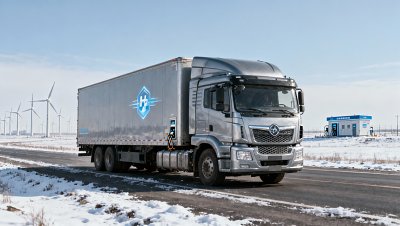
On May 10, 2026, the Ministry of Transport (MOT) and the National Development and Reform Commission (NDRC) jointly issued the Implementation Rules for Subsidies on New Energy Urban Bus Renewal and Battery Replacement (2026). This policy marks a structural expansion of China’s EV subsidy framework — extending financial support beyond urban buses to include battery replacement for new energy medium- and heavy-duty tractors and refrigerated semi-trailers used in urban logistics. The move directly targets supply-chain readiness for overseas green logistics projects and signals a strategic shift toward integrated vehicle-battery lifecycle management.
Event Overview
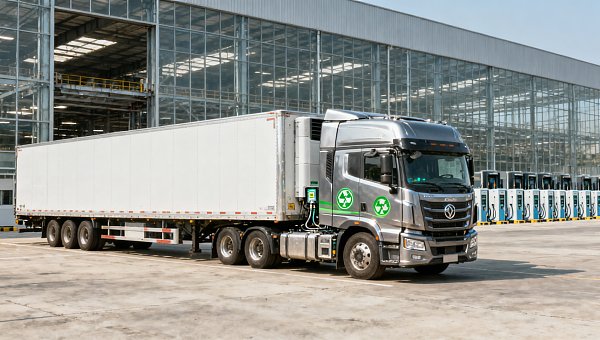
On May 10, 2026, the Ministry of Transport and the National Development and Reform Commission jointly released the Implementation Rules for Subsidies on New Energy Urban Bus Renewal and Battery Replacement (2026). Under the rules, battery replacement for new energy urban logistics vehicles — specifically medium- and heavy-duty tractors and refrigerated semi-trailers — is newly included in the subsidy scope. The maximum per-unit subsidy is RMB 12,000, applicable to both lithium iron phosphate (LFP) and sodium-ion battery technologies.
Industries Affected
Direct Trading Enterprises
Export-oriented OEMs and chassis suppliers targeting overseas urban logistics markets will face revised technical expectations from international buyers. With subsidies lowering domestic TCO for battery-integrated logistics platforms, foreign procurement teams may increasingly prioritize Chinese-made chassis certified for dual-chemistry battery compatibility — especially for projects backed by multilateral green infrastructure funds. However, eligibility verification and subsidy claim timelines may introduce new lead-time constraints in cross-border order fulfillment.
Raw Material Procurement Enterprises
Suppliers of cathode active materials, electrolytes, and anode precursors for LFP and sodium-ion batteries are likely to see modest near-term demand uplift, particularly from battery pack integrators serving the newly subsidized vehicle segments. Yet this effect remains conditional: actual volume growth depends on adoption speed among municipal logistics operators and whether subsidy disbursement aligns with production cycles. No direct raw material quota or price stabilization mechanism is stipulated in the rules.
Manufacturing Enterprises
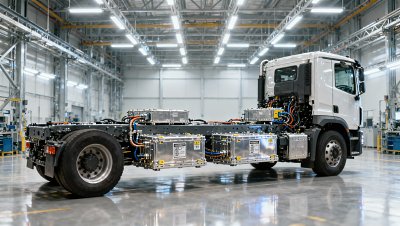
EV chassis and battery system integrators must now adapt product validation protocols to accommodate dual-chemistry battery mounting interfaces and thermal management compatibility. Unlike previous bus-only subsidies, this update applies to heavier-duty platforms with higher vibration, thermal, and duty-cycle variability — raising engineering requirements for mechanical anchoring, BMS communication standardization, and safety certification across chemistries. Manufacturers lacking sodium-ion integration experience may need to accelerate joint development with cell suppliers.
Supply Chain Service Enterprises
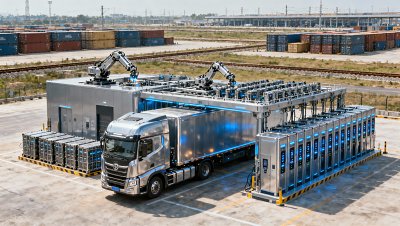
Third-party battery swapping networks, logistics fleet managers, and after-sales service providers face recalibration of service design. The inclusion of refrigerated semi-trailers — often operated under tight temperature-control SLAs — introduces new requirements for battery health monitoring, cold-weather performance validation, and rapid-swap infrastructure deployment at urban distribution hubs. Current service models optimized for passenger EVs or light commercial vehicles are unlikely to scale without hardware and software upgrades.
Key Considerations and Recommended Actions
Verify Eligibility Criteria Before Product Launch
Manufacturers and exporters should cross-check vehicle type definitions (e.g., “refrigerated semi-trailer” vs. “refrigerated truck”) and battery replacement thresholds (minimum capacity degradation, cycle count documentation) against official MOT guidance — expected to be published separately in Q3 2026. Premature alignment risks misallocation of R&D resources.
Assess Sodium-Ion Integration Readiness
While LFP compatibility is well established, sodium-ion battery integration requires updated voltage tolerance margins, low-temperature charge algorithms, and mechanical interface revalidation. Firms should audit current BMS firmware and thermal housing designs — not assume backward compatibility — before committing to export contracts referencing the subsidy framework.
Monitor Provincial Implementation Timetables
The national rules delegate fund allocation and application review to provincial transport departments. Early-adopter provinces (e.g., Guangdong, Zhejiang, Sichuan) may begin accepting applications as early as July 2026; others may delay until Q1 2027. Exporters should map regional rollout schedules to inform localized go-to-market sequencing and inventory planning.
Editorial Perspective / Industry Observation
This policy is better understood as a demand-side catalyst for domestic battery ecosystem maturity — not a direct stimulus for overseas sales. Analysis shows that subsidy uptake hinges less on headline rates than on three operational factors: standardized battery removal/reinstallation procedures across OEMs, interoperable diagnostics between vehicle and replacement packs, and transparent residual value assessment frameworks for second-life cells. Observably, the absence of these enablers in current pilot programs suggests implementation lags may persist through 2027. From an industry perspective, the real inflection point lies not in subsidy volume, but in whether MOT uses this initiative to codify battery interchangeability standards — a prerequisite for scalable global adoption.
Conclusion
The expansion of battery replacement subsidies to urban logistics EVs reflects a maturing policy logic: shifting from pure vehicle adoption incentives toward holistic lifecycle support. While immediate export impact is limited by implementation granularity and regional variance, the long-term signal is clear — China is institutionalizing battery flexibility as a core export competitiveness factor. A rational interpretation is that this rule sets foundational conditions rather than guarantees near-term revenue uplift; its significance emerges over time, contingent on execution fidelity and complementary industrial policies.
Source Attribution
Official document: Implementation Rules for Subsidies on New Energy Urban Bus Renewal and Battery Replacement (2026), jointly issued by the Ministry of Transport and the National Development and Reform Commission, effective May 10, 2026. Full text available via MOT’s official portal (www.mot.gov.cn). Note: Provincial implementation guidelines, subsidy application portals, and technical eligibility checklists remain pending and are subject to continuous monitoring.
Trending News
- Truck Tipper Exporter Compliance Risks in Cross-Border Deliveries
- Truck Trailer Distributor Trends Shaping Regional Market Growth in 2026
- Crane Truck for Sale: 7 Checks Before You Choose a Model
- How to Compare a Truck Trailer Supplier Beyond Unit Price
- Bulldozer for Construction: Key Specs That Affect Earthmoving Efficiency
Tag
Recommended News
 New Energy TrucksChina Introduces Subsidies for EV Bus & Battery ReplacementEV bus & battery replacement subsidies now live in China—up to ¥12,000/unit for medium/heavy-duty tractors & refrigerated semi-trailers. Act now!
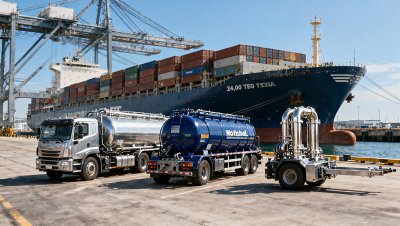
 New Energy TrucksWorld's Largest Methanol-Fueled Container Ship NamedWorld's largest methanol-fueled container ship named — discover how methanol-compatible tractor units, cryogenic tank semi-trailers & loading systems are reshaping green land-based transport.
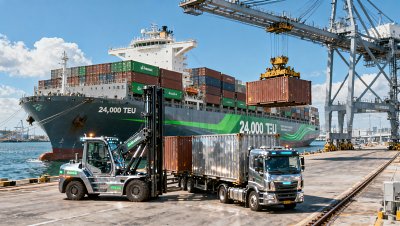
 New Energy TrucksWorld's Largest Methanol-Fueled Container Ship NamedWorld's largest methanol-fueled container ship named — accelerating green adoption across land-based port handling equipment, yard tractors, stacker cranes & reach stackers.
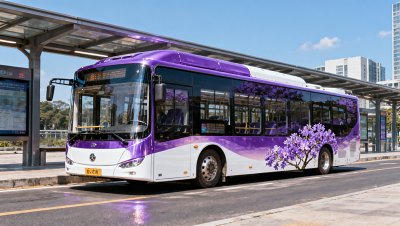
 New Energy TrucksKunming Launches Jacaranda-Themed EV Buses; Design Draws Interest from South AmericaKunming's jacaranda-themed EV buses showcase China's design-led electric bus innovation — drawing strong interest from South America's transport operators.
 New Energy TrucksNanning IRP Launches Smart EV Freight Charging & Swapping StationNanning IRP’s smart EV freight charging & swapping station — China’s first for cross-border heavy-duty trucks — boosts efficiency, cuts downtime, and sets a new benchmark for China–ASEAN green logistics.
 New Energy TrucksNanning IRP Launches First Cross-Border EV Heavy-Duty Charging HubNanning IRP launches China’s first cross-border EV heavy-duty charging hub—enabling 3-min battery swaps, V2G, and TMS integration for China–ASEAN freight.
 New Energy TrucksNanning IRP Launches RCEP-Focused EV Freight Charging HubNanning IRP launches China’s first RCEP-focused EV freight charging hub—300kW fast charge, battery swap & AI dispatch for China–Vietnam/Laos cross-border logistics.
 New Energy TrucksKunming's Blue Jacaranda Themed Buses Launch with Domestic Smart Scheduling & New Energy ChassisKunming's blue jacaranda buses debut with domestic smart scheduling & new energy LFMP chassis—key benchmark for global urban transit equipment exporters and smart mobility integrators.
 New Energy TrucksNanning IRP Launches Smart EV Charging Hub for ASEAN FreightNanning IRP's Smart EV Charging Hub powers ASEAN freight with intelligent charging, maintenance & green refueling — a game-changing infrastructure leap for cross-border electric truck operators.
 New Energy TrucksChina Launches New Freight Hub Initiative Targeting Smart EV Truck SwappingSmart EV truck battery-swap hubs take center stage in China’s new National Freight Hub Initiative—unlocking opportunities for OEMs, integrators & global logistics operators.
 New Energy TrucksChina Launches New Freight Hub Strengthening ActionChina's new Freight Hub Strengthening Action prioritizes intelligent battery-swap hubs & multimodal terminals—key for EV truck OEMs, logistics providers, and global supply chain enablers.
 New Energy TrucksGermany Launches H2-Truck Corridor Tender: Chinese OEMs Eligible as PartnersH2-Truck Corridor tender launched in Germany—Chinese OEMs invited as technology partners. €180M cross-border hydrogen freight initiative with EU CBAM credit potential.
 New Energy TrucksUS CBP Launches Traceability Review for EV Heavy-Duty Truck Battery ComponentsEV heavy-duty truck battery components now face US CBP traceability review—learn how firmware hashes, Battery Passports & Tier-3 docs impact your exports.
 New Energy TrucksHebei Launches H2 Heavy-Duty Truck Export Channel to EUH2 heavy-duty truck export channel launched: Hebei opens EU test route for green hydrogen trucks — key for OEMs, certifiers & hydrogen infrastructure.
 New Energy TrucksHebei Unveils '15th Five-Year' Transport Plan: Hydrogen Heavy-Duty Truck Corridor and Export Test ChannelsHydrogen heavy-duty truck manufacturers & international fleet operators: Hebei launches Beijing–Tianjin–Shijiazhuang corridor and Tangshan/Caofeidian export test channels — accelerate global validation and market entry.
 New Energy TrucksNanning IRP Launches EV Freight Charging Station for W. Sea-Air CorridorNanning IRP's new EV freight charging station boosts W. Sea-Air Corridor logistics — 300 V2G terminals, ASEAN-standard support, and cold-chain readiness. Discover how it reshapes cross-border EV freight viability.
 New Energy TrucksHebei's 15th Five-Year Transport Plan Launches Hydrogen Heavy-Duty Truck CorridorHydrogen heavy-duty truck corridor launched in Hebei—key opportunity for manufacturers, logistics operators & clean energy developers targeting Mongolia/Russia markets.
 New Energy TrucksJining, Shandong Builds 132 E-Heavy-Duty Truck Charging StationsJining, Shandong’s 132 e-heavy-duty truck charging stations set a new benchmark for GB/T 20234.3–2025 compliance—key for global exporters, OEMs & infrastructure integrators.
 New Energy TrucksHebei's 15th Five-Year Plan Launches Beijing-Tianjin-Hebei H2 Truck CorridorHebei's 15th Five-Year Plan launches the Beijing-Tianjin-Hebei H2 truck corridor — a strategic gateway for hydrogen heavy-duty vehicle exporters, OEMs, and green transport partners to validate GB/T 34592-compliant trucks in real port logistics environments.
 New Energy TrucksJining, Shandong Builds 132 EV Heavy-Duty Truck Charging StationsEV heavy-duty truck charging stations in Jining, Shandong: 132 sites deployed + local standard launched — a scalable model driving global EPC-plus-operations exports.
 New Energy TrucksNanning Rail Port Builds EV Charging Hub for Western Land-Sea CorridorNanning Rail Port's new EV charging hub accelerates green freight along the Western Land-Sea Corridor — vital for cross-border logistics, EV exporters & ESG-compliant shippers.
 New Energy TrucksChina's First 10,000-Ton Pure-Electric Smart Container Ship Enters ServiceChina's first 10,000-ton pure-electric smart container ship launches—driving urgent 800V/V2G and IEC 62196-3:2025 compliance for port terminal tractors and logistics equipment suppliers.
 New Energy TrucksChina's First 10,000-Ton Pure Electric Smart Container Ship Enters ServiceElectric port tractor & battery-swap systems gain global momentum as China’s first 10,000-ton pure electric smart container ship enters service—key for zero-carbon terminals and overseas green port projects.
 New Energy TrucksGuangxi Xijiang Waterway Enforces Zero Discharge for Vessel PollutantsGuangxi Xijiang Waterway enforces zero discharge for vessel pollutants—impacting LNG-powered transport, electric short-haul trucks & green port infrastructure. Key for陆路运输设备 stakeholders.
 New Energy TrucksLeshan 110kV Luomu Substation Upgrade CompletedLeshan 110kV Luomu Substation upgrade delivers intelligent load regulation & millisecond fault isolation — critical for EV heavy-duty truck battery-swap networks on the Sichuan–Chongqing corridor.