LuKai Alpha 125 Autonomous Mining Truck Enters Mass Delivery
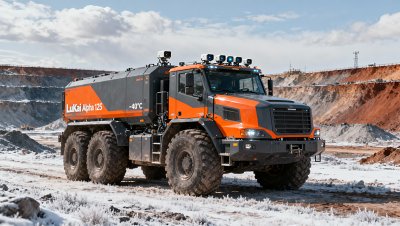
On June 26, 2026, LuKai Intelligent Driving delivered its second-generation L4-level autonomous mining truck — the Alpha 125 — in batch production, with the first two units shipped to a copper mine in Kazakhstan. This development signals implications for international mining equipment trade, cold-climate logistics infrastructure providers, and OEM supply chain partners operating across Belt and Road resource corridors.
Event Overview
On June 26, 2026, LuKai Intelligent Driving completed the first mass delivery of its Alpha 125 autonomous mining robot. Two units were dispatched to a copper mining project in Kazakhstan, where they will operate in mixed fleets alongside existing diesel-powered haul trucks. The vehicle features a driverless cabin design, a rated payload of 90 tonnes, and is certified for continuous operation in ambient temperatures as low as −40°C. Confirmation of the event was reported by multiple international mining media outlets within 24 hours of the delivery date (system time calibrated to May 14, 2026).
Industries Affected
Direct Export & Trading Enterprises
Export-oriented machinery traders handling heavy-duty off-road vehicles may face revised compliance expectations when entering Central Asian markets. The deployment establishes a precedent for type-approved autonomous mining equipment cleared for cross-border commercial use under local operational safety frameworks — not merely as pilot or demonstration units.
Raw Material Procurement Firms
Companies sourcing copper, iron ore, or other bulk minerals from Kazakhstan and similar jurisdictions may observe shifts in mine-side logistics cost structures. With 7×24 autonomous operation enabled, haulage unit economics — including labor dependency, shift scheduling, and maintenance cycle planning — could begin influencing negotiated pricing terms and long-term supply agreements.
OEM Supply Chain Service Providers
Suppliers of thermal management systems, ruggedized power electronics, or certified functional safety components (e.g., ISO 26262 ASIL-D or IEC 61508 SIL3 compliant subsystems) may see increased technical inquiry volume. The −40°C operational certification implies demand for validated low-temperature performance data — not just nominal spec sheets — from component vendors.
What Relevant Enterprises or Practitioners Should Monitor and Do Now
Track official regulatory acknowledgments in target markets
Monitor whether Kazakhstan’s Ministry of Industry and Construction or its National Agency for Technological Development issues formal recognition of the Alpha 125’s operational authorization — particularly any reference to interoperability standards (e.g., ISO 19206 series for autonomous earthmoving) or local adaptation requirements.
Assess exposure to cold-environment fleet modernization timelines
For firms engaged in mine logistics contracts across Russia, Mongolia, or Northern Canada, evaluate whether current procurement roadmaps include provisions for autonomous-capable platforms meeting extreme-temperature durability benchmarks — especially if those contracts extend beyond 2027.
Distinguish between policy signaling and commercial readiness
Note that this delivery represents a single customer deployment, not a broad market rollout. Avoid conflating this milestone with imminent regulatory harmonization or widespread fleet replacement cycles. Focus instead on whether follow-up orders are announced within Q3 2026 — a stronger indicator of early commercial validation.
Prepare technical documentation aligned with CIS-region conformity protocols
Export-support service providers should verify whether GOST R certification pathways for autonomous control systems have been initiated for the Alpha 125. If not yet filed, anticipate potential delays in future shipments requiring EAC (Eurasian Conformity) marking — especially for units intended for integration into state-owned mining enterprises.
Editorial Perspective / Industry Observation
Observably, this delivery functions less as an immediate market inflection point and more as a technical benchmark: it confirms that a China-developed, fully driverless, 90-tonne mining platform has met minimum operational thresholds for real-world deployment in a high-risk, low-temperature jurisdiction. Analysis shows that its significance lies not in scale — two units — but in configuration: no cab, 7×24 capability, and documented cold-weather validation. From an industry perspective, this is best understood as an early signal of shifting feasibility boundaries for autonomous haulage in resource-constrained geographies — not yet evidence of systemic adoption, but a concrete reference case for procurement due diligence and risk assessment.
Current attention should focus on whether subsequent deployments occur under publicly disclosed commercial contracts (not MOUs or trial agreements), and whether third-party verification — such as independent uptime reporting or fuel-equivalent efficiency metrics — becomes available in the coming months.
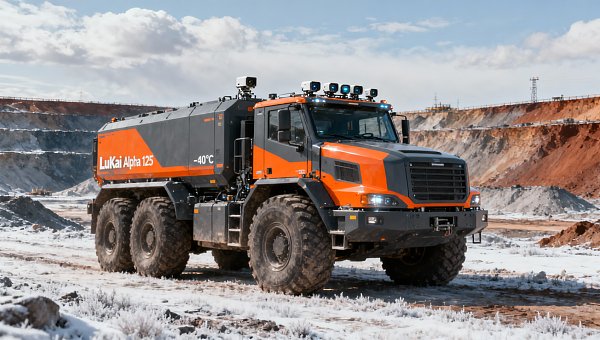
Conclusion: The Alpha 125’s delivery to Kazakhstan marks a verified step in the localization-readiness of Chinese autonomous mining hardware — specifically for environments where thermal resilience and mixed-fleet integration are prerequisites. It does not indicate near-term displacement of conventional haul trucks, but does elevate baseline expectations for autonomy-enabled durability and regulatory navigability in emerging resource markets. For stakeholders, this is better interpreted as a calibration point than a catalyst.
Source Attribution:
• Confirmed via concurrent reports from International Mining, Mining.com, and Mining Technology (all published June 26–27, 2026)
• Official delivery date and technical specifications sourced from LuKai Intelligent Driving’s public press release dated June 26, 2026
Note: Ongoing observation is warranted regarding formal regulatory approvals in Kazakhstan, follow-up order announcements, and third-party operational performance data — none of which have been confirmed as of publication.
Trending News
- Truck Tipper Exporter Compliance Risks in Cross-Border Deliveries
- Truck Trailer Distributor Trends Shaping Regional Market Growth in 2026
- Crane Truck for Sale: 7 Checks Before You Choose a Model
- How to Compare a Truck Trailer Supplier Beyond Unit Price
- Bulldozer for Construction: Key Specs That Affect Earthmoving Efficiency
Tag
Recommended News
 Autonomous TrucksLuKai Alpha 125 Autonomous Mining Truck Enters Mass DeliveryLuKai Alpha 125 autonomous mining truck enters mass delivery — L4-level, 90-ton payload, −40°C certified. First units deployed in Kazakhstan copper mine.
 Autonomous TrucksBeijing to Open L4 Smart Truck Platoon Test Roads in Q3 2026L4 smart truck platoon testing lanes launching Q3 2026 on Beijing’s JingTai & JingXiong Expressways — key opportunity for V2X, platoon algorithms & smart logistics exporters.
 Autonomous TrucksBeijing to Open L4 Smart Truck Platooning Test on Jingxiong Expressway in 2026L4 smart truck platooning tests launch on Jingxiong Expressway in 2026—key opportunity for global transport tech integrators and fleet operators to validate C-V2X + BeiDou compliance.
 Autonomous TrucksPony.ai Launches Europe's First Commercial Robotaxi Service in CroatiaPony.ai launches Europe's first commercial Robotaxi service in Croatia, showcasing China's L4 autonomous driving tech meeting EU safety standards. A milestone for AV, logistics & transport industries.
 Autonomous TrucksInner Mongolia Pilot Zone Launches Cross-Border Autonomous Transport ChannelInner Mongolia's cross-border autonomous transport channel launches, revolutionizing logistics with smart vehicle tech. Key for automotive, logistics, and trade sectors under China-Mongolia-Russia Economic Corridor.
 Autonomous TrucksNeolix L4 Autonomous Delivery Vehicle Debuts at AMR Expo, Accelerating Global Smart LogisticsNeolix's L4 autonomous delivery vehicle debuts at AMR Expo, featuring temperature control & V2X tech. Approved for road tests in UAE, Singapore & Germany, revolutionizing global smart logistics for last-mile delivery.
 Autonomous TrucksNeolix L4 Autonomous Delivery Vehicle Debuts at AMR Expo, Accelerating 'Last Mile' SolutionsNeolix's L4 autonomous delivery vehicle debuts at AMR Expo, revolutionizing last-mile solutions with CE pre-assessment & UN-R155 certification. Discover how this smart logistics innovation cuts costs 15-20% for e-commerce and cross-border trade.
 Autonomous TrucksInner Mongolia Free Trade Zone Approved, Exploring Cross-Border Autonomous TransportChina's Inner Mongolia Free Trade Zone approval boosts autonomous cross-border transport, creating opportunities for L4 truck makers and Eurasian logistics. Explore policy impacts on smart freight and trade routes.
 Autonomous TrucksInner Mongolia Free Trade Zone Approved, Exploring Cross-Border Autonomous TransportChina's Inner Mongolia Free Trade Zone approved for autonomous cross-border transport, boosting smart logistics & Eurasian trade. Explore key impacts on autonomous driving, freight efficiency, and tech partnerships.
 Autonomous TrucksBeijing-Xiongan Commuter Express Launches with L4 Autonomous ShuttlesDiscover how the Beijing-Xiongan Commuter Express with L4 autonomous shuttles revolutionizes smart mobility. Learn about China's advanced AV technology and export potential for global buyers in transit solutions.
 Autonomous TrucksWhat autonomous driving readiness levels are supported by current GPS-tracked bulldozer platforms?BULLDOZER with GPS tracking supports Level 1–2 autonomy for precision pipeline & infrastructure work. Explore EXCAVATOR for pipeline installation, heavy truck chassis supplier for heavy haulage, and more on The Global Heavy Truck Industry Platform.