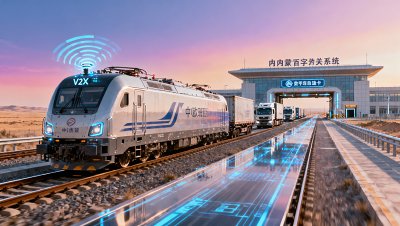
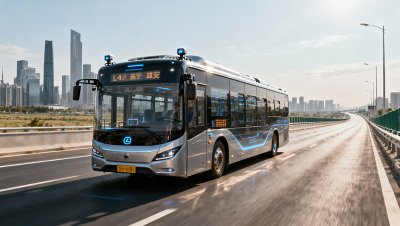
Beijing-Xiongan Commuter Express Launches with L4 Autonomous Shuttles
Introduction
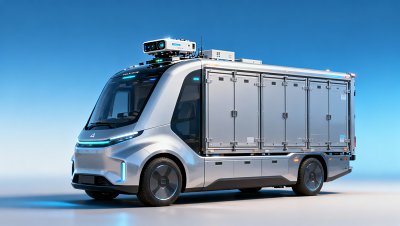
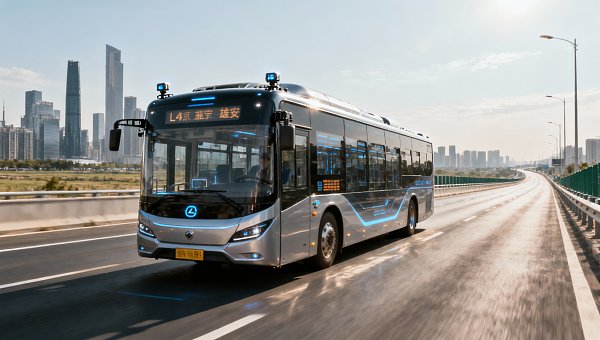
On March 17, 2026, the Beijing-Xiongan Commuter Express officially began operations, featuring domestically produced L4 autonomous medium-sized buses jointly delivered by automotive and smart driving enterprises in the Beijing-Tianjin-Hebei region. This development is particularly noteworthy for industries involved in autonomous vehicle technology, smart city infrastructure, and international trade in mobility solutions. The project serves as a tangible case study for overseas buyers in municipal transit, airport shuttles, and closed-campus logistics, signaling China's growing capability in batch production of intelligent mobility systems.
Event Overview
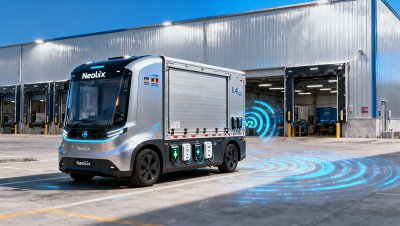
The Beijing-Xiongan Commuter Express launched on March 17, 2026, utilizing L4 autonomous medium-sized buses developed through collaboration among multiple Chinese manufacturers. The project demonstrates China's progress in key technologies such as intelligent chassis, automotive-grade domain controllers, and V2X cooperative systems. It also aims to reduce the technology adoption cycle for international clients seeking ready-made solutions.
Impact on Key Industries
Autonomous Vehicle Manufacturers
The successful deployment validates China's ability to produce L4 autonomous vehicles at scale, potentially accelerating global adoption. Manufacturers should monitor international procurement trends, particularly in emerging markets seeking turnkey solutions.
Smart City Infrastructure Providers
The integration of V2X systems highlights growing opportunities for companies specializing in connected infrastructure. Providers should assess compatibility with Chinese autonomous driving standards when planning overseas projects.
International Trade Consultants
With China positioning itself as a provider of complete mobility solutions, trade consultants should update clients on certification processes and technology transfer frameworks for autonomous vehicle imports.
Key Considerations for Stakeholders
Monitor Certification Standards
Companies should track evolving international regulations for L4 autonomous vehicles, as standardization will influence export potential.
Evaluate Partnership Opportunities
The joint delivery model suggests value in forming cross-industry alliances to offer comprehensive mobility packages.
Assess Localization Requirements
International buyers will need support adapting Chinese autonomous systems to local operating conditions and regulatory environments.
Industry Perspective
From an industry standpoint, this development appears more significant as a market signal than an immediate disruptive force. While demonstrating technical capability, widespread international adoption will depend on factors beyond technology readiness, including regulatory alignment and infrastructure compatibility. The project nevertheless establishes China as a serious contender in the global autonomous mobility market, particularly for structured operational environments.
Conclusion
The Beijing-Xiongan Commuter Express represents a milestone in China's autonomous vehicle industry, showcasing export-ready technology while highlighting remaining challenges in global market penetration. Industry observers would be prudent to view this as evidence of technological maturation rather than immediate market transformation, with the true test being sustained operational performance and international customer adoption.
Source Information
Primary source: Official launch announcement of Beijing-Xiongan Commuter Express, March 17, 2026. Ongoing monitoring required for operational data and international customer feedback.
Trending News
- Cab Chassis Truck for Fire Department: Key Specs Before Ordering
- When to Use an Excavator With Long Reach Boom on Site
- Choosing a Water Truck Factory for Municipal and Mining Projects
- Truck Parts Wholesale: How to Balance Price, Quality, and Lead Time
- Crane Truck Price in 2026: What Drives Total Ownership Cost
Tag
Recommended News
 Autonomous TrucksLuKai Alpha 125 Mining Transport Robot Enters Mass DeliveryLuKai Alpha 125 mining transport robot enters mass delivery — GNSS-denied, KAZMINE-2026 certified autonomous haulage for copper mines in Kazakhstan.
 Autonomous TrucksL4 Autonomous Container Tractor Chassis Emerges as New Export Vehicle for China's Smart Shipping StrategyL4 autonomous container tractor chassis: China's new export-ready smart shipping solution for global logistics—modular, UN R156-precompliant, and infrastructure-adaptive.
 Autonomous TrucksLuKai Alpha 125 Mining Robot Enters Mass DeliveryLuKai Alpha 125 mining robot — L4 autonomous haulage, 90-ton payload, GNSS-free navigation — now in mass delivery for global mines.
 Autonomous TrucksLuKai Alpha 125 Autonomous Mining Truck Enters Mass DeliveryLuKai Alpha 125 autonomous mining truck enters mass delivery — L4-level, 90-ton payload, −40°C certified. First units deployed in Kazakhstan copper mine.
 Autonomous TrucksBeijing to Open L4 Smart Truck Platoon Test Roads in Q3 2026L4 smart truck platoon testing lanes launching Q3 2026 on Beijing’s JingTai & JingXiong Expressways — key opportunity for V2X, platoon algorithms & smart logistics exporters.
 Autonomous TrucksBeijing to Open L4 Smart Truck Platooning Test on Jingxiong Expressway in 2026L4 smart truck platooning tests launch on Jingxiong Expressway in 2026—key opportunity for global transport tech integrators and fleet operators to validate C-V2X + BeiDou compliance.
 Autonomous TrucksPony.ai Launches Europe's First Commercial Robotaxi Service in CroatiaPony.ai launches Europe's first commercial Robotaxi service in Croatia, showcasing China's L4 autonomous driving tech meeting EU safety standards. A milestone for AV, logistics & transport industries.
 Autonomous TrucksInner Mongolia Pilot Zone Launches Cross-Border Autonomous Transport ChannelInner Mongolia's cross-border autonomous transport channel launches, revolutionizing logistics with smart vehicle tech. Key for automotive, logistics, and trade sectors under China-Mongolia-Russia Economic Corridor.
 Autonomous TrucksNeolix L4 Autonomous Delivery Vehicle Debuts at AMR Expo, Accelerating Global Smart LogisticsNeolix's L4 autonomous delivery vehicle debuts at AMR Expo, featuring temperature control & V2X tech. Approved for road tests in UAE, Singapore & Germany, revolutionizing global smart logistics for last-mile delivery.
 Autonomous TrucksNeolix L4 Autonomous Delivery Vehicle Debuts at AMR Expo, Accelerating 'Last Mile' SolutionsNeolix's L4 autonomous delivery vehicle debuts at AMR Expo, revolutionizing last-mile solutions with CE pre-assessment & UN-R155 certification. Discover how this smart logistics innovation cuts costs 15-20% for e-commerce and cross-border trade.
 Autonomous TrucksInner Mongolia Free Trade Zone Approved, Exploring Cross-Border Autonomous TransportChina's Inner Mongolia Free Trade Zone approval boosts autonomous cross-border transport, creating opportunities for L4 truck makers and Eurasian logistics. Explore policy impacts on smart freight and trade routes.
 Autonomous TrucksInner Mongolia Free Trade Zone Approved, Exploring Cross-Border Autonomous TransportChina's Inner Mongolia Free Trade Zone approved for autonomous cross-border transport, boosting smart logistics & Eurasian trade. Explore key impacts on autonomous driving, freight efficiency, and tech partnerships.
 Autonomous TrucksBeijing-Xiongan Commuter Express Launches with L4 Autonomous ShuttlesDiscover how the Beijing-Xiongan Commuter Express with L4 autonomous shuttles revolutionizes smart mobility. Learn about China's advanced AV technology and export potential for global buyers in transit solutions.
 Autonomous TrucksWhat autonomous driving readiness levels are supported by current GPS-tracked bulldozer platforms?BULLDOZER with GPS tracking supports Level 1–2 autonomy for precision pipeline & infrastructure work. Explore EXCAVATOR for pipeline installation, heavy truck chassis supplier for heavy haulage, and more on The Global Heavy Truck Industry Platform.