Shanghai Boosts L4 Autonomous Driving, Targets 6M Passengers by 2027
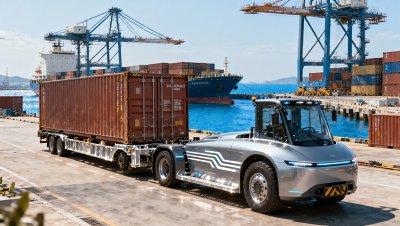
On January 16, 2026, Shanghai announced ambitious plans to achieve over 6 million cumulative passenger trips using L4-level autonomous vehicles by 2027, focusing on ports, airports, urban microcirculation, and new town shuttle services. This policy will accelerate the standardization and large-scale application of specialized autonomous vehicle systems, including unmanned delivery vehicles, Robo-Bus chassis, and smart sanitation vehicles. The initiative is expected to provide Chinese manufacturers with high-density commercial validation data, enhancing global trust in Chinese autonomous solutions for government procurement, municipal tenders, and logistics technology selection.
Event Overview
Shanghai has set a clear target for L4 autonomous vehicle adoption, aiming for over 6 million passenger trips by 2027. The policy prioritizes deployment in specific scenarios such as port logistics, airport transfers, urban microcirculation, and new town connectivity. This move is part of broader efforts to standardize and scale autonomous vehicle applications, particularly in specialized sectors like delivery, public transport, and sanitation.
Impact on Key Industries
Autonomous Vehicle Manufacturers
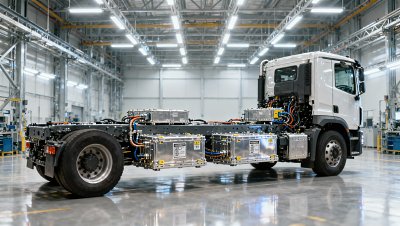
The policy will drive demand for specialized autonomous vehicle platforms, including Robo-Bus chassis and unmanned delivery systems. Manufacturers with expertise in these areas will benefit from increased orders and opportunities to refine their technology through real-world applications.
Smart City Infrastructure Providers
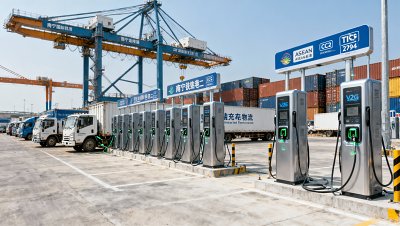
Companies involved in smart city infrastructure, such as V2X communication systems and traffic management solutions, will see growing demand as Shanghai expands its autonomous vehicle network. This includes upgrades to road sensors, traffic signals, and data integration platforms.
Logistics and Delivery Services
Logistics firms and e-commerce platforms operating in Shanghai may gain early access to autonomous delivery networks, reducing operational costs and improving efficiency. The policy could also spur partnerships between logistics providers and autonomous vehicle manufacturers.
Key Considerations for Businesses
Monitor Policy Implementation
Companies should track how Shanghai rolls out its autonomous vehicle initiatives, including pilot programs and infrastructure upgrades. Early adopters may gain a competitive edge in securing contracts or partnerships.
Focus on Niche Applications
Businesses should prioritize specialized autonomous solutions, such as last-mile delivery or airport shuttle services, where demand is likely to grow fastest under the new policy.
Prepare for Data-Driven Opportunities
The high-volume deployment of autonomous vehicles will generate valuable operational data. Companies that can leverage this data to improve their products or services will have an advantage in both domestic and international markets.
Industry Perspective
From an industry standpoint, Shanghai's policy signals a strong commitment to autonomous vehicle adoption at scale. While the 6 million passenger target is ambitious, it reflects growing confidence in L4 technology's readiness for real-world use. The focus on specific use cases suggests a pragmatic approach to implementation, with potential lessons for other cities looking to deploy autonomous systems.
Conclusion
Shanghai's L4 autonomous vehicle targets represent a significant step forward for the industry, particularly in specialized applications like logistics and public transport. While the full impact will depend on implementation, the policy creates immediate opportunities for manufacturers and service providers in the autonomous vehicle ecosystem. Businesses should view this as both a validation of the technology's potential and a call to prepare for scaled deployment.
Source
Shanghai Municipal Government Announcement, January 16, 2026.
Trending News
- Cab Chassis Truck for Fire Department: Key Specs Before Ordering
- When to Use an Excavator With Long Reach Boom on Site
- Choosing a Water Truck Factory for Municipal and Mining Projects
- Truck Parts Wholesale: How to Balance Price, Quality, and Lead Time
- Crane Truck Price in 2026: What Drives Total Ownership Cost
Tag
Recommended News
 New Energy TrucksChina Adds Tractor-Trailer Battery-Swap Systems to Subsidy ProgramTractor-trailer battery-swap systems now qualify for China’s new energy subsidy—up to ¥32,000 per unit. Key update for陆路运输设备 manufacturers, logistics fleets, and EV infrastructure providers.
 New Energy TrucksChina Introduces Subsidies for EV Bus & Battery ReplacementEV bus & battery replacement subsidies now live in China—up to ¥12,000/unit for medium/heavy-duty tractors & refrigerated semi-trailers. Act now!
 New Energy TrucksWorld's Largest Methanol-Fueled Container Ship NamedWorld's largest methanol-fueled container ship named — accelerating green adoption across land-based port handling equipment, yard tractors, stacker cranes & reach stackers.
 New Energy TrucksKunming Launches Jacaranda-Themed EV Buses; Design Draws Interest from South AmericaKunming's jacaranda-themed EV buses showcase China's design-led electric bus innovation — drawing strong interest from South America's transport operators.
 New Energy TrucksNanning IRP Launches Smart EV Freight Charging & Swapping StationNanning IRP’s smart EV freight charging & swapping station — China’s first for cross-border heavy-duty trucks — boosts efficiency, cuts downtime, and sets a new benchmark for China–ASEAN green logistics.
 New Energy TrucksNanning IRP Launches First Cross-Border EV Heavy-Duty Charging HubNanning IRP launches China’s first cross-border EV heavy-duty charging hub—enabling 3-min battery swaps, V2G, and TMS integration for China–ASEAN freight.
 New Energy TrucksNanning IRP Launches RCEP-Focused EV Freight Charging HubNanning IRP launches China’s first RCEP-focused EV freight charging hub—300kW fast charge, battery swap & AI dispatch for China–Vietnam/Laos cross-border logistics.
 New Energy TrucksKunming's Blue Jacaranda Themed Buses Launch with Domestic Smart Scheduling & New Energy ChassisKunming's blue jacaranda buses debut with domestic smart scheduling & new energy LFMP chassis—key benchmark for global urban transit equipment exporters and smart mobility integrators.
 New Energy TrucksNanning IRP Launches Smart EV Charging Hub for ASEAN FreightNanning IRP's Smart EV Charging Hub powers ASEAN freight with intelligent charging, maintenance & green refueling — a game-changing infrastructure leap for cross-border electric truck operators.
 New Energy TrucksChina Launches New Freight Hub Initiative Targeting Smart EV Truck SwappingSmart EV truck battery-swap hubs take center stage in China’s new National Freight Hub Initiative—unlocking opportunities for OEMs, integrators & global logistics operators.
 New Energy TrucksChina Launches New Freight Hub Strengthening ActionChina's new Freight Hub Strengthening Action prioritizes intelligent battery-swap hubs & multimodal terminals—key for EV truck OEMs, logistics providers, and global supply chain enablers.
 New Energy TrucksGermany Launches H2-Truck Corridor Tender: Chinese OEMs Eligible as PartnersH2-Truck Corridor tender launched in Germany—Chinese OEMs invited as technology partners. €180M cross-border hydrogen freight initiative with EU CBAM credit potential.
 New Energy TrucksUS CBP Launches Traceability Review for EV Heavy-Duty Truck Battery ComponentsEV heavy-duty truck battery components now face US CBP traceability review—learn how firmware hashes, Battery Passports & Tier-3 docs impact your exports.
 New Energy TrucksHebei Launches H2 Heavy-Duty Truck Export Channel to EUH2 heavy-duty truck export channel launched: Hebei opens EU test route for green hydrogen trucks — key for OEMs, certifiers & hydrogen infrastructure.
 New Energy TrucksHebei Unveils '15th Five-Year' Transport Plan: Hydrogen Heavy-Duty Truck Corridor and Export Test ChannelsHydrogen heavy-duty truck manufacturers & international fleet operators: Hebei launches Beijing–Tianjin–Shijiazhuang corridor and Tangshan/Caofeidian export test channels — accelerate global validation and market entry.
 New Energy TrucksNanning IRP Launches EV Freight Charging Station for W. Sea-Air CorridorNanning IRP's new EV freight charging station boosts W. Sea-Air Corridor logistics — 300 V2G terminals, ASEAN-standard support, and cold-chain readiness. Discover how it reshapes cross-border EV freight viability.
 New Energy TrucksHebei's 15th Five-Year Transport Plan Launches Hydrogen Heavy-Duty Truck CorridorHydrogen heavy-duty truck corridor launched in Hebei—key opportunity for manufacturers, logistics operators & clean energy developers targeting Mongolia/Russia markets.
 New Energy TrucksJining, Shandong Builds 132 E-Heavy-Duty Truck Charging StationsJining, Shandong’s 132 e-heavy-duty truck charging stations set a new benchmark for GB/T 20234.3–2025 compliance—key for global exporters, OEMs & infrastructure integrators.
 New Energy TrucksHebei's 15th Five-Year Plan Launches Beijing-Tianjin-Hebei H2 Truck CorridorHebei's 15th Five-Year Plan launches the Beijing-Tianjin-Hebei H2 truck corridor — a strategic gateway for hydrogen heavy-duty vehicle exporters, OEMs, and green transport partners to validate GB/T 34592-compliant trucks in real port logistics environments.
 New Energy TrucksJining, Shandong Builds 132 EV Heavy-Duty Truck Charging StationsEV heavy-duty truck charging stations in Jining, Shandong: 132 sites deployed + local standard launched — a scalable model driving global EPC-plus-operations exports.
 New Energy TrucksNanning Rail Port Builds EV Charging Hub for Western Land-Sea CorridorNanning Rail Port's new EV charging hub accelerates green freight along the Western Land-Sea Corridor — vital for cross-border logistics, EV exporters & ESG-compliant shippers.
 New Energy TrucksChina's First 10,000-Ton Pure-Electric Smart Container Ship Enters ServiceChina's first 10,000-ton pure-electric smart container ship launches—driving urgent 800V/V2G and IEC 62196-3:2025 compliance for port terminal tractors and logistics equipment suppliers.
 New Energy TrucksChina's First 10,000-Ton Pure Electric Smart Container Ship Enters ServiceElectric port tractor & battery-swap systems gain global momentum as China’s first 10,000-ton pure electric smart container ship enters service—key for zero-carbon terminals and overseas green port projects.
 New Energy TrucksGuangxi Xijiang Waterway Enforces Zero Discharge for Vessel PollutantsGuangxi Xijiang Waterway enforces zero discharge for vessel pollutants—impacting LNG-powered transport, electric short-haul trucks & green port infrastructure. Key for陆路运输设备 stakeholders.
 New Energy TrucksLeshan 110kV Luomu Substation Upgrade CompletedLeshan 110kV Luomu Substation upgrade delivers intelligent load regulation & millisecond fault isolation — critical for EV heavy-duty truck battery-swap networks on the Sichuan–Chongqing corridor.