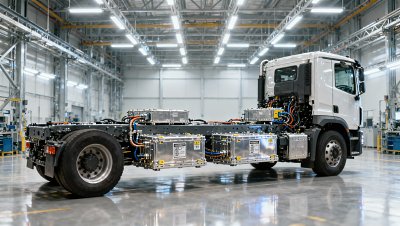
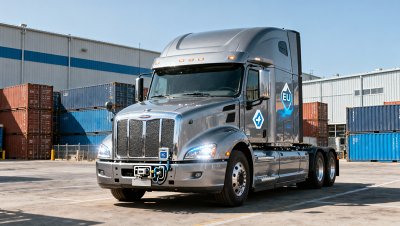
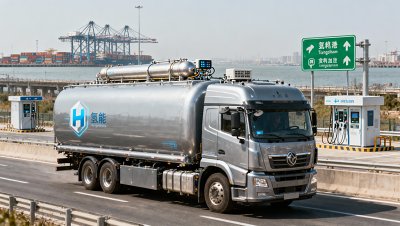
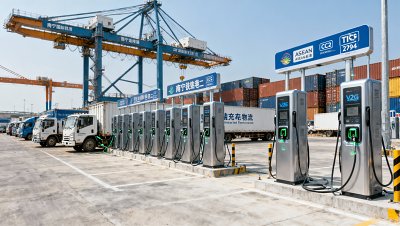
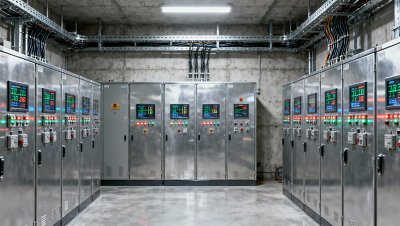
Jining, Shandong Builds 132 E-Heavy-Duty Truck Charging Stations
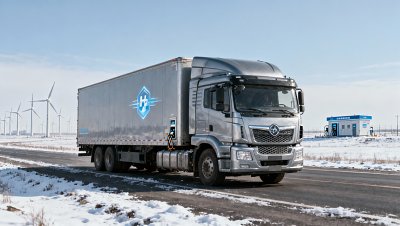
As of April 29, 2026, Jining City in Shandong Province has completed construction of 132 standardized charging stations dedicated to electric heavy-duty trucks — a development with implications for international commercial EV infrastructure standards, cross-border equipment procurement, and supply chain interoperability planning.
Event Overview
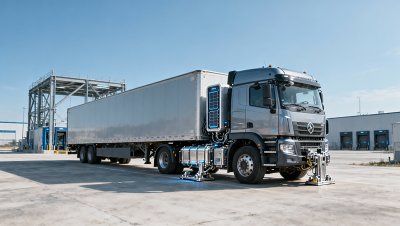
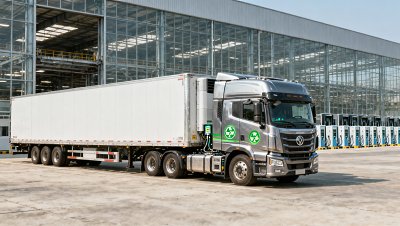
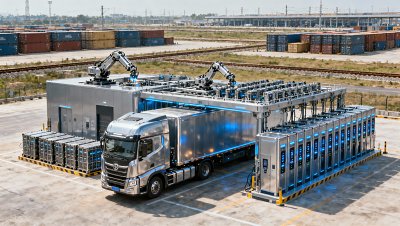
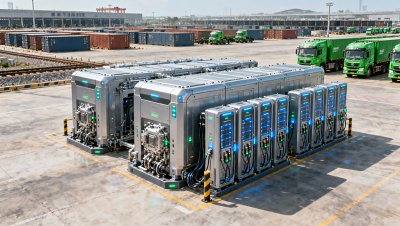
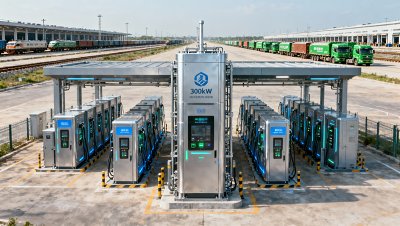
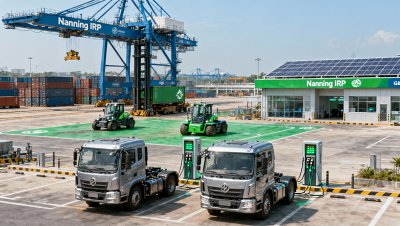
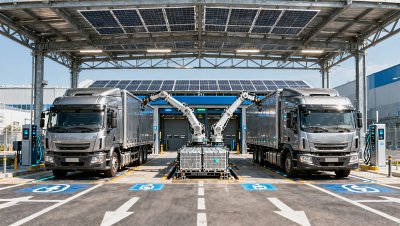
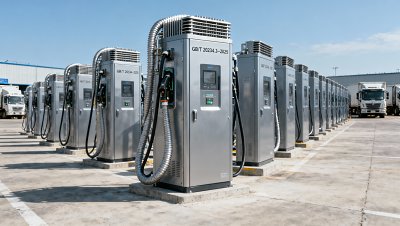
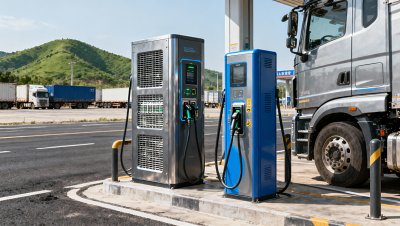
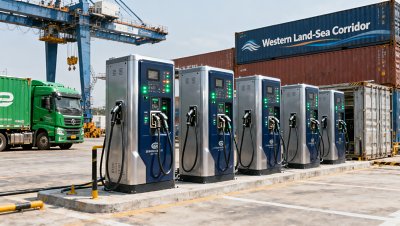
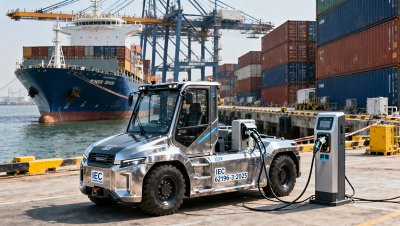
By April 29, 2026, Jining had commissioned 132 electric heavy-duty truck–specific charging stations. All stations comply with the GB/T 20234.3–2025 connector protocol and employ modular liquid-cooled fast-charging technology, with individual chargers capable of up to 480 kW peak output. This deployment is under active review by transportation authorities in ASEAN and Middle Eastern countries as a reference for domestic heavy-truck electrification infrastructure standards. Overseas buyers evaluating Chinese electric heavy-duty trucks are now assessing compatibility with the ‘mainstream Chinese commercial charging ecosystem’ represented by the Jining standard.
Industries Affected
Direct Exporters & Cross-Border Equipment Suppliers
Exporters supplying charging hardware, vehicle interfaces, or control systems to China’s commercial EV infrastructure projects may face tightening interoperability requirements. The adoption of GB/T 20234.3–2025 as a de facto benchmark in large-scale deployments signals growing technical alignment expectations in downstream procurement — particularly where Chinese-built infrastructure serves as a model for overseas regulatory frameworks.
Electric Heavy-Duty Vehicle Manufacturers
OEMs designing or certifying trucks for export markets — especially ASEAN and Gulf Cooperation Council (GCC) countries — must now assess whether their vehicles’ charging interfaces and thermal management systems align with the Jining-deployed specification set. Non-compliance may limit eligibility for infrastructure-supported pilot programs or public procurement tenders referencing this standard.
Charging Infrastructure Integrators & System Providers
Firms integrating chargers into depot networks, logistics hubs, or port terminals need to verify component-level compliance with GB/T 20234.3–2025 and liquid-cooling interface specifications. The 480 kW peak power requirement implies higher thermal design margins and updated grid connection assessments — affecting both hardware selection and site commissioning timelines.
Supply Chain & Logistics Service Providers
Third-party fleet operators and logistics service providers adopting electric heavy-duty trucks — particularly those operating across China and neighboring regions — may encounter divergent charging availability depending on adherence to the Jining-aligned ecosystem. Interoperability gaps could affect route planning, dwell time at depots, and maintenance scheduling if proprietary or non-standard cooling or communication protocols are used.
What Relevant Enterprises or Practitioners Should Monitor and Do Now
Track official technical references from ASEAN and GCC transport agencies
Several ASEAN and Middle Eastern national transport ministries have initiated technical consultations on heavy-truck charging standards; publicly available draft documents or working group reports may cite Jining’s implementation as a case study. Monitoring these outputs helps anticipate near-term specification shifts in tender requirements.
Verify vehicle and charger certification status against GB/T 20234.3–2025
For manufacturers and integrators, confirming formal compliance — not just functional compatibility — with the 2025 revision is critical. Certification bodies such as CQC and CATL-certified test labs now list this protocol in scope; documentation should specify version year and tested power envelope (e.g., ≥480 kW under liquid-cooled conditions).
Distinguish between policy signaling and operational readiness
While foreign agencies are studying the Jining model, no binding adoption of GB/T 20234.3–2025 has been announced outside China. Enterprises should treat current references as indicative rather than prescriptive — prioritizing flexibility in interface design and firmware-upgradable communication stacks over immediate full re-engineering.
Prepare for interface and thermal validation in multi-market pilot deployments
When participating in joint infrastructure pilots (e.g., China–Thailand green freight corridors), allocate additional time and budget for on-site verification of connector mating force, coolant flow rate synchronization, and CAN FD message timing — all aspects highlighted in GB/T 20234.3–2025 but not covered in earlier versions.
Editorial Perspective / Industry Observation
Observably, the Jining rollout functions less as an isolated infrastructure milestone and more as a coordination signal: it reflects consolidation around a nationally harmonized, high-power, liquid-cooled charging architecture for heavy-duty applications. Analysis shows this is not yet a globally adopted standard — but its use as a reference point by multiple sovereign regulators suggests it is gaining weight as a *de facto* interoperability anchor in emerging markets. From an industry perspective, this development marks a shift from fragmented pilot testing toward system-level scalability benchmarks. It is currently best understood as a strong technical policy signal — one that informs procurement roadmaps and product development cycles, but does not yet mandate immediate redesign across global portfolios.
Conclusion
This initiative underscores how localized, large-scale infrastructure deployments can shape transnational technical expectations — especially where domestic standards demonstrate operational viability at scale. For stakeholders, the Jining case is not about replicating a single city’s build-out, but recognizing how standardized, high-power charging ecosystems influence equipment compatibility thresholds, certification pathways, and regional infrastructure planning. It is more accurately interpreted as an evolving reference framework than a finalized global requirement — warranting structured monitoring, not wholesale adaptation.
Source Attribution
Main source: Official update released by Jining Municipal Transport Bureau, dated April 29, 2026. No third-party verification or independent technical audit reports have been published to date. Ongoing observation is recommended for updates from ASEAN Secretariat Working Group on Sustainable Freight and GCC Standardization Organization’s EV Infrastructure Task Force.
Trending News
- Logging Truck Price in 2026: What Affects Total Ownership Cost?
- Crane Truck Cost Breakdown: Chassis, Boom, and Compliance Fees
- How to Compare a Logging Truck Distributor by Service Coverage
- Choosing a Water Truck Supplier for Dust Control Projects
- Water Truck Exporter Selection: Key Delivery and Compliance Risks
Tag
Recommended News
 New Energy TrucksChina Adds Tractor-Trailer Battery-Swap Systems to Subsidy ProgramTractor-trailer battery-swap systems now qualify for China’s new energy subsidy—up to ¥32,000 per unit. Key update for陆路运输设备 manufacturers, logistics fleets, and EV infrastructure providers.
 New Energy TrucksChina Introduces Subsidies for EV Bus & Battery ReplacementEV bus & battery replacement subsidies now live in China—up to ¥12,000/unit for medium/heavy-duty tractors & refrigerated semi-trailers. Act now!
 New Energy TrucksWorld's Largest Methanol-Fueled Container Ship NamedWorld's largest methanol-fueled container ship named — accelerating green adoption across land-based port handling equipment, yard tractors, stacker cranes & reach stackers.
 New Energy TrucksKunming Launches Jacaranda-Themed EV Buses; Design Draws Interest from South AmericaKunming's jacaranda-themed EV buses showcase China's design-led electric bus innovation — drawing strong interest from South America's transport operators.
 New Energy TrucksNanning IRP Launches Smart EV Freight Charging & Swapping StationNanning IRP’s smart EV freight charging & swapping station — China’s first for cross-border heavy-duty trucks — boosts efficiency, cuts downtime, and sets a new benchmark for China–ASEAN green logistics.
 New Energy TrucksNanning IRP Launches First Cross-Border EV Heavy-Duty Charging HubNanning IRP launches China’s first cross-border EV heavy-duty charging hub—enabling 3-min battery swaps, V2G, and TMS integration for China–ASEAN freight.
 New Energy TrucksNanning IRP Launches RCEP-Focused EV Freight Charging HubNanning IRP launches China’s first RCEP-focused EV freight charging hub—300kW fast charge, battery swap & AI dispatch for China–Vietnam/Laos cross-border logistics.
 New Energy TrucksKunming's Blue Jacaranda Themed Buses Launch with Domestic Smart Scheduling & New Energy ChassisKunming's blue jacaranda buses debut with domestic smart scheduling & new energy LFMP chassis—key benchmark for global urban transit equipment exporters and smart mobility integrators.
 New Energy TrucksNanning IRP Launches Smart EV Charging Hub for ASEAN FreightNanning IRP's Smart EV Charging Hub powers ASEAN freight with intelligent charging, maintenance & green refueling — a game-changing infrastructure leap for cross-border electric truck operators.
 New Energy TrucksChina Launches New Freight Hub Initiative Targeting Smart EV Truck SwappingSmart EV truck battery-swap hubs take center stage in China’s new National Freight Hub Initiative—unlocking opportunities for OEMs, integrators & global logistics operators.
 New Energy TrucksChina Launches New Freight Hub Strengthening ActionChina's new Freight Hub Strengthening Action prioritizes intelligent battery-swap hubs & multimodal terminals—key for EV truck OEMs, logistics providers, and global supply chain enablers.
 New Energy TrucksGermany Launches H2-Truck Corridor Tender: Chinese OEMs Eligible as PartnersH2-Truck Corridor tender launched in Germany—Chinese OEMs invited as technology partners. €180M cross-border hydrogen freight initiative with EU CBAM credit potential.
 New Energy TrucksUS CBP Launches Traceability Review for EV Heavy-Duty Truck Battery ComponentsEV heavy-duty truck battery components now face US CBP traceability review—learn how firmware hashes, Battery Passports & Tier-3 docs impact your exports.
 New Energy TrucksHebei Launches H2 Heavy-Duty Truck Export Channel to EUH2 heavy-duty truck export channel launched: Hebei opens EU test route for green hydrogen trucks — key for OEMs, certifiers & hydrogen infrastructure.
 New Energy TrucksHebei Unveils '15th Five-Year' Transport Plan: Hydrogen Heavy-Duty Truck Corridor and Export Test ChannelsHydrogen heavy-duty truck manufacturers & international fleet operators: Hebei launches Beijing–Tianjin–Shijiazhuang corridor and Tangshan/Caofeidian export test channels — accelerate global validation and market entry.
 New Energy TrucksNanning IRP Launches EV Freight Charging Station for W. Sea-Air CorridorNanning IRP's new EV freight charging station boosts W. Sea-Air Corridor logistics — 300 V2G terminals, ASEAN-standard support, and cold-chain readiness. Discover how it reshapes cross-border EV freight viability.
 New Energy TrucksHebei's 15th Five-Year Transport Plan Launches Hydrogen Heavy-Duty Truck CorridorHydrogen heavy-duty truck corridor launched in Hebei—key opportunity for manufacturers, logistics operators & clean energy developers targeting Mongolia/Russia markets.
 New Energy TrucksJining, Shandong Builds 132 E-Heavy-Duty Truck Charging StationsJining, Shandong’s 132 e-heavy-duty truck charging stations set a new benchmark for GB/T 20234.3–2025 compliance—key for global exporters, OEMs & infrastructure integrators.
 New Energy TrucksHebei's 15th Five-Year Plan Launches Beijing-Tianjin-Hebei H2 Truck CorridorHebei's 15th Five-Year Plan launches the Beijing-Tianjin-Hebei H2 truck corridor — a strategic gateway for hydrogen heavy-duty vehicle exporters, OEMs, and green transport partners to validate GB/T 34592-compliant trucks in real port logistics environments.
 New Energy TrucksJining, Shandong Builds 132 EV Heavy-Duty Truck Charging StationsEV heavy-duty truck charging stations in Jining, Shandong: 132 sites deployed + local standard launched — a scalable model driving global EPC-plus-operations exports.
 New Energy TrucksNanning Rail Port Builds EV Charging Hub for Western Land-Sea CorridorNanning Rail Port's new EV charging hub accelerates green freight along the Western Land-Sea Corridor — vital for cross-border logistics, EV exporters & ESG-compliant shippers.
 New Energy TrucksChina's First 10,000-Ton Pure-Electric Smart Container Ship Enters ServiceChina's first 10,000-ton pure-electric smart container ship launches—driving urgent 800V/V2G and IEC 62196-3:2025 compliance for port terminal tractors and logistics equipment suppliers.
 New Energy TrucksChina's First 10,000-Ton Pure Electric Smart Container Ship Enters ServiceElectric port tractor & battery-swap systems gain global momentum as China’s first 10,000-ton pure electric smart container ship enters service—key for zero-carbon terminals and overseas green port projects.
 New Energy TrucksGuangxi Xijiang Waterway Enforces Zero Discharge for Vessel PollutantsGuangxi Xijiang Waterway enforces zero discharge for vessel pollutants—impacting LNG-powered transport, electric short-haul trucks & green port infrastructure. Key for陆路运输设备 stakeholders.
 New Energy TrucksLeshan 110kV Luomu Substation Upgrade CompletedLeshan 110kV Luomu Substation upgrade delivers intelligent load regulation & millisecond fault isolation — critical for EV heavy-duty truck battery-swap networks on the Sichuan–Chongqing corridor.