World's Largest Methanol-Fueled Container Ship Named
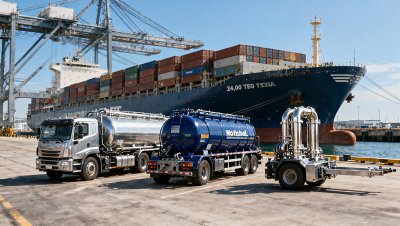
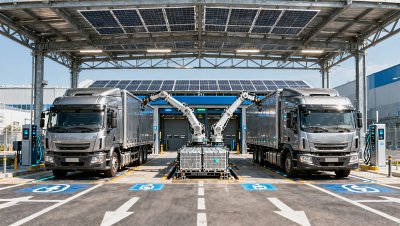
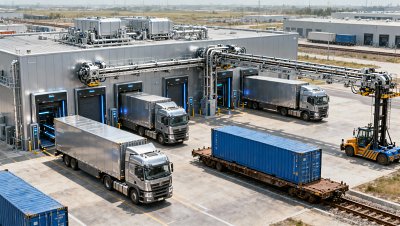
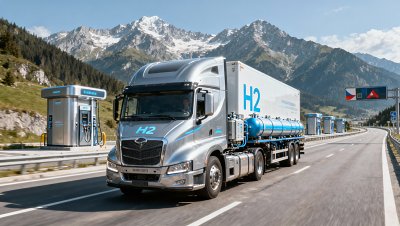
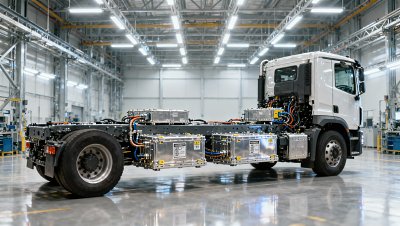
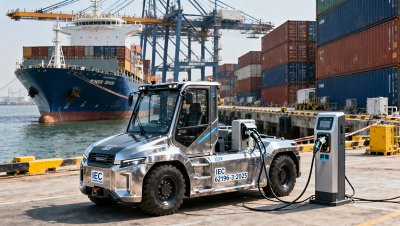
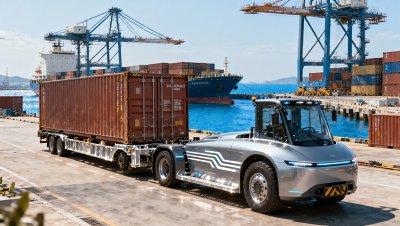
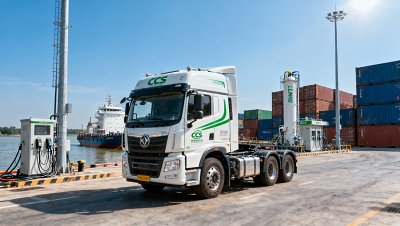
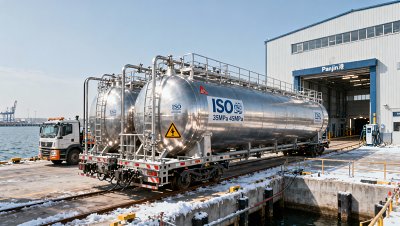
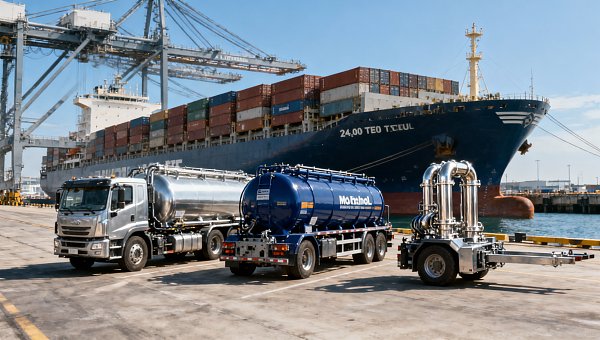
On May 7, 2026, the world’s first 24,000 TEU methanol dual-fuel container ship was named in Nantong, Jiangsu Province, China. This milestone signals growing traction for green land-based equipment supporting maritime decarbonization — particularly methanol-compatible tractor units, cryogenic methanol tank semi-trailers, and dedicated loading/unloading arm systems — all domestically developed and certified by DNV GL. Stakeholders in marine logistics, heavy-duty road transport, and port infrastructure should monitor implications for cross-border equipment procurement, certification alignment, and regional green fuel supply chain development.
Event Overview
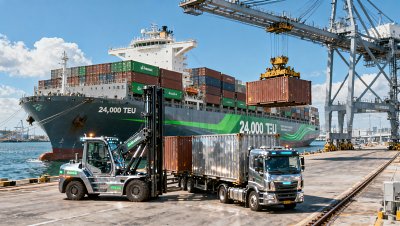
On May 7, 2026, a 24,000 TEU methanol dual-fuel container ship was officially named in Nantong, Jiangsu. Its shore-side support equipment — including methanol refueling tractors, cryogenic methanol tank semi-trailers, and specialized loading/unloading arms — was jointly developed by Chinese enterprises and has received DNV GL certification. The vessel is scheduled for operation on Southeast Asia–North Europe routes.
Impact on Specific Industry Segments
Maritime Carriers & Liner Operators
These operators face increasing pressure to meet EEXI and CII requirements on major trade lanes. The deployment of methanol-fueled vessels creates demand for compatible port-side handling infrastructure — especially where bunkering, storage, and transfer must occur at low temperatures without leakage or material degradation. Impact manifests as tighter technical specifications for third-party service providers and longer lead times for equipment commissioning.
Heavy-Duty Road Transport Equipment Manufacturers
Domestic manufacturers of specialized trailers and tractors now have validated reference designs meeting international class society standards (DNV GL). This opens opportunities for export-oriented production — but only if product documentation, materials traceability, and operational safety protocols align with EU/ASEAN regulatory expectations. Impact centers on certification readiness, not just mechanical performance.
Port Infrastructure & Terminal Operators
Ports serving Southeast Asia–North Europe routes may see early requests for methanol bunkering zones, cryogenic storage capacity, and vapor recovery integration. Unlike LNG, methanol handling requires corrosion-resistant materials and strict vapor control — yet lacks harmonized global terminal design codes. Impact lies in phased infrastructure planning: retrofitting existing facilities versus building new dedicated zones.
Logistics Service Providers & Cross-Border Freight Forwarders
Forwarders managing containerized cargo across these corridors will need to verify methanol compatibility of inland equipment used for drayage and depot transfers. Non-compliant trailers or untrained personnel could delay vessel turnarounds or trigger port authority inspections. Impact appears first in documentation checks and carrier-verified equipment lists — not in rate changes or volume shifts.
What Relevant Enterprises or Practitioners Should Focus On Now
Monitor certification pathway updates from DNV GL and other classification societies
DNV GL’s current methanol equipment guidelines are based on interim recommendations. Analysis shows formalized rules for cryogenic methanol transport systems — especially for semi-trailers operating below −97°C — are still under review. Stakeholders should track publication timelines rather than assume current certifications guarantee long-term compliance.
Track equipment deployment patterns on Southeast Asia–North Europe routes
Observably, initial vessel deployments do not automatically trigger parallel orders for shore-side gear. Actual procurement depends on port authority approvals, local fuel availability, and charterer-mandated safety clauses. Current more suitable approach is to map which terminals (e.g., Rotterdam, Singapore, Hamburg) have publicly announced methanol bunkering pilot programs — not assume blanket regional rollout.
Distinguish between policy intent and operational readiness
While national green shipping initiatives signal strategic direction, actual methanol fuel supply chains remain fragmented. From industry perspective, confirmed methanol production volumes, ISO-certified fuel quality testing labs, and documented cold-weather performance data — not policy statements — determine near-term feasibility. Prioritize verification over anticipation.
Prepare documentation packages for international equipment validation
DNV GL certification alone does not satisfy EU Type Approval or ASEAN Mutual Recognition Arrangement requirements. Companies exporting methanol-handling gear should begin compiling material test reports, weld procedure specifications, and operator training curricula — aligned with EN 13094 (tank vehicles) and ISO 18645 (methanol fuel quality) — well before tender submissions.
Editorial Perspective / Industry Observation
This event is best understood as a technical validation milestone — not yet a commercial inflection point. Analysis shows it confirms domestic capability to meet stringent marine-grade certification for methanol infrastructure, but does not indicate imminent large-scale fleet conversion or standardized port retrofits. Observably, the real signal lies in the coordination among shipbuilder, equipment OEMs, and class society — suggesting maturing ecosystem alignment, not just isolated product success. From industry angle, sustained attention is warranted because certification precedents set here may inform future standards for ammonia or hydrogen-compatible transport systems.
In summary, the naming of this vessel marks a step toward scalable green fuel integration in deep-sea shipping — but its primary industry significance is in validating land-based equipment interoperability under international safety frameworks. It is more accurately interpreted as an enabler of future procurement, not evidence of current market saturation. Current more appropriate understanding is that this is a foundational benchmark — one that raises the bar for technical due diligence, not a trigger for immediate capital expenditure across logistics networks.
Source: Public announcement issued on May 7, 2026, regarding the naming ceremony in Nantong, Jiangsu; confirmation of DNV GL certification status for associated land-based equipment; stated operational route (Southeast Asia–North Europe).
Note: Ongoing observation is required for actual deployment schedule, fuel supply chain development, and follow-up equipment orders — none of which are confirmed in available information.
Trending News
- Construction Machinery Cost Control: 7 Hidden Expenses in Project Planning
- Logging Truck Price Guide: Spec Choices That Change Total Ownership Cost
- Crane Truck Cost Breakdown: Chassis, Crane Unit, and Compliance Fees
- How to Vet a Logging Truck Distributor Before Entering a New Market
- Logging Truck Supplier Selection: Load Capacity, Terrain Fit, and Downtime
Tag
Recommended News
 New Energy TrucksWorld's Largest Methanol-Fueled Container Ship NamedWorld's largest methanol-fueled container ship named — discover how methanol-compatible tractor units, cryogenic tank semi-trailers & loading systems are reshaping green land-based transport.
 New Energy TrucksWorld's Largest Methanol-Fueled Container Ship NamedWorld's largest methanol-fueled container ship named — accelerating green adoption across land-based port handling equipment, yard tractors, stacker cranes & reach stackers.
 New Energy TrucksKunming Launches Jacaranda-Themed EV Buses; Design Draws Interest from South AmericaKunming's jacaranda-themed EV buses showcase China's design-led electric bus innovation — drawing strong interest from South America's transport operators.
 New Energy TrucksNanning IRP Launches Smart EV Freight Charging & Swapping StationNanning IRP’s smart EV freight charging & swapping station — China’s first for cross-border heavy-duty trucks — boosts efficiency, cuts downtime, and sets a new benchmark for China–ASEAN green logistics.
 New Energy TrucksNanning IRP Launches First Cross-Border EV Heavy-Duty Charging HubNanning IRP launches China’s first cross-border EV heavy-duty charging hub—enabling 3-min battery swaps, V2G, and TMS integration for China–ASEAN freight.
 New Energy TrucksNanning IRP Launches RCEP-Focused EV Freight Charging HubNanning IRP launches China’s first RCEP-focused EV freight charging hub—300kW fast charge, battery swap & AI dispatch for China–Vietnam/Laos cross-border logistics.
 New Energy TrucksKunming's Blue Jacaranda Themed Buses Launch with Domestic Smart Scheduling & New Energy ChassisKunming's blue jacaranda buses debut with domestic smart scheduling & new energy LFMP chassis—key benchmark for global urban transit equipment exporters and smart mobility integrators.
 New Energy TrucksNanning IRP Launches Smart EV Charging Hub for ASEAN FreightNanning IRP's Smart EV Charging Hub powers ASEAN freight with intelligent charging, maintenance & green refueling — a game-changing infrastructure leap for cross-border electric truck operators.
 New Energy TrucksChina Launches New Freight Hub Initiative Targeting Smart EV Truck SwappingSmart EV truck battery-swap hubs take center stage in China’s new National Freight Hub Initiative—unlocking opportunities for OEMs, integrators & global logistics operators.
 New Energy TrucksChina Launches New Freight Hub Strengthening ActionChina's new Freight Hub Strengthening Action prioritizes intelligent battery-swap hubs & multimodal terminals—key for EV truck OEMs, logistics providers, and global supply chain enablers.
 New Energy TrucksGermany Launches H2-Truck Corridor Tender: Chinese OEMs Eligible as PartnersH2-Truck Corridor tender launched in Germany—Chinese OEMs invited as technology partners. €180M cross-border hydrogen freight initiative with EU CBAM credit potential.
 New Energy TrucksUS CBP Launches Traceability Review for EV Heavy-Duty Truck Battery ComponentsEV heavy-duty truck battery components now face US CBP traceability review—learn how firmware hashes, Battery Passports & Tier-3 docs impact your exports.
 New Energy TrucksHebei Launches H2 Heavy-Duty Truck Export Channel to EUH2 heavy-duty truck export channel launched: Hebei opens EU test route for green hydrogen trucks — key for OEMs, certifiers & hydrogen infrastructure.
 New Energy TrucksHebei Unveils '15th Five-Year' Transport Plan: Hydrogen Heavy-Duty Truck Corridor and Export Test ChannelsHydrogen heavy-duty truck manufacturers & international fleet operators: Hebei launches Beijing–Tianjin–Shijiazhuang corridor and Tangshan/Caofeidian export test channels — accelerate global validation and market entry.
 New Energy TrucksNanning IRP Launches EV Freight Charging Station for W. Sea-Air CorridorNanning IRP's new EV freight charging station boosts W. Sea-Air Corridor logistics — 300 V2G terminals, ASEAN-standard support, and cold-chain readiness. Discover how it reshapes cross-border EV freight viability.
 New Energy TrucksHebei's 15th Five-Year Transport Plan Launches Hydrogen Heavy-Duty Truck CorridorHydrogen heavy-duty truck corridor launched in Hebei—key opportunity for manufacturers, logistics operators & clean energy developers targeting Mongolia/Russia markets.
 New Energy TrucksJining, Shandong Builds 132 E-Heavy-Duty Truck Charging StationsJining, Shandong’s 132 e-heavy-duty truck charging stations set a new benchmark for GB/T 20234.3–2025 compliance—key for global exporters, OEMs & infrastructure integrators.
 New Energy TrucksHebei's 15th Five-Year Plan Launches Beijing-Tianjin-Hebei H2 Truck CorridorHebei's 15th Five-Year Plan launches the Beijing-Tianjin-Hebei H2 truck corridor — a strategic gateway for hydrogen heavy-duty vehicle exporters, OEMs, and green transport partners to validate GB/T 34592-compliant trucks in real port logistics environments.
 New Energy TrucksJining, Shandong Builds 132 EV Heavy-Duty Truck Charging StationsEV heavy-duty truck charging stations in Jining, Shandong: 132 sites deployed + local standard launched — a scalable model driving global EPC-plus-operations exports.
 New Energy TrucksNanning Rail Port Builds EV Charging Hub for Western Land-Sea CorridorNanning Rail Port's new EV charging hub accelerates green freight along the Western Land-Sea Corridor — vital for cross-border logistics, EV exporters & ESG-compliant shippers.
 New Energy TrucksChina's First 10,000-Ton Pure-Electric Smart Container Ship Enters ServiceChina's first 10,000-ton pure-electric smart container ship launches—driving urgent 800V/V2G and IEC 62196-3:2025 compliance for port terminal tractors and logistics equipment suppliers.
 New Energy TrucksChina's First 10,000-Ton Pure Electric Smart Container Ship Enters ServiceElectric port tractor & battery-swap systems gain global momentum as China’s first 10,000-ton pure electric smart container ship enters service—key for zero-carbon terminals and overseas green port projects.
 New Energy TrucksGuangxi Xijiang Waterway Enforces Zero Discharge for Vessel PollutantsGuangxi Xijiang Waterway enforces zero discharge for vessel pollutants—impacting LNG-powered transport, electric short-haul trucks & green port infrastructure. Key for陆路运输设备 stakeholders.
 New Energy TrucksLeshan 110kV Luomu Substation Upgrade CompletedLeshan 110kV Luomu Substation upgrade delivers intelligent load regulation & millisecond fault isolation — critical for EV heavy-duty truck battery-swap networks on the Sichuan–Chongqing corridor.
 New Energy TrucksPanjin Port Launches LNG Tank Container TerminalPanjin Port's new LNG tank container terminal — Northeast China’s first — boosts cold-climate transport, cross-border LNG trade & modular logistics for importers, carriers & EPC firms.