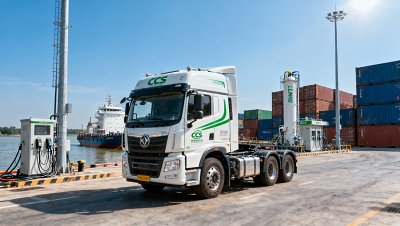
Panjin Port Launches LNG Tank Container Terminal
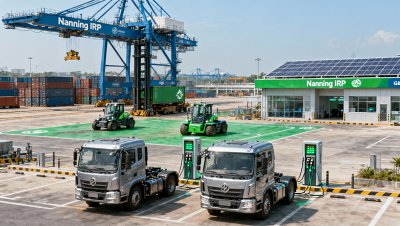
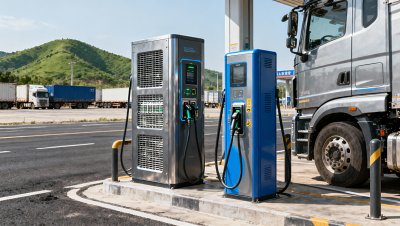
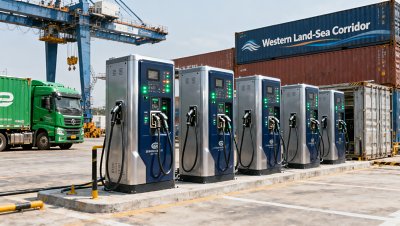
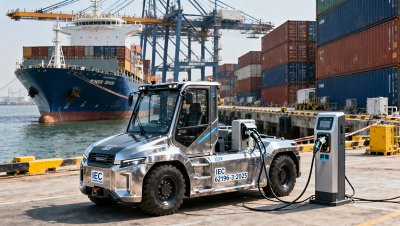
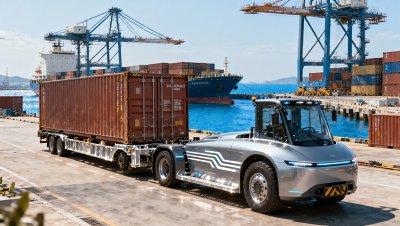
On April 18, 2026, Panjin Port activated its dedicated LNG tank container handling berth — the first of its kind in Northeast China — alongside a dedicated LNG-fueled tractor truck refueling lane and maintenance center. This development signals material implications for LNG logistics, cold-climate heavy transport, and cross-border energy trade infrastructure, particularly for enterprises engaged in LNG import/export, cryogenic equipment supply, and international energy project execution.
Event Overview
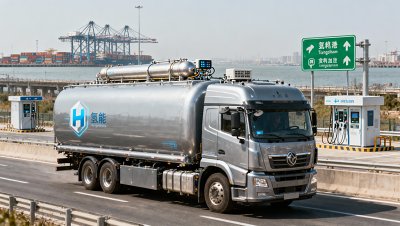
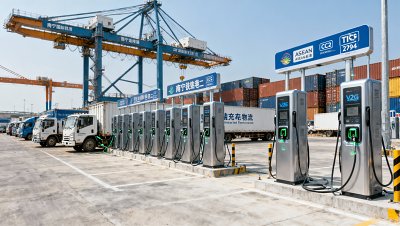
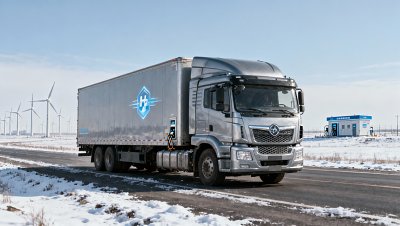
On April 18, 2026, Panjin Port officially commenced operations at its LNG tank container专用 loading/unloading berth. The facility supports dual-pressure-grade tank containers (35 MPa and 45 MPa) and includes Northeast China’s first dedicated refueling and maintenance infrastructure for LNG-powered tractor trucks. Confirmed commercial commitments include annual tank container transportation agreements signed with Sinopec and Gazprom Far East Company.
Impact on Specific Industry Segments
Direct Trade Enterprises (LNG Importers/Exporters)
These entities face newly viable routing options for small- to medium-volume LNG shipments from resource-rich countries including Canada, Norway, and Kazakhstan. The terminal enables flexible, modular LNG movement without reliance on large-scale liquefaction terminals or regasification infrastructure — lowering entry barriers for spot or project-based LNG trade.
Supply Chain Service Providers (Tank Container Operators & Intermodal Carriers)
Operators managing ISO tank containers — especially those certified for 35 MPa/45 MPa LNG service — may see increased demand for compatible equipment and certified driver training. The availability of on-site refueling and maintenance also reduces downtime for LNG-fueled prime movers, improving asset utilization in cold-weather corridors.
Energy Project Contractors & EPC Firms
Firms executing LNG logistics components for overseas resource projects now have a reference case demonstrating validated Chinese-made equipment performance under extreme low-temperature conditions. This may influence tender specifications and technology selection criteria for future projects in similar climates.
What Relevant Enterprises or Practitioners Should Monitor and Act On
Track official operational metrics and expansion timelines
Current information confirms commissioning but not throughput volume, average dwell time, or planned capacity upgrades. Stakeholders should monitor port authority announcements and customs clearance data for early indicators of scalability.
Monitor pressure-grade alignment between contracted equipment and terminal specs
The terminal supports both 35 MPa and 45 MPa tank containers. Enterprises deploying or procuring units must verify compatibility with their intended cargo origin (e.g., Canadian producers commonly use 45 MPa; some Asian terminals operate at 35 MPa), as mismatched specs may trigger rehandling or certification delays.
Distinguish between pilot validation and full commercial rollout
While Sinopec and Gazprom Far East have signed annual agreements, these represent initial anchor contracts — not evidence of broad market adoption. Observers should treat this as a proof-of-concept milestone rather than an immediate shift in mainstream LNG logistics flows.
Assess cold-weather maintenance protocols for LNG tractors
The integrated maintenance center is explicitly designed for LNG-fueled tractors operating in sub-zero conditions. Fleets planning deployments to Northeast China or similar regions should request access to documented procedures and service SLAs before committing long-term vehicle allocations.
Editorial Perspective / Industry Observation
From an industry perspective, this initiative is best understood as a functional validation point — not yet a systemic infrastructure shift. It demonstrates that Chinese port infrastructure can meet international technical requirements for high-pressure LNG tank logistics under extreme environmental constraints. Analysis来看, its primary value lies in de-risking modular LNG transport for bilateral energy cooperation, especially where full-scale terminals are economically or geographically unfeasible. Observation来看, the involvement of both a major Chinese NOC (Sinopec) and a Russian state-backed supplier (Gazprom Far East) suggests strategic alignment beyond commercial convenience — though actual trade volumes remain to be verified. Current more appropriate interpretation is that this is an enabling step, not a self-sustaining channel.
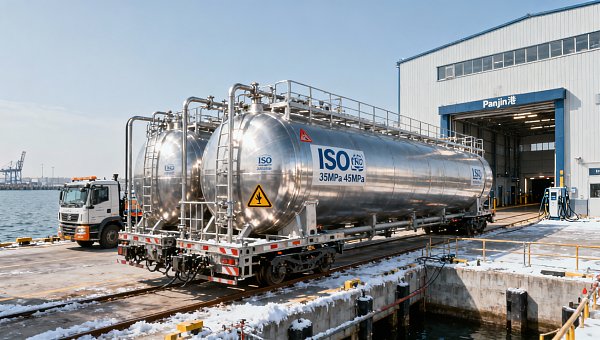
In summary, the Panjin Port LNG tank container terminal represents a targeted infrastructure upgrade with measurable implications for niche LNG logistics segments — particularly those involving modular transport, cold-climate operations, and resource-country partnerships. Its significance is procedural and symbolic at this stage: it confirms technical readiness and contractual interest, but does not yet indicate scalable throughput or market-wide adoption. For stakeholders, it is更适合理解为 a benchmark for feasibility — one that warrants monitoring, not immediate strategic realignment.
Source: Official commissioning announcement by Panjin Port Authority (April 18, 2026); confirmed contract references from Sinopec and Gazprom Far East press statements. Note: Throughput data, tariff structures, and future phase plans remain unconfirmed and require ongoing observation.
Trending News
- Nanjing Launches First Wind Power Equipment Shipping Route to Pakistan
- Irkeshtam Port’s 24-Hour Freight Clearance Boosts Exports to Kyrgyzstan
- Erenhot-Mongolia 24-Hour Freight Clearance Marks First Anniversary
- China-Europe Railway Express Surpasses 130,000 Trains
- Iran-Pakistan Launch 6 Cross-Border Roads, 3 New Land Ports
Tag
Recommended News
 New Energy TrucksNanning IRP Launches Smart EV Freight Charging & Swapping StationNanning IRP’s smart EV freight charging & swapping station — China’s first for cross-border heavy-duty trucks — boosts efficiency, cuts downtime, and sets a new benchmark for China–ASEAN green logistics.
 New Energy TrucksNanning IRP Launches First Cross-Border EV Heavy-Duty Charging HubNanning IRP launches China’s first cross-border EV heavy-duty charging hub—enabling 3-min battery swaps, V2G, and TMS integration for China–ASEAN freight.
 New Energy TrucksNanning IRP Launches RCEP-Focused EV Freight Charging HubNanning IRP launches China’s first RCEP-focused EV freight charging hub—300kW fast charge, battery swap & AI dispatch for China–Vietnam/Laos cross-border logistics.
 New Energy TrucksNanning IRP Launches RCEP-Focused EV Freight Charging HubNanning IRP launches China’s first RCEP-focused EV freight charging hub—300kW fast charge, battery swap & AI dispatch for China–Vietnam/Laos cross-border logistics.
 New Energy TrucksNanning IRP Launches RCEP-Focused EV Freight Charging HubNanning IRP launches China’s first RCEP-focused EV freight charging hub—300kW fast charge, battery swap & AI dispatch for China–Vietnam/Laos cross-border logistics.
 New Energy TrucksNanning IRP Launches RCEP-Focused EV Freight Charging HubNanning IRP launches China’s first RCEP-focused EV freight charging hub—300kW fast charge, battery swap & AI dispatch for China–Vietnam/Laos cross-border logistics.
 New Energy TrucksNanning IRP Launches RCEP-Focused EV Freight Charging HubNanning IRP launches China’s first RCEP-focused EV freight charging hub—300kW fast charge, battery swap & AI dispatch for China–Vietnam/Laos cross-border logistics.
 New Energy TrucksKunming's Blue Jacaranda Themed Buses Launch with Domestic Smart Scheduling & New Energy ChassisKunming's blue jacaranda buses debut with domestic smart scheduling & new energy LFMP chassis—key benchmark for global urban transit equipment exporters and smart mobility integrators.
 New Energy TrucksNanning IRP Launches Smart EV Charging Hub for ASEAN FreightNanning IRP's Smart EV Charging Hub powers ASEAN freight with intelligent charging, maintenance & green refueling — a game-changing infrastructure leap for cross-border electric truck operators.
 New Energy TrucksChina Launches New Freight Hub Initiative Targeting Smart EV Truck SwappingSmart EV truck battery-swap hubs take center stage in China’s new National Freight Hub Initiative—unlocking opportunities for OEMs, integrators & global logistics operators.
 New Energy TrucksChina Launches New Freight Hub Strengthening ActionChina's new Freight Hub Strengthening Action prioritizes intelligent battery-swap hubs & multimodal terminals—key for EV truck OEMs, logistics providers, and global supply chain enablers.
 New Energy TrucksGermany Launches H2-Truck Corridor Tender: Chinese OEMs Eligible as PartnersH2-Truck Corridor tender launched in Germany—Chinese OEMs invited as technology partners. €180M cross-border hydrogen freight initiative with EU CBAM credit potential.
 New Energy TrucksUS CBP Launches Traceability Review for EV Heavy-Duty Truck Battery ComponentsEV heavy-duty truck battery components now face US CBP traceability review—learn how firmware hashes, Battery Passports & Tier-3 docs impact your exports.
 New Energy TrucksHebei Launches H2 Heavy-Duty Truck Export Channel to EUH2 heavy-duty truck export channel launched: Hebei opens EU test route for green hydrogen trucks — key for OEMs, certifiers & hydrogen infrastructure.
 New Energy TrucksHebei Unveils '15th Five-Year' Transport Plan: Hydrogen Heavy-Duty Truck Corridor and Export Test ChannelsHydrogen heavy-duty truck manufacturers & international fleet operators: Hebei launches Beijing–Tianjin–Shijiazhuang corridor and Tangshan/Caofeidian export test channels — accelerate global validation and market entry.
 New Energy TrucksJining, Shandong Builds 132 E-Heavy-Duty Truck Charging StationsJining, Shandong builds 132 e-heavy-duty truck charging stations — ultra-fast 360kW liquid-cooled chargers with AI battery monitoring. A global reference for green freight corridors.
 New Energy TrucksNanning IRP Launches EV Freight Charging Station for W. Sea-Air CorridorNanning IRP's new EV freight charging station boosts W. Sea-Air Corridor logistics — 300 V2G terminals, ASEAN-standard support, and cold-chain readiness. Discover how it reshapes cross-border EV freight viability.
 New Energy TrucksHebei's 15th Five-Year Transport Plan Launches Hydrogen Heavy-Duty Truck CorridorHydrogen heavy-duty truck corridor launched in Hebei—key opportunity for manufacturers, logistics operators & clean energy developers targeting Mongolia/Russia markets.
 New Energy TrucksJining, Shandong Builds 132 E-Heavy-Duty Truck Charging StationsJining, Shandong’s 132 e-heavy-duty truck charging stations set a new benchmark for GB/T 20234.3–2025 compliance—key for global exporters, OEMs & infrastructure integrators.
 New Energy TrucksHebei's 15th Five-Year Plan Launches Beijing-Tianjin-Hebei H2 Truck CorridorHebei's 15th Five-Year Plan launches the Beijing-Tianjin-Hebei H2 truck corridor — a strategic gateway for hydrogen heavy-duty vehicle exporters, OEMs, and green transport partners to validate GB/T 34592-compliant trucks in real port logistics environments.
 New Energy TrucksJining, Shandong Builds 132 EV Heavy-Duty Truck Charging StationsEV heavy-duty truck charging stations in Jining, Shandong: 132 sites deployed + local standard launched — a scalable model driving global EPC-plus-operations exports.
 New Energy TrucksNanning Rail Port Builds EV Charging Hub for Western Land-Sea CorridorNanning Rail Port's new EV charging hub accelerates green freight along the Western Land-Sea Corridor — vital for cross-border logistics, EV exporters & ESG-compliant shippers.
 New Energy TrucksChina's First 10,000-Ton Pure-Electric Smart Container Ship Enters ServiceChina's first 10,000-ton pure-electric smart container ship launches—driving urgent 800V/V2G and IEC 62196-3:2025 compliance for port terminal tractors and logistics equipment suppliers.
 New Energy TrucksChina's First 10,000-Ton Pure Electric Smart Container Ship Enters ServiceElectric port tractor & battery-swap systems gain global momentum as China’s first 10,000-ton pure electric smart container ship enters service—key for zero-carbon terminals and overseas green port projects.
 New Energy TrucksGuangxi Xijiang Waterway Enforces Zero Discharge for Vessel PollutantsGuangxi Xijiang Waterway enforces zero discharge for vessel pollutants—impacting LNG-powered transport, electric short-haul trucks & green port infrastructure. Key for陆路运输设备 stakeholders.