Iran Shifts 40% Trade to Land Routes by 2026; China-Pakistan Border Crossings Go 24/7
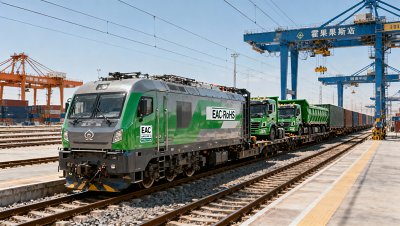
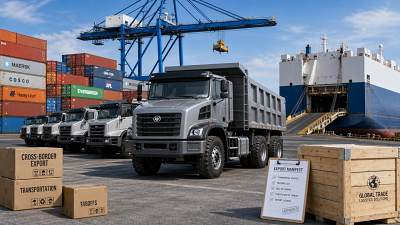
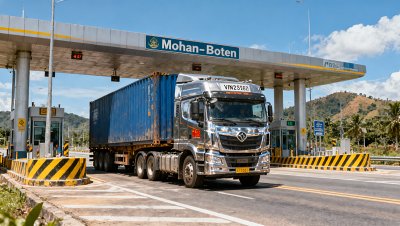
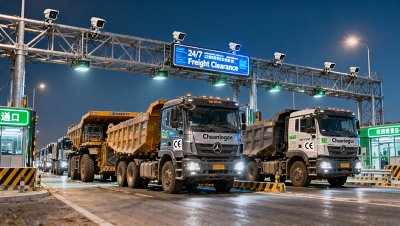
On May 1, 2026, Iran announced a strategic shift to redirect 40% of its foreign trade to overland transport by end-2026 — reducing reliance on the Strait of Hormuz. Simultaneously, Pakistan and Iran jointly launched six new cross-border road links and three additional land ports, enabling 24-hour operations at six land border crossings with cargo clearance compressed to under six hours. This development directly affects exporters of heavy-duty trucks, specialized transport vehicles, intelligent customs clearance systems, and modular semi-trailers — notably increasing procurement demand for Eurasian South Corridor land logistics equipment along the China–Pakistan–Iran triangle.
Event Overview
On May 1, 2026, the Iranian Ministry of Roads and Urban Development announced that 40% of Iran’s foreign trade volume would be shifted to land-based transport routes by the end of 2026. On the same date, Pakistan and Iran inaugurated six new cross-border highways and three new land ports, bringing the total number of fully operational 24-hour land border crossings between the two countries to six. At these six points, customs clearance for goods is now targeted to be completed within six hours.
Industries Affected
Heavy-Duty & Specialized Vehicle Manufacturers
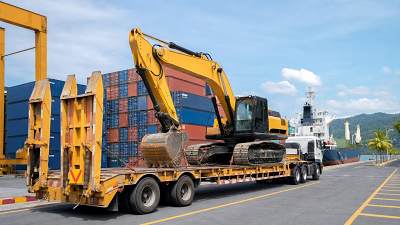
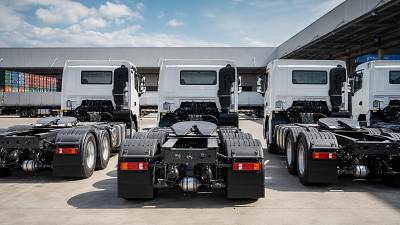
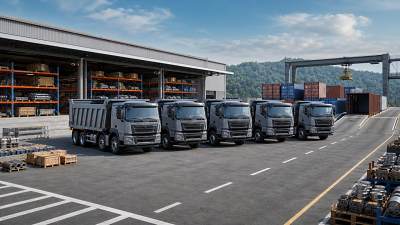
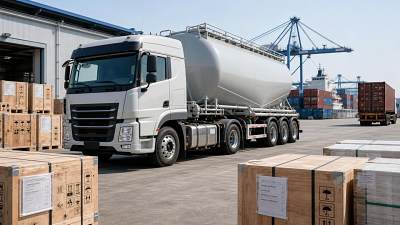
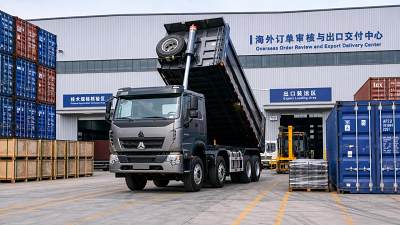
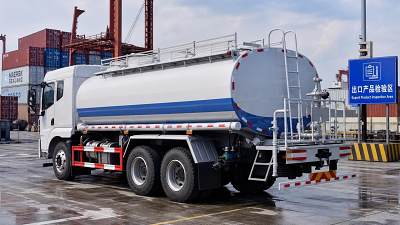
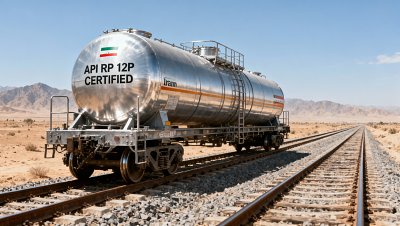
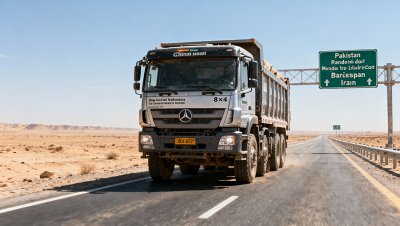
These manufacturers are directly impacted because the infrastructure expansion increases demand for trucks suited to long-haul desert/mountain routes, refrigerated or tank transport units, and ruggedized chassis for modular trailer coupling. The 24/7通关 (customs) requirement also raises specifications for vehicle durability, telematics integration, and compliance with regional safety and emissions standards.
Intelligent Customs Equipment Suppliers
With clearance time compressed to ≤6 hours across six 24-hour land ports, demand rises for automated license plate recognition (ALPR), RFID-enabled cargo tracking, AI-assisted document verification, and integrated customs data platforms. Suppliers must align with interoperability protocols used by Iranian and Pakistani border agencies.
Modular Trailer & Intermodal Equipment Exporters
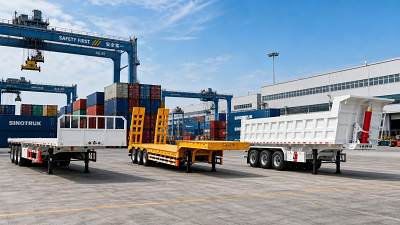
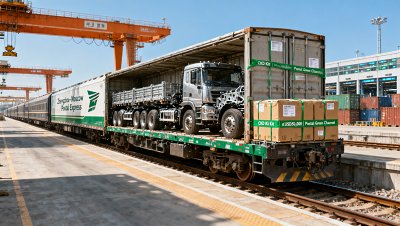
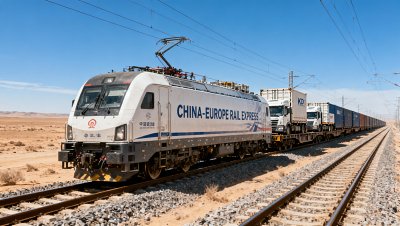
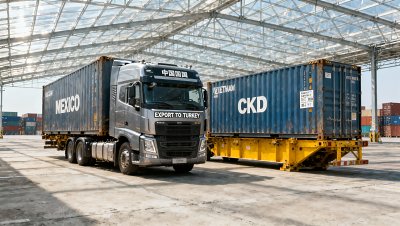
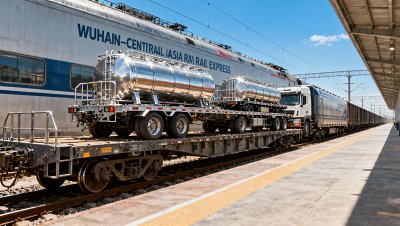
The push for faster land-based throughput favors standardized, quick-coupling trailer systems compatible with diverse truck fleets. Modular designs supporting rapid reconfiguration (e.g., swap bodies, ISO container adapters) gain relevance — especially where rail–road intermodal handoffs occur near border zones.
Logistics Service Providers Operating in the CPEC–Iran Corridor
Firms managing freight from China’s western provinces through Pakistan to Iran face revised transit timelines, documentation workflows, and staffing requirements for night-shift operations. Their service contracts, insurance terms, and driver certification standards may need updating to reflect the new 24/7 operational regime and accelerated clearance windows.
What Companies and Professionals Should Monitor and Do Now
Track official implementation milestones — not just announcements
The May 1, 2026 announcement sets a target (40% land-based trade by end-2026) and confirms infrastructure activation (six 24-hour ports). However, actual trade diversion depends on tariff harmonization, road maintenance schedules, and bilateral customs data-sharing agreements — all subject to phased rollout. Companies should monitor quarterly updates from Iran’s Ministry of Roads and Pakistan’s Federal Board of Revenue.
Assess product readiness for border-specific technical and regulatory conditions
Key checkpoints include axle-load limits on newly opened mountain passes, compatibility with Iranian/Pakistani GNSS-based fleet tracking mandates, and certification requirements for electronic customs declarations (e.g., IRAN-ECUS, Pakistan’s ASYCUDA World integration). Pre-certification audits are advisable before tendering into public procurement frameworks.
Distinguish policy intent from near-term procurement signals
While the 40% land-trade target spans three years, initial government tenders — particularly for port-side yard equipment, weighbridge upgrades, and temporary inspection booths — are likely to emerge in Q3–Q4 2026. These early opportunities reflect immediate capacity needs rather than long-term strategy.
Prepare supply chain coordination for extended operating windows
24/7 border operations require synchronized scheduling across hauliers, customs brokers, and warehousing partners. Firms should review labor agreements, cold-chain handoff protocols, and real-time cargo status sharing mechanisms — especially where multi-leg journeys involve both Chinese and Pakistani carriers.
Editorial Perspective / Industry Observation
Observably, this is a policy signal — not yet an operational reality. The simultaneous launch of infrastructure and timeline commitment reflects geopolitical urgency to diversify trade routes away from maritime chokepoints. However, the 40% target remains aspirational without parallel investments in domestic rail connectivity, warehousing capacity near border zones, and harmonized digital customs interfaces. From an industry angle, the most concrete near-term impact lies in the 24/7 operational mandate: it compresses lead times, raises equipment uptime expectations, and elevates demand for interoperable digital logistics tools. Sustained monitoring is warranted — not because full implementation is guaranteed, but because even partial execution reshapes equipment procurement cycles and service-level agreements across the South Corridor.
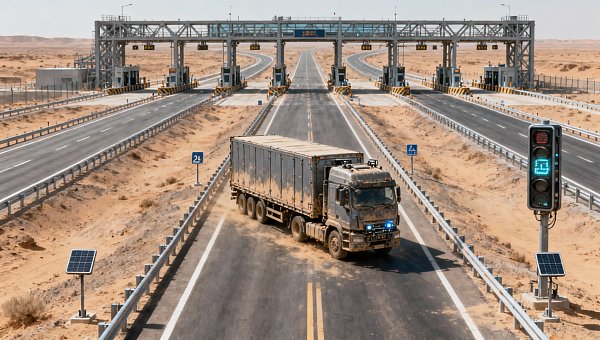
This development marks a structural recalibration of Eurasian south-bound land logistics — one that prioritizes speed, resilience, and interoperability over legacy maritime dependency. It does not replace sea freight but establishes a parallel, high-priority corridor with distinct equipment, compliance, and coordination requirements. For stakeholders, it is best understood not as a sudden market opening, but as the formal start of a multi-year infrastructure and process alignment phase — where early preparation matters more than immediate scale.
Source: Iranian Ministry of Roads and Urban Development (official statement, May 1, 2026); Joint Pakistan–Iran Border Infrastructure Commemoration Report (May 1, 2026).
Further observation required on: actual monthly trade mode distribution data, bilateral customs data exchange protocols, and tender issuance timelines for related infrastructure upgrades.
Recommended News
 Truck ExportLow Bed Trailer Export to Southeast Asia: 2026 Cost RisksLow bed trailer export to Southeast Asia in 2026 faces freight, duty, compliance, and supplier cost risks. Learn how to control landed cost and source smarter.
 Truck ExportTruck Trailer Wholesale Risks to Check Before OrderingTruck trailer wholesale can boost margins, but hidden risks matter. Review supplier credibility, specs, compliance, payment, inspection, and shipping before you order.
 Truck ExportWhat Makes a Reliable Truck Trailer Distributor in Export MarketsTruck trailer distributor selection shapes export success. Learn how to assess compliance, supply stability, technical fit, and after-sales support for safer global sourcing.
 Truck ExportZhengzhou-Moscow Postal Test Train Launches New 'Mail-Level' Clearance for Heavy-Duty CKD ExportsZhengzhou-Moscow postal test train enables 'mail-level' clearance for heavy-duty CKD exports — faster, cheaper, and simpler customs for SMEs targeting Eurasia.
 Truck ExportHorgos Port Handles Over 3,000 China-Europe & Central Asia Trains in 2026Horgos Port handled 3,000+ China–Europe & Central Asia trains in early 2026 — 37% carried new-energy heavy trucks. Discover logistics, compliance & market insights.
 Truck ExportChina-Europe Railway Express Surpasses 130,000 TrainsChina-Europe Railway Express surpasses 130,000 trains — boosting reliability for heavy-duty truck exporters, KD kit suppliers & specialized vehicle firms.
 Truck ExportWhat Makes a Reliable Truck Tipper Distributor in New Export MarketsTruck tipper distributor selection can define export success. Learn how to assess local reach, compliance, parts support, and service strength before entering new markets.
 Truck ExportShatian Customs Releases May H1 Transport Vehicle Inspection ResultsShatian Customs' May 2026 transport vehicle inspection reveals 98.7% HS code accuracy for heavy-duty trucks & KD kits — critical insights for exporters, forwarders, and compliance teams targeting Turkey, Mexico, Vietnam.
 Truck ExportShengsi Customs Clears 4 Ro-Ro Vessels for EAC/CE Dual ComplianceShengsi Customs clears 4 Ro-Ro vessels for EAC/CE dual compliance — streamlining heavy-truck exports to Russia, Kazakhstan & EAEU markets with 'one inspection, two certificates' efficiency.
 Truck ExportQingdao Port Adds 13 Foreign Trade Routes, Boosts CKD Export to MEAQingdao Port adds 13 foreign trade routes & CKD dedicated customs channel — accelerating heavy-duty truck CKD exports to Middle East and Africa with 48-hour clearance.
 Truck ExportYichang Hazardous Cargo Waiting Anchorage LaunchedYichang Hazardous Cargo Waiting Anchorage launched—supports 28 vessels, smart inspection & e-waybill verification. Critical for chemical logistics, trucking & Yangtze supply chains.
 Truck ExportTruck Trailer Exporter Comparison: Pricing, Certification, and After-SalesTruck trailer exporter comparison guide covering pricing, certification, factory capability, and after-sales support. Learn how to compare suppliers smarter and reduce sourcing risk.
 Truck ExportTruck Cement Exporter Selection: Compliance Points for Cross-Border DealsTruck cement exporter selection starts with compliance. Learn how to verify documents, technical standards, and service terms to reduce cross-border risk and secure smoother deals.
 Truck ExportCrane Truck Exporter Options: Matching Lifting Capacity to Project NeedsCrane truck exporter insights for matching lifting capacity to real project needs. Compare specs, reduce risk, control costs, and choose the right truck with confidence.
 Truck ExportDump Truck Exporter Costs Explained: Shipping, Duties, and Hidden FeesDump truck exporter costs go far beyond the factory price. Learn how shipping, duties, compliance paperwork, and hidden fees affect landed cost and smarter sourcing decisions.
 Truck ExportTruck Tipper Exporter Review: What to Check Before Signing an Overseas OrderTruck tipper exporter review guide: learn what to check before signing an overseas order, from compliance and specs to inspection, shipping, and after-sales support.
 Truck ExportCodelco Launches Tender for 200 L4 Autonomous Mining TrucksCodelco's L4 autonomous mining trucks tender: 200 units, 90t payload—key opportunity for Chinese OEMs & Chilean integrators. Act now!
 Truck ExportChina-Laos Cross-Border Heavy Truck Transport Pilot LaunchedChina-Laos heavy truck transport pilot launched: 'single inspection, mutual recognition' slashes clearance to 2.8 hours — boost exports, streamline logistics & unlock ASEAN road freight opportunities.
 Truck ExportWater Truck Exporter Selection: Key Delivery and Compliance RisksWater truck exporter selection now demands more than price checks. Learn the key delivery, compliance, and after-sales risks that can delay projects and raise total costs.
 Truck ExportHow to Verify a Reliable Truck Parts Exporter Before OrderingTruck parts exporter verification starts with legal compliance, quality control, and export capability. Learn practical checks to reduce sourcing risk and order with confidence.
 Truck ExportErenhot Highway Port Launches 24/7 Freight ClearanceErenhot Highway Port now offers 24/7 freight clearance — boosting efficiency for heavy-duty vehicle exports, cutting clearance time by 40% and enabling component-level customs processing.
 Truck ExportIran Launches Rail-Based Crude Oil Containerized Transport with Chinese-Made Tank Semi-TrailersIran launches rail-based crude oil containerized transport using Chinese-made tank semi-trailers—key for narrow-gauge rail equipment suppliers, energy logistics & multimodal integrators.
 Truck ExportWuhan Central Asia Railway Express Hits 103 Trains in April 2026Wuhan Central Asia Railway Express hits 103 trains in April 2026 — traction vehicles & specialized semi-trailers drive 37% of cargo. Discover logistics insights for陆路运输设备 exporters.
 Truck ExportHow to Vet a Construction Machinery Exporter for Overseas OrdersConstruction machinery exporter selection made easier: learn how to verify compliance, quality control, delivery reliability, and after-sales support for safer overseas orders.
 Truck ExportPakistan Opens 6 Land Routes to Iran, Cutting China Heavy-Truck Transit to 6 HoursPakistan opens 6 land routes to Iran—cutting China heavy-truck transit from Gwadar to Iranian sites to just 6 hours. Game-changer for陆路运输设备 exporters, OEMs & logistics firms.