Yichang Hazardous Cargo Waiting Anchorage Launched
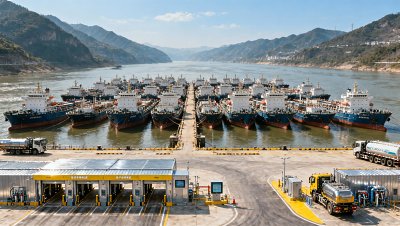
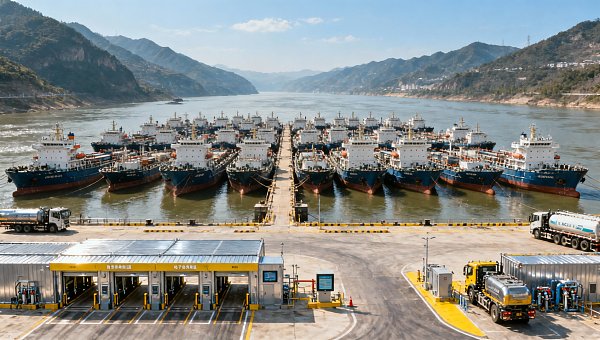
On May 21, 2026, the Yichang Jiuzhou River hazardous cargo vessel waiting anchorage officially entered operation—capable of simultaneously accommodating 28 hazardous material transport vessels. This development directly affects international chemical logistics operators, domestic heavy-duty trucking service providers, and regulatory-compliance-focused supply chain stakeholders along the Yangtze Economic Belt.
Event Overview
On May 21, 2026, the Yichang Jiuzhou River hazardous cargo vessel waiting anchorage commenced operations. It provides dedicated anchorage for up to 28 hazardous cargo vessels. The facility includes a smart inspection channel for hazardous goods vehicles, electronic consignment verification terminals, and temporary refueling interfaces for LNG- and hydrogen-powered tractor units.
Impact on Specific Industry Segments
International Chemical Logistics Operators (e.g., Southeast Asia, Middle East–based carriers)
These operators rely on seamless ‘door-to-port’ handover for time-sensitive or regulated chemical shipments. The new anchorage standardizes pre-lock waiting procedures, reduces uncertainty in vessel scheduling, and strengthens verifiable compliance documentation at the port interface—directly affecting transit time predictability and audit readiness.
Domestic Heavy-Duty Trucking & Intermodal Service Providers
Firms operating Class 2–9 hazardous cargo trucks within the Yangtze corridor now face stricter alignment requirements between vehicle dispatch timing, electronic运单 (e-waybill) submission, and anchorage gate access. The integrated e-waybill terminal implies real-time data synchronization with national hazardous cargo transport monitoring platforms—potentially affecting fleet dispatch protocols and driver credentialing workflows.
Port-Adjacent Warehousing & Transloading Facilities
Facilities located near the Three Gorges Dam lock system may experience shifts in short-term storage demand patterns. With standardized waiting times and digital verification now embedded upstream, inventory buffering strategies for just-in-time chemical deliveries could require recalibration—especially for temperature-sensitive or high-reactivity cargoes requiring immediate offloading post-anchorage clearance.
What Relevant Enterprises or Practitioners Should Monitor and Act On
Track official implementation guidelines for electronic consignment verification
The anchorage’s e-waybill terminal is operational—but national-level enforcement thresholds (e.g., mandatory fields, validation latency windows, penalty triggers) remain subject to further notice. Companies should monitor announcements from the Ministry of Transport and the Yangtze River Maritime Safety Administration for binding procedural updates.
Assess compatibility of current vehicle telematics and e-waybill systems with the anchorage’s interface protocols
The smart inspection channel and refueling interfaces imply hardware/software interoperability requirements—notably for LNG/hydrogen tractor fleets. Operators should verify whether their existing e-waybill transmission modules support the anchorage’s API schema or require middleware integration prior to scheduled calls.
Differentiate between regulatory signal and operational readiness
While the anchorage is active, full integration with upstream logistics platforms (e.g., national hazardous cargo monitoring system, provincial road transport licensing databases) may still be phased. Enterprises should treat initial operations as a pilot phase—not yet a fully synchronized ecosystem—and maintain manual fallback procedures for document verification and scheduling adjustments.
Prepare for potential adjustments in inland haulage scheduling windows
With fixed-capacity anchorage and digital gate controls, arrival time windows for hazardous cargo trucks may tighten. Carriers should review historical lock transit delays and align departure schedules with verified anchorage occupancy data—available via the Yangtze River Maritime Bureau’s public dashboard—to avoid idle time or non-compliant waiting outside designated zones.
Editorial Perspective / Industry Observation
Observably, this anchorage launch functions primarily as an infrastructure-enabled compliance checkpoint—not a standalone policy change. Its significance lies less in immediate capacity expansion and more in establishing a replicable node where physical logistics, digital documentation, and alternative-fuel readiness converge under unified oversight. Analysis shows it signals a shift toward harmonized, traceable hazardous cargo movement across inland waterways—particularly where multimodal handoffs (road-to-water) carry elevated regulatory scrutiny. From an industry perspective, it is better understood as an early-stage operational template than a finalized national standard; sustained observation is warranted for how its data flows integrate with broader transport safety frameworks.
Conclusion: The Yichang hazardous cargo waiting anchorage marks a concrete step toward standardizing and digitizing hazardous goods handling at critical Yangtze River chokepoints. It does not replace existing regulations but adds a layer of verifiable process control at the vessel-truck-port interface. Currently, it is best interpreted as an infrastructure-led compliance enabler—one that raises baseline expectations for data transparency and multimodal coordination, rather than introducing new legal obligations.
Source Attribution:
– Official announcement by Yichang Municipal Transport Bureau (May 21, 2026)
– Technical specifications published by Yangtze River Maritime Safety Administration
– Operational parameters confirmed via site commissioning report (Yichang Port Authority, May 2026)
Note: Integration timelines with national hazardous cargo monitoring platforms and enforcement thresholds for e-waybill validation remain under observation and are not yet publicly specified.
Trending News
- Truck Tipper Sourcing Checklist: Specs, Lead Time, and Compliance
- What Makes a Reliable Truck Tipper Distributor in New Export Markets
- Truck Tipper OEM or Standard Model: Which Lowers Lifetime Cost?
- Truck Tipper Bulk Order: 5 Cost Risks to Check Before Signing
- How to Vet a Heavy Truck Chassis Manufacturer With R&D Capability in 2026
Tag
Recommended News
 Truck ExportWhat Makes a Reliable Truck Tipper Distributor in New Export MarketsTruck tipper distributor selection can define export success. Learn how to assess local reach, compliance, parts support, and service strength before entering new markets.
 Truck ExportShatian Customs Releases May H1 Transport Vehicle Inspection ResultsShatian Customs' May 2026 transport vehicle inspection reveals 98.7% HS code accuracy for heavy-duty trucks & KD kits — critical insights for exporters, forwarders, and compliance teams targeting Turkey, Mexico, Vietnam.
 Truck ExportShengsi Customs Clears 4 Ro-Ro Vessels for EAC/CE Dual ComplianceShengsi Customs clears 4 Ro-Ro vessels for EAC/CE dual compliance — streamlining heavy-truck exports to Russia, Kazakhstan & EAEU markets with 'one inspection, two certificates' efficiency.
 Truck ExportQingdao Port Adds 13 Foreign Trade Routes, Boosts CKD Export to MEAQingdao Port adds 13 foreign trade routes & CKD dedicated customs channel — accelerating heavy-duty truck CKD exports to Middle East and Africa with 48-hour clearance.
 Truck ExportYichang Hazardous Cargo Waiting Anchorage LaunchedYichang Hazardous Cargo Waiting Anchorage launched—supports 28 vessels, smart inspection & e-waybill verification. Critical for chemical logistics, trucking & Yangtze supply chains.
 Truck ExportTruck Trailer Exporter Comparison: Pricing, Certification, and After-SalesTruck trailer exporter comparison guide covering pricing, certification, factory capability, and after-sales support. Learn how to compare suppliers smarter and reduce sourcing risk.
 Truck ExportTruck Cement Exporter Selection: Compliance Points for Cross-Border DealsTruck cement exporter selection starts with compliance. Learn how to verify documents, technical standards, and service terms to reduce cross-border risk and secure smoother deals.
 Truck ExportCrane Truck Exporter Options: Matching Lifting Capacity to Project NeedsCrane truck exporter insights for matching lifting capacity to real project needs. Compare specs, reduce risk, control costs, and choose the right truck with confidence.
 Truck ExportDump Truck Exporter Costs Explained: Shipping, Duties, and Hidden FeesDump truck exporter costs go far beyond the factory price. Learn how shipping, duties, compliance paperwork, and hidden fees affect landed cost and smarter sourcing decisions.
 Truck ExportTruck Tipper Exporter Review: What to Check Before Signing an Overseas OrderTruck tipper exporter review guide: learn what to check before signing an overseas order, from compliance and specs to inspection, shipping, and after-sales support.
 Truck ExportCodelco Launches Tender for 200 L4 Autonomous Mining TrucksCodelco's L4 autonomous mining trucks tender: 200 units, 90t payload—key opportunity for Chinese OEMs & Chilean integrators. Act now!
 Truck ExportChina-Laos Cross-Border Heavy Truck Transport Pilot LaunchedChina-Laos heavy truck transport pilot launched: 'single inspection, mutual recognition' slashes clearance to 2.8 hours — boost exports, streamline logistics & unlock ASEAN road freight opportunities.
 Truck ExportWater Truck Exporter Selection: Key Delivery and Compliance RisksWater truck exporter selection now demands more than price checks. Learn the key delivery, compliance, and after-sales risks that can delay projects and raise total costs.
 Truck ExportHow to Verify a Reliable Truck Parts Exporter Before OrderingTruck parts exporter verification starts with legal compliance, quality control, and export capability. Learn practical checks to reduce sourcing risk and order with confidence.
 Truck ExportErenhot Highway Port Launches 24/7 Freight ClearanceErenhot Highway Port now offers 24/7 freight clearance — boosting efficiency for heavy-duty vehicle exports, cutting clearance time by 40% and enabling component-level customs processing.
 Truck ExportIran Launches Rail-Based Crude Oil Containerized Transport with Chinese-Made Tank Semi-TrailersIran launches rail-based crude oil containerized transport using Chinese-made tank semi-trailers—key for narrow-gauge rail equipment suppliers, energy logistics & multimodal integrators.
 Truck ExportWuhan Central Asia Railway Express Hits 103 Trains in April 2026Wuhan Central Asia Railway Express hits 103 trains in April 2026 — traction vehicles & specialized semi-trailers drive 37% of cargo. Discover logistics insights for陆路运输设备 exporters.
 Truck ExportHow to Vet a Construction Machinery Exporter for Overseas OrdersConstruction machinery exporter selection made easier: learn how to verify compliance, quality control, delivery reliability, and after-sales support for safer overseas orders.
 Truck ExportPakistan Opens 6 Land Routes to Iran, Cutting China Heavy-Truck Transit to 6 HoursPakistan opens 6 land routes to Iran—cutting China heavy-truck transit from Gwadar to Iranian sites to just 6 hours. Game-changer for陆路运输设备 exporters, OEMs & logistics firms.
 Truck ExportIran Launches Rail-Based Crude Oil Containerization with Chinese-Made Tank TrailersIran adopts Chinese-made 40-ft rail tank trailers for crude oil containerization—enhancing safety, bypassing Hormuz risks, and setting new standards in陆路运输设备 logistics.
 Truck ExportPakistan Opens 6 Land Corridors to Iran, Cutting China-Iran Heavy-Truck Transit to 6 HoursPakistan opens 6 land corridors to Iran—cutting China-Iran heavy-truck transit to just 6 hours. Boost reliability, bypass Hormuz risks & optimize logistics now.
 Truck ExportLow Bed Trailer Export with Waterproof Features: What Buyers Often MissLow bed trailer export with waterproof features: discover the hidden sealing, drainage, wiring, and coating details buyers often miss to reduce corrosion, downtime, and costly post-delivery issues.
 Truck ExportHeavy Equipment Export to Mexico: Key Compliance and Import RisksHeavy equipment export to Mexico demands strict compliance. Learn key import risks, document checks, and supplier evaluation tips to avoid delays, reduce costs, and enter the market with confidence.
 Truck ExportWuhan Central Asia Railway Express Hits 103 Trains in April 2026Wuhan Central Asia Railway Express hits 103 trains in April 2026 — traction vehicles & specialized trailers drive 37% of export value. Key insight for heavy equipment exporters and rail logistics providers.
 Truck ExportLow Bed Trailer Export to Southeast Asia: Specs That Avoid Clearance DelaysLow bed trailer export to Southeast Asia starts with the right specs. Learn which dimensions, axle setups, deck heights, and documents help avoid clearance delays and cut costly port risks.