RCEP Upgrade Takes Effect: Lower Tariffs on China-Made Truck Parts
On 1 May 2026, the second-phase technical amendment to the Regional Comprehensive Economic Partnership (RCEP) entered into force, reducing most-favoured-nation (MFN) tariffs by 3–5 percentage points for 37 HS-coded Chinese truck components—including steering knuckles, axle housings, and aluminum alloy wheel hubs—in the Philippines, Cambodia, and Myanmar. This development is especially relevant for exporters of commercial vehicle parts, international logistics providers, and ASEAN-based assembly manufacturers.
Event Overview
The RCEP Second-Phase Technical Amendment officially took effect on 1 May 2026. Under this instrument, the Philippines, Cambodia, and Myanmar have lowered MFN tariff rates by 3–5 percentage points on 37 specific HS-coded products originating from China, all related to heavy- and medium-duty truck components. According to official estimates, the reduction is expected to save over USD 120 million in tariff costs for Chinese truck parts exporters in 2026.
Industries Affected
Direct Exporters of Truck Components
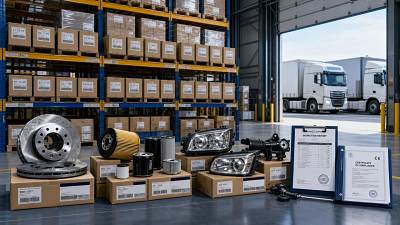
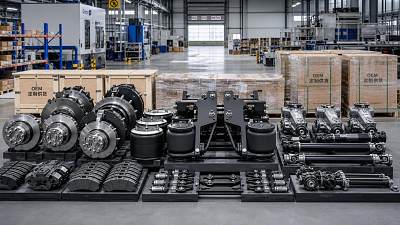
Companies exporting the 37 listed HS-coded items—such as steering knuckles (HS 8708.91), axle housings (HS 8708.99), and aluminum alloy wheel hubs (HS 8708.70)—will see immediate tariff savings on shipments to the three ASEAN countries. The impact manifests primarily in improved landed cost competitiveness and potential margin expansion, assuming pricing remains stable or is partially passed on to downstream buyers.
Domestic Component Manufacturers (OEM/ODM)
Manufacturers supplying these 37 items to export-oriented trading companies or foreign-invested enterprises may experience increased order volume from export clients seeking to leverage the new tariff advantage. However, demand uplift depends on whether overseas buyers adjust procurement timing or shift sourcing toward Chinese suppliers with certified origin documentation.
International Freight Forwarders & Customs Brokers
Service providers handling cross-border shipments of these components must verify updated tariff classifications and ensure accurate Certificate of Origin (Form RCEP) submissions. Errors in HS code alignment or incomplete documentation could delay clearance or disqualify shipments from preferential treatment.
ASEAN-Based Commercial Vehicle Assemblers
Assemblers in the Philippines, Cambodia, and Myanmar that source Chinese-made chassis parts may now reduce input costs or improve local production economics. This could support longer-term localization strategies—but only if supply chain reliability and lead times remain consistent.
What Companies and Practitioners Should Focus On Now
Monitor Official Implementation Guidance
While the amendment has entered into force, national customs administrations in the Philippines, Cambodia, and Myanmar may issue supplementary operational notices on documentation requirements, origin verification procedures, or transitional arrangements. Exporters should track announcements from each country’s Ministry of Finance or Customs Department.
Verify HS Code Alignment and Origin Certification Readiness
Not all variants of a component type fall under the 37 listed HS codes. Companies must confirm exact tariff line matches for their exported SKUs—and ensure internal systems and external partners (e.g., freight forwarders) can generate valid Form RCEP certificates meeting origin rules of cumulation and direct shipment requirements.
Distinguish Between Policy Signal and Operational Impact
This tariff reduction applies only to three ASEAN markets—not the full RCEP bloc—and covers a narrow subset of parts. It does not imply broader market access improvements or regulatory harmonization. Companies should avoid extrapolating benefits beyond the confirmed scope.
Prepare for Documentation and Supply Chain Adjustments
Export departments should review current shipping workflows to integrate RCEP-origin certification without delaying dispatch. Where applicable, consider aligning procurement contracts with downstream buyers to reflect revised landed cost expectations—especially for long-term supply agreements signed before May 2026.
Editorial Perspective / Industry Observation
Observably, this amendment functions primarily as a targeted tariff optimization tool—not a structural trade liberalization milestone. Analysis shows it reinforces existing supply chain patterns rather than triggering major shifts: the covered items are already widely traded, and the tariff cuts are modest in absolute terms. From an industry perspective, its significance lies less in immediate revenue impact and more in signaling continued RCEP institutionalization—particularly among newer or less economically integrated members. Current attention should focus on implementation fidelity: how consistently and transparently each country administers the new rates will determine whether this becomes a replicable model for future sectoral upgrades.

Conclusion
While the RCEP technical amendment delivers measurable, albeit narrow, tariff relief for select Chinese truck components entering three ASEAN markets, its broader industry value resides in reinforcing procedural predictability within the agreement’s framework. It is better understood as a calibrated adjustment to existing trade flows—not a catalyst for new market entry or rapid diversification. Stakeholders are advised to treat it as an operational efficiency opportunity requiring precise execution, rather than a strategic inflection point.
Information Sources
Primary source: Official gazette notifications issued by the governments of the Philippines, Cambodia, and Myanmar on the entry into force of the RCEP Second-Phase Technical Amendment, effective 1 May 2026. Additional data on estimated tariff savings sourced from publicly released statements by China’s Ministry of Commerce. Note: Implementation details—including customs guidance, dispute resolution mechanisms, and future phase-in schedules—remain subject to ongoing observation and may evolve across jurisdictions.
Trending News
- Truck Tipper Sourcing Checklist: Specs, Lead Time, and Compliance
- What Makes a Reliable Truck Tipper Distributor in New Export Markets
- Truck Tipper OEM or Standard Model: Which Lowers Lifetime Cost?
- Truck Tipper Bulk Order: 5 Cost Risks to Check Before Signing
- How to Vet a Heavy Truck Chassis Manufacturer With R&D Capability in 2026
Tag
Recommended News
 Truck Parts IndustryHow a Truck Cement Manufacturer Ensures Consistent Load QualityTruck cement manufacturer standards directly affect load consistency, safety, and efficiency. Learn how top suppliers control design, sealing, batching, and testing for reliable transport.
 Truck Parts IndustryTruck Parts Price Trends in 2026: What Is Driving Cost Changes?Truck parts price trends in 2026 are driven by steel, energy, freight, currency, and compliance costs. Discover what raises prices, which parts face the most pressure, and how buyers can source smarter.
 Truck Parts IndustryTruck Parts Wholesale: How to Balance Price, Quality, and Lead TimeTruck parts wholesale made smarter: learn how to balance price, quality, and lead time by application to cut downtime, reduce hidden costs, and source with more confidence.
 Truck Parts IndustryTruck Spare Parts Supplier with Bulk Order Discounts: Savings vs Stock RiskTruck spare parts supplier with bulk order discounts: learn when bulk buying cuts fleet costs and when stock risk hurts cash flow, uptime, and sourcing efficiency.
 Truck Parts IndustryTruck Spare Parts Supplier in Europe: Compliance Checks Before OrderingTruck spare parts supplier in Europe selection starts with compliance. Learn the key checks for safety, fitment, traceability, and import documents before you order.
 Truck Parts IndustryChoosing a Heavy Truck Parts Manufacturer with OEM Services for Stable SupplyHeavy truck parts manufacturer with OEM services: learn how to secure stable supply, consistent quality, and lower sourcing risk with practical buyer evaluation tips.
 Truck Parts IndustryHeavy Truck Parts for Construction: Durability vs Replacement CostHeavy truck parts manufacturer for construction insights: learn how to balance durability, replacement cost, and uptime across rough ground, urban projects, and severe-duty fleets.
 Truck Parts IndustryCold Storage Vehicle Parts That Reduce Failure RatesCommercial vehicle parts for cold storage that cut failure rates: explore seals, insulation, cooling, and electrical upgrades to protect cargo, reduce downtime, and improve fleet uptime.
 Truck Parts IndustryGermany Heavy Truck Parts Manufacturers: Quality and Supply RisksHeavy truck parts manufacturer in Germany: learn how to assess quality, certifications, and supply risks to secure safer sourcing, stable deliveries, and long-term fleet performance.
 Truck Parts IndustryVietnam to Enforce New Used Truck Import Rules from Q4 2026Vietnam's new used truck import rules (Q4 2026) require OEM remanufacturing certification & traceability—key for Chinese exporters, assemblers & logistics providers.
 Truck Parts IndustryChoosing a Truck Parts Exporter: Lead Time, Compliance, and Quality RisksTruck parts exporter selection affects uptime, compliance, and cost. Learn how to compare lead time, certification, and quality control to avoid delays, claims, and fleet-wide failures.
 Truck Parts IndustryGermany Heavy Truck Parts Manufacturers: Quality and Supply RisksHeavy truck parts manufacturer in Germany selection guide: compare quality systems, traceability, testing, and supply risks to secure reliable truck parts sourcing.
 Truck Parts IndustryIrkeshtam Port’s 24-Hour Freight Clearance Boosts Exports to KyrgyzstanIrkeshtam Port’s 24-hour freight clearance slashes heavy-truck component clearance to <15 mins—boosting road transport equipment exports to Kyrgyzstan.
 Truck Parts IndustryHeavy Truck Parts for Construction: Which Components Fail Most OftenHeavy truck parts manufacturer for construction insights: discover which brake, suspension, filter, and drivetrain components fail most often—and how smarter sourcing cuts downtime and repair costs.
 Truck Parts IndustryBulk Order Discounts on Truck Spare Parts: When Savings Become RiskTruck spare parts supplier with bulk order discounts: learn when lower prices increase downtime, quality, and inventory risk—and how to source smarter for reliable fleet performance.
 Truck Parts IndustryTruck Parts Wholesale: How to Balance Price, Quality, and Stock RiskTruck parts wholesale success depends on balancing price, quality, and inventory risk. Learn practical sourcing checks to protect margins, reduce dead stock, and choose reliable suppliers.
 Truck Parts IndustryHow OEM Services Reduce Downtime in Heavy Truck Parts SupplyHeavy truck parts manufacturer with OEM services helps cut downtime with accurate fit, faster lead times, and stable supply—discover smarter sourcing for fleet maintenance.
 Truck Parts IndustryErenhot-Mongolia 24-Hour Freight Clearance Boosts Trucking EfficiencyErenhot-Mongolia 24-hour freight clearance slashes truck clearance time by 40%—boosting efficiency for auto parts, cold-chain & cross-border trucking.
 Truck Parts IndustryKazakhstan Extends Zero-Tariff for Truck Parts on China-Europe Rail Routes to 2027Kazakhstan extends zero-tariff for truck parts—including ADAS controllers, ECUs & T-BOX units—on China-Europe rail routes until 2027. Boost your logistics & export strategy now!
 Truck Parts IndustryHow Low-Maintenance Truck Spare Parts Reduce Downtime Over TimeTruck spare parts supplier with low maintenance solutions help fleets cut downtime, reduce repair frequency, and improve workshop efficiency. Discover how durable parts boost long-term truck performance.
![]() Truck Parts IndustryHeavy Truck Parts Manufacturer for Construction: How to Judge Product ConsistencyHeavy truck parts manufacturer for construction selection starts with consistency. Learn how to judge batch stability, traceability, and quality control to reduce risk and improve fleet safety.
Truck Parts IndustryHeavy Truck Parts Manufacturer for Construction: How to Judge Product ConsistencyHeavy truck parts manufacturer for construction selection starts with consistency. Learn how to judge batch stability, traceability, and quality control to reduce risk and improve fleet safety.![]() Truck Parts IndustryTruck Parts Price in 2026: What Is Driving Replacement Cost HigherTruck parts price in 2026 is rising fast. Discover the key cost drivers, category risks, and sourcing tips buyers need to reduce replacement costs and make smarter purchasing decisions.
Truck Parts IndustryTruck Parts Price in 2026: What Is Driving Replacement Cost HigherTruck parts price in 2026 is rising fast. Discover the key cost drivers, category risks, and sourcing tips buyers need to reduce replacement costs and make smarter purchasing decisions. Truck Parts IndustryHow to Compare Truck Tipper Distributors by Parts Response TimeTruck tipper distributor comparison starts with parts response time. Learn how to assess stock speed, technical support, and supply reliability to cut downtime and choose the right partner.
 Truck Parts IndustryCommercial Vehicle Parts for Cold Storage: What Improves ReliabilityCommercial vehicle parts for cold storage that boost uptime, temperature stability, and fleet reliability. Learn which components reduce breakdowns and protect cargo in demanding cold-chain transport.
 Truck Parts IndustryTruck Parts Wholesale: How to Balance Price, Lead Time, and QualityTruck parts wholesale guide for distributors: learn how to balance price, lead time, and quality to reduce risk, protect margins, and choose suppliers with confidence.