Low-Maintenance Truck Spare Parts Suppliers: What Reduces Service Calls
For after-sales maintenance teams, choosing a truck spare parts supplier with low maintenance capability means fewer breakdowns, faster repairs, and lower service pressure. In demanding transport operations, the right supplier does more than deliver parts—it helps reduce repeat failures, improve vehicle uptime, and support long-term reliability. This article explores what truly reduces service calls and how to identify dependable spare parts partners.
In road transport equipment, service calls are rarely caused by a single failed component alone. Most repeat interventions come from poor fitment, unstable material quality, missing technical data, slow replenishment, or weak warranty support. For maintenance managers handling tractors, dump trucks, cargo vehicles, mixers, and trailers, supplier choice directly affects workshop efficiency, field repair frequency, and fleet availability.
A truck spare parts supplier with low maintenance value is not simply a low-price vendor. It is a partner that helps workshops reduce diagnosis time, lower replacement frequency, and standardize repair outcomes across different truck brands and operating conditions. On a global B2B sourcing platform, this means comparing suppliers not only by catalog size, but also by consistency, documentation, lead time, and service response.
What “Low Maintenance” Really Means in Truck Spare Parts Supply
For after-sales teams, low maintenance does not mean a part never wears out. In heavy truck operations, brake components, suspension parts, filters, seals, bearings, electrical connectors, and clutch elements all have finite service lives. What matters is whether the supplied part performs within the expected interval, installs correctly the first time, and avoids creating secondary faults in nearby systems.
A truck spare parts supplier with low maintenance performance usually supports three measurable outcomes. First, repeat replacement cycles become more predictable, such as 6–12 months for common wear items depending on route conditions. Second, unplanned return-to-workshop events decline because matching errors and premature failures are reduced. Third, technicians spend less time on rework, which can save 20–40 minutes per repair order on frequently replaced items.
This is especially important in cross-border procurement. Buyers often source for mixed fleets that include different axle ratings, engine families, and cab platforms. If a supplier cannot provide accurate interchange data, installation guidance, torque references, or material specifications, even a low-cost part can increase total maintenance cost by generating callbacks within 30–90 days.
Key characteristics of a low-maintenance supplier
- Stable dimensional tolerance, reducing fitment correction during installation.
- Clear compatibility data across truck models, engine codes, axle types, and production years.
- Consistent batch quality, so the same part number performs similarly over multiple orders.
- Practical technical support, including photos, drawings, packaging labels, and troubleshooting advice.
- Reliable replenishment cycles, often within 7–30 days depending on product category and origin.
In the commercial vehicle aftermarket, these factors often matter more than headline unit price. A part that costs 8% less but causes two extra service calls in one quarter is rarely the better purchasing decision. This is why many after-sales teams now evaluate suppliers by service-call reduction potential, not only by catalog breadth.
Why platform-based sourcing helps
A specialized global heavy truck B2B platform makes this evaluation easier because buyers can compare suppliers across multiple categories, from chassis parts and cabs to trailer components and service items. Instead of reviewing isolated offers, maintenance buyers can screen suppliers by product scope, response speed, industry focus, and documentation depth in one place. That reduces sourcing risk before the first shipment is even placed.
Which Supplier Factors Most Directly Reduce Service Calls
Not every supplier strength has the same impact on workshop call volume. For after-sales maintenance personnel, four areas usually produce the clearest operational results: part accuracy, durability consistency, delivery reliability, and technical communication. If one of these areas is weak, service calls tend to rise even when the part itself appears acceptable at first glance.
Part accuracy is often the first filter. In truck fleets operating 50,000–120,000 km per year, a wrong connector type, incorrect mounting hole spacing, or mismatched seal dimension can turn a standard 45-minute repair into a half-day interruption. A dependable truck spare parts supplier with low maintenance focus should be able to verify OE references, application range, and key installation dimensions before shipment.
Durability consistency is the second major driver. One successful trial order does not guarantee long-term reliability. Maintenance teams should watch for batch-to-batch variation in rubber hardness, metal surface finish, weld quality, bearing smoothness, and corrosion protection. If the same part number performs differently in 3 separate purchase cycles, service-call forecasting becomes difficult and technician trust drops.
Evaluation matrix for service-call reduction
The table below shows how maintenance teams can prioritize supplier criteria based on their direct effect on repair stability and field intervention frequency.
The most important takeaway is that service-call reduction comes from combined supplier discipline, not from one feature alone. A supplier with fast shipping but poor fitment control will still create pressure for the workshop. Likewise, a technically strong supplier that cannot deliver within the required 2–4 week window may force buyers to use unstable substitutes.
Common warning signs
- Product descriptions are too generic and do not identify model year, load class, or interface type.
- Quotation sheets change specifications between batches without clear notice.
- Warranty responses take more than 5 working days for basic quality feedback.
- Packaging lacks lot information, making failure tracing difficult.
When two or more of these warning signs appear, after-sales teams should expect more service uncertainty. In many heavy-duty applications, the cost of one roadside intervention can exceed the saved amount on several low-cost parts, particularly for brake, steering, and cooling system components.
How to Assess Parts by Category Instead of Using One Generic Standard
Different spare parts create different maintenance risks. A single supplier may perform well in filters and service kits, but less well in electrical items or suspension components. That is why maintenance teams should score suppliers by category, especially when sourcing for heavy trucks, semi-trailers, construction vehicles, and municipal transport fleets with mixed duty cycles.
For example, filters and seals are replaced often, so consistency and inventory availability matter most. For brake parts, friction stability, heat resistance, and dimensional precision are more critical. For electrical sensors and connectors, terminal fit, insulation quality, and environmental resistance can determine whether the repair lasts through vibration, dust, moisture, and temperature swings from -20°C to 45°C.
A truck spare parts supplier with low maintenance credibility should understand these category differences and provide appropriate technical detail for each. If all products are sold with the same vague language, the supplier may not have deep category control.
Category-specific checks for after-sales teams
The following comparison helps maintenance personnel evaluate what should be checked first before approving a supplier for recurring purchase programs.
This category view helps workshops avoid a common mistake: approving one supplier for the whole parts basket after a small successful order. A better method is phased qualification. Start with 2–3 fast-moving items, then expand into high-risk categories only after 60–90 days of stable performance and acceptable claim handling.
Practical scoring method
- Score fitment accuracy on a 1–5 scale based on first-time installation success.
- Score durability using replacement cycle stability across at least 10–20 units.
- Score service response by time to answer technical questions, ideally within 24 hours.
- Score supply reliability by on-time delivery ratio over 3 purchase cycles.
Once this scoring framework is used consistently, the maintenance department can separate suppliers that truly reduce service calls from those that simply offer broad catalogs. In road transport equipment, disciplined category control often delivers better lifetime value than aggressive spot pricing.
Implementation Steps: From Supplier Screening to Lower Workshop Pressure
Reducing service calls requires a process, not just a purchase order. Even a strong truck spare parts supplier with low maintenance strengths will not deliver full value if the buyer has no structured approval flow. Maintenance teams should connect sourcing, workshop feedback, and failure records into one practical loop that can be repeated for every major part family.
In many fleets, the first improvement comes from standardizing what is recorded during trial use. Instead of saying a part is “good” or “not good,” technicians should note installation time, adjustment needed, condition after 15 days, and whether the vehicle returns for the same fault within 30–60 days. These simple records quickly reveal whether the supplier is lowering service pressure or only moving it downstream.
A platform that connects global manufacturers, suppliers, distributors, and buyers can support this implementation stage by making comparison easier. Maintenance buyers can review product categories, shortlist partners by specialization, and then move into small-batch validation rather than committing early to one source.
Five-step approval workflow
- Define the top 10–20 parts responsible for the most service interventions or downtime in the last quarter.
- Request detailed application confirmation, packaging information, and delivery lead times from shortlisted suppliers.
- Run a controlled trial batch, often 5–30 units depending on the part category and fleet size.
- Track first-fit rate, technician feedback, and return incidents for 30–90 days.
- Approve only the categories that meet quality, response, and replenishment expectations.
This approach limits exposure while still moving fast enough for operational needs. It is especially useful for fleets serving long-haul logistics, mining support routes, construction projects, or municipal engineering work, where downtime costs can escalate in less than one shift.
What to document during pilot orders
- Installation deviations such as hole mismatch, connector looseness, or extra adjustment steps.
- Packaging issues including missing labels, poor moisture protection, or mixed part numbers.
- Delivery accuracy measured by quantity, specification match, and promised shipping date.
- Supplier response time for claims, replacement requests, and technical clarification.
After 2–3 purchasing rounds, patterns usually become clear. A supplier that reduces workshop pressure will show fewer claims, shorter diagnosis time, and more stable part behavior across batches. That is the point where broader cooperation becomes justifiable.
Common Mistakes That Increase Service Calls and How to Avoid Them
Many service-call problems come from procurement habits rather than part defects alone. One common mistake is choosing only by unit price. Another is treating all truck components as interchangeable aftermarket commodities. In heavy-duty road transport, small differences in dimensions, materials, or application fit can have disproportionate effects on reliability.
A second mistake is weak communication between workshop technicians and purchasing staff. If the buyer does not know whether failures occur after 7 days, 3 months, or one seasonal cycle, the wrong supplier may continue receiving orders. Maintenance departments need a shared language for failure mode, installation difficulty, and repeat intervention rate.
A third mistake is overexpanding too quickly after one good order. A supplier that performs well on consumables may not be suitable for load-bearing or electronically sensitive parts. Service-call reduction depends on controlled qualification by category, not blanket approval.
Risk-control checklist before scaling orders
Before increasing order volume, after-sales teams can use the checklist below to reduce the chance of future workshop callbacks and emergency field repairs.
These thresholds are practical rather than absolute, but they help teams compare suppliers with a common standard. When a truck spare parts supplier with low maintenance focus consistently meets these checkpoints, the workshop usually experiences fewer repeat jobs and more predictable scheduling.
FAQ for maintenance buyers
How long should a supplier trial last?
For fast-moving wear parts, 30–60 days is often enough to detect fitment and early failure issues. For suspension, brake, or electrical parts under variable load conditions, 60–90 days provides a more reliable picture.
Should maintenance teams prefer one supplier or multiple suppliers?
A mixed strategy is usually safer. One core supplier may handle high-volume standard items, while 1–2 backup suppliers cover critical categories or urgent replenishment. This improves continuity without sacrificing quality control.
What documents are most useful before ordering?
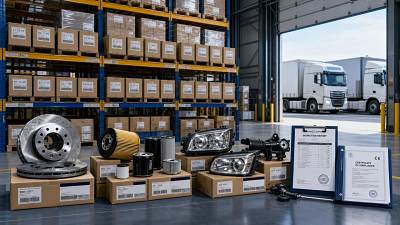
Ask for application lists, dimensional confirmation, product photos, packaging details, and any installation notes. These documents often prevent the most common causes of service calls: mismatched specifications and incomplete repair preparation.
For after-sales maintenance teams, the best supplier is the one that makes daily work more predictable: fewer emergency breakdowns, fewer repeat repairs, shorter installation time, and more stable replenishment. In practical terms, a truck spare parts supplier with low maintenance value combines accurate application matching, category-specific quality control, responsive support, and delivery discipline that fits real fleet operations.
Using a specialized global heavy truck industry platform can simplify this process by helping buyers compare suppliers, product categories, and sourcing options across the commercial vehicle supply chain. That creates a stronger basis for smarter decisions in spare parts purchasing, especially for teams responsible for uptime in logistics, construction transport, mining support, and municipal fleets.
If you are looking to reduce service calls, improve workshop efficiency, and identify dependable global parts partners, now is the right time to review your sourcing strategy. Contact us to explore suitable suppliers, request tailored product matching support, and learn more solutions for heavy truck spare parts procurement.
Trending News
- Cab Chassis Truck for Fire Department: Key Specs Before Ordering
- When to Use an Excavator With Long Reach Boom on Site
- Choosing a Water Truck Factory for Municipal and Mining Projects
- Truck Parts Wholesale: How to Balance Price, Quality, and Lead Time
- Crane Truck Price in 2026: What Drives Total Ownership Cost
Tag
Recommended News
 Truck Parts IndustryTruck Parts Wholesale: How to Balance Price, Quality, and Lead TimeTruck parts wholesale made smarter: learn how to balance price, quality, and lead time by application to cut downtime, reduce hidden costs, and source with more confidence.
 Truck Parts IndustryTruck Spare Parts Supplier with Bulk Order Discounts: Savings vs Stock RiskTruck spare parts supplier with bulk order discounts: learn when bulk buying cuts fleet costs and when stock risk hurts cash flow, uptime, and sourcing efficiency.
 Truck Parts IndustryTruck Spare Parts Supplier in Europe: Compliance Checks Before OrderingTruck spare parts supplier in Europe selection starts with compliance. Learn the key checks for safety, fitment, traceability, and import documents before you order.
 Truck Parts IndustryChoosing a Heavy Truck Parts Manufacturer with OEM Services for Stable SupplyHeavy truck parts manufacturer with OEM services: learn how to secure stable supply, consistent quality, and lower sourcing risk with practical buyer evaluation tips.
 Truck Parts IndustryHeavy Truck Parts for Construction: Durability vs Replacement CostHeavy truck parts manufacturer for construction insights: learn how to balance durability, replacement cost, and uptime across rough ground, urban projects, and severe-duty fleets.
 Truck Parts IndustryCold Storage Vehicle Parts That Reduce Failure RatesCommercial vehicle parts for cold storage that cut failure rates: explore seals, insulation, cooling, and electrical upgrades to protect cargo, reduce downtime, and improve fleet uptime.
 Truck Parts IndustryGermany Heavy Truck Parts Manufacturers: Quality and Supply RisksHeavy truck parts manufacturer in Germany: learn how to assess quality, certifications, and supply risks to secure safer sourcing, stable deliveries, and long-term fleet performance.
 Truck Parts IndustryVietnam to Enforce New Used Truck Import Rules from Q4 2026Vietnam's new used truck import rules (Q4 2026) require OEM remanufacturing certification & traceability—key for Chinese exporters, assemblers & logistics providers.
 Truck Parts IndustryChoosing a Truck Parts Exporter: Lead Time, Compliance, and Quality RisksTruck parts exporter selection affects uptime, compliance, and cost. Learn how to compare lead time, certification, and quality control to avoid delays, claims, and fleet-wide failures.
 Truck Parts IndustryGermany Heavy Truck Parts Manufacturers: Quality and Supply RisksHeavy truck parts manufacturer in Germany selection guide: compare quality systems, traceability, testing, and supply risks to secure reliable truck parts sourcing.
 Truck Parts IndustryIrkeshtam Port’s 24-Hour Freight Clearance Boosts Exports to KyrgyzstanIrkeshtam Port’s 24-hour freight clearance slashes heavy-truck component clearance to <15 mins—boosting road transport equipment exports to Kyrgyzstan.
 Truck Parts IndustryHeavy Truck Parts for Construction: Which Components Fail Most OftenHeavy truck parts manufacturer for construction insights: discover which brake, suspension, filter, and drivetrain components fail most often—and how smarter sourcing cuts downtime and repair costs.
 Truck Parts IndustryBulk Order Discounts on Truck Spare Parts: When Savings Become RiskTruck spare parts supplier with bulk order discounts: learn when lower prices increase downtime, quality, and inventory risk—and how to source smarter for reliable fleet performance.
 Truck Parts IndustryTruck Parts Wholesale: How to Balance Price, Quality, and Stock RiskTruck parts wholesale success depends on balancing price, quality, and inventory risk. Learn practical sourcing checks to protect margins, reduce dead stock, and choose reliable suppliers.
 Truck Parts IndustryHow OEM Services Reduce Downtime in Heavy Truck Parts SupplyHeavy truck parts manufacturer with OEM services helps cut downtime with accurate fit, faster lead times, and stable supply—discover smarter sourcing for fleet maintenance.
 Truck Parts IndustryErenhot-Mongolia 24-Hour Freight Clearance Boosts Trucking EfficiencyErenhot-Mongolia 24-hour freight clearance slashes truck clearance time by 40%—boosting efficiency for auto parts, cold-chain & cross-border trucking.
 Truck Parts IndustryKazakhstan Extends Zero-Tariff for Truck Parts on China-Europe Rail Routes to 2027Kazakhstan extends zero-tariff for truck parts—including ADAS controllers, ECUs & T-BOX units—on China-Europe rail routes until 2027. Boost your logistics & export strategy now!
 Truck Parts IndustryHow Low-Maintenance Truck Spare Parts Reduce Downtime Over TimeTruck spare parts supplier with low maintenance solutions help fleets cut downtime, reduce repair frequency, and improve workshop efficiency. Discover how durable parts boost long-term truck performance.
![]() Truck Parts IndustryHeavy Truck Parts Manufacturer for Construction: How to Judge Product ConsistencyHeavy truck parts manufacturer for construction selection starts with consistency. Learn how to judge batch stability, traceability, and quality control to reduce risk and improve fleet safety.
Truck Parts IndustryHeavy Truck Parts Manufacturer for Construction: How to Judge Product ConsistencyHeavy truck parts manufacturer for construction selection starts with consistency. Learn how to judge batch stability, traceability, and quality control to reduce risk and improve fleet safety.![]() Truck Parts IndustryTruck Parts Price in 2026: What Is Driving Replacement Cost HigherTruck parts price in 2026 is rising fast. Discover the key cost drivers, category risks, and sourcing tips buyers need to reduce replacement costs and make smarter purchasing decisions.
Truck Parts IndustryTruck Parts Price in 2026: What Is Driving Replacement Cost HigherTruck parts price in 2026 is rising fast. Discover the key cost drivers, category risks, and sourcing tips buyers need to reduce replacement costs and make smarter purchasing decisions. Truck Parts IndustryHow to Compare Truck Tipper Distributors by Parts Response TimeTruck tipper distributor comparison starts with parts response time. Learn how to assess stock speed, technical support, and supply reliability to cut downtime and choose the right partner.
 Truck Parts IndustryCommercial Vehicle Parts for Cold Storage: What Improves ReliabilityCommercial vehicle parts for cold storage that boost uptime, temperature stability, and fleet reliability. Learn which components reduce breakdowns and protect cargo in demanding cold-chain transport.
 Truck Parts IndustryTruck Parts Wholesale: How to Balance Price, Lead Time, and QualityTruck parts wholesale guide for distributors: learn how to balance price, lead time, and quality to reduce risk, protect margins, and choose suppliers with confidence.
 Truck Parts IndustryChoosing a Heavy Truck Parts Manufacturer in Germany for Stable SupplyHeavy truck parts manufacturer in Germany: learn how to compare suppliers by scenario, secure stable supply, reduce sourcing risk, and improve fleet uptime with smarter procurement decisions.
 Truck Parts IndustryAre Low-Maintenance Truck Spare Parts Suppliers Worth Switching ToIs a truck spare parts supplier with low maintenance worth the switch? Learn how better fitment, fewer failures, and reliable delivery can cut downtime and lower fleet service costs.