How a Truck Parts Manufacturer Handles Quality Across Batches
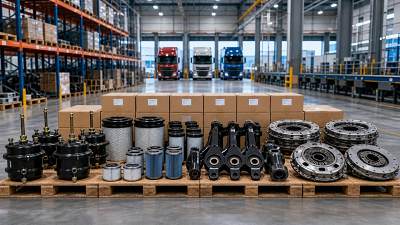
For buyers comparing a truck parts manufacturer, batch-to-batch quality consistency is critical to uptime, safety, and long-term cost control. Whether sourcing parts for a dump truck for sale, truck cement mixer, crane truck for sale, or truck trailer for sale, understanding how manufacturers manage standards, testing, and traceability helps procurement teams and distributors choose reliable suppliers with confidence.
In the road transport equipment sector, one failed brake chamber, mismatched suspension part, or unstable casting batch can affect fleet availability, warranty exposure, and brand reputation. This is especially important for international B2B buyers who often place repeat orders over 3 to 12 months and need predictable quality across different production runs.
For sourcing teams, quality is not only about whether one sample passes inspection. It is about whether the 500th unit performs like the first, whether dimensional tolerances stay within target ranges, and whether the supplier can trace material, process, and inspection records when a field issue appears. A capable truck parts manufacturer builds this consistency into every stage of production.
This article explains how manufacturers manage quality across batches, what procurement professionals should verify before placing repeat orders, and how distributors can reduce supply risk when evaluating suppliers on a global heavy truck industry platform.
Why Batch Consistency Matters in Heavy Truck Parts Supply
In heavy-duty applications, parts operate under high loads, vibration, heat, and continuous duty cycles. A steering component, hub assembly, leaf spring, or sealing part that varies from batch to batch may still look acceptable visually, yet fail early in mining routes, municipal construction, or long-haul logistics. For buyers, the real issue is not only part quality, but quality stability over time.
Batch inconsistency creates three direct commercial risks. First, it raises maintenance frequency and unplanned downtime. Second, it complicates inventory management because mixed performance forces buyers to separate lots. Third, it increases after-sales cost for distributors and OEM support teams, especially when defective parts are already installed on 20, 50, or 200 vehicles.
The impact is wider when parts are used across different vehicle categories. A truck cement mixer may require wear resistance and sealing reliability under constant rotation. A crane truck for sale needs stable hydraulic and structural components. A truck trailer for sale depends on axle, brake, suspension, and lighting parts that must perform consistently in cross-border transport and varying climates.
Typical failure points buyers should monitor
Most quality deviations appear in a limited number of control areas. Dimensional drift of more than ±0.2 mm to ±0.5 mm can affect fitment. Hardness variation may lead to premature wear or brittleness. Rubber compound instability can shorten service life from 24 months to less than 12 months in harsh environments. Surface treatment inconsistency may also accelerate corrosion during coastal or winter operations.
- Material variation between incoming lots, such as steel grade deviation or rubber formulation changes.
- Process variation, including heat treatment temperature swings, welding parameter drift, or machining tool wear.
- Inspection gaps, where only first articles are checked but in-process and final random sampling are too limited.
- Poor labeling and traceability, making it difficult to isolate a problem batch within 24 to 48 hours.
For B2B procurement teams, a practical question is simple: can the truck parts manufacturer prove that each batch is produced under the same controlled conditions? If not, even a competitive unit price may become expensive after warranty claims, freight replacements, and delayed project schedules.
How a Truck Parts Manufacturer Controls Quality from Raw Material to Final Packaging
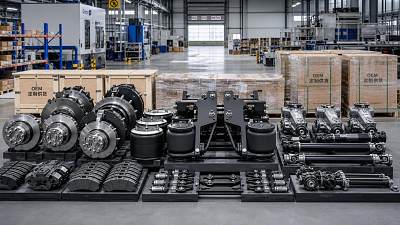
Reliable batch quality starts long before final inspection. Strong manufacturers control the full chain: raw material approval, process setup, in-process verification, final testing, and packaging discipline. In commercial vehicle parts, consistency usually depends on repeatable systems rather than individual operator experience alone.
1. Incoming material verification
A manufacturer should verify every incoming lot against defined specifications before release to production. Depending on the part category, checks may include chemical composition, hardness range, tensile performance, coating thickness, or rubber elasticity. Common practice is to quarantine materials until sampling is completed, often within 24 hours of receipt.
Key controls at the material stage
For metal parts, manufacturers often review mill certificates and conduct spot checks on dimensions and hardness. For rubber and polymer parts, they may test density, aging behavior, and compression set. If a supplier changes a sub-material source without notice, the truck parts manufacturer should trigger a revalidation process before mass production resumes.
2. Process standardization on the shop floor
Standard work instructions help keep every batch aligned. This includes machine settings, torque values, molding times, welding sequences, and heat treatment windows. For example, if a bushing requires a curing range of 160°C to 180°C for 8 to 12 minutes, drifting beyond that range can change performance even when the part appearance remains normal.
Manufacturers with stable output usually lock critical parameters and record them by shift, machine, or lot. They also monitor wear items such as cutting tools, molds, and fixtures. A mold with 80,000 cycles may need rework or replacement before dimensional stability starts to decline.
The table below shows how process control typically works across common heavy truck parts categories.
For buyers, the main takeaway is that different parts require different control plans. A serious supplier should explain which 3 to 5 parameters are treated as critical for the exact part you are sourcing, instead of using the same generic quality statement for all products.
3. In-process and final inspection
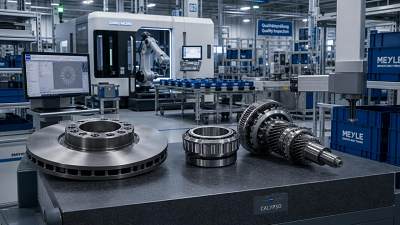
Effective manufacturers do not rely only on end-of-line inspection. They check first-piece approval at startup, patrol inspection every 1 to 2 hours, and final sampling before packing. For higher-risk components, some factories increase sampling frequency or move to 100% inspection for dimensions, leak testing, or visual defects.
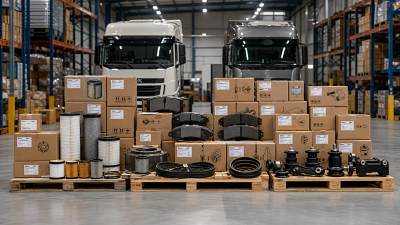
Final packaging also matters. Incorrect labeling, mixed part numbers, and weak export packaging can turn good production into bad delivery. In international trade, carton marking, pallet stability, moisture protection, and lot identification are essential if products travel 20 to 45 days by sea freight.
Testing, Traceability, and Documentation Buyers Should Ask For
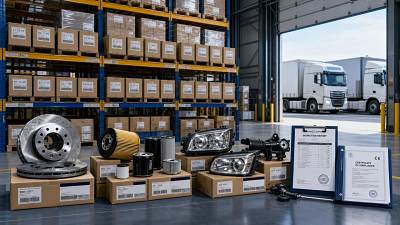
When comparing suppliers on a B2B platform, documentation often reveals more than sales language. A dependable truck parts manufacturer should be able to show how each batch can be traced from raw material to finished shipment. Traceability reduces response time if a defect is found and helps buyers separate isolated issues from systemic quality problems.
What complete batch traceability should include
At minimum, a batch record should connect five elements: material lot, production date, machine or line, operator or shift, and final inspection result. In stronger systems, the batch code can also link to packaging date and shipment container details. This allows the supplier to investigate within 1 business day rather than spending a week searching disconnected records.
For buyers managing aftermarket distribution or project supply, traceability is especially important when the same part number is supplied over 6 to 12 months. If a field complaint appears, the distributor needs to know whether only one delivery lot is affected or whether all stock should be quarantined.
Documents that support confidence before repeat orders
The following document set is commonly used during supplier evaluation and order approval. Not every part needs the same depth of records, but the pattern of control should be clear.
Procurement teams do not need excessive paperwork for every order, but they should request evidence that the system exists and can be produced when needed. If a supplier cannot provide consistent records for the last 3 batches of the same part, repeatability may still be weak.
Questions worth asking during supplier review
- How are batch numbers assigned, and where are they marked on cartons or parts?
- What is the standard retention period for quality records: 12 months, 24 months, or longer?
- Which tests are performed on every batch, and which are performed weekly or monthly?
- How quickly can the supplier issue a corrective action response after a complaint, such as within 48 to 72 hours?
These questions are practical for buyers sourcing spare parts for complete trucks, trailers, chassis systems, and construction machinery. They also support cross-border purchasing where visual inspection at the destination may happen weeks after shipment.
How Procurement Teams and Distributors Can Evaluate Batch Quality Before Scaling Orders
A common sourcing mistake is to approve a supplier based on one good sample and one attractive quotation. In practice, stable purchasing requires a staged evaluation model. This is useful for procurement managers, business evaluation teams, and distributors who plan to move from trial orders to regular monthly or quarterly volumes.
A practical 4-step verification process
- Start with sample validation for fitment, material, and function against your target vehicle application.
- Place a pilot order, often 50 to 300 units depending on part value and risk level, to verify packaging, delivery, and initial field performance.
- Review consistency across at least 2 to 3 separate production batches before scaling volume.
- Set a written quality agreement covering tolerance limits, complaint handling time, and traceability requirements.
This process is especially useful when sourcing parts used in multiple vehicle types such as dump trucks, semi-trailers, concrete transport equipment, and crane support vehicles. Even when the same part number is listed, actual performance can vary depending on road load, dust exposure, and duty cycle.
Comparison points for supplier selection
The table below helps buyers compare suppliers beyond price alone. It can be used during RFQ reviews, distributor onboarding, or annual supplier assessment.
The key conclusion is that a qualified truck parts manufacturer should perform well in all four areas, not only in quotation speed. For distributors, this reduces return rates and improves customer trust when supplying fleet owners, repair networks, and equipment resellers.
Common purchasing mistakes
Buyers sometimes overfocus on MOQ or lead time and undercheck process stability. Another mistake is mixing lots from different suppliers under one stock code, which makes complaint tracing difficult. It is also risky to skip packaging review when exporting to regions with humid ports, long inland delivery, or rough unloading conditions.
A stronger approach is to define acceptance rules before order confirmation: inspection method, lot labeling format, document package, and claim response expectations. This turns quality from a reactive discussion into a measurable supply requirement.
Using a Global Heavy Truck Industry Platform to Identify Reliable Manufacturers
A professional global heavy truck industry platform can make supplier screening more efficient, especially when buyers need access to truck chassis and cab parts, complete truck systems, trailer components, construction machinery spares, and aftermarket replacement parts. The value is not only product discovery, but also better comparison across suppliers, categories, and regions.
For information researchers and commercial evaluation teams, the platform helps narrow a long supplier list into a workable shortlist. Buyers can compare product scope, application fit, export readiness, and responsiveness without starting from zero in every market. This is particularly useful when sourcing for multi-country distribution or infrastructure projects with phased delivery over 2 to 6 months.
How platform-based sourcing improves quality evaluation
A structured B2B platform supports better decisions because it allows buyers to compare multiple signals together: product category depth, consistency of technical descriptions, availability of buying guides, and access to market insights. While no digital listing replaces a full audit, it can reduce screening time and help teams focus on suppliers that communicate clearly about manufacturing and quality control.
- Use product discovery tools to identify manufacturers specializing in the exact part families you need, such as brake, suspension, cab, axle, or trailer systems.
- Compare suppliers serving similar applications, including mining transport, municipal engineering, long-haul logistics, or construction fleets.
- Review whether the supplier can support repeat international trade, documentation requests, and distributor cooperation.
- Use buying guides and market information to align sourcing strategy with regional demand, replacement cycles, and vehicle type trends.
What buyers should prepare before making contact
The fastest way to evaluate a truck parts manufacturer is to send a clear inquiry package. Include part number, vehicle application, annual demand estimate, target market, packaging requirement, and whether you need OEM-style consistency or aftermarket value positioning. Even an estimated annual volume range, such as 1,000 to 5,000 units, helps suppliers propose the right process and delivery plan.
Recommended inquiry checklist
- Part drawings, samples, or technical references where available.
- Target vehicle types, such as dump truck, truck cement mixer, crane truck, or semi-trailer.
- Expected order rhythm, for example monthly, quarterly, or project-based supply.
- Required inspection points, complaint handling expectations, and packaging format.
- Destination market conditions, including climate, duty cycle, and transport method.
The more precise the inquiry, the easier it becomes to judge whether the supplier understands batch consistency at an operational level. This also improves quotation quality and reduces delays caused by repeated clarification during sourcing.
FAQ: Practical Questions About Batch Quality in Truck Parts Manufacturing
How many batches should a buyer review before placing a larger order?
For standard aftermarket parts, reviewing 2 to 3 separate batches is a practical minimum. For safety-related or high-load components, buyers often prefer a sample phase plus one pilot lot and one repeat lot before annual contracts are expanded. This approach helps reveal whether the truck parts manufacturer is stable across time, not only on a single run.
What is a reasonable complaint response time for B2B truck parts supply?
A practical benchmark is an initial response within 48 to 72 hours, followed by containment action and data review. For more complex issues, a root cause update within 7 business days is common. Faster response is valuable when parts are already in field use or distribution inventory across several customer locations.
Is low price always a warning sign?
Not always, but a significant price gap should trigger questions about material grade, process control, inspection scope, or packaging standard. A supplier quoting 10% to 20% below market may still be competitive, but buyers should verify what is included and whether batch documentation supports consistent quality.
Which parts require the strictest batch monitoring?
Brake parts, steering components, suspension parts, hubs, seals, and hydraulic-related components usually deserve tighter monitoring because failure can affect safety, uptime, and secondary component life. For trailers and construction-related trucks, load-bearing and vibration-sensitive parts should be reviewed carefully.
Batch-to-batch quality is one of the clearest indicators of whether a truck parts manufacturer can support long-term commercial cooperation. For buyers, distributors, and business evaluation teams, the most reliable suppliers are those that combine controlled materials, stable processes, documented testing, and traceable delivery records across repeated orders.
Within the global heavy truck industry, this matters across every sourcing category, from complete trucks and chassis systems to trailers, construction machinery, and spare parts. A supplier that can explain its control points, show multi-batch consistency, and respond quickly to issues is better positioned to support fleet uptime, resale confidence, and procurement efficiency.
If you are comparing suppliers for heavy truck parts, trailer components, or commercial vehicle equipment, use a professional industry platform to shortlist qualified manufacturers, request the right quality documents, and evaluate consistency before scaling your orders. Contact us today to get tailored sourcing support, compare reliable suppliers, and explore more solutions for global heavy truck and road transport equipment procurement.
Trending News
- Cab Chassis Truck for Fire Department: Key Specs Before Ordering
- When to Use an Excavator With Long Reach Boom on Site
- Choosing a Water Truck Factory for Municipal and Mining Projects
- Truck Parts Wholesale: How to Balance Price, Quality, and Lead Time
- Crane Truck Price in 2026: What Drives Total Ownership Cost
Tag
Recommended News
 Truck Parts IndustryTruck Parts Wholesale: How to Balance Price, Quality, and Lead TimeTruck parts wholesale made smarter: learn how to balance price, quality, and lead time by application to cut downtime, reduce hidden costs, and source with more confidence.
 Truck Parts IndustryTruck Spare Parts Supplier with Bulk Order Discounts: Savings vs Stock RiskTruck spare parts supplier with bulk order discounts: learn when bulk buying cuts fleet costs and when stock risk hurts cash flow, uptime, and sourcing efficiency.
 Truck Parts IndustryTruck Spare Parts Supplier in Europe: Compliance Checks Before OrderingTruck spare parts supplier in Europe selection starts with compliance. Learn the key checks for safety, fitment, traceability, and import documents before you order.
 Truck Parts IndustryChoosing a Heavy Truck Parts Manufacturer with OEM Services for Stable SupplyHeavy truck parts manufacturer with OEM services: learn how to secure stable supply, consistent quality, and lower sourcing risk with practical buyer evaluation tips.
 Truck Parts IndustryHeavy Truck Parts for Construction: Durability vs Replacement CostHeavy truck parts manufacturer for construction insights: learn how to balance durability, replacement cost, and uptime across rough ground, urban projects, and severe-duty fleets.
 Truck Parts IndustryCold Storage Vehicle Parts That Reduce Failure RatesCommercial vehicle parts for cold storage that cut failure rates: explore seals, insulation, cooling, and electrical upgrades to protect cargo, reduce downtime, and improve fleet uptime.
 Truck Parts IndustryGermany Heavy Truck Parts Manufacturers: Quality and Supply RisksHeavy truck parts manufacturer in Germany: learn how to assess quality, certifications, and supply risks to secure safer sourcing, stable deliveries, and long-term fleet performance.
 Truck Parts IndustryVietnam to Enforce New Used Truck Import Rules from Q4 2026Vietnam's new used truck import rules (Q4 2026) require OEM remanufacturing certification & traceability—key for Chinese exporters, assemblers & logistics providers.
 Truck Parts IndustryChoosing a Truck Parts Exporter: Lead Time, Compliance, and Quality RisksTruck parts exporter selection affects uptime, compliance, and cost. Learn how to compare lead time, certification, and quality control to avoid delays, claims, and fleet-wide failures.
 Truck Parts IndustryGermany Heavy Truck Parts Manufacturers: Quality and Supply RisksHeavy truck parts manufacturer in Germany selection guide: compare quality systems, traceability, testing, and supply risks to secure reliable truck parts sourcing.
 Truck Parts IndustryIrkeshtam Port’s 24-Hour Freight Clearance Boosts Exports to KyrgyzstanIrkeshtam Port’s 24-hour freight clearance slashes heavy-truck component clearance to <15 mins—boosting road transport equipment exports to Kyrgyzstan.
 Truck Parts IndustryHeavy Truck Parts for Construction: Which Components Fail Most OftenHeavy truck parts manufacturer for construction insights: discover which brake, suspension, filter, and drivetrain components fail most often—and how smarter sourcing cuts downtime and repair costs.
 Truck Parts IndustryBulk Order Discounts on Truck Spare Parts: When Savings Become RiskTruck spare parts supplier with bulk order discounts: learn when lower prices increase downtime, quality, and inventory risk—and how to source smarter for reliable fleet performance.
 Truck Parts IndustryTruck Parts Wholesale: How to Balance Price, Quality, and Stock RiskTruck parts wholesale success depends on balancing price, quality, and inventory risk. Learn practical sourcing checks to protect margins, reduce dead stock, and choose reliable suppliers.
 Truck Parts IndustryHow OEM Services Reduce Downtime in Heavy Truck Parts SupplyHeavy truck parts manufacturer with OEM services helps cut downtime with accurate fit, faster lead times, and stable supply—discover smarter sourcing for fleet maintenance.
 Truck Parts IndustryErenhot-Mongolia 24-Hour Freight Clearance Boosts Trucking EfficiencyErenhot-Mongolia 24-hour freight clearance slashes truck clearance time by 40%—boosting efficiency for auto parts, cold-chain & cross-border trucking.
 Truck Parts IndustryKazakhstan Extends Zero-Tariff for Truck Parts on China-Europe Rail Routes to 2027Kazakhstan extends zero-tariff for truck parts—including ADAS controllers, ECUs & T-BOX units—on China-Europe rail routes until 2027. Boost your logistics & export strategy now!
 Truck Parts IndustryHow Low-Maintenance Truck Spare Parts Reduce Downtime Over TimeTruck spare parts supplier with low maintenance solutions help fleets cut downtime, reduce repair frequency, and improve workshop efficiency. Discover how durable parts boost long-term truck performance.
![]() Truck Parts IndustryHeavy Truck Parts Manufacturer for Construction: How to Judge Product ConsistencyHeavy truck parts manufacturer for construction selection starts with consistency. Learn how to judge batch stability, traceability, and quality control to reduce risk and improve fleet safety.
Truck Parts IndustryHeavy Truck Parts Manufacturer for Construction: How to Judge Product ConsistencyHeavy truck parts manufacturer for construction selection starts with consistency. Learn how to judge batch stability, traceability, and quality control to reduce risk and improve fleet safety.![]() Truck Parts IndustryTruck Parts Price in 2026: What Is Driving Replacement Cost HigherTruck parts price in 2026 is rising fast. Discover the key cost drivers, category risks, and sourcing tips buyers need to reduce replacement costs and make smarter purchasing decisions.
Truck Parts IndustryTruck Parts Price in 2026: What Is Driving Replacement Cost HigherTruck parts price in 2026 is rising fast. Discover the key cost drivers, category risks, and sourcing tips buyers need to reduce replacement costs and make smarter purchasing decisions. Truck Parts IndustryHow to Compare Truck Tipper Distributors by Parts Response TimeTruck tipper distributor comparison starts with parts response time. Learn how to assess stock speed, technical support, and supply reliability to cut downtime and choose the right partner.
 Truck Parts IndustryCommercial Vehicle Parts for Cold Storage: What Improves ReliabilityCommercial vehicle parts for cold storage that boost uptime, temperature stability, and fleet reliability. Learn which components reduce breakdowns and protect cargo in demanding cold-chain transport.
 Truck Parts IndustryTruck Parts Wholesale: How to Balance Price, Lead Time, and QualityTruck parts wholesale guide for distributors: learn how to balance price, lead time, and quality to reduce risk, protect margins, and choose suppliers with confidence.
 Truck Parts IndustryChoosing a Heavy Truck Parts Manufacturer in Germany for Stable SupplyHeavy truck parts manufacturer in Germany: learn how to compare suppliers by scenario, secure stable supply, reduce sourcing risk, and improve fleet uptime with smarter procurement decisions.
 Truck Parts IndustryAre Low-Maintenance Truck Spare Parts Suppliers Worth Switching ToIs a truck spare parts supplier with low maintenance worth the switch? Learn how better fitment, fewer failures, and reliable delivery can cut downtime and lower fleet service costs.