Choosing a Truck Parts Distributor That Can Support Fast Repairs
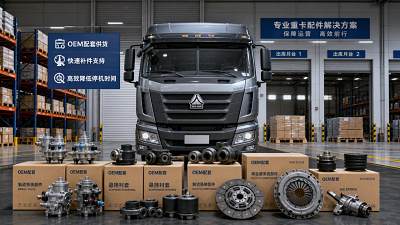
When repairs cannot wait, choosing the right truck parts distributor becomes critical for aftermarket maintenance teams. A reliable partner helps reduce downtime, speed up parts availability, and keep fleets operating safely and efficiently. In a global market with complex supply chains, knowing what to look for in a distributor can make every repair faster, smoother, and more cost-effective.
Why a Checklist-Based Approach Matters for Fast Repairs
For aftermarket maintenance staff in the road transport equipment sector, time pressure is rarely theoretical. A truck waiting for a brake chamber, clutch component, hub bearing, air dryer cartridge, or electrical sensor may sit idle for 6 hours, 24 hours, or even 3 to 7 days if sourcing is disorganized. That is why selecting a truck parts distributor should not depend on price alone. A checklist-based review helps teams verify supply speed, fitment accuracy, technical support, and service consistency before a breakdown turns into a scheduling problem.
The heavy truck aftermarket is also more complex than many buyers expect. Parts may differ by axle load range, engine platform, emission generation, cab configuration, trailer application, or regional standard. A distributor that can support fast repairs must do more than hold stock. It should help maintenance teams identify the right part number, confirm interchangeability within acceptable limits, and provide realistic lead times such as same-day dispatch, 24 to 48 hour warehouse transfer, or 1 to 3 week international replenishment.
Using a clear selection checklist reduces three common risks: ordering the wrong part, waiting on uncertain lead times, and overpaying for emergency freight. In practical terms, even a 2% to 5% reduction in wrong-part orders can save significant labor hours over a quarter, especially for fleets or service networks handling dozens of repair jobs per week.
The first questions maintenance teams should ask
- Can the truck parts distributor confirm stock status in real time or within a response window of 30 to 60 minutes?
- Does the distributor support VIN, OE reference, drawing, or photo-based identification for urgent repair orders?
- What categories are locally stocked, and which items typically require 3 to 15 days of replenishment?
- Is there a process for handling misorders, warranty questions, and technical clarification without delaying workshop work?
- Can the distributor support both fast-moving consumables and slower, critical replacement parts for heavy-duty trucks and trailers?
For international sourcing environments, digital access also matters. A global B2B platform serving commercial vehicles and heavy equipment can help buyers compare multiple suppliers, identify coverage by product line, and check whether the distributor has experience with truck chassis and cab parts, trailers and semi-trailers, construction machinery spares, and other connected categories. This is especially useful when a repair team needs to source across more than one product family in the same maintenance cycle.
Core Checklist: How to Evaluate a Truck Parts Distributor
The most effective way to compare a truck parts distributor is to score a few operational criteria instead of relying on general claims. For aftermarket maintenance teams, the real question is simple: can this supplier help us restore vehicles quickly, accurately, and repeatedly? The checklist below focuses on service points that directly influence repair speed.
Key evaluation items to prioritize
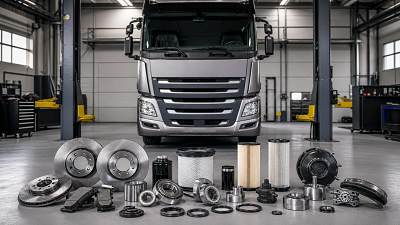
- Check catalog depth across high-failure and high-demand lines such as braking parts, suspension parts, steering components, filters, lighting, drivetrain items, seals, cooling parts, and electrical systems.
- Verify cross-reference capability. A distributor should be able to work from OE numbers, aftermarket numbers, and model-specific descriptions within the same inquiry cycle.
- Ask for normal response times. A strong benchmark is quotation or availability feedback within 1 to 4 business hours for standard parts and within 24 hours for uncommon items.
- Review fulfillment accuracy. Even if exact performance data is not published, the supplier should explain how it controls picking, packaging, labeling, and batch traceability.
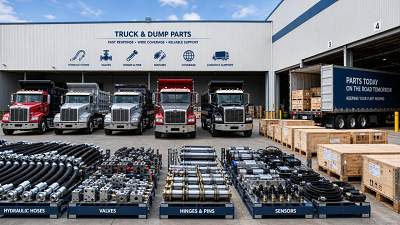
- Confirm logistics options, including emergency dispatch, consolidated shipment, export packaging, and support for mixed-category orders.
- Assess after-sales handling for shortages, damaged shipments, fitment disputes, and urgent replacements.
A capable truck parts distributor should also show strength in both breadth and depth. Breadth means it covers multiple systems needed during unscheduled repairs. Depth means it can support multiple brands, duty cycles, and application ranges, from long-haul tractors to municipal vehicles, dump trucks, and trailers. For maintenance teams, this reduces the need to manage 5 to 10 separate small suppliers for one workshop.
Before the comparison table below, it helps to group the evaluation criteria by operational value rather than marketing language. The following checklist can be used during supplier screening calls, RFQ reviews, or platform-based sourcing discussions.
This table shows that fast repairs depend on more than warehouse size. A truck parts distributor with disciplined identification, clear replenishment windows, and broad category support may outperform a cheaper source that cannot verify fitment or delivery timing. For aftermarket teams, the best distributor is usually the one that reduces total repair delay, not just unit price.
Minimum supplier information to request
When screening a potential truck parts distributor, ask for a practical service profile. This should include stocked product groups, dispatch cut-off times, export packing methods, return rules, documentation support, and the main applications served. If a supplier cannot clearly explain these points in the first 1 to 2 exchanges, future urgent orders may also be difficult to manage.
Match the Distributor to Your Repair Scenario
Not every workshop needs the same type of truck parts distributor. A fleet maintenance center handling preventive service has different priorities from a roadside repair partner or an independent spare parts trader serving multiple brands. Choosing the right fit means matching the distributor’s strengths to your repair pattern, stock strategy, and vehicle mix.
Typical scenarios and what to prioritize
For fleets with 20 to 200 vehicles, replenishment predictability is often the top concern. These operators usually need stable supply of filters, brake linings, wheel-end parts, air system components, lamps, belts, and common sensors. In this case, a truck parts distributor that supports scheduled ordering, monthly usage analysis, and repeat part-number control can improve workshop efficiency.
For emergency repair providers, the priority shifts toward speed and confirmation accuracy. A supplier that can respond within 30 minutes to 2 hours, verify interchange options, and arrange express shipment can make the difference between a same-day release and an overnight delay. Here, deeper technical support may be more valuable than a slightly lower price.
For distributors or traders sourcing internationally through a commercial vehicle B2B platform, product range and supplier comparability become essential. Access to multiple manufacturers and parts sources across truck chassis and cab systems, trailers, complete trucks, and construction machinery parts creates flexibility, especially when one source faces shortages or long lead times of 10 to 30 days.
Before selecting by scenario, it helps to compare the distributor profile against the operational need. The table below can guide that match.
This comparison highlights an important point: the right truck parts distributor is context-dependent. Maintenance teams should rank needs by urgency, vehicle diversity, and service radius. A one-size-fits-all supplier model often leads to either excess stock or repeated emergency buying.
Practical scenario checklist
- If your workshop handles more than 10 routine service jobs per week, ask the distributor about repeat-order support and stock reservation.
- If your trucks operate across long-haul routes, verify whether the truck parts distributor can ship to multiple regions or coordinate with local partners.
- If your fleet includes tractors, tippers, trailers, and municipal vehicles, prioritize suppliers with wide category coverage instead of single-line specialists.
- If your repair work often depends on imported parts, request realistic cross-border lead times and customs document support before the first urgent order.
Commonly Overlooked Risks That Slow Repairs
Many delays happen not because the part is unavailable, but because one detail was missed during ordering. In road transport equipment maintenance, overlooked fitment points, incomplete data, and unclear packaging or return terms can extend downtime by another 24 to 72 hours. A disciplined review process helps prevent these avoidable losses.
Risk reminders maintenance teams should not ignore
The first common issue is incomplete identification data. A message that says “need brake parts for heavy truck urgently” is rarely enough. A truck parts distributor works faster when the inquiry includes OE number, vehicle model, production year, axle or engine details, dimensions, photos, and failure description. In many cases, sending 4 to 6 clear data points can cut the confirmation cycle by half.
The second issue is assuming that visually similar parts are interchangeable. A sensor connector, brake drum size, king pin kit dimension, or suspension bushing hardness may differ within the same vehicle family. Without confirmation, a low-cost substitute can create rework, unsafe operation, or another unplanned stop within weeks.
The third issue is ignoring packaging and freight risk. Heavy components such as hubs, drums, spring assemblies, and steering parts require secure packaging for long-distance transport. If the truck parts distributor cannot explain carton, pallet, or protective packing standards, international shipments may arrive damaged, turning a 7-day delivery into a 14-day problem.
Quick risk checklist before placing urgent orders
- Confirm whether the requested part number has superseded versions or related alternatives.
- Check whether left-hand and right-hand, front and rear, or axle-specific differences apply.
- Ask if the listed lead time refers to stock-on-hand, factory supply, or in-transit inventory.
- Clarify whether quoted pricing includes export packaging, duties support documents, or only ex-warehouse shipment.
- Request photos or dimensional confirmation for unusual or non-standard components.
These checks are especially useful when sourcing through a global heavy truck industry platform, where buyers may be comparing suppliers from different regions. Digital comparison brings speed, but clear verification remains essential. A reliable truck parts distributor should welcome detailed checks because they reduce claims and improve repeat business.
Execution Plan: How to Build a Faster Sourcing Workflow
Once you identify a suitable truck parts distributor, the next step is to standardize how your team works with it. Good sourcing performance is not only about supplier capability; it also depends on how well the workshop sends information, classifies urgency, and tracks repeat demand. A simple operating process can reduce sourcing friction significantly over a 30 to 90 day period.
Recommended workflow for aftermarket maintenance teams
Start by dividing parts into three bands: fast-moving service items, critical downtime parts, and low-frequency special items. Fast-moving items usually deserve planned stocking. Critical downtime parts should be linked to a truck parts distributor with clear emergency support. Low-frequency items may be sourced through a broader B2B marketplace where supplier comparison adds value.
Next, create a standard inquiry template. It should capture vehicle application, part number, dimensions if known, quantity, urgency level, required delivery date, and destination. This small step often reduces back-and-forth messages by 20% to 40%, especially when multiple mechanics or branch workshops submit requests.
Finally, review supplier performance monthly. Even without complex software, tracking response time, on-time delivery, wrong-part incidents, and issue resolution speed across 10 to 30 orders can show whether the truck parts distributor is improving or creating hidden costs.
Simple action checklist to implement now
- Prepare a preferred supplier list by product category, not just one general contact for all parts.
- Store past successful part references for repeat repairs involving brakes, suspension, wheel-end systems, filters, and electrical replacements.
- Mark urgent orders by service impact, such as vehicle immobilized, safety-related fault, or planned maintenance delay.
- Use a global industry platform to compare alternate suppliers when lead time exceeds your acceptable repair window.
- Review whether combined orders can lower freight cost without extending the required delivery time beyond the repair target.
In the road transport equipment industry, the best results often come from combining a dependable truck parts distributor with a wider sourcing network. A specialized distributor handles speed-critical orders, while a professional global platform helps maintenance teams discover additional suppliers, compare product lines, and prepare backup options for future demand spikes.
Why Work With a Global Heavy Truck Industry Platform
For buyers responsible for heavy truck and commercial vehicle aftermarket support, access to supplier information is just as important as access to parts. A professional international B2B platform focused on the heavy truck supply chain helps maintenance teams move beyond isolated sourcing and into a more transparent, scalable process. This is valuable when the repair environment involves multiple truck brands, diverse duty cycles, and changing cross-border supply conditions.
The advantage is not only product variety. A focused industry platform can connect buyers with manufacturers, suppliers, and distributors across categories such as truck chassis and cab, complete trucks, light trucks, trailers and semi-trailers, construction machinery, and spare parts. For aftermarket personnel, this means fewer blind spots when a repair requires related components from more than one system or application area.
It also supports better decision-making. Instead of relying on a single quote, buyers can review supplier coverage, compare offerings, study market information, and prepare sourcing plans for both urgent and routine repairs. Over time, this can help reduce dependence on reactive purchasing and improve continuity across monthly, seasonal, or project-based maintenance cycles.
Contact us for faster truck parts sourcing decisions
If your team is evaluating a truck parts distributor, we can help you shorten the decision process. Through our global heavy truck industry platform, you can consult on part parameter confirmation, product selection by application, delivery lead time expectations, supplier matching, and category coverage across commercial vehicle and heavy equipment sectors.
You are welcome to contact us with your OE references, vehicle model details, required quantities, target delivery window, certification or documentation needs, and sourcing region. We can support discussions around sample availability, quotation comparison, custom sourcing plans, and practical options for urgent aftermarket repairs.
When fast repairs matter, choosing the right truck parts distributor should be based on clear checks, realistic service expectations, and strong supply-chain visibility. Contact us to discuss your parts list, fitment questions, lead time targets, or multi-supplier sourcing requirements, and we will help you identify the most suitable next step.
Recommended News
 Truck Parts IndustryTruck Engine Warning Signs Before Costly RepairsTruck engine warning signs can reveal costly failures early. Learn how fleets detect noise, smoke, overheating, power loss, and alerts to cut downtime.
 Truck Parts IndustryTruck Parts Quality Checks That Reduce Fleet DowntimeTruck parts quality checks help fleets reduce downtime, prevent premature failures, improve fitment control, and source more reliable components for safer operations.
 Truck Parts IndustryHow a Truck Cement Manufacturer Ensures Consistent Load QualityTruck cement manufacturer standards directly affect load consistency, safety, and efficiency. Learn how top suppliers control design, sealing, batching, and testing for reliable transport.
 Truck Parts IndustryTruck Parts Price Trends in 2026: What Is Driving Cost Changes?Truck parts price trends in 2026 are driven by steel, energy, freight, currency, and compliance costs. Discover what raises prices, which parts face the most pressure, and how buyers can source smarter.
 Truck Parts IndustryTruck Parts Wholesale: How to Balance Price, Quality, and Lead TimeTruck parts wholesale made smarter: learn how to balance price, quality, and lead time by application to cut downtime, reduce hidden costs, and source with more confidence.
 Truck Parts IndustryTruck Spare Parts Supplier with Bulk Order Discounts: Savings vs Stock RiskTruck spare parts supplier with bulk order discounts: learn when bulk buying cuts fleet costs and when stock risk hurts cash flow, uptime, and sourcing efficiency.
 Truck Parts IndustryTruck Spare Parts Supplier in Europe: Compliance Checks Before OrderingTruck spare parts supplier in Europe selection starts with compliance. Learn the key checks for safety, fitment, traceability, and import documents before you order.
 Truck Parts IndustryChoosing a Heavy Truck Parts Manufacturer with OEM Services for Stable SupplyHeavy truck parts manufacturer with OEM services: learn how to secure stable supply, consistent quality, and lower sourcing risk with practical buyer evaluation tips.
 Truck Parts IndustryHeavy Truck Parts for Construction: Durability vs Replacement CostHeavy truck parts manufacturer for construction insights: learn how to balance durability, replacement cost, and uptime across rough ground, urban projects, and severe-duty fleets.
 Truck Parts IndustryCold Storage Vehicle Parts That Reduce Failure RatesCommercial vehicle parts for cold storage that cut failure rates: explore seals, insulation, cooling, and electrical upgrades to protect cargo, reduce downtime, and improve fleet uptime.
 Truck Parts IndustryGermany Heavy Truck Parts Manufacturers: Quality and Supply RisksHeavy truck parts manufacturer in Germany: learn how to assess quality, certifications, and supply risks to secure safer sourcing, stable deliveries, and long-term fleet performance.
 Truck Parts IndustryVietnam to Enforce New Used Truck Import Rules from Q4 2026Vietnam's new used truck import rules (Q4 2026) require OEM remanufacturing certification & traceability—key for Chinese exporters, assemblers & logistics providers.
 Truck Parts IndustryChoosing a Truck Parts Exporter: Lead Time, Compliance, and Quality RisksTruck parts exporter selection affects uptime, compliance, and cost. Learn how to compare lead time, certification, and quality control to avoid delays, claims, and fleet-wide failures.
 Truck Parts IndustryGermany Heavy Truck Parts Manufacturers: Quality and Supply RisksHeavy truck parts manufacturer in Germany selection guide: compare quality systems, traceability, testing, and supply risks to secure reliable truck parts sourcing.
 Truck Parts IndustryIrkeshtam Port’s 24-Hour Freight Clearance Boosts Exports to KyrgyzstanIrkeshtam Port’s 24-hour freight clearance slashes heavy-truck component clearance to <15 mins—boosting road transport equipment exports to Kyrgyzstan.
 Truck Parts IndustryHeavy Truck Parts for Construction: Which Components Fail Most OftenHeavy truck parts manufacturer for construction insights: discover which brake, suspension, filter, and drivetrain components fail most often—and how smarter sourcing cuts downtime and repair costs.
 Truck Parts IndustryBulk Order Discounts on Truck Spare Parts: When Savings Become RiskTruck spare parts supplier with bulk order discounts: learn when lower prices increase downtime, quality, and inventory risk—and how to source smarter for reliable fleet performance.
 Truck Parts IndustryTruck Parts Wholesale: How to Balance Price, Quality, and Stock RiskTruck parts wholesale success depends on balancing price, quality, and inventory risk. Learn practical sourcing checks to protect margins, reduce dead stock, and choose reliable suppliers.
 Truck Parts IndustryHow OEM Services Reduce Downtime in Heavy Truck Parts SupplyHeavy truck parts manufacturer with OEM services helps cut downtime with accurate fit, faster lead times, and stable supply—discover smarter sourcing for fleet maintenance.
 Truck Parts IndustryErenhot-Mongolia 24-Hour Freight Clearance Boosts Trucking EfficiencyErenhot-Mongolia 24-hour freight clearance slashes truck clearance time by 40%—boosting efficiency for auto parts, cold-chain & cross-border trucking.
 Truck Parts IndustryKazakhstan Extends Zero-Tariff for Truck Parts on China-Europe Rail Routes to 2027Kazakhstan extends zero-tariff for truck parts—including ADAS controllers, ECUs & T-BOX units—on China-Europe rail routes until 2027. Boost your logistics & export strategy now!
 Truck Parts IndustryHow Low-Maintenance Truck Spare Parts Reduce Downtime Over TimeTruck spare parts supplier with low maintenance solutions help fleets cut downtime, reduce repair frequency, and improve workshop efficiency. Discover how durable parts boost long-term truck performance.
![]() Truck Parts IndustryHeavy Truck Parts Manufacturer for Construction: How to Judge Product ConsistencyHeavy truck parts manufacturer for construction selection starts with consistency. Learn how to judge batch stability, traceability, and quality control to reduce risk and improve fleet safety.
Truck Parts IndustryHeavy Truck Parts Manufacturer for Construction: How to Judge Product ConsistencyHeavy truck parts manufacturer for construction selection starts with consistency. Learn how to judge batch stability, traceability, and quality control to reduce risk and improve fleet safety.![]() Truck Parts IndustryTruck Parts Price in 2026: What Is Driving Replacement Cost HigherTruck parts price in 2026 is rising fast. Discover the key cost drivers, category risks, and sourcing tips buyers need to reduce replacement costs and make smarter purchasing decisions.
Truck Parts IndustryTruck Parts Price in 2026: What Is Driving Replacement Cost HigherTruck parts price in 2026 is rising fast. Discover the key cost drivers, category risks, and sourcing tips buyers need to reduce replacement costs and make smarter purchasing decisions. Truck Parts IndustryHow to Compare Truck Tipper Distributors by Parts Response TimeTruck tipper distributor comparison starts with parts response time. Learn how to assess stock speed, technical support, and supply reliability to cut downtime and choose the right partner.