Truck Parts Wholesale: How to Balance Price, Stock, and Quality
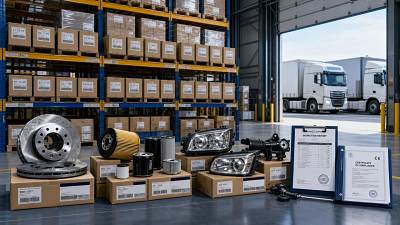
In truck parts wholesale, the real challenge is not just finding low prices—it is balancing cost, stock availability, and dependable quality. For dealers, distributors, and agents, the right sourcing strategy can improve margins, reduce downtime, and strengthen customer trust. This guide explores how to evaluate suppliers, manage inventory risks, and secure reliable truck parts in a competitive global market.
For most buyers searching for truck parts wholesale, the real question is practical: how do you buy at a competitive cost without ending up with slow deliveries, unstable stock, or quality complaints that hurt your reputation? The answer is not choosing the cheapest supplier. It is building a sourcing system that protects margin, service levels, and long-term customer relationships at the same time.
Dealers, distributors, and agents usually care about three outcomes above all else. First, they need pricing that leaves room for profit in a competitive market. Second, they need stable availability so they can serve workshops, fleets, and end customers without delay. Third, they need product quality that reduces returns, warranty disputes, and downtime risks.
That is why a smart truck parts wholesale strategy should focus less on one-time unit price and more on total purchasing value. When you compare suppliers through the lens of lead time, consistency, defect rate, documentation, packaging, and after-sales support, you make better buying decisions and reduce hidden costs across the supply chain.
Why Price Alone Is a Risky Way to Buy Truck Parts Wholesale
Low pricing is attractive, especially when markets are under pressure and customers are negotiating harder. However, in truck parts wholesale, the lowest quote often hides other costs that appear later. A part that is 8% cheaper can become far more expensive if it arrives late, fails early, creates installation issues, or triggers customer complaints.
For distributors, the true cost of a poor purchase includes more than procurement spend. It can include emergency air freight, replacement shipments, technician labor, vehicle downtime, loss of repeat business, and internal time spent resolving disputes. These are real margin killers, and they often matter more than the original purchase price.
A better approach is to evaluate total landed value. That means asking not only, “What is the unit price?” but also, “What is the defect rate? How stable is supply? How quickly can the supplier replenish urgent items? Are technical specifications consistent? Is the packaging suitable for international transport?”
When buyers use this broader view, they often discover that a slightly higher-priced supplier delivers better overall profitability. Fewer returns, faster turnover, and stronger customer trust can generate much more value than a small discount on paper.
What Dealers and Distributors Need Most From a Wholesale Supplier
Target buyers in this market are not simply purchasing products. They are protecting service reliability for their own customers. Whether they serve repair shops, transport fleets, construction companies, or regional resellers, they need suppliers that can support business continuity.
The first priority is fit-for-market inventory. Not every region has the same vehicle parc, emission standards, road conditions, or preferred truck brands. A good wholesale supplier should offer product ranges that match the local replacement demand, including both fast-moving maintenance parts and critical repair components.
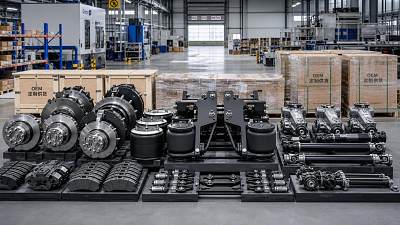
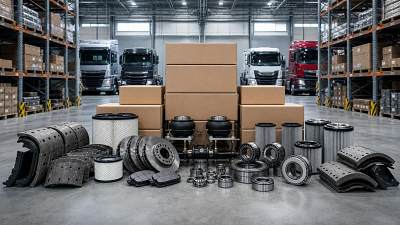
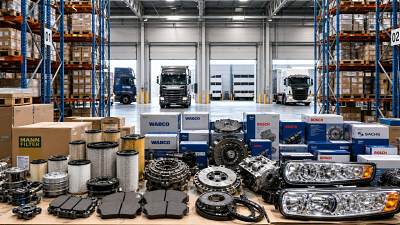
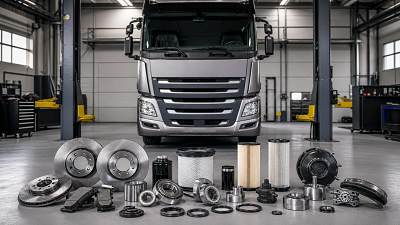
The second priority is stable replenishment. Dealers do not want to win an order today and fail to deliver next month. Stock consistency matters especially for filters, brake components, suspension parts, engine parts, electrical items, and trailer wear parts. Supply interruptions in these categories can quickly damage customer confidence.
The third priority is dependable quality verification. Buyers need to know whether parts meet OE standards, aftermarket positioning, or economy-grade expectations. Clarity matters. A supplier does not need to sell only premium products, but they must honestly define performance level, compatibility, and intended application.
The fourth priority is communication. In international truck parts wholesale, unclear product data, delayed responses, and weak order tracking create unnecessary risk. Professional suppliers provide catalog support, specification confirmation, packing details, lead time updates, and problem resolution processes.
How to Evaluate Price Without Damaging Margin
Price evaluation should begin with category segmentation. Not all parts should be sourced using the same logic. Fast-moving consumables, emergency repair items, high-value assemblies, and low-turn seasonal products each require different pricing strategies.
For fast-moving parts, competitive pricing is important because turnover is high and customers often compare options directly. Here, wholesale buyers should negotiate based on annual volume, mixed-container purchasing, or product bundles across several SKUs. Lower logistics cost per unit can improve margin without forcing the supplier to cut quality.
For critical repair parts, availability and reliability often matter more than the lowest cost. A distributor serving fleets may accept slightly higher prices if the supplier offers dependable lead times and low failure rates. In these cases, stable service can justify stronger resale pricing and better customer retention.
It is also useful to compare suppliers on a landed-cost basis rather than FOB price alone. Freight mode, customs handling, payment terms, packaging efficiency, and minimum order quantity all affect final cost. A supplier with a lower quote but poor packing density or longer lead times may not be the best choice in reality.
Another useful practice is tiered sourcing. Many distributors use one supplier for core volume lines, another for specialist items, and a backup supplier for urgent or unstable categories. This protects margin while avoiding overdependence on a single source.
How to Manage Stock Without Tying Up Too Much Cash
Inventory is where the balance between price, stock, and quality becomes most visible. If you buy too little, you lose orders and customers. If you buy too much, cash flow suffers and the risk of obsolete stock increases. In truck parts wholesale, inventory discipline is just as important as supplier selection.
The starting point is SKU classification. Separate your products into fast movers, medium movers, slow movers, and critical low-frequency items. Fast movers should usually have deeper stock and shorter reorder cycles. Slow movers should be purchased more cautiously, often through smaller quantities or supplier-supported replenishment programs.
Historical sales data is important, but it should not be the only reference. Buyers should also consider seasonality, local infrastructure activity, fleet expansion trends, and the installed base of truck models in their region. For example, growing mining or construction activity may increase demand for specific suspension, braking, and engine components.
Safety stock should be based on supplier lead time and demand volatility. If a supplier’s lead time is stable, stock planning becomes easier. If lead times are inconsistent, you may need larger buffers, which increases carrying cost. This is another reason why supplier reliability directly affects profitability.
Some wholesalers reduce stock pressure by using mixed procurement strategies. They keep local stock for high-demand items, place scheduled orders for predictable categories, and source rare items on demand. This balanced approach supports service levels while controlling working capital exposure.
It is also wise to review dead stock regularly. In heavy truck parts, product range can expand quickly, but not every SKU deserves shelf space forever. Slow-moving inventory should be identified early and managed through promotions, bundled sales, regional redistribution, or tighter future purchasing controls.
How to Judge Quality Before Quality Problems Reach Your Customers
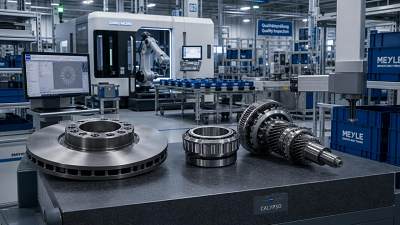
Quality control in truck parts wholesale should start long before goods arrive at your warehouse. The most effective buyers assess quality at the supplier evaluation stage, during sample confirmation, and through ongoing performance monitoring after orders begin.
First, verify technical consistency. Product drawings, material specifications, OE references, compatibility lists, and test reports should be available for important categories. If the supplier cannot provide clear technical information, that is a warning sign, especially for safety-related or performance-sensitive components.
Second, request samples and compare them carefully. Do not only check visual appearance. Review dimensions, weight, finishing, marking, fitment, packaging, labeling, and installation experience. A part that looks acceptable in photos may still create field problems once technicians begin using it.
Third, understand the supplier’s quality management process. Ask how they inspect incoming materials, monitor production, manage batch traceability, and handle nonconforming goods. Serious suppliers are usually able to explain their control process clearly and provide documentation when needed.
Fourth, monitor post-purchase quality with data. Return rate, failure type, claim frequency, and customer feedback should be tracked by SKU and supplier. A wholesaler that reviews these metrics regularly can identify problems early and make faster sourcing adjustments.
For many distributors, the best solution is not choosing only one quality level. Instead, they offer clearly separated product tiers such as premium, standard aftermarket, and economy. This allows them to serve different market segments while protecting transparency and reducing mismatched expectations.
Supplier Selection: What Separates a Reliable Partner From a Risky One
A good truck parts wholesale supplier is not defined by catalog size alone. The right partner combines relevant product range, dependable execution, commercial flexibility, and professional support. This becomes even more important in cross-border sourcing, where mistakes take longer and cost more to fix.
Begin with product-market fit. Does the supplier have strength in the truck brands, models, and applications that matter in your region? A large general catalog is less useful than a focused range with proven demand and strong replenishment ability.
Then assess commercial responsiveness. How fast do they quote? Can they manage mixed orders? Do they explain MOQ clearly? Are payment terms realistic? Can they support packaging customization or branding if needed? These practical factors often influence business success more than brochure claims.
Operational capability is equally important. Ask about lead times, production scheduling, warehouse stock levels, export experience, and documentation support. Reliable suppliers should be able to handle invoices, packing lists, HS code references, and shipping coordination efficiently.
Finally, evaluate how they handle problems. Every supply chain experiences issues at some point. What matters is whether the supplier responds quickly, accepts evidence-based claims, and offers a structured solution. A supplier’s after-sales behavior is often the clearest indicator of long-term reliability.
Building a Smarter Sourcing Model for Long-Term Growth
The most successful buyers in truck parts wholesale usually do not rely on one simple rule. They build a sourcing model based on category priorities, customer requirements, and market realities. This gives them more control over margin, stock risk, and service quality.
One practical model is to divide your sourcing plan into three layers. The first layer covers core high-volume SKUs, where price competitiveness and stock stability are both essential. The second layer covers technical or higher-risk items, where quality assurance and supplier capability matter most. The third layer covers low-frequency or special-demand items, where flexibility and response speed are the main priorities.
This layered method helps distributors allocate attention and capital more effectively. Instead of applying the same purchasing standard to every SKU, they can make smarter trade-offs based on real business impact.
Digital sourcing platforms can also improve decision-making. A professional B2B marketplace focused on heavy truck and commercial vehicle supply chains can help buyers compare suppliers, explore broader product ranges, and access supporting information such as brand directories, market insights, and buying guides. This makes sourcing more transparent and reduces time spent searching blindly.
For companies expanding internationally, platform-based sourcing is especially useful because it combines product discovery with supplier visibility. Buyers can identify new supply options, benchmark quotations, and reduce concentration risk while still maintaining structured evaluation standards.
Common Mistakes Buyers Should Avoid
One common mistake is chasing the lowest price without defining the target quality level. This leads to mismatched expectations, customer complaints, and difficult supplier disputes. Always confirm whether the product is OE-equivalent, standard aftermarket, or economy grade before ordering volume.
Another mistake is overbuying to obtain discounts. Lower unit cost may look attractive, but if the stock moves slowly, the real return can be poor. Inventory that sits too long creates cash pressure and increases the risk of damage, obsolescence, or market price changes.
A third mistake is depending on a single supplier for all categories. Even strong suppliers can face delays, material shortages, or policy disruptions. A balanced supplier network improves resilience and gives buyers more negotiating power.
Finally, many buyers underestimate the value of accurate product data. Wrong OE numbers, unclear compatibility, and inconsistent labeling can create costly confusion. Strong data discipline is not an administrative detail; it is a commercial advantage.
Conclusion: Balance Creates Better Wholesale Results
In truck parts wholesale, sustainable success rarely comes from price alone. Dealers, distributors, and agents achieve better results when they balance three priorities together: competitive cost, dependable stock, and consistent quality. When one of these is ignored, margin and customer trust are both at risk.
The most effective strategy is to evaluate suppliers through a total-value lens, classify inventory carefully, and match sourcing methods to real product demand. Buyers who take this disciplined approach are better positioned to reduce downtime, improve service reliability, and build stronger long-term business performance.
As the heavy truck market becomes more global and competitive, the winners will not simply be those who buy cheaper. They will be those who source smarter, respond faster, and deliver dependable value to their customers every time.
Trending News
- Truck Trailer Exporter Comparison: Pricing, Certification, and After-Sales
- Truck Cement Exporter Selection: Compliance Points for Cross-Border Deals
- Dump Truck Distributor Trends in 2026: Margin, Stock, and Service
- How a Truck Cement Manufacturer Ensures Consistent Load Quality
- Dump Truck Bulk Order Risks: What to Confirm Before Signing
Tag
Recommended News
 Truck Parts IndustryHow a Truck Cement Manufacturer Ensures Consistent Load QualityTruck cement manufacturer standards directly affect load consistency, safety, and efficiency. Learn how top suppliers control design, sealing, batching, and testing for reliable transport.
 Truck Parts IndustryTruck Parts Price Trends in 2026: What Is Driving Cost Changes?Truck parts price trends in 2026 are driven by steel, energy, freight, currency, and compliance costs. Discover what raises prices, which parts face the most pressure, and how buyers can source smarter.
 Truck Parts IndustryTruck Parts Wholesale: How to Balance Price, Quality, and Lead TimeTruck parts wholesale made smarter: learn how to balance price, quality, and lead time by application to cut downtime, reduce hidden costs, and source with more confidence.
 Truck Parts IndustryTruck Spare Parts Supplier with Bulk Order Discounts: Savings vs Stock RiskTruck spare parts supplier with bulk order discounts: learn when bulk buying cuts fleet costs and when stock risk hurts cash flow, uptime, and sourcing efficiency.
 Truck Parts IndustryTruck Spare Parts Supplier in Europe: Compliance Checks Before OrderingTruck spare parts supplier in Europe selection starts with compliance. Learn the key checks for safety, fitment, traceability, and import documents before you order.
 Truck Parts IndustryChoosing a Heavy Truck Parts Manufacturer with OEM Services for Stable SupplyHeavy truck parts manufacturer with OEM services: learn how to secure stable supply, consistent quality, and lower sourcing risk with practical buyer evaluation tips.
 Truck Parts IndustryHeavy Truck Parts for Construction: Durability vs Replacement CostHeavy truck parts manufacturer for construction insights: learn how to balance durability, replacement cost, and uptime across rough ground, urban projects, and severe-duty fleets.
 Truck Parts IndustryCold Storage Vehicle Parts That Reduce Failure RatesCommercial vehicle parts for cold storage that cut failure rates: explore seals, insulation, cooling, and electrical upgrades to protect cargo, reduce downtime, and improve fleet uptime.
 Truck Parts IndustryGermany Heavy Truck Parts Manufacturers: Quality and Supply RisksHeavy truck parts manufacturer in Germany: learn how to assess quality, certifications, and supply risks to secure safer sourcing, stable deliveries, and long-term fleet performance.
 Truck Parts IndustryVietnam to Enforce New Used Truck Import Rules from Q4 2026Vietnam's new used truck import rules (Q4 2026) require OEM remanufacturing certification & traceability—key for Chinese exporters, assemblers & logistics providers.
 Truck Parts IndustryChoosing a Truck Parts Exporter: Lead Time, Compliance, and Quality RisksTruck parts exporter selection affects uptime, compliance, and cost. Learn how to compare lead time, certification, and quality control to avoid delays, claims, and fleet-wide failures.
 Truck Parts IndustryGermany Heavy Truck Parts Manufacturers: Quality and Supply RisksHeavy truck parts manufacturer in Germany selection guide: compare quality systems, traceability, testing, and supply risks to secure reliable truck parts sourcing.
 Truck Parts IndustryIrkeshtam Port’s 24-Hour Freight Clearance Boosts Exports to KyrgyzstanIrkeshtam Port’s 24-hour freight clearance slashes heavy-truck component clearance to <15 mins—boosting road transport equipment exports to Kyrgyzstan.
 Truck Parts IndustryHeavy Truck Parts for Construction: Which Components Fail Most OftenHeavy truck parts manufacturer for construction insights: discover which brake, suspension, filter, and drivetrain components fail most often—and how smarter sourcing cuts downtime and repair costs.
 Truck Parts IndustryBulk Order Discounts on Truck Spare Parts: When Savings Become RiskTruck spare parts supplier with bulk order discounts: learn when lower prices increase downtime, quality, and inventory risk—and how to source smarter for reliable fleet performance.
 Truck Parts IndustryTruck Parts Wholesale: How to Balance Price, Quality, and Stock RiskTruck parts wholesale success depends on balancing price, quality, and inventory risk. Learn practical sourcing checks to protect margins, reduce dead stock, and choose reliable suppliers.
 Truck Parts IndustryHow OEM Services Reduce Downtime in Heavy Truck Parts SupplyHeavy truck parts manufacturer with OEM services helps cut downtime with accurate fit, faster lead times, and stable supply—discover smarter sourcing for fleet maintenance.
 Truck Parts IndustryErenhot-Mongolia 24-Hour Freight Clearance Boosts Trucking EfficiencyErenhot-Mongolia 24-hour freight clearance slashes truck clearance time by 40%—boosting efficiency for auto parts, cold-chain & cross-border trucking.
 Truck Parts IndustryKazakhstan Extends Zero-Tariff for Truck Parts on China-Europe Rail Routes to 2027Kazakhstan extends zero-tariff for truck parts—including ADAS controllers, ECUs & T-BOX units—on China-Europe rail routes until 2027. Boost your logistics & export strategy now!
 Truck Parts IndustryHow Low-Maintenance Truck Spare Parts Reduce Downtime Over TimeTruck spare parts supplier with low maintenance solutions help fleets cut downtime, reduce repair frequency, and improve workshop efficiency. Discover how durable parts boost long-term truck performance.
![]() Truck Parts IndustryHeavy Truck Parts Manufacturer for Construction: How to Judge Product ConsistencyHeavy truck parts manufacturer for construction selection starts with consistency. Learn how to judge batch stability, traceability, and quality control to reduce risk and improve fleet safety.
Truck Parts IndustryHeavy Truck Parts Manufacturer for Construction: How to Judge Product ConsistencyHeavy truck parts manufacturer for construction selection starts with consistency. Learn how to judge batch stability, traceability, and quality control to reduce risk and improve fleet safety.![]() Truck Parts IndustryTruck Parts Price in 2026: What Is Driving Replacement Cost HigherTruck parts price in 2026 is rising fast. Discover the key cost drivers, category risks, and sourcing tips buyers need to reduce replacement costs and make smarter purchasing decisions.
Truck Parts IndustryTruck Parts Price in 2026: What Is Driving Replacement Cost HigherTruck parts price in 2026 is rising fast. Discover the key cost drivers, category risks, and sourcing tips buyers need to reduce replacement costs and make smarter purchasing decisions. Truck Parts IndustryHow to Compare Truck Tipper Distributors by Parts Response TimeTruck tipper distributor comparison starts with parts response time. Learn how to assess stock speed, technical support, and supply reliability to cut downtime and choose the right partner.
 Truck Parts IndustryCommercial Vehicle Parts for Cold Storage: What Improves ReliabilityCommercial vehicle parts for cold storage that boost uptime, temperature stability, and fleet reliability. Learn which components reduce breakdowns and protect cargo in demanding cold-chain transport.
 Truck Parts IndustryTruck Parts Wholesale: How to Balance Price, Lead Time, and QualityTruck parts wholesale guide for distributors: learn how to balance price, lead time, and quality to reduce risk, protect margins, and choose suppliers with confidence.