Truck Parts Price Guide for Budgeting Repairs and Routine Service
Managing repair and service costs starts with understanding truck parts price trends across essential components. For aftermarket maintenance teams, a clear price guide helps improve budgeting, reduce downtime, and choose the right parts without compromising reliability. This article explores key cost factors, common replacement items, and practical ways to control maintenance expenses more effectively.
Understanding truck parts price in heavy-duty maintenance
In the road transport equipment sector, truck parts price is more than a purchasing figure. It is a planning tool that affects fleet uptime, workshop scheduling, inventory turnover, and service profitability. For aftermarket maintenance personnel, knowing how prices move across wear parts, engine components, braking systems, suspension items, and electrical assemblies helps create realistic repair budgets and avoid rushed buying decisions.
A useful truck parts price guide should not focus only on the cheapest option. Heavy truck repairs involve a balance between part cost, service life, compatibility, brand reputation, lead time, and failure risk. A low initial price may look attractive, but if a component fails early or causes repeated labor hours, the total maintenance cost rises quickly. That is why maintenance teams increasingly compare not only supplier quotes, but also operating conditions, part grade, and replacement interval.
This is especially important in global commercial vehicle operations, where spare parts sourcing now spans multiple countries and supplier networks. Platforms that connect manufacturers, distributors, and buyers across the heavy truck supply chain make it easier to check specifications, compare offers, and identify reliable partners. For service teams, that transparency supports better cost control and more predictable maintenance planning.
Why the industry pays close attention to parts pricing
Heavy-duty trucks operate in demanding conditions such as long-haul logistics, construction transport, mining support, and municipal engineering. In these environments, maintenance costs are influenced by mileage, payload, terrain, climate, driver behavior, and preventive service discipline. Because many fleets work on narrow operating margins, even moderate changes in truck parts price can affect monthly repair budgets in a significant way.
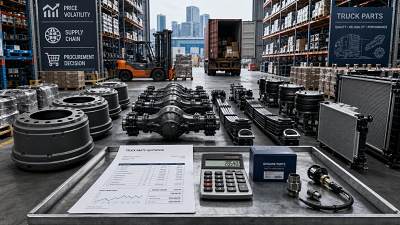
Another reason for increased attention is market volatility. Prices can shift due to raw material costs, exchange rates, supply chain delays, emission standard upgrades, and changes in OEM versus aftermarket demand. A brake drum, clutch kit, or turbocharger may have very different price levels depending on origin, certification, and current stock availability. Maintenance teams that monitor these factors are better prepared to avoid budget overruns.
Digital sourcing also plays a major role. In the past, many workshops depended on a limited local network. Today, international B2B platforms in the heavy truck industry give buyers access to broader product catalogs, truck brand directories, and supplier comparisons. This wider visibility helps aftermarket professionals benchmark truck parts price across regions and identify the best combination of quality, delivery speed, and technical fit.
Main factors that influence truck parts price
Several cost drivers explain why similar truck components can vary widely in price. Understanding them makes budgeting more accurate and helps service personnel justify purchasing decisions internally.
- Part type and complexity: Filters and belts are usually low-cost consumables, while injectors, transmissions, ECUs, and differential assemblies carry much higher price tags.
- OEM, OE-grade, or aftermarket level: Original parts often cost more, but some high-quality aftermarket options provide a strong value balance for routine service.
- Material quality: Steel grade, friction material, sealing quality, machining precision, and heat treatment directly affect both truck parts price and expected lifespan.
- Vehicle brand and model: Parts for globally common trucks are often easier to source, while specialized models may have higher prices and longer lead times.
- Supply chain location: Freight cost, import duty, packaging, and warehouse availability can alter the final landed price substantially.
- Volume and procurement method: Bulk purchasing, annual contracts, and scheduled replenishment can reduce unit cost compared with emergency orders.
For maintenance teams, the key is to convert these pricing variables into a practical maintenance strategy. Instead of treating every repair as an isolated event, workshops should classify parts by criticality, replacement frequency, and downtime impact.
Typical price-sensitive parts categories
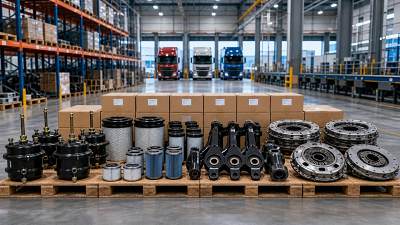
Not every item contributes equally to repair spending. In most heavy truck operations, recurring maintenance budgets are concentrated in a few major categories. Tracking truck parts price by category helps create better service forecasts.
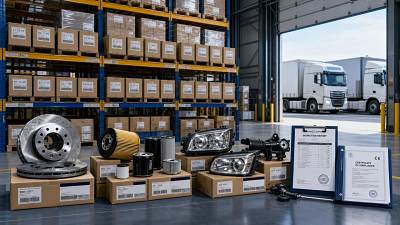
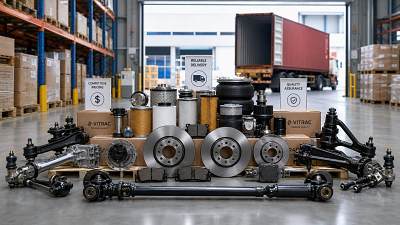
Among these groups, brake, filtration, clutch, suspension, and fuel system items usually receive the most attention because they combine high replacement frequency with direct impact on safety and uptime. A detailed truck parts price record for these categories gives service managers a strong foundation for monthly and quarterly budget planning.
How truck parts price affects aftermarket operations
For aftermarket maintenance teams, pricing data supports more than procurement. It shapes decisions across workshop operations. If the expected truck parts price for major wear items is known in advance, teams can estimate service packages more accurately, communicate better with fleet operators, and reserve the right stock before peak maintenance periods.
This is particularly valuable for businesses serving multiple truck brands or mixed fleets. Different chassis designs, axle systems, and engine platforms can produce very different replacement cost profiles. One fleet may consume brake linings rapidly on mountain routes, while another spends more on air system valves because of stop-start urban delivery. Cost visibility helps workshops set priorities instead of reacting to every breakdown the same way.
A structured view of truck parts price also improves supplier management. When maintenance personnel understand the normal market range for common components, they can detect overpricing, unusual specification changes, or quality inconsistencies. This reduces the chance of buying mismatched or unreliable parts under urgent conditions.
Budgeting methods that work in real service environments
Effective repair budgeting starts with separating parts into planned and unplanned spend. Planned spend includes routine service items and known wear components. Unplanned spend covers accident damage, sudden failures, and difficult diagnostics. The more accurately a team maps truck parts price within these two groups, the more stable the maintenance budget becomes.
A practical approach includes the following steps:
- Build a parts history by vehicle model, mileage band, and operating route.
- Track average truck parts price for top twenty recurring items each month.
- Set minimum and maximum stock levels for fast-moving service parts.
- Use at least two approved supplier sources for high-risk or high-value parts.
- Review failures that repeat within short intervals to identify false savings.
This method is especially effective when linked to digital sourcing tools. A professional industry platform can help teams compare suppliers, access broader spare parts listings, and identify alternatives for global truck brands. That visibility reduces emergency buying and supports more disciplined cost control.
Choosing between lower cost and long-term value
One of the most common mistakes in maintenance budgeting is treating truck parts price as the only decision point. In reality, total maintenance value depends on cost per service interval, reliability under load, installation accuracy, and the effect on related components. For example, a low-cost air filter that allows higher contamination can shorten engine component life. A cheaper clutch release bearing may lead to repeat labor and extra downtime.
Aftermarket maintenance teams should therefore apply different rules to different parts. For safety-related components such as brake parts, steering joints, and suspension elements, verified quality should carry greater weight. For standard service parts with stable specifications, competitive sourcing can deliver savings without major risk when suppliers are properly vetted.
This balanced view is where market knowledge matters most. A well-managed supplier network allows teams to compare truck parts price while still checking certifications, production capability, fitment data, and shipment reliability. That is far more effective than choosing purely on headline price.
Common scenarios where price awareness creates measurable value
Practical points to watch before ordering
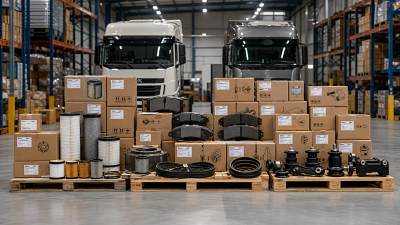
Before confirming any purchase, maintenance personnel should verify part numbers, technical drawings when needed, material specification, warranty terms, and brand compatibility. A favorable truck parts price loses value if the wrong item delays installation or causes a repeat repair. It is also wise to review packaging standards, lead time commitments, and the supplier’s experience with international heavy truck applications.
For globally sourced spare parts, communication quality matters almost as much as product quality. Clear digital catalogs, prompt technical support, and transparent quotation structures reduce risk and save workshop time. This is one reason industry platforms with organized supplier directories and product discovery tools are increasingly important in the commercial vehicle aftermarket.
Conclusion and next-step thinking
A reliable view of truck parts price helps aftermarket maintenance teams move from reactive repairs to controlled service planning. It supports better budgeting, stronger supplier evaluation, smarter stocking decisions, and lower downtime across heavy truck operations. In a market shaped by global sourcing, mixed fleet demands, and rising service expectations, pricing knowledge is no longer optional.
The most effective strategy is to combine price tracking with technical judgment. When teams compare truck parts price alongside quality level, service interval, and supplier reliability, they make decisions that protect both cost and performance. For businesses in the heavy truck ecosystem, using a professional global B2B platform to explore products, compare sources, and follow market insights can make repair budgeting more accurate and long-term maintenance planning more resilient.
Trending News
- Truck Trailer Exporter Comparison: Pricing, Certification, and After-Sales
- Truck Cement Exporter Selection: Compliance Points for Cross-Border Deals
- Dump Truck Distributor Trends in 2026: Margin, Stock, and Service
- How a Truck Cement Manufacturer Ensures Consistent Load Quality
- Dump Truck Bulk Order Risks: What to Confirm Before Signing
Tag
Recommended News
 Truck Parts IndustryHow a Truck Cement Manufacturer Ensures Consistent Load QualityTruck cement manufacturer standards directly affect load consistency, safety, and efficiency. Learn how top suppliers control design, sealing, batching, and testing for reliable transport.
 Truck Parts IndustryTruck Parts Price Trends in 2026: What Is Driving Cost Changes?Truck parts price trends in 2026 are driven by steel, energy, freight, currency, and compliance costs. Discover what raises prices, which parts face the most pressure, and how buyers can source smarter.
 Truck Parts IndustryTruck Parts Wholesale: How to Balance Price, Quality, and Lead TimeTruck parts wholesale made smarter: learn how to balance price, quality, and lead time by application to cut downtime, reduce hidden costs, and source with more confidence.
 Truck Parts IndustryTruck Spare Parts Supplier with Bulk Order Discounts: Savings vs Stock RiskTruck spare parts supplier with bulk order discounts: learn when bulk buying cuts fleet costs and when stock risk hurts cash flow, uptime, and sourcing efficiency.
 Truck Parts IndustryTruck Spare Parts Supplier in Europe: Compliance Checks Before OrderingTruck spare parts supplier in Europe selection starts with compliance. Learn the key checks for safety, fitment, traceability, and import documents before you order.
 Truck Parts IndustryChoosing a Heavy Truck Parts Manufacturer with OEM Services for Stable SupplyHeavy truck parts manufacturer with OEM services: learn how to secure stable supply, consistent quality, and lower sourcing risk with practical buyer evaluation tips.
 Truck Parts IndustryHeavy Truck Parts for Construction: Durability vs Replacement CostHeavy truck parts manufacturer for construction insights: learn how to balance durability, replacement cost, and uptime across rough ground, urban projects, and severe-duty fleets.
 Truck Parts IndustryCold Storage Vehicle Parts That Reduce Failure RatesCommercial vehicle parts for cold storage that cut failure rates: explore seals, insulation, cooling, and electrical upgrades to protect cargo, reduce downtime, and improve fleet uptime.
 Truck Parts IndustryGermany Heavy Truck Parts Manufacturers: Quality and Supply RisksHeavy truck parts manufacturer in Germany: learn how to assess quality, certifications, and supply risks to secure safer sourcing, stable deliveries, and long-term fleet performance.
 Truck Parts IndustryVietnam to Enforce New Used Truck Import Rules from Q4 2026Vietnam's new used truck import rules (Q4 2026) require OEM remanufacturing certification & traceability—key for Chinese exporters, assemblers & logistics providers.
 Truck Parts IndustryChoosing a Truck Parts Exporter: Lead Time, Compliance, and Quality RisksTruck parts exporter selection affects uptime, compliance, and cost. Learn how to compare lead time, certification, and quality control to avoid delays, claims, and fleet-wide failures.
 Truck Parts IndustryGermany Heavy Truck Parts Manufacturers: Quality and Supply RisksHeavy truck parts manufacturer in Germany selection guide: compare quality systems, traceability, testing, and supply risks to secure reliable truck parts sourcing.
 Truck Parts IndustryIrkeshtam Port’s 24-Hour Freight Clearance Boosts Exports to KyrgyzstanIrkeshtam Port’s 24-hour freight clearance slashes heavy-truck component clearance to <15 mins—boosting road transport equipment exports to Kyrgyzstan.
 Truck Parts IndustryHeavy Truck Parts for Construction: Which Components Fail Most OftenHeavy truck parts manufacturer for construction insights: discover which brake, suspension, filter, and drivetrain components fail most often—and how smarter sourcing cuts downtime and repair costs.
 Truck Parts IndustryBulk Order Discounts on Truck Spare Parts: When Savings Become RiskTruck spare parts supplier with bulk order discounts: learn when lower prices increase downtime, quality, and inventory risk—and how to source smarter for reliable fleet performance.
 Truck Parts IndustryTruck Parts Wholesale: How to Balance Price, Quality, and Stock RiskTruck parts wholesale success depends on balancing price, quality, and inventory risk. Learn practical sourcing checks to protect margins, reduce dead stock, and choose reliable suppliers.
 Truck Parts IndustryHow OEM Services Reduce Downtime in Heavy Truck Parts SupplyHeavy truck parts manufacturer with OEM services helps cut downtime with accurate fit, faster lead times, and stable supply—discover smarter sourcing for fleet maintenance.
 Truck Parts IndustryErenhot-Mongolia 24-Hour Freight Clearance Boosts Trucking EfficiencyErenhot-Mongolia 24-hour freight clearance slashes truck clearance time by 40%—boosting efficiency for auto parts, cold-chain & cross-border trucking.
 Truck Parts IndustryKazakhstan Extends Zero-Tariff for Truck Parts on China-Europe Rail Routes to 2027Kazakhstan extends zero-tariff for truck parts—including ADAS controllers, ECUs & T-BOX units—on China-Europe rail routes until 2027. Boost your logistics & export strategy now!
 Truck Parts IndustryHow Low-Maintenance Truck Spare Parts Reduce Downtime Over TimeTruck spare parts supplier with low maintenance solutions help fleets cut downtime, reduce repair frequency, and improve workshop efficiency. Discover how durable parts boost long-term truck performance.
![]() Truck Parts IndustryHeavy Truck Parts Manufacturer for Construction: How to Judge Product ConsistencyHeavy truck parts manufacturer for construction selection starts with consistency. Learn how to judge batch stability, traceability, and quality control to reduce risk and improve fleet safety.
Truck Parts IndustryHeavy Truck Parts Manufacturer for Construction: How to Judge Product ConsistencyHeavy truck parts manufacturer for construction selection starts with consistency. Learn how to judge batch stability, traceability, and quality control to reduce risk and improve fleet safety.![]() Truck Parts IndustryTruck Parts Price in 2026: What Is Driving Replacement Cost HigherTruck parts price in 2026 is rising fast. Discover the key cost drivers, category risks, and sourcing tips buyers need to reduce replacement costs and make smarter purchasing decisions.
Truck Parts IndustryTruck Parts Price in 2026: What Is Driving Replacement Cost HigherTruck parts price in 2026 is rising fast. Discover the key cost drivers, category risks, and sourcing tips buyers need to reduce replacement costs and make smarter purchasing decisions. Truck Parts IndustryHow to Compare Truck Tipper Distributors by Parts Response TimeTruck tipper distributor comparison starts with parts response time. Learn how to assess stock speed, technical support, and supply reliability to cut downtime and choose the right partner.
 Truck Parts IndustryCommercial Vehicle Parts for Cold Storage: What Improves ReliabilityCommercial vehicle parts for cold storage that boost uptime, temperature stability, and fleet reliability. Learn which components reduce breakdowns and protect cargo in demanding cold-chain transport.
 Truck Parts IndustryTruck Parts Wholesale: How to Balance Price, Lead Time, and QualityTruck parts wholesale guide for distributors: learn how to balance price, lead time, and quality to reduce risk, protect margins, and choose suppliers with confidence.