What Sets a Heavy Truck Parts Manufacturer in Germany Apart
Choosing a heavy truck parts manufacturer in Germany requires more than checking product catalogs or pricing. For business evaluators, the real differentiators lie in engineering precision, quality standards, supply chain reliability, and global service capability. This article explores what makes German manufacturers stand out in the heavy truck parts market and how buyers can assess long-term value when selecting reliable international partners.
Why a checklist-based evaluation matters first
When procurement teams compare a heavy truck parts manufacturer in Germany with suppliers from other markets, the biggest risk is judging too quickly on unit price or brand familiarity. In the road transport equipment sector, a low quoted cost can be offset by poor fitment accuracy, unstable lead times, weak documentation, or limited after-sales support. A checklist approach helps business evaluators separate marketing claims from measurable capability.
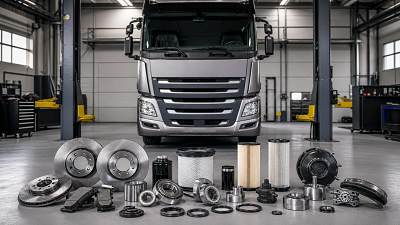
This is especially important for fleets, distributors, OEM support channels, and international sourcing teams working across truck chassis, powertrain systems, braking components, suspension parts, cab assemblies, filtration products, and service kits. German suppliers often compete on total lifecycle performance rather than simple upfront pricing, so evaluation should focus on what actually affects uptime, warranty exposure, inventory planning, and long-term supply security.
The first screening checklist for a heavy truck parts manufacturer in Germany
Before detailed negotiation, evaluators should confirm a short list of non-negotiable factors. These points provide a fast way to identify whether a manufacturer is suitable for deeper commercial review.
- Verify product scope: confirm whether the supplier produces engine parts, transmission components, axle systems, braking parts, electrical assemblies, cab parts, trailer interfaces, or mixed aftermarket lines.
- Check manufacturing role: determine whether the company is a true manufacturer, an assembler, a contract producer, or a trading company with limited factory control.
- Review standards compliance: look for ISO-based quality management, process traceability, test protocols, and relevant European technical standards.
- Confirm application coverage: identify supported truck brands, model ranges, emission platforms, payload classes, and operating environments.
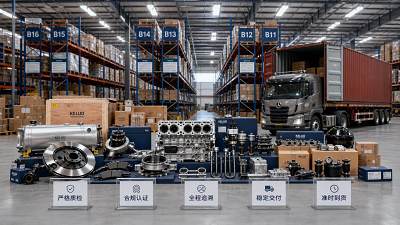
- Assess export readiness: ask about multilingual documentation, customs support, packaging for overseas transport, and experience with international distribution.
- Examine supply continuity: ask about production planning, safety stock policy, raw material sourcing, and lead time consistency.
- Evaluate service responsiveness: measure quotation speed, engineering communication, complaint handling, and sample support.
Core factors that often set German manufacturers apart
1. Engineering precision and repeatable tolerances
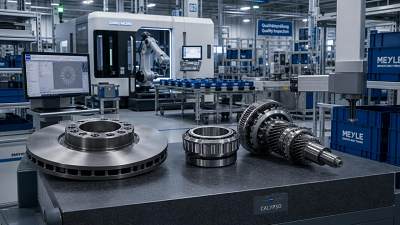
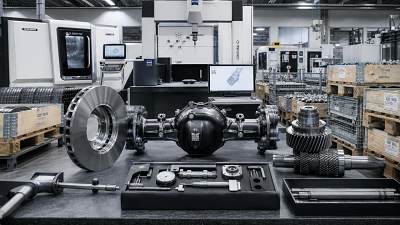
A leading heavy truck parts manufacturer in Germany is usually distinguished by process consistency rather than only by technical claims. In heavy-duty transport, small dimensional deviations can lead to sealing failure, premature wear, vibration, brake imbalance, or installation delays. German manufacturers often place strong emphasis on machining accuracy, material specification control, and repeatable batch quality. For evaluators, the practical question is not whether the part looks good, but whether every shipment performs the same way under field conditions.
2. Strong quality systems with documented traceability
Traceability is a major differentiator in commercial vehicle components. Reliable German suppliers typically maintain batch records, incoming material inspections, in-process checks, and final test reports. This matters when resolving warranty claims, investigating failure causes, or managing regulated fleet maintenance programs. Business evaluators should ask how quickly a supplier can trace a delivered lot back to raw material, machine settings, and inspection history.
3. Performance orientation for demanding duty cycles
Germany’s heavy truck ecosystem is closely linked to long-haul logistics, industrial transport, municipal service fleets, and construction operations. As a result, many local producers design parts with demanding use cases in mind, including high mileage, continuous loading, harsh climates, and strict maintenance intervals. For buyers, this often translates into longer service life, more stable fitment, and lower total cost per kilometer, even if the purchase price is higher.
4. Integration with OEM and high-spec aftermarket expectations
Another advantage of a heavy truck parts manufacturer in Germany is familiarity with OEM-grade expectations. Even suppliers focused on aftermarket channels often work within technical cultures shaped by original equipment requirements. That usually affects drawing discipline, validation standards, packaging quality, labeling accuracy, and revision control. For a distributor or fleet buyer, this can reduce installation errors and improve confidence in cross-border procurement.
Detailed evaluation criteria business assessors should check
The following table can be used as a practical scoring framework when reviewing a heavy truck parts manufacturer in Germany.
What to prioritize by buyer type and sourcing scenario
For distributors
Distributors should focus on SKU breadth, packaging consistency, catalog accuracy, interchange references, and private label options. A heavy truck parts manufacturer in Germany may be technically excellent, but if the product data is incomplete or the packaging is not optimized for warehouse operations, the commercial advantage becomes weaker. Ask whether the supplier can support digital catalogs, barcode systems, and replacement mapping for multiple truck brands.
For fleet operators and service networks
Fleet buyers should prioritize uptime impact. Focus on durability, maintenance interval performance, warranty responsiveness, and emergency resupply capability. In this case, the best heavy truck parts manufacturer in Germany is not always the one with the largest range, but the one able to keep critical parts available and solve quality issues fast. Confirm whether the supplier can support recurring demand planning and urgent replacement orders.
For OEM support or industrial procurement teams
These buyers should place extra weight on engineering collaboration, drawing control, material substitution policy, PPAP-style documentation where relevant, and change notification procedures. Any unannounced revision can create compliance or performance risk, especially for regulated transport applications and specialized heavy equipment integration.
Commonly overlooked risks when comparing suppliers
- Assuming “Made in Germany” automatically means premium quality. Country reputation helps, but process proof is still essential.
- Ignoring logistics complexity. Even a top heavy truck parts manufacturer in Germany can become a poor fit if freight timing, customs paperwork, or packaging design are weak for your destination market.
- Failing to check product range depth. A supplier may perform well on one component family but outsource critical companion parts, creating inconsistency.
- Not reviewing claim handling procedures. Many buyers ask about warranty duration, but not about response time, root cause analysis, or replacement logistics.
- Overlooking documentation quality. Incorrect labels, unclear torque instructions, or missing technical sheets can create costly service errors.
Practical due diligence steps before shortlisting
To move from initial interest to a reliable decision, evaluators should use a staged review process. This reduces procurement risk while keeping the comparison objective.
- Request a focused supplier profile covering factory location, production lines, key certifications, export markets, and main product families.
- Ask for sample technical documents such as inspection reports, material data, installation guidance, and packaging specifications.
- Compare lead times for both routine orders and urgent replenishment.
- Run a pilot order on a small but meaningful set of high-turn parts.
- Track communication quality during the trial phase, including answer accuracy and speed.
- Evaluate landed cost, not just ex-works price, especially for cross-border road transport equipment supply chains.
How digital sourcing platforms improve manufacturer evaluation
For global buyers, digital B2B sourcing platforms can shorten the path to finding a qualified heavy truck parts manufacturer in Germany. Instead of relying on scattered contacts, buyers can compare supplier profiles, product categories, industry coverage, and trade support resources in one place. This is particularly valuable in the commercial vehicle and heavy equipment sector, where compatibility, technical detail, and supplier reliability matter more than broad marketplace visibility.
A specialized industry platform also helps evaluators cross-check market positioning. Buyers can identify whether a supplier’s strengths align with truck chassis and cab systems, complete trucks, light trucks, construction machinery, trailers and semi-trailers, or spare parts. That context supports better sourcing decisions than generic supplier listings.
FAQ for business evaluators
Is a German manufacturer always the best option for heavy truck parts?
Not always. A heavy truck parts manufacturer in Germany may offer strong quality systems and engineering discipline, but the best choice depends on application, volume, logistics route, service expectations, and total procurement cost. The right supplier is the one that fits your operational model.
What documents should I request first?
Start with certifications, product specifications, quality control summaries, warranty terms, export references, and sample inspection records. For critical items, also request validation data and traceability examples.
How can I judge long-term value beyond price?
Measure value through part life, fitment consistency, lower service interruption, claim resolution speed, and supply reliability. These factors often determine whether a higher-priced supplier creates lower total ownership cost over time.
Final action guide for your next supplier review
If you are reviewing a heavy truck parts manufacturer in Germany, begin with a structured checklist instead of a price-first comparison. Confirm manufacturing authenticity, technical standards, traceability, export capability, and service responsiveness before discussing long-term terms. Then test performance with a controlled pilot order and evaluate both product quality and operational cooperation.
If further assessment is needed, the most useful questions to raise next are clear: Which truck models and part numbers are covered? What validation data is available? How stable are lead times? What is the warranty workflow? Can the supplier support packaging, labeling, and documentation for your market? What are the MOQ, annual volume expectations, and customization options? By preparing these points early, business evaluators can identify reliable partners faster and make better sourcing decisions across the global heavy truck supply chain.
Trending News
- Truck Trailer Exporter Comparison: Pricing, Certification, and After-Sales
- Truck Cement Exporter Selection: Compliance Points for Cross-Border Deals
- Dump Truck Distributor Trends in 2026: Margin, Stock, and Service
- How a Truck Cement Manufacturer Ensures Consistent Load Quality
- Dump Truck Bulk Order Risks: What to Confirm Before Signing
Tag
Recommended News
 Truck Parts IndustryHow a Truck Cement Manufacturer Ensures Consistent Load QualityTruck cement manufacturer standards directly affect load consistency, safety, and efficiency. Learn how top suppliers control design, sealing, batching, and testing for reliable transport.
 Truck Parts IndustryTruck Parts Price Trends in 2026: What Is Driving Cost Changes?Truck parts price trends in 2026 are driven by steel, energy, freight, currency, and compliance costs. Discover what raises prices, which parts face the most pressure, and how buyers can source smarter.
 Truck Parts IndustryTruck Parts Wholesale: How to Balance Price, Quality, and Lead TimeTruck parts wholesale made smarter: learn how to balance price, quality, and lead time by application to cut downtime, reduce hidden costs, and source with more confidence.
 Truck Parts IndustryTruck Spare Parts Supplier with Bulk Order Discounts: Savings vs Stock RiskTruck spare parts supplier with bulk order discounts: learn when bulk buying cuts fleet costs and when stock risk hurts cash flow, uptime, and sourcing efficiency.
 Truck Parts IndustryTruck Spare Parts Supplier in Europe: Compliance Checks Before OrderingTruck spare parts supplier in Europe selection starts with compliance. Learn the key checks for safety, fitment, traceability, and import documents before you order.
 Truck Parts IndustryChoosing a Heavy Truck Parts Manufacturer with OEM Services for Stable SupplyHeavy truck parts manufacturer with OEM services: learn how to secure stable supply, consistent quality, and lower sourcing risk with practical buyer evaluation tips.
 Truck Parts IndustryHeavy Truck Parts for Construction: Durability vs Replacement CostHeavy truck parts manufacturer for construction insights: learn how to balance durability, replacement cost, and uptime across rough ground, urban projects, and severe-duty fleets.
 Truck Parts IndustryCold Storage Vehicle Parts That Reduce Failure RatesCommercial vehicle parts for cold storage that cut failure rates: explore seals, insulation, cooling, and electrical upgrades to protect cargo, reduce downtime, and improve fleet uptime.
 Truck Parts IndustryGermany Heavy Truck Parts Manufacturers: Quality and Supply RisksHeavy truck parts manufacturer in Germany: learn how to assess quality, certifications, and supply risks to secure safer sourcing, stable deliveries, and long-term fleet performance.
 Truck Parts IndustryVietnam to Enforce New Used Truck Import Rules from Q4 2026Vietnam's new used truck import rules (Q4 2026) require OEM remanufacturing certification & traceability—key for Chinese exporters, assemblers & logistics providers.
 Truck Parts IndustryChoosing a Truck Parts Exporter: Lead Time, Compliance, and Quality RisksTruck parts exporter selection affects uptime, compliance, and cost. Learn how to compare lead time, certification, and quality control to avoid delays, claims, and fleet-wide failures.
 Truck Parts IndustryGermany Heavy Truck Parts Manufacturers: Quality and Supply RisksHeavy truck parts manufacturer in Germany selection guide: compare quality systems, traceability, testing, and supply risks to secure reliable truck parts sourcing.
 Truck Parts IndustryIrkeshtam Port’s 24-Hour Freight Clearance Boosts Exports to KyrgyzstanIrkeshtam Port’s 24-hour freight clearance slashes heavy-truck component clearance to <15 mins—boosting road transport equipment exports to Kyrgyzstan.
 Truck Parts IndustryHeavy Truck Parts for Construction: Which Components Fail Most OftenHeavy truck parts manufacturer for construction insights: discover which brake, suspension, filter, and drivetrain components fail most often—and how smarter sourcing cuts downtime and repair costs.
 Truck Parts IndustryBulk Order Discounts on Truck Spare Parts: When Savings Become RiskTruck spare parts supplier with bulk order discounts: learn when lower prices increase downtime, quality, and inventory risk—and how to source smarter for reliable fleet performance.
 Truck Parts IndustryTruck Parts Wholesale: How to Balance Price, Quality, and Stock RiskTruck parts wholesale success depends on balancing price, quality, and inventory risk. Learn practical sourcing checks to protect margins, reduce dead stock, and choose reliable suppliers.
 Truck Parts IndustryHow OEM Services Reduce Downtime in Heavy Truck Parts SupplyHeavy truck parts manufacturer with OEM services helps cut downtime with accurate fit, faster lead times, and stable supply—discover smarter sourcing for fleet maintenance.
 Truck Parts IndustryErenhot-Mongolia 24-Hour Freight Clearance Boosts Trucking EfficiencyErenhot-Mongolia 24-hour freight clearance slashes truck clearance time by 40%—boosting efficiency for auto parts, cold-chain & cross-border trucking.
 Truck Parts IndustryKazakhstan Extends Zero-Tariff for Truck Parts on China-Europe Rail Routes to 2027Kazakhstan extends zero-tariff for truck parts—including ADAS controllers, ECUs & T-BOX units—on China-Europe rail routes until 2027. Boost your logistics & export strategy now!
 Truck Parts IndustryHow Low-Maintenance Truck Spare Parts Reduce Downtime Over TimeTruck spare parts supplier with low maintenance solutions help fleets cut downtime, reduce repair frequency, and improve workshop efficiency. Discover how durable parts boost long-term truck performance.
![]() Truck Parts IndustryHeavy Truck Parts Manufacturer for Construction: How to Judge Product ConsistencyHeavy truck parts manufacturer for construction selection starts with consistency. Learn how to judge batch stability, traceability, and quality control to reduce risk and improve fleet safety.
Truck Parts IndustryHeavy Truck Parts Manufacturer for Construction: How to Judge Product ConsistencyHeavy truck parts manufacturer for construction selection starts with consistency. Learn how to judge batch stability, traceability, and quality control to reduce risk and improve fleet safety.![]() Truck Parts IndustryTruck Parts Price in 2026: What Is Driving Replacement Cost HigherTruck parts price in 2026 is rising fast. Discover the key cost drivers, category risks, and sourcing tips buyers need to reduce replacement costs and make smarter purchasing decisions.
Truck Parts IndustryTruck Parts Price in 2026: What Is Driving Replacement Cost HigherTruck parts price in 2026 is rising fast. Discover the key cost drivers, category risks, and sourcing tips buyers need to reduce replacement costs and make smarter purchasing decisions. Truck Parts IndustryHow to Compare Truck Tipper Distributors by Parts Response TimeTruck tipper distributor comparison starts with parts response time. Learn how to assess stock speed, technical support, and supply reliability to cut downtime and choose the right partner.
 Truck Parts IndustryCommercial Vehicle Parts for Cold Storage: What Improves ReliabilityCommercial vehicle parts for cold storage that boost uptime, temperature stability, and fleet reliability. Learn which components reduce breakdowns and protect cargo in demanding cold-chain transport.
 Truck Parts IndustryTruck Parts Wholesale: How to Balance Price, Lead Time, and QualityTruck parts wholesale guide for distributors: learn how to balance price, lead time, and quality to reduce risk, protect margins, and choose suppliers with confidence.