When OEM Services Matter in Heavy Truck Parts Manufacturing
Choosing the right heavy truck parts manufacturer with OEM services can directly affect product quality, supply stability, and long-term market competitiveness. For business decision-makers in the global commercial vehicle sector, OEM capabilities are not simply an optional service layer. They often determine whether a supplier can support your product positioning, meet technical requirements, protect delivery timelines, and scale with your business across different regions and vehicle platforms.
In practical terms, OEM services matter most when your business needs more than standard catalog parts. If you are building a differentiated aftermarket brand, sourcing for mixed fleet requirements, entering a new regional market, or trying to reduce warranty and procurement risk, OEM capability becomes a strategic filter in supplier selection. The core question is not whether a factory can produce a part, but whether it can produce the right part consistently, compliantly, and profitably for your business model.
For procurement leaders, distributors, importers, and commercial vehicle platform buyers, the value of OEM support lies in measurable outcomes: better fit and performance, stronger quality control, easier customization, improved packaging and branding, more dependable documentation, and a clearer path to long-term supply partnership. This article explains when OEM services matter, what decision-makers should evaluate, and how to identify a manufacturer that can truly support cross-border heavy truck parts sourcing.
Why OEM Services Become a Strategic Issue in Heavy Truck Parts Manufacturing
In heavy truck parts, the cost of a poor sourcing decision is rarely limited to the purchase price. One mismatch in dimensions, material grade, mounting tolerance, or performance standard can create installation failures, vehicle downtime, warranty disputes, and loss of customer trust. This is why OEM services matter most in categories where compatibility, durability, and operating conditions are critical.
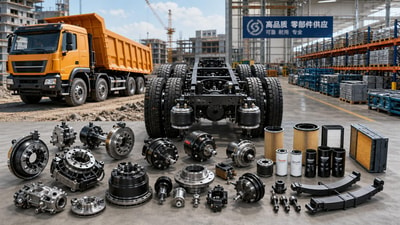
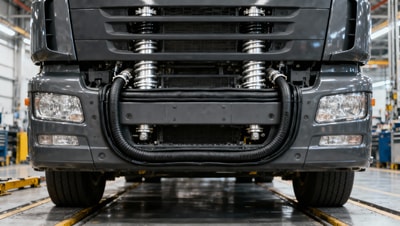
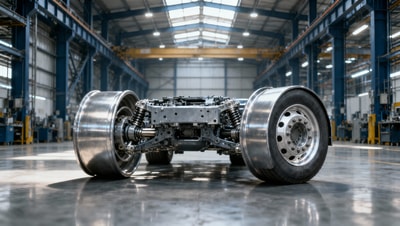
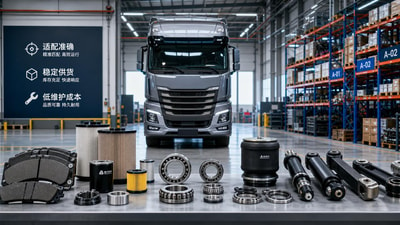
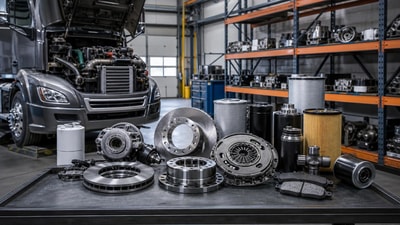
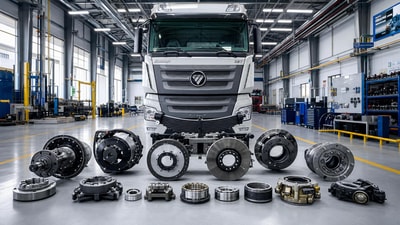
Unlike generic consumer products, heavy truck components often operate under extreme load, high mileage, vibration, heat, dust, and long service intervals. Brake parts, suspension components, steering assemblies, drivetrain parts, engine-related components, electrical systems, and trailer interfaces all require precise engineering and repeatable manufacturing. A supplier that only offers off-the-shelf products may not be able to adapt quickly enough to market-specific requirements or fleet-level performance expectations.
OEM services allow buyers to align part specifications with real-world application needs. That may include adjusting materials, dimensions, surface treatment, hardness, sealing performance, packaging standards, private labeling, or even documentation language for target markets. For a business decision-maker, this flexibility is not cosmetic. It can directly affect total cost of ownership, return rates, market acceptance, and brand reputation.
In addition, the heavy truck industry is increasingly global and fragmented. Buyers often serve customers across multiple truck brands, axle systems, trailer standards, and emissions or safety regimes. A capable OEM partner can help bridge these differences by supporting technical matching, controlled customization, and stable production planning. That is especially valuable for distributors and B2B platforms that must serve diverse buyer profiles without multiplying inventory risk.
When a Standard Parts Supplier Is Not Enough
Not every sourcing project requires full OEM involvement. For some commodity parts with mature specifications and low brand sensitivity, standard supply may be acceptable. But there are several business situations where choosing a heavy truck parts manufacturer with OEM services becomes the smarter decision.
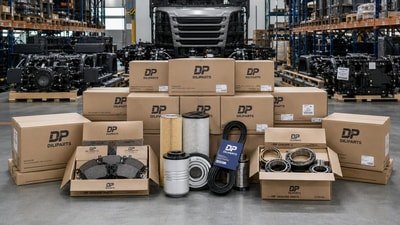
First, OEM support matters when you are building or expanding a private-label parts business. If your company wants to compete on more than price, you need product consistency, customized packaging, traceable batches, and the ability to fine-tune specifications based on market feedback. A standard trader may supply products, but a manufacturer with OEM capability can help shape a scalable brand offer.
Second, OEM services are important when you serve fleets or industrial buyers with recurring, application-specific needs. Large fleet operators care about service life, maintenance intervals, and replacement predictability. If a part can be modified to improve wear resistance, sealing, fitment, or reliability, the long-term savings can outweigh the higher unit cost. In such cases, technical customization creates commercial value.
Third, OEM capability becomes essential when entering new export markets. Different countries may require different labeling, documentation, certifications, packaging durability, corrosion resistance, or product adaptation for climate and road conditions. A supplier that cannot support these market-specific adjustments may limit your expansion or increase compliance risk.
Fourth, OEM support is often needed when your business has experienced quality inconsistency from multi-source purchasing. Consolidating supply with a qualified manufacturer can improve process control, standardize materials, and reduce variation between batches. This is particularly relevant for safety-related parts or high-volume SKUs where defect rates quickly become a financial and reputational issue.
What Business Decision-Makers Actually Need From OEM Services
For senior buyers and commercial leaders, OEM should not be interpreted narrowly as “custom logo printing” or “make-to-drawing production.” Real OEM value is broader. It combines manufacturing ability, engineering responsiveness, quality discipline, and commercial coordination.
The first requirement is technical understanding. A reliable manufacturer should be able to discuss application scenarios, vehicle compatibility, material options, design tolerances, failure modes, and testing methods. If a supplier cannot communicate clearly about why a specification matters, OEM claims may be superficial.
The second requirement is process control. Decision-makers should look for evidence that the supplier can maintain consistency across raw material selection, machining or casting processes, heat treatment, assembly, inspection, and packaging. OEM projects often fail not because the prototype is wrong, but because mass production drifts from the approved standard.
The third requirement is commercial flexibility with operational discipline. Buyers often need customized minimum order quantities, packaging formats, barcode systems, documentation sets, or shipment plans. A good OEM partner can accommodate these needs without causing confusion, missed lead times, or unstable pricing.
The fourth requirement is partnership capability. In cross-border heavy truck sourcing, communication speed, problem resolution, engineering change management, and after-sales support matter as much as factory output. Decision-makers should favor manufacturers that treat OEM programs as long-term business relationships rather than one-time transactions.
How OEM Services Improve Quality, Reliability, and Market Fit
One of the strongest reasons to work with a heavy truck parts manufacturer with OEM services is the ability to improve product-market fit. Standard parts may satisfy baseline demand, but they do not always reflect the actual operating environment of the target customer. OEM adaptation makes it possible to close that gap.
For example, trucks used in mining, long-haul logistics, municipal engineering, or infrastructure construction face very different stress conditions. Dust exposure, brake frequency, road quality, axle load, temperature range, and maintenance practices all influence part performance. A manufacturer with OEM capability can recommend or produce adjustments that better suit these use cases.
Quality also benefits from closer coordination between buyer and manufacturer. Instead of selecting from a catalog with limited transparency, the buyer can define control points, testing standards, packaging requirements, and traceability expectations in advance. This reduces ambiguity and creates a stronger basis for inspection and claims management.
Reliability improves because OEM projects usually require more formal validation. Depending on the part category, this may include dimensional inspection, material certification, hardness testing, fatigue testing, salt spray testing, performance simulation, or trial installation. Even if not every project requires complex testing, the discipline of specification control reduces sourcing uncertainty.
Finally, OEM services improve market fit at the brand level. For distributors and platforms serving international buyers, packaging, labels, user instructions, and compliance documents are part of the buying experience. A manufacturer that supports market-ready product presentation helps you sell more effectively and reduce downstream friction.
Key Evaluation Criteria Before Choosing an OEM-Capable Manufacturer
Many suppliers advertise customization, but not all have genuine OEM depth. For business decision-makers, the evaluation process should focus on capabilities that reduce operational and commercial risk.
Start with manufacturing scope. Does the supplier actually produce the relevant part category in-house, or does it outsource most of the process? In-house control generally improves consistency, confidentiality, and response speed. If outsourcing is involved, ask how subcontractors are managed and audited.
Next, assess engineering support. Can the manufacturer work from samples, drawings, OEM numbers, or application data? Can it suggest material or design improvements? Does it have a technical team that can communicate clearly in international business settings? Strong engineering support is often what separates a real OEM partner from a basic producer.
Then review quality assurance systems. Ask about incoming material inspection, in-process controls, final inspection, nonconformance handling, and batch traceability. Certifications can be useful, but they should be supported by real process evidence such as inspection records, test reports, and defect response procedures.
Lead time stability is equally important. A supplier may offer attractive customization, but if tooling development, approval cycles, and production scheduling are weak, your inventory planning will suffer. Decision-makers should understand sample lead times, production capacity, peak season constraints, and reorder predictability.
Also evaluate documentation and export readiness. International B2B buyers often need packing lists, HS code support, product labels, certificates, installation instructions, and market-specific compliance documents. Manufacturers that already serve global heavy truck buyers are generally better prepared for this requirement.
Finally, look at communication quality. Slow replies, vague answers, and inconsistent sales-engineering coordination are early warning signs. In OEM programs, misunderstandings become expensive. Clear communication is not a soft factor; it is part of execution capability.
Common Risks in OEM Heavy Truck Parts Sourcing and How to Reduce Them
OEM sourcing creates value, but it also introduces complexity. The biggest risk is assuming that customization automatically means better performance. In reality, poorly defined requirements can lead to unsuitable materials, incorrect tolerances, or unnecessary cost increases. Buyers should begin with clear application goals and approval criteria.
Another common risk is over-reliance on samples without validating mass production consistency. A good prototype is not enough. Decision-makers should ask how the approved sample will be translated into production control documents, inspection standards, and batch records. Repeatability matters more than first impressions.
Tooling ownership and intellectual property can also become concerns, especially in private-label or exclusive-product projects. Before launching an OEM program, buyers should clarify who owns drawings, molds, packaging designs, and brand assets, as well as how confidentiality is managed.
Commercial risk must be considered as well. Custom parts may involve higher MOQs, longer lead times, or less flexibility if demand changes. This does not mean OEM is the wrong choice, but it does mean the sourcing strategy should align with your sales forecast, cash flow, and inventory turnover targets.
To reduce these risks, businesses should use a staged approval process: define specifications, validate samples, confirm testing requirements, document packaging and labeling standards, and align on quality claims procedures before large-volume orders begin. Strong suppliers will welcome this structure because it supports smoother execution on both sides.
OEM Services and the Long-Term Economics of Supply Chain Performance
From a management perspective, the case for OEM services should be judged by long-term economics, not just unit price. A cheaper standard part may appear attractive at the purchasing stage, but if it causes more returns, fitment complaints, shorter service life, or unstable reordering, the total business cost rises quickly.
OEM sourcing can improve gross margin in several ways. It may support premium pricing through better performance or branding. It may reduce failure-related costs through improved consistency. It may also strengthen customer retention by offering parts that better match fleet needs or local operating conditions.
There are also supply chain benefits. Working closely with an OEM-capable manufacturer can reduce supplier fragmentation, improve forecast alignment, and create more visibility around production planning. Over time, this can support better inventory decisions and lower emergency procurement costs.
For B2B platforms and global sourcing businesses, OEM partnerships can create differentiation that is difficult for price-only competitors to match. If your platform connects buyers with manufacturers that offer real customization, technical collaboration, and dependable export support, you are not just listing products—you are improving sourcing outcomes.
This strategic value is especially relevant in the global heavy truck ecosystem, where buyers need confidence across quality, compatibility, logistics, and supplier reliability. OEM capability helps convert a simple transaction into a more resilient commercial relationship.
How to Decide Whether an OEM-Capable Supplier Is Right for Your Business
Not every company needs the same level of OEM engagement. The right decision depends on your business model, product category, customer expectations, and growth plan. A useful starting question is this: are you trying to buy parts, or are you trying to build a dependable market offer?
If your priority is spot purchasing of standard items, a general supplier may be enough. But if your business depends on repeat sales, private label development, fleet performance, regional adaptation, or reputation-sensitive categories, an OEM-capable manufacturer is usually the better strategic fit.
Decision-makers should compare suppliers not only on quote sheets, but on their ability to support the full lifecycle of the product: specification definition, sample validation, mass production, quality traceability, export documentation, packaging, and post-delivery issue resolution. That broader view often changes the sourcing decision.
It is also wise to begin with a focused trial rather than a broad rollout. Select a product family with meaningful volume and clear performance expectations. Test the supplier’s technical responsiveness, documentation quality, production consistency, and communication discipline. A successful pilot can then become the basis for a larger partnership.
In today’s competitive commercial vehicle market, supplier choice is increasingly a strategic choice. The right heavy truck parts manufacturer with OEM services can help you reduce sourcing risk, improve market fit, and create stronger long-term business value than a standard product-only vendor.
Conclusion
OEM services matter in heavy truck parts manufacturing when business requirements go beyond basic availability and low purchase price. For decision-makers, the real value lies in better product fit, more consistent quality, stronger branding, improved compliance readiness, and a more dependable supply relationship.
The most capable manufacturers do more than accept custom orders. They support engineering alignment, production discipline, quality assurance, export execution, and long-term collaboration. That is why OEM capability should be evaluated as a business asset, not a marketing label.
As global demand for commercial vehicles, construction equipment, trailers, and spare parts continues to grow, buyers need sourcing partners that can adapt to technical complexity and international market expectations. Choosing the right OEM-capable supplier is one of the most practical ways to strengthen competitiveness in the heavy truck industry—especially for companies that want to build a durable brand, serve demanding customers, and scale with confidence.
Trending News
- What Makes a Delivery Truck Supplier Cost-Effective in Real Operations
- How Energy-Saving Features Change Excavator Value Over Time
- Heavy Equipment Export for Mining Operations: What Delays Shipments Most
- Are Fireproof Materials Worth It in a Semi Trailer Manufacturer
- Inside a Water Truck Factory: What Quality-Control Steps Matter Most
Tag
Recommended News
 Truck Parts IndustryCommercial Vehicle Parts for Cold Storage: What Improves ReliabilityCommercial vehicle parts for cold storage that boost uptime, temperature stability, and fleet reliability. Learn which components reduce breakdowns and protect cargo in demanding cold-chain transport.
 Truck Parts IndustryTruck Parts Wholesale: How to Balance Price, Lead Time, and QualityTruck parts wholesale guide for distributors: learn how to balance price, lead time, and quality to reduce risk, protect margins, and choose suppliers with confidence.
 Truck Parts IndustryWhen OEM Services Matter in Heavy Truck Parts ManufacturingHeavy truck parts manufacturer with OEM services: learn when OEM capability improves quality, fit, branding, and supply reliability for global B2B buyers.
 Truck Parts IndustryChoosing a Heavy Truck Parts Manufacturer in Germany for Stable SupplyHeavy truck parts manufacturer in Germany: learn how to compare suppliers by scenario, secure stable supply, reduce sourcing risk, and improve fleet uptime with smarter procurement decisions.
 Truck Parts IndustryAre Low-Maintenance Truck Spare Parts Suppliers Worth Switching ToIs a truck spare parts supplier with low maintenance worth the switch? Learn how better fitment, fewer failures, and reliable delivery can cut downtime and lower fleet service costs.
 Truck Parts IndustryTruck Parts Wholesale: How to Balance Price, Stock, and ReliabilityTruck parts wholesale success depends on balancing price, stock, and reliability. Learn how to compare suppliers, reduce risk, protect margins, and make smarter buying decisions.
 Truck Parts IndustryWhen OEM Services Matter in Heavy Truck Parts ManufacturingLearn why a heavy truck parts manufacturer with OEM services helps buyers improve quality consistency, customization, and supply stability for stronger long-term market performance.
 Truck Parts IndustryWhat Sets a Heavy Truck Parts Manufacturer in Germany ApartHeavy truck parts manufacturer in Germany insights: discover how German engineering, strict quality control, and reliable supply help buyers reduce risk, improve uptime, and choose stronger long-term partners.
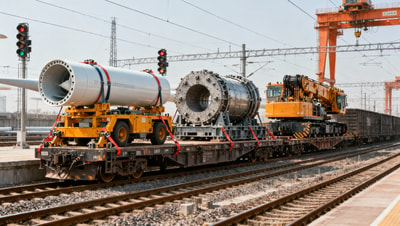
 Truck Parts IndustryNew Railway Cargo Transport Rules Take Effect May 1, 2026New Railway Cargo Transport Rules (2026): 72-hour certified load-securing plans required for oversized rail freight—key for wind, tunneling & crane transport equipment.
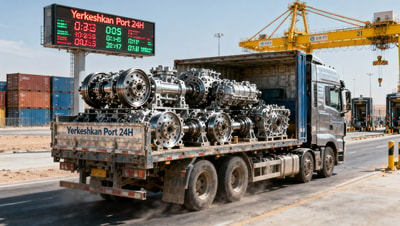
 Truck Parts IndustryYerkeshkan Port 24-Hour Freight: +87.4% Truck Parts Export to KyrgyzstanYerkeshkan Port 24-hour freight boosts truck parts exports to Kyrgyzstan by +87.4% — optimize JIT logistics, customs compliance & aftermarket supply chains now.
 Truck Parts IndustryBulk Order Discounts on Truck Spare Parts: Savings vs Supply RiskTruck spare parts supplier with bulk order discounts: learn how to cut procurement costs without raising supply risk, downtime, or inventory pressure in road transport operations.
 Truck Parts IndustryHow to Assess a Heavy Truck Parts Manufacturer for Construction FleetsHeavy truck parts manufacturer for construction: learn how to assess quality, fitment, supply speed, and technical support to reduce downtime and choose a supplier your fleet can trust.
 Truck Parts IndustryANVISA Brazil: Rubber Seals for Trucks Require REACH SVHC 233 ReportRubber seals for trucks entering Brazil must now comply with ANVISA’s REACH SVHC 233 reporting requirement — learn how to avoid customs delays and ensure seamless import.
 Truck Parts IndustryRCEP Upgrade Takes Effect: Lower Tariffs on China-Made Truck PartsRCEP Upgrade lowers tariffs on China-made truck parts—steering knuckles, axle housings & wheel hubs—for Philippines, Cambodia, Myanmar. Save costs now.
![]() Truck Parts IndustryKazakhstan Extends Zero-Tariff for China-Made Truck Parts to 2027Kazakhstan extends zero-tariff for China-made truck parts until 2027—boosting cost efficiency & clearance speed for brake discs, air suspension, LED headlights.
Truck Parts IndustryKazakhstan Extends Zero-Tariff for China-Made Truck Parts to 2027Kazakhstan extends zero-tariff for China-made truck parts until 2027—boosting cost efficiency & clearance speed for brake discs, air suspension, LED headlights. Truck Parts IndustryHow to Choose a Truck Spare Parts Supplier With Low Maintenance BenefitsTruck spare parts supplier with low maintenance benefits: learn how to compare quality, fit, delivery, and support to cut downtime, reduce repeat repairs, and keep fleets running efficiently.
 Truck Parts IndustryTruck Parts Price Guide for Budgeting Repairs and Routine ServiceTruck parts price guide for heavy-duty repairs and routine service. Learn key cost factors, compare parts smarter, control maintenance budgets, and reduce fleet downtime.
 Truck Parts IndustryTruck Parts Wholesale: How to Balance Price, Stock, and QualityTruck parts wholesale made smarter: learn how to balance price, stock, and quality to cut downtime, protect margins, and choose reliable suppliers with confidence.
 Truck Parts IndustryWhat Sets a Heavy Truck Parts Manufacturer in Germany ApartHeavy truck parts manufacturer in Germany: learn how to assess engineering precision, traceability, supply reliability, and global service to choose a trusted long-term partner.
 Truck Parts IndustryIrkeshtam Port 24-Hour Freight Clearance Accelerates Truck Parts Exports to KyrgyzstanIrkeshtam Port’s 24-hour freight clearance slashes truck parts export time to Kyrgyzstan—boosting speed, cutting costs, and scaling Central Asian logistics efficiency.
 Truck Parts IndustryTruck Spare Parts Supplier in Europe: How to Judge Stock Depth and Response SpeedTruck spare parts supplier in Europe: learn how to verify real stock depth, quotation speed, and dispatch reliability to reduce sourcing risk and choose a supplier that keeps your business moving.
 Truck Parts IndustryHeavy Truck Parts for Construction: The Quality Checks That Prevent Costly StopsHeavy truck parts manufacturer for construction: learn the quality checks that prevent downtime, improve safety, and keep demanding construction fleets running on schedule.
 Truck Parts IndustryCommercial Vehicle Parts for Cold Storage: How to Reduce Failure in Low TemperaturesCommercial vehicle parts for cold storage: learn how to reduce low-temperature failures, improve fleet uptime, and choose durable parts for refrigerated trucks and cold-chain operations.
 Truck Parts IndustryCommercial Vehicle Parts for Warehouse: Common Failures and Better Replacement TimingCommercial vehicle parts for warehouse fleets fail faster under stop-start duty. Learn common failure points and how better replacement timing reduces downtime, cost, and safety risk.
 Truck Parts IndustryHow OEM Services Change the Value of a Heavy Truck Parts ManufacturerHeavy truck parts manufacturer with OEM services: discover how OEM support boosts quality consistency, private labeling, customization, and long-term channel growth.