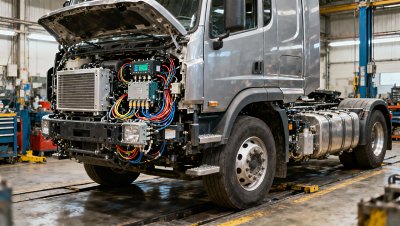
L4 Autonomous Trucks Launch on Tianjin Port–Xiong’an Route
On May 9, 2026, China’s Ministry of Transport Science Academy disclosed the commencement of routine platooned operations for domestically developed L4-level autonomous container trucks along the Tianjin Port–Xiong’an New Area logistics corridor — a direct outcome of technology spillover from the Smart Shipping 2030 Action Plan. This milestone signals accelerated regulatory and operational readiness for high-automation road freight in China’s strategic logistics corridors, with implications spanning cross-border trade compliance, domestic supply chain resilience, and export-standard validation for intelligent commercial vehicles.
Event Overview
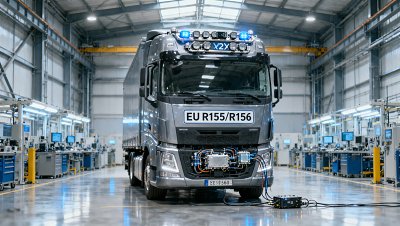
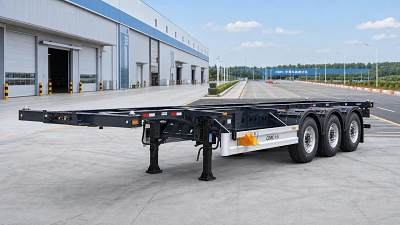
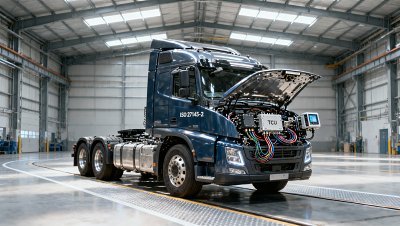
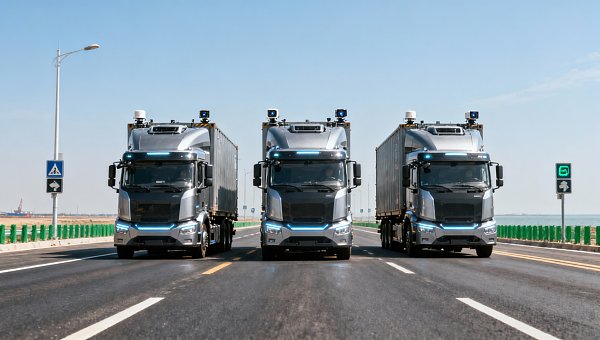
On May 9, 2026, the Ministry of Transport Science Academy confirmed that L4-rated unmanned tractor-trailer units — fully compliant with Chinese heavy-duty vehicle architecture — have entered sustained, scheduled testing on the Tianjin Port–Xiong’an New Area trunk route. The units operate in coordinated platoons for over 18 hours daily under real-world logistics conditions. Concurrently, pre-assessment for EU UN-R155 and Saudi SASO autonomous vehicle certification has commenced — marking the first formal step toward international type-approval for China-built intelligent prime movers.
Industries Impacted
Direct Trading Enterprises
Trading firms engaged in bulk cargo movement between port hubs and inland economic zones (e.g., Beijing-Tianjin-Hebei industrial clusters) face revised lead-time expectations and documentation requirements. As autonomous trucking introduces predictable, 24/7 dispatch windows, shippers must adapt scheduling protocols, customs coordination timelines, and insurance clauses — particularly where liability attribution shifts under partial or full automation.
Raw Material Procurement Enterprises
Enterprises sourcing raw materials via just-in-time delivery (e.g., steel, cement, prefabricated components for Xiong’an infrastructure projects) may experience reduced variability in inbound logistics performance. However, they must now assess vendor eligibility under emerging fleet automation standards — including telematics integration, remote diagnostics capability, and cybersecurity audit readiness — as these increasingly influence tender qualification criteria.
Manufacturing Enterprises
Heavy equipment and automotive OEMs involved in chassis development, ADAS integration, or trailer-mounted sensor systems gain near-term validation opportunities. Yet their R&D pipelines must now align with dual-track certification pathways: domestic functional safety standards (GB/T 40429–2021) and export-oriented frameworks (UN-R155, SASO). This convergence raises engineering resource demands and validation cycle timelines.
Supply Chain Service Providers
Third-party logistics (3PL) operators and freight platform providers face pressure to integrate autonomous fleet management modules into existing TMS platforms — especially for load-matching, dynamic ETA forecasting, and incident escalation routing. Their service differentiation is increasingly tied to interoperability with vehicle OEMs’ cloud-based autonomy stacks, not just GPS tracking.
Key Considerations and Recommended Actions
Monitor Certification Pre-Assessment Timelines Closely
The ongoing UN-R155 and SASO pre-assessments represent more than export preparation — they are de facto stress tests of China’s domestic L4 operational governance model. Enterprises should track published test reports and gap analyses from certifying bodies, as these will inform upcoming national amendments to GB standards for automated road freight.
Evaluate Fleet Integration Readiness — Not Just Vehicle Capability
L4 deployment success hinges less on standalone vehicle performance and more on back-office compatibility: ERP-to-vehicle API handshakes, digital twin synchronization for maintenance planning, and cyber-resilience verification against ISO/SAE 21434. Companies should initiate internal audits against these interfaces before committing to pilot contracts.
Update Contractual Frameworks for Liability Allocation
Current logistics contracts rarely address fault attribution during supervised autonomous operation. Legal and procurement teams should revise force majeure, delay penalties, and insurance endorsement clauses — particularly where human drivers serve only as fallback supervisors rather than active controllers.
Editorial Insight / Industry Observation
Observably, this trial is not primarily about proving technical feasibility — L4 hardware and perception stacks have matured across multiple Chinese OEMs since 2024. Rather, it serves as a regulatory sandbox for defining *operational accountability* in mixed-autonomy environments. Analysis shows the emphasis on EU and Gulf certification pathways reflects a deliberate strategy: using foreign regulatory rigor to accelerate domestic standard harmonization, rather than waiting for consensus within China’s fragmented provincial transport authorities. From an industry perspective, the choice of the Tianjin–Xiong’an corridor — a state-designated smart infrastructure demonstration zone — suggests policy prioritization of politically symbolic routes over commercially dense but complex urban networks.
Conclusion
This milestone is better understood as an institutional calibration event than a pure technology rollout. It signals growing alignment among China’s transport regulators, vehicle certification bodies, and infrastructure planners around a shared definition of “safe, scalable automation” for freight — one anchored in verifiable international benchmarks. For global stakeholders, the implication is not immediate market displacement, but rather a tightening window to co-develop interoperability frameworks before China’s domestic standards begin shaping regional norms.
Source Attribution
Primary source: Ministry of Transport Science Academy, official disclosure dated May 9, 2026.
Supplementary context: Smart Shipping 2030 Action Plan (State Council General Office Document No. 12 [2023]); UN-R155 Certification Guidance v3.1 (UNECE, March 2026); SASO TR-2025 Draft Framework for Automated Commercial Vehicles (Saudi Standards, Metrology and Quality Organization, April 2026).
Note: Certification pre-assessment outcomes, final approval timelines, and scalability metrics beyond the current 18-hour/day regime remain under observation.
Trending News
- Construction Machinery Cost Control: 7 Hidden Expenses in Project Planning
- Logging Truck Price Guide: Spec Choices That Change Total Ownership Cost
- Crane Truck Cost Breakdown: Chassis, Crane Unit, and Compliance Fees
- How to Vet a Logging Truck Distributor Before Entering a New Market
- Logging Truck Supplier Selection: Load Capacity, Terrain Fit, and Downtime
Tag
Recommended News
 Technology & InnovationL4 Autonomous Trucks Launch on Tianjin Port–Xiong’an RouteL4 autonomous trucks launch on Tianjin Port–Xiong’an route—first routine platooned operations in China’s strategic logistics corridor. Watch EU & Gulf certification unfold.
 Technology & InnovationAre Energy-Saving Excavators Worth It for Long-Term Operations?Excavator manufacturer with energy-saving features: discover if lower fuel use, reduced downtime, and stronger long-term ROI make these machines the smart choice for demanding operations.
 Technology & InnovationSouth China Pioneer Studio Wins Youth May 4th Award for Smart Truck CertificationSmart truck certification breakthrough: South China Pioneer Studio wins Youth May 4th Award for EU R155/R156 compliance — a game-changer for global陆路运输设备 exports.
 Technology & InnovationL4 Autonomous Container Trucks Begin Trial on Tianjin Port–Xiong'an CorridorL4 autonomous container trucks begin trial on Tianjin Port–Xiong'an Corridor—key milestone for cross-border logistics, heavy-equipment transport & smart intermodal supply chains.
 Technology & InnovationQuick Installation Excavators: Do They Reduce Setup Time on Real Sites?Excavator manufacturer with quick installation: discover whether fast-deploy excavators truly cut real-site setup time, lower labor costs, and improve uptime before you buy.
 Technology & InnovationModular Flatbed Trailers: When Design Flexibility Improves UtilizationFind out how a flatbed trailer supplier with modular design helps fleets boost utilization, adapt to varied loads, cut idle assets, and improve long-term ROI.
 Technology & InnovationPortable Construction Machinery: Where Flexible Equipment Saves TimeConstruction machinery supplier with portable options helps cut relocation time, improve transport efficiency, and keep projects moving faster across changing job sites.
 Technology & InnovationSemi Trailer Manufacturer with Lightweight Design: Is Lower Weight Worth It?Semi trailer manufacturer with lightweight design: discover when lower weight boosts payload, fuel savings, and fleet ROI—and when durability, compliance, and repair costs matter more.
![]() Technology & InnovationWhy Quick Installation Matters When Choosing an Excavator ManufacturerExcavator manufacturer with quick installation: discover how faster setup cuts downtime, simplifies maintenance, improves reliability, and keeps heavy equipment projects on schedule.
Technology & InnovationWhy Quick Installation Matters When Choosing an Excavator ManufacturerExcavator manufacturer with quick installation: discover how faster setup cuts downtime, simplifies maintenance, improves reliability, and keeps heavy equipment projects on schedule. Technology & InnovationHow Modular Design Changes the Value of a Flatbed Trailer SupplierFlatbed trailer supplier with modular design: discover how modular platforms cut lifecycle costs, boost fleet flexibility, and improve ROI for logistics, construction, and industrial buyers.
 Technology & InnovationHow Portable Construction Machinery for Mining Helps Remote Projects Move FasterConstruction machinery for mining helps remote projects move faster with easier transport, quick setup, and flexible deployment. Learn how to cut delays and improve site efficiency.
 Technology & InnovationTruck Tipper OEM: How Custom Body Design Changes Worksite PerformanceTruck tipper OEM solutions with custom body design can boost unloading efficiency, durability, and site safety. Learn how to compare suppliers and choose the right fit for demanding jobs.
 Technology & InnovationHow Energy-Saving Features Change Excavator Value Over TimeDiscover how an excavator manufacturer with energy-saving features can lower fuel costs, improve uptime, and boost resale value with a smart long-term buying checklist.
 Technology & InnovationDo Energy-Saving Features Really Matter in an Excavator ManufacturerExcavator manufacturer with energy-saving features: learn how to verify fuel savings, uptime, service support, and ROI before choosing the right supplier.
 Technology & InnovationKunming Blue Jacaranda-Themed Buses Launch with Domestic V2X & LMPF BatteryKunming's blue jacaranda buses feature domestic V2X & LMPF battery tech — a proven, export-ready blueprint for urban transit and airport GSE suppliers targeting Middle East & LATAM markets.
 Technology & InnovationPortable Construction Machinery: Where Flexible Equipment Delivers More ValueConstruction machinery supplier with portable options: use this practical checklist to compare mobility, setup, service, and lifecycle value for faster, smarter project decisions.
 Technology & InnovationHow Construction Machinery for Mining Is Shifting Toward Higher UptimeConstruction machinery for mining is shifting from raw power to higher uptime. Learn how smarter maintenance, diagnostics, and parts support help cut risk, control costs, and improve project performance.
 Technology & InnovationHow a Truck Cement Manufacturer Controls Tank and Discharge QualityTruck cement manufacturer insights: learn how leading factories control tank strength, weld quality, pressure testing, and discharge performance to improve safety, uptime, and sourcing confidence.
 Technology & InnovationWhen Portable Construction Machinery Makes More Sense for Remote ProjectsConstruction machinery supplier with portable options: learn when compact, mobile equipment is the smarter choice for remote projects, cutting transport costs, delays, and setup time.
 Technology & InnovationWhy R&D Capability Matters in a Heavy Truck Chassis ManufacturerHeavy truck chassis manufacturer with R&D capability: discover how stronger engineering improves durability, customization, compliance, and fleet uptime for global B2B sourcing.
 Technology & InnovationPortable Construction Machinery for Infrastructure Projects: What Works BestConstruction machinery supplier for infrastructure buyers: discover the best portable machines for roads, utilities, and municipal projects to boost mobility, uptime, and cost control.
 Technology & InnovationWhen a BULLDOZER for Road Construction Delivers Better Site EfficiencyBULLDOZER for road construction buying guide: learn how the right machine improves grading accuracy, reduces downtime, and boosts site efficiency for faster project delivery.
 Technology & InnovationExcavator Attachment Choices That Can Slow a Job Instead of HelpingExcavator attachment mistakes can delay truck loading and raise costs. Learn how excavator bucket choice, excavator rental, excavator for sale, and excavator parts affect productivity.
 Technology & InnovationTC521 Advances Smart Heavy-Duty Truck Remote Diagnostics StandardTC521 advances smart heavy-duty truck remote diagnostics: ISO 27145-2 compliance, EU/UAE/GCC type approval readiness — act now to avoid certification delays.
 Technology & InnovationTruck control unit faults that look mechanical at firstTruck control unit faults often mimic truck steering system, truck fuel system, and truck cooling system failures. Learn how to avoid wrong truck pump parts orders and cut downtime.