Portable Construction Machinery: Where Flexible Equipment Saves Time
When schedules are tight and job sites keep changing, choosing a construction machinery supplier with portable options can make a real difference. In road transport equipment, infrastructure delivery, and municipal engineering, portable machinery helps shorten relocation time, lower transport friction, and support more stable daily output. For projects that depend on trucks, trailers, and mobile support assets, a construction machinery supplier with portable options is not only a source of equipment, but also a practical link between planning efficiency and field execution.
Portable construction machinery in the road transport equipment ecosystem
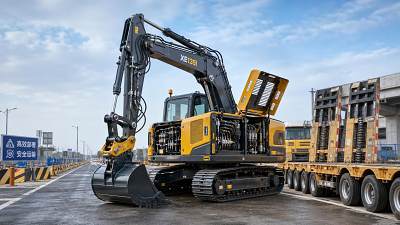
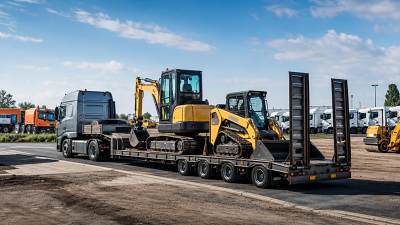
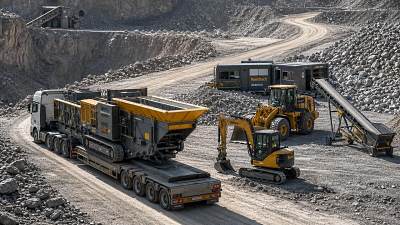
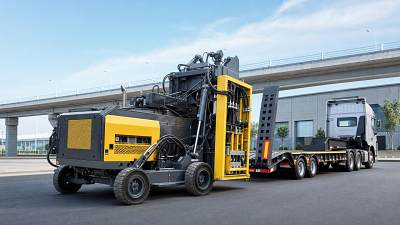
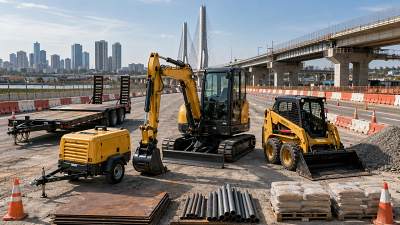
Portable construction machinery refers to equipment designed for easier movement between sites, quicker setup, and more flexible integration with transport fleets. In the land transport equipment sector, this often includes compact excavators, portable loaders, mobile concrete support units, light-duty road maintenance machines, mobile compressors, generator sets, and trailer-compatible service equipment. A construction machinery supplier with portable options typically focuses on machines that can be moved efficiently by truck or trailer without excessive dismantling, escort arrangements, or extended idle time.
This matters because many modern projects no longer operate from a single fixed location. Highway maintenance, utility trenching, municipal upgrades, warehousing expansion, mining access roads, and logistics yard development often involve multiple work points within one contract. In such conditions, machine mobility becomes part of productivity. Equipment that is powerful but difficult to relocate can create downtime that affects labor use, fleet scheduling, and delivery milestones.
For that reason, a construction machinery supplier with portable options should be evaluated not only by machine specifications, but also by transport compatibility, axle load implications, trailer matching, service access, spare parts availability, and the ability to support cross-border or multi-region deployment. In practice, flexible equipment works best when it fits naturally into the wider heavy truck and commercial vehicle chain.
Current industry signals shaping equipment choices
Several industry trends are increasing demand for mobile and adaptable machinery. As logistics corridors expand and infrastructure works move faster, equipment buyers are paying more attention to how machines travel, how quickly they start operating, and how well they support phased construction schedules.
These signals are closely connected to the heavy truck industry. Transporting equipment safely and legally requires the right trailer configuration, load planning, route suitability, and after-sales coordination. This is where a digital B2B platform for heavy trucks, construction machinery, trailers, and spare parts creates value: it allows users to compare machines alongside transport assets and supplier capabilities instead of treating equipment selection as an isolated purchase.
Business value of choosing a construction machinery supplier with portable options
The first advantage is time savings. A construction machinery supplier with portable options can help reduce loading preparation, simplify relocation planning, and shorten the interval between arrival and operation. On projects with repeated site changes, even small time savings per move can accumulate into meaningful schedule protection.
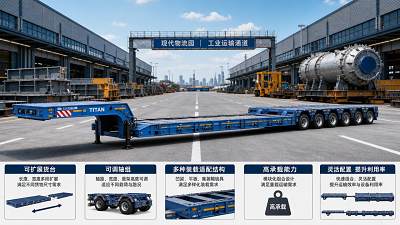
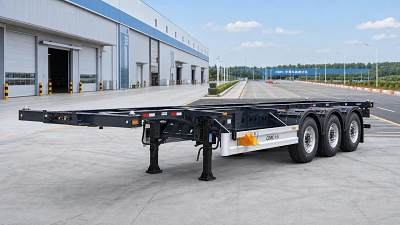
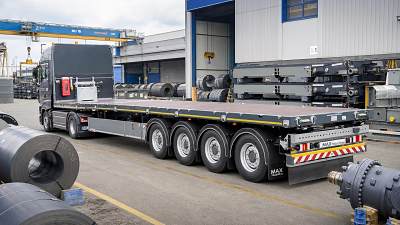
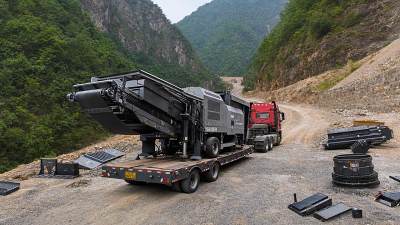
The second advantage is transport efficiency. Portable equipment is often better matched with standard transport solutions, including flatbed trailers, low-bed trailers, or medium-duty truck combinations. This can reduce the need for special permits, disassembly work, or oversized cargo handling. In many cases, easier transport also lowers the risk of route disruption and helps maintain more predictable delivery timing.
The third advantage is improved utilization. Machines that are easier to move are more likely to be redeployed rather than left waiting at low-activity sites. This supports better return on equipment investment and allows contractors or service providers to respond faster to changing project priorities. A construction machinery supplier with portable options therefore contributes to both operational continuity and asset productivity.
Another important benefit is coordination across the supply chain. On complex projects, machinery movement depends on truck availability, trailer selection, driver schedules, service support, and spare parts lead time. Suppliers that understand this broader context are better positioned to recommend suitable machine sizes, attachment options, and transport-compatible configurations. This is especially relevant in global trade, where equipment sourcing decisions often involve different countries, regulations, and logistics partners.
Typical application scenarios for portable equipment
Portable machinery is valuable across a wide range of road transport equipment and construction-linked applications. The best-fit equipment depends on job duration, terrain, payload requirements, and how frequently the machine must move.
In all of these scenarios, the role of a construction machinery supplier with portable options extends beyond equipment delivery. Supplier quality affects documentation, shipping preparation, component availability, and long-term service reliability. For global buyers, access to verified product categories such as complete trucks, trailers, construction machinery, and spare parts in one professional marketplace can simplify comparison and reduce sourcing uncertainty.
How to evaluate portable equipment and supplier fit
Selecting the right machine starts with movement frequency. If a project requires weekly or even daily relocation, transport convenience should be considered a core technical criterion rather than an afterthought. Weight, dimensions, tie-down points, ramp access, and compatibility with available trailers all affect actual field efficiency.
- Check transport dimensions and operating dimensions separately.
- Confirm whether attachments must be removed during transport.
- Review axle load and trailer matching requirements.
- Ask about parts support in destination regions.
- Evaluate service manuals, multilingual documentation, and compliance records.
It is also useful to compare suppliers on digital transparency. A strong construction machinery supplier with portable options should provide clear product specifications, application guidance, image-based verification, and responsive communication. Platforms that combine supplier directories with industry data, buying guides, and market insight can improve decision quality because they allow side-by-side review of equipment categories and sourcing conditions.
Another practical factor is ecosystem compatibility. Portable machines are most efficient when supported by the right transport and maintenance network. Access to truck chassis information, trailer solutions, spare parts channels, and industry brand directories helps create a more complete sourcing strategy. This is particularly important for projects spanning logistics transport, infrastructure development, and municipal engineering, where machine uptime depends on more than the machine alone.
Practical considerations for deployment and long-term use
Even well-chosen portable equipment can lose value if deployment planning is weak. Before purchase or sourcing confirmation, align machine selection with route conditions, loading tools, operator familiarity, and expected duty cycle. A compact unit that travels easily but lacks the required output may create hidden inefficiency, while an oversized machine may increase transport costs without delivering proportionate benefits.
Routine maintenance should also reflect mobile use patterns. Frequent transport introduces vibration exposure, repeated loading stress, and connection point wear. Buyers should establish inspection routines for hydraulic lines, fasteners, undercarriage components, lighting, brakes on trailer-mounted units, and transport securing points. A construction machinery supplier with portable options that can support preventive maintenance planning adds value well beyond the initial transaction.
For international sourcing, document readiness is equally important. Shipping marks, packing details, certificates, technical files, and spare parts coding should be clear before dispatch. In a global B2B environment, reliable information flow helps prevent customs delays, installation confusion, and after-sales disputes. This is one reason professional heavy truck and equipment platforms continue to gain relevance as global trade collaboration expands.
Next-step sourcing approach for flexible equipment
Portable machinery saves time when equipment choice, transport planning, and supplier capability are aligned from the start. A construction machinery supplier with portable options can support faster site transitions, better fleet coordination, and more efficient project execution across road transport, construction, and industrial operations. The strongest results usually come from comparing machinery together with trailers, truck support resources, parts availability, and supplier credibility.
To move forward effectively, define the main job scenarios, list transport constraints, and compare portable equipment options within a broader heavy truck ecosystem. Using a professional international platform that connects construction machinery, commercial vehicles, trailers, and spare parts can simplify product discovery and help identify reliable global partners. In a market where time, mobility, and transparency increasingly shape results, choosing a construction machinery supplier with portable options is a practical step toward more resilient and efficient operations.
Trending News
- Water Truck Factory Checklist: What to Confirm Before Factory Audit
- High-Strength Flatbed Trailers: Where Stronger Steel Pays Off
- Excavator Manufacturer in China: How to Compare Quality Across Factories
- Heavy Equipment Export to Africa: Market Openings and Compliance Challenges
- Quick Installation Excavators: Do They Reduce Setup Time on Real Sites?
Tag
Recommended News
 Technology & InnovationQuick Installation Excavators: Do They Reduce Setup Time on Real Sites?Excavator manufacturer with quick installation: discover whether fast-deploy excavators truly cut real-site setup time, lower labor costs, and improve uptime before you buy.
 Technology & InnovationModular Flatbed Trailers: When Design Flexibility Improves UtilizationFind out how a flatbed trailer supplier with modular design helps fleets boost utilization, adapt to varied loads, cut idle assets, and improve long-term ROI.
 Technology & InnovationPortable Construction Machinery: Where Flexible Equipment Saves TimeConstruction machinery supplier with portable options helps cut relocation time, improve transport efficiency, and keep projects moving faster across changing job sites.
 Technology & InnovationSemi Trailer Manufacturer with Lightweight Design: Is Lower Weight Worth It?Semi trailer manufacturer with lightweight design: discover when lower weight boosts payload, fuel savings, and fleet ROI—and when durability, compliance, and repair costs matter more.
![]() Technology & InnovationWhy Quick Installation Matters When Choosing an Excavator ManufacturerExcavator manufacturer with quick installation: discover how faster setup cuts downtime, simplifies maintenance, improves reliability, and keeps heavy equipment projects on schedule.
Technology & InnovationWhy Quick Installation Matters When Choosing an Excavator ManufacturerExcavator manufacturer with quick installation: discover how faster setup cuts downtime, simplifies maintenance, improves reliability, and keeps heavy equipment projects on schedule. Technology & InnovationHow Modular Design Changes the Value of a Flatbed Trailer SupplierFlatbed trailer supplier with modular design: discover how modular platforms cut lifecycle costs, boost fleet flexibility, and improve ROI for logistics, construction, and industrial buyers.
 Technology & InnovationHow Portable Construction Machinery for Mining Helps Remote Projects Move FasterConstruction machinery for mining helps remote projects move faster with easier transport, quick setup, and flexible deployment. Learn how to cut delays and improve site efficiency.
 Technology & InnovationTruck Tipper OEM: How Custom Body Design Changes Worksite PerformanceTruck tipper OEM solutions with custom body design can boost unloading efficiency, durability, and site safety. Learn how to compare suppliers and choose the right fit for demanding jobs.
 Technology & InnovationTruck Tipper OEM: How Custom Body Design Changes Worksite PerformanceTruck tipper OEM solutions with custom body design can boost unloading efficiency, durability, and site safety. Learn how to compare suppliers and choose the right fit for demanding jobs.
 Technology & InnovationHow Energy-Saving Features Change Excavator Value Over TimeDiscover how an excavator manufacturer with energy-saving features can lower fuel costs, improve uptime, and boost resale value with a smart long-term buying checklist.
 Technology & InnovationDo Energy-Saving Features Really Matter in an Excavator ManufacturerExcavator manufacturer with energy-saving features: learn how to verify fuel savings, uptime, service support, and ROI before choosing the right supplier.
 Technology & InnovationKunming Blue Jacaranda-Themed Buses Launch with Domestic V2X & LMPF BatteryKunming's blue jacaranda buses feature domestic V2X & LMPF battery tech — a proven, export-ready blueprint for urban transit and airport GSE suppliers targeting Middle East & LATAM markets.
 Technology & InnovationPortable Construction Machinery: Where Flexible Equipment Delivers More ValueConstruction machinery supplier with portable options: use this practical checklist to compare mobility, setup, service, and lifecycle value for faster, smarter project decisions.
 Technology & InnovationHow Construction Machinery for Mining Is Shifting Toward Higher UptimeConstruction machinery for mining is shifting from raw power to higher uptime. Learn how smarter maintenance, diagnostics, and parts support help cut risk, control costs, and improve project performance.
 Technology & InnovationHow a Truck Cement Manufacturer Controls Tank and Discharge QualityTruck cement manufacturer insights: learn how leading factories control tank strength, weld quality, pressure testing, and discharge performance to improve safety, uptime, and sourcing confidence.
 Technology & InnovationWhen Portable Construction Machinery Makes More Sense for Remote ProjectsConstruction machinery supplier with portable options: learn when compact, mobile equipment is the smarter choice for remote projects, cutting transport costs, delays, and setup time.
 Technology & InnovationWhy R&D Capability Matters in a Heavy Truck Chassis ManufacturerDiscover why a heavy truck chassis manufacturer with R&D capability delivers better reliability, customization, and long-term value. Use this guide to evaluate suppliers with confidence.
 Technology & InnovationWhy R&D Capability Matters in a Heavy Truck Chassis ManufacturerHeavy truck chassis manufacturer with R&D capability: discover how stronger engineering improves durability, customization, compliance, and fleet uptime for global B2B sourcing.
 Technology & InnovationPortable Construction Machinery for Infrastructure Projects: What Works BestConstruction machinery supplier for infrastructure buyers: discover the best portable machines for roads, utilities, and municipal projects to boost mobility, uptime, and cost control.
 Technology & InnovationWhen a BULLDOZER for Road Construction Delivers Better Site EfficiencyBULLDOZER for road construction buying guide: learn how the right machine improves grading accuracy, reduces downtime, and boosts site efficiency for faster project delivery.
 Technology & InnovationExcavator Attachment Choices That Can Slow a Job Instead of HelpingExcavator attachment mistakes can delay truck loading and raise costs. Learn how excavator bucket choice, excavator rental, excavator for sale, and excavator parts affect productivity.
 Technology & InnovationTC521 Advances Smart Heavy-Duty Truck Remote Diagnostics StandardTC521 advances smart heavy-duty truck remote diagnostics: ISO 27145-2 compliance, EU/UAE/GCC type approval readiness — act now to avoid certification delays.
 Technology & InnovationTruck control unit faults that look mechanical at firstTruck control unit faults often mimic truck steering system, truck fuel system, and truck cooling system failures. Learn how to avoid wrong truck pump parts orders and cut downtime.
 Technology & InnovationTC521 Launches Pre-Research on Remote Diagnostics Interface Standard for Smart Heavy-Duty TrucksRemote diagnostics interface standard pre-research launched for smart heavy-duty trucks — align with ACEA R19-2025 & ISO 27145 now to secure EU market access.
 Technology & InnovationMilitary truck battery systems now require dual-voltage support — legacy chargers can’t keep upHydraulic pump, fuel injection pump & truck military systems now demand dual-voltage battery support—legacy chargers fail. Upgrade for truck off road, logistics truck, and truck lowbed reliability.