Portable Construction Machinery: Where Flexible Equipment Delivers More Value
For project managers and engineering leaders, choosing the right equipment can directly impact timelines, costs, and site efficiency. A trusted construction machinery supplier with portable options offers the flexibility needed for fast-moving jobs, remote locations, and changing project demands. In today’s competitive construction environment, portable machinery is becoming a smarter investment for teams seeking higher utilization and better operational value.
For road transport equipment buyers and project decision-makers, a checklist-based approach is the fastest way to evaluate portable machinery without missing critical details. Portable equipment may look attractive because of easy movement and lower setup requirements, but the real value depends on jobsite fit, transport efficiency, maintenance support, and supplier reliability. Instead of comparing machines only by price or rated output, teams should first confirm the key decision points that influence uptime, redeployment speed, and lifecycle cost.
Why project teams should evaluate portable machinery with a checklist first
Portable construction machinery often serves projects where conditions change quickly: road building, municipal engineering, bridge maintenance, logistics yard expansion, mining support, and temporary infrastructure works. In these settings, the wrong machine creates hidden problems such as repeated transport delays, underused capacity, difficult servicing, or poor compatibility with available heavy trucks and trailers. That is why working with a construction machinery supplier with portable options should begin with structured checks rather than broad product browsing.
A practical checklist helps answer five questions early: Can the machine move efficiently between sites? Does it match transport limitations? Will it deliver stable output in actual field conditions? Is service support available across regions? And can the equipment maintain value through multiple deployments? These questions matter more than promotional claims because they determine whether portability becomes a cost advantage or an operational compromise.
Core selection checklist: what to confirm before comparing models
Before requesting quotations, project managers should confirm the following evaluation points with any construction machinery supplier with portable options. This reduces the risk of buying equipment that looks flexible on paper but performs poorly in transport-intensive operations.
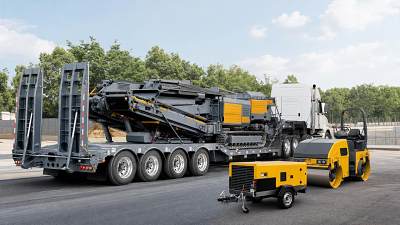
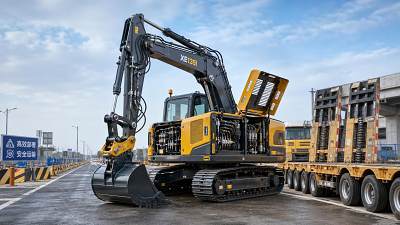
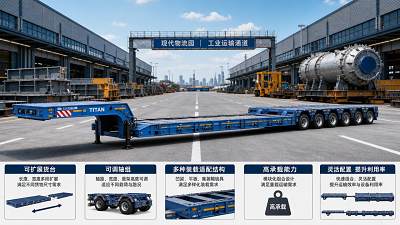
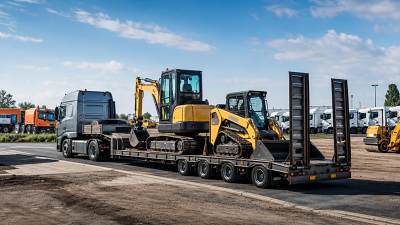
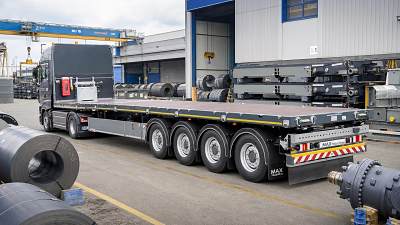
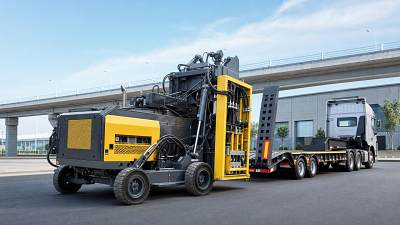
- Transport dimensions and weight: Check whether the machine can be moved by available trucks, low-bed trailers, or semi-trailers without special routing, permit delays, or extra escort costs.
- Setup and teardown time: Confirm how many people, tools, and lifting resources are required to make the equipment operational after arrival and ready for dispatch when the task ends.
- Power and fuel compatibility: Verify whether the machine fits the site’s available diesel supply, electric system, generator support, or hybrid operating conditions.
- Operating capacity under real conditions: Rated output should be compared against actual terrain, weather, loading cycles, and shift intensity rather than laboratory values alone.
- Maintenance accessibility: Ask how quickly wear parts can be replaced on site and whether service points are easy to access without major disassembly.
- Spare parts coverage: Confirm the supplier’s regional parts network, lead times, and support for fast-moving consumables and critical components.
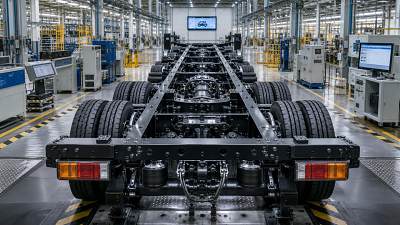
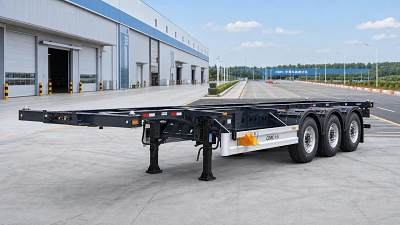
- Compatibility with transport fleet: Make sure the equipment can be paired efficiently with existing truck chassis, trailers, lifting vehicles, and loading plans.
- Safety and compliance: Review braking, locking, lighting, towing, and operator safety features, especially if the machine must travel across public roads or cross-border routes.
- Lifecycle value: Estimate total ownership cost across several projects, including transport frequency, downtime risk, service intervals, and resale potential.
How to judge whether portable equipment truly creates more value
Not every compact or towable machine automatically delivers better value. A strong construction machinery supplier with portable options should help buyers compare equipment in terms of redeployment efficiency, not just purchase price. The best portable machinery usually performs well in three areas at the same time: it is fast to move, fast to activate, and stable during repeated use cycles.
Project leaders should pay special attention to utilization rate. A larger fixed machine may offer high output but stay idle between jobs or require costly mobilization. Portable machinery can outperform it when the equipment serves multiple smaller sites, short-duration contracts, emergency repairs, or distributed infrastructure programs. In these cases, value comes from higher usage across more locations, lower waiting time, and easier coordination with commercial vehicle fleets.
Quick judgment standards for value creation
Scenario-based checks: what matters most in different project types
The same machine may be a strong fit for one project and a weak fit for another. When discussing requirements with a construction machinery supplier with portable options, buyers should define the main operating scenario first.
For road and municipal engineering
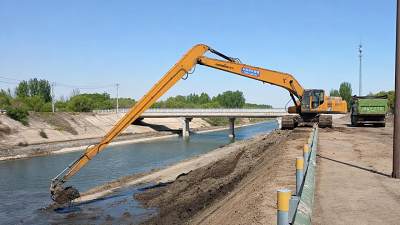
Portability matters most when crews move between multiple short work zones. Priority checks include rapid loading, compact transport form, low disruption to traffic management, and quick start-up during limited working windows. Machines that reduce lane closure time often create more project value than units with only higher nominal output.
For remote infrastructure and mining support
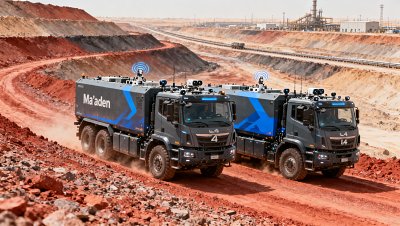
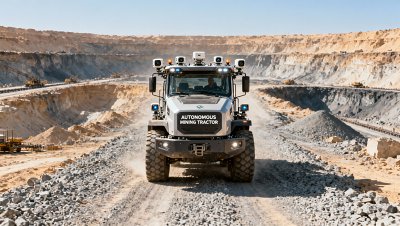
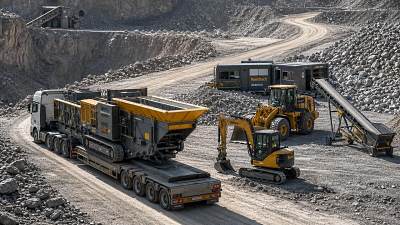
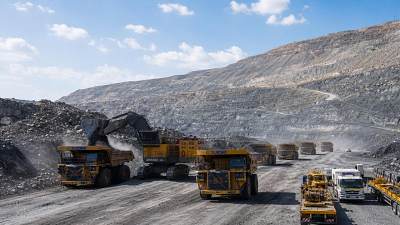
In remote areas, buyers should prioritize ruggedness, fuel autonomy, field maintenance simplicity, and spare parts access. A construction machinery supplier with portable options should clearly explain service support, replacement part lead times, and transport plans for isolated regions. Remote jobs punish complex equipment that cannot be repaired quickly.
For logistics parks and industrial yard development
These projects often need phased work across changing site layouts. Portable machinery is valuable when it can be repositioned with minimal interruption to truck flows, warehouse operations, and yard construction sequencing. Compatibility with internal haul routes and transport equipment should be confirmed early.
Commonly overlooked items that reduce the benefit of portable machinery
Many procurement teams focus on machine specifications but overlook operational frictions. These hidden issues often determine whether the equipment performs as a flexible asset or becomes another scheduling problem.
- Ignoring transport integration: A machine may be portable in theory but inefficient if it does not fit existing trailers, loading ramps, or securement methods.
- Underestimating operator transition time: If controls, setup steps, or maintenance routines are too complex, portability will not translate into faster execution.
- Failing to assess regional compliance: Different markets may have varying road transport rules, axle load restrictions, and emissions requirements.
- Buying too much capacity: Oversized equipment reduces flexibility and raises movement cost, especially on fragmented projects.
- Not checking support response time: A supplier with a broad catalog is not automatically a reliable partner unless support commitments are clear and practical.
Execution advice: what to prepare before contacting suppliers
To get useful proposals from a construction machinery supplier with portable options, buyers should prepare a concise project brief instead of asking for a generic quotation. This saves time and results in more relevant recommendations.
- List the project types the machine will serve over the next 12 to 24 months.
- Define transport constraints, including truck types, trailer limits, road access, and permit sensitivity.
- Specify expected daily workload, working hours, terrain conditions, and weather exposure.
- Clarify whether the machine will support primary production, backup operations, or emergency deployment.
- Request maintenance schedules, parts lists, training support, warranty terms, and service response commitments.
For companies sourcing through a global B2B marketplace, this preparation is especially important. A digital platform serving heavy trucks, trailers, construction machinery, and spare parts can help buyers compare options efficiently, but the quality of the final match still depends on how clearly the application, transport model, and service expectations are defined. For project managers in the road transport equipment sector, this means treating machinery selection as part of the broader fleet and logistics plan rather than as an isolated equipment purchase.
How to identify a reliable supplier, not just a low-price offer
A capable construction machinery supplier with portable options should be able to do more than send a brochure. Strong suppliers ask about your transport fleet, project sequence, duty cycle, site access, and maintenance capabilities. They should also provide comparable references, technical documentation, and practical advice on matching portable equipment to trucks, trailers, or support vehicles.
Look for signs of supplier maturity such as clear product categorization, transparent specifications, cross-border trade experience, multilingual communication support, and access to spare parts resources. Platforms focused on commercial vehicles and heavy equipment are particularly useful because they connect equipment sourcing with related supply chain elements, including truck chassis, complete trucks, trailers, and replacement parts. This integrated view helps buyers build a more dependable operating system around the machine itself.
FAQ: practical questions project managers often ask
Is portable machinery always the better choice for cost control?
No. Portable machinery creates the most value when projects are distributed, time-sensitive, or mobility-dependent. For long-term fixed operations with stable output demand, stationary or larger units may offer better economics.
What is the first thing to ask a construction machinery supplier with portable options?
Ask how the recommended machine performs in transport, setup, and repeated redeployment. This reveals whether the supplier understands real project conditions instead of simply pushing inventory.
How important is parts availability compared with purchase price?
For mobile and multi-site operations, parts availability is often more important. A lower purchase price can quickly lose value if downtime extends project schedules or forces costly standby arrangements.
Final decision guide and next-step action points
Portable equipment delivers more value when it improves redeployment speed, fits the transport fleet, supports field maintenance, and stays productive across varied project conditions. For engineering leaders, the best decision is rarely the machine with the biggest output claim. It is the one that aligns with your movement pattern, workload profile, service expectations, and total project rhythm.
If you are evaluating a construction machinery supplier with portable options, the next step is to prepare a short requirement package covering application scenario, transport limits, operating environment, expected deployment frequency, budget range, and support expectations. Then ask suppliers to respond with matched models, service plans, spare parts coverage, lead times, and recommended trailer or truck pairing. That level of discussion will give your team a far better basis for choosing equipment that is not only portable, but truly valuable in real-world road transport and construction operations.
Trending News
- Truck Tipper Sourcing Checklist: Specs, Lead Time, and Compliance
- What Makes a Reliable Truck Tipper Distributor in New Export Markets
- Truck Tipper OEM or Standard Model: Which Lowers Lifetime Cost?
- Truck Tipper Bulk Order: 5 Cost Risks to Check Before Signing
- How to Vet a Heavy Truck Chassis Manufacturer With R&D Capability in 2026
Tag
Recommended News
 Technology & InnovationGlobal Heavy-Duty Autonomous Trucks Near CommercializationHeavy-duty autonomous trucks are nearing commercialization — 200+ L4 vehicles deployed in Saudi & Chilean mines, delivering 120,000+ km fault-free haulage.
 Technology & InnovationWhen to Use an Excavator With Long Reach Boom on SiteEXCAVATOR with long reach boom guide: learn when it adds real value for dredging, demolition, slopes, and drainage jobs to improve safety, access, and site efficiency.
 Technology & InnovationGlobal Heavy-Duty Autonomous Truck Testing Reaches Commercial Inflection PointHeavy-duty autonomous truck testing hits commercial inflection point: 1M km L4 mining ops in Saudi Arabia & Chile — key for OEMs, mining logistics & global off-road transport.
 Technology & InnovationWhat Advanced Technology Means in Heavy Truck Chassis DesignDiscover how a heavy truck chassis manufacturer with advanced technology improves strength, durability, payload efficiency, and integration for demanding transport needs.
 Technology & InnovationChina Adds Tractor-Trailers' Battery-Swap Systems to NEV Bus Subsidy SchemeBattery-swap systems for tractor-trailers now qualify for China’s NEV bus subsidy—up to ¥32,000 per system. Key for logistics, mining & port electrification.
 Technology & InnovationPortable Construction Machinery Supplier: Where Mobility Improves Jobsite OutputConstruction machinery supplier with portable options helps contractors cut mobilization time, improve transport efficiency, and boost jobsite output across road, municipal, and multi-site projects.
 Technology & InnovationChina Adds Heavy-Duty Tractor Battery-Swap Systems to EV Bus Subsidy SchemeHeavy-duty tractor battery-swap systems now qualify for China’s 2026 EV bus subsidy—30% off, up to ¥280,000. Act before Dec 31!
 Technology & InnovationDo Energy-Saving Excavators Lower Fuel Use in Daily Jobsite Operations?Excavator manufacturer with energy-saving features: discover how smarter hydraulics, auto idle, and telematics can cut daily fuel use, improve uptime, and lower jobsite operating costs.
 Technology & InnovationL4 Autonomous Trucks Launch on Tianjin Port–Xiong’an RouteL4 autonomous trucks launch on Tianjin Port–Xiong’an route—first routine platooned operations in China’s strategic logistics corridor. Watch EU & Gulf certification unfold.
 Technology & InnovationAre Energy-Saving Excavators Worth It for Long-Term Operations?Excavator manufacturer with energy-saving features: discover if lower fuel use, reduced downtime, and stronger long-term ROI make these machines the smart choice for demanding operations.
 Technology & InnovationSouth China Pioneer Studio Wins Youth May 4th Award for Smart Truck CertificationSmart truck certification breakthrough: South China Pioneer Studio wins Youth May 4th Award for EU R155/R156 compliance — a game-changer for global陆路运输设备 exports.
 Technology & InnovationL4 Autonomous Container Trucks Begin Trial on Tianjin Port–Xiong'an CorridorL4 autonomous container trucks begin trial on Tianjin Port–Xiong'an Corridor—key milestone for cross-border logistics, heavy-equipment transport & smart intermodal supply chains.
 Technology & InnovationQuick Installation Excavators: Do They Reduce Setup Time on Real Sites?Excavator manufacturer with quick installation: discover whether fast-deploy excavators truly cut real-site setup time, lower labor costs, and improve uptime before you buy.
 Technology & InnovationModular Flatbed Trailers: When Design Flexibility Improves UtilizationFind out how a flatbed trailer supplier with modular design helps fleets boost utilization, adapt to varied loads, cut idle assets, and improve long-term ROI.
 Technology & InnovationPortable Construction Machinery: Where Flexible Equipment Saves TimeConstruction machinery supplier with portable options helps cut relocation time, improve transport efficiency, and keep projects moving faster across changing job sites.
 Technology & InnovationSemi Trailer Manufacturer with Lightweight Design: Is Lower Weight Worth It?Semi trailer manufacturer with lightweight design: discover when lower weight boosts payload, fuel savings, and fleet ROI—and when durability, compliance, and repair costs matter more.
![]() Technology & InnovationWhy Quick Installation Matters When Choosing an Excavator ManufacturerExcavator manufacturer with quick installation: discover how faster setup cuts downtime, simplifies maintenance, improves reliability, and keeps heavy equipment projects on schedule.
Technology & InnovationWhy Quick Installation Matters When Choosing an Excavator ManufacturerExcavator manufacturer with quick installation: discover how faster setup cuts downtime, simplifies maintenance, improves reliability, and keeps heavy equipment projects on schedule. Technology & InnovationHow Modular Design Changes the Value of a Flatbed Trailer SupplierFlatbed trailer supplier with modular design: discover how modular platforms cut lifecycle costs, boost fleet flexibility, and improve ROI for logistics, construction, and industrial buyers.
 Technology & InnovationHow Portable Construction Machinery for Mining Helps Remote Projects Move FasterConstruction machinery for mining helps remote projects move faster with easier transport, quick setup, and flexible deployment. Learn how to cut delays and improve site efficiency.
 Technology & InnovationTruck Tipper OEM: How Custom Body Design Changes Worksite PerformanceTruck tipper OEM solutions with custom body design can boost unloading efficiency, durability, and site safety. Learn how to compare suppliers and choose the right fit for demanding jobs.
 Technology & InnovationHow Energy-Saving Features Change Excavator Value Over TimeDiscover how an excavator manufacturer with energy-saving features can lower fuel costs, improve uptime, and boost resale value with a smart long-term buying checklist.
 Technology & InnovationDo Energy-Saving Features Really Matter in an Excavator ManufacturerExcavator manufacturer with energy-saving features: learn how to verify fuel savings, uptime, service support, and ROI before choosing the right supplier.
 Technology & InnovationKunming Blue Jacaranda-Themed Buses Launch with Domestic V2X & LMPF BatteryKunming's blue jacaranda buses feature domestic V2X & LMPF battery tech — a proven, export-ready blueprint for urban transit and airport GSE suppliers targeting Middle East & LATAM markets.
 Technology & InnovationPortable Construction Machinery: Where Flexible Equipment Delivers More ValueConstruction machinery supplier with portable options: use this practical checklist to compare mobility, setup, service, and lifecycle value for faster, smarter project decisions.
 Technology & InnovationHow Construction Machinery for Mining Is Shifting Toward Higher UptimeConstruction machinery for mining is shifting from raw power to higher uptime. Learn how smarter maintenance, diagnostics, and parts support help cut risk, control costs, and improve project performance.