China's MW-Class Hydrogen Aviation Turboprop Engine First Flight
On April 11, 2026, China’s indigenously developed megawatt-class hydrogen-fueled aviation turboprop engine completed its maiden flight — a milestone with cross-sector implications for heavy-duty hydrogen internal combustion engines (H-ICE), particularly in the commercial vehicle and export-oriented clean transport segments.
Event Overview
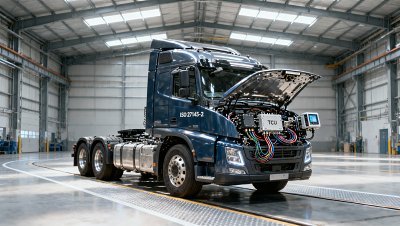
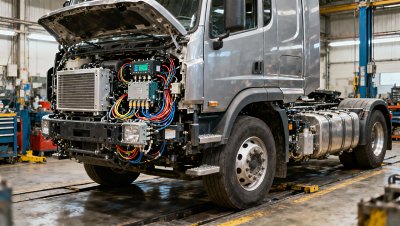
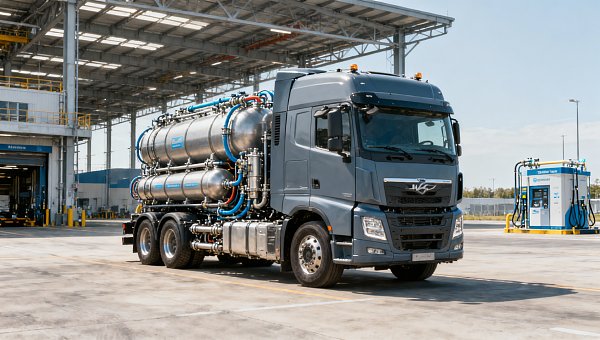
On April 11, 2026, China’s first domestically developed megawatt-class hydrogen-fueled aviation turboprop engine successfully conducted its maiden flight. Core technologies — including high-pressure hydrogen injection and anti-knock combustion control — have been concurrently transferred to heavy-duty truck hydrogen internal combustion engine platforms at Shaanxi Automobile Group (Shaanxi Auto) and FAW Jiefang. Multiple OEMs indicated plans to initiate small-batch road testing of hydrogen-fueled tractor units in Q3 2026, targeting export markets with relatively mature hydrogen infrastructure, such as Japan, South Korea, and Australia.
Industries Affected
Heavy-Duty Truck OEMs & Tier-1 Powertrain Suppliers
This event directly impacts manufacturers developing or integrating hydrogen internal combustion engines for Class 8 tractors. The validated aviation-grade combustion control and hydrogen injection technologies reduce technical uncertainty in scaling H-ICE for high-load, long-haul applications. Impact manifests in accelerated validation timelines, revised component specification requirements (e.g., hydrogen-compatible fuel rails, high-pressure injectors), and intensified focus on durability under transient load conditions.
Hydrogen Infrastructure Equipment Manufacturers
Firms supplying high-pressure gaseous hydrogen dispensers, onboard storage systems (350–700 bar), and refueling protocols face renewed demand signals — not only from light-duty pilots but now from heavy-duty commercial vehicle programs targeting export. The emphasis on ‘hydrogen infrastructure–ready’ markets implies tighter alignment with regional standards (e.g., Japan’s JIS B 8227, Australia’s AS 4332), potentially affecting certification pathways and product configuration decisions.
Export-Oriented Commercial Vehicle Distributors & Aftermarket Service Providers
Distributors operating in Japan, South Korea, and Australia must assess compatibility between upcoming hydrogen tractor models and local refueling network capacities, maintenance tooling, technician training frameworks, and emissions compliance documentation. Early engagement with OEMs on service manuals, spare parts logistics, and diagnostic software localization is now more operationally relevant.
What Relevant Enterprises or Practitioners Should Focus On
Monitor official technical transfer announcements from Shaanxi Auto and FAW Jiefang
Current information confirms technology transfer has begun, but publicly available details on architecture (e.g., spark-ignited vs. pilot-ignited), compression ratio, or NOx control strategy remain limited. Official updates — expected in mid-2026 — will clarify design maturity and scalability constraints.
Track Q3 2026 road test scope and geographic deployment
The planned small-batch road tests are a critical inflection point. Observers should note whether testing occurs domestically (e.g., in hydrogen corridor zones like Beijing-Tianjin-Hebei) or begins directly in target export markets — the latter would signal higher confidence in regulatory alignment and infrastructure readiness.
Distinguish between policy signaling and near-term procurement impact
While the aviation engine milestone strengthens national hydrogen strategy narratives, no new subsidies, tax incentives, or infrastructure mandates tied specifically to hydrogen ICE trucks have been announced. Procurement planning should treat this as a technology-readiness signal — not an immediate market trigger.
Pre-validate supply chain readiness for high-pressure hydrogen components
Suppliers of valves, injectors, seals, and sensors rated for >350 bar hydrogen service should review existing qualification data against anticipated duty cycles in heavy-duty truck applications. Early dialogue with OEM engineering teams on material compatibility testing (e.g., hydrogen embrittlement resistance) may help prioritize R&D investments.
Editorial Perspective / Industry Observation
From an industry perspective, this milestone is best understood not as a near-term commercial inflection, but as a credibility accelerator for hydrogen internal combustion — especially where battery-electric alternatives face energy density or charging infrastructure constraints. Analysis来看, the rapid cross-sector technology transfer (from aviation to heavy truck) reflects a deliberate systems-engineering approach: leveraging extreme-environment validation to de-risk less demanding applications. Observation来看, it signals growing institutional confidence in hydrogen ICE as a complementary — not transitional — powertrain for specific use cases. Current more appropriate interpretation is that this represents a strong technical signal, not yet a market-ready outcome; sustained attention is warranted because successful road testing in Q3 2026 could shift procurement timelines in targeted export markets by 6–12 months.
Conclusion
This achievement marks a significant step in hydrogen propulsion system integration across mobility sectors. Its primary industry significance lies in accelerating technical validation for heavy-duty hydrogen internal combustion engines — particularly for export-focused commercial vehicle programs. It does not indicate imminent mass production or regulatory adoption, but rather underscores a strategic pivot toward leveraging high-fidelity aerospace-derived engineering for terrestrial transport decarbonization. Currently, it is more appropriately understood as a high-signal technical milestone with cascading validation effects — not a standalone market catalyst.
Source Attribution
Main source: Public announcement issued by China’s Ministry of Industry and Information Technology (MIIT) and related state-owned enterprise press releases dated April 11, 2026.
Points requiring ongoing observation: Specific performance metrics of the aviation engine; exact timing and location of Q3 2026 road tests; formal confirmation of technology transfer scope to Shaanxi Auto and FAW Jiefang beyond initial reporting.
Trending News
- Manzhouli Highway Port Launches 24-Hour Freight Clearance
- Irkeshtam Port’s 24-Hour Freight Clearance Boosts Exports to Kyrgyzstan by 66%
- Erenhot-Mongolia 24-Hour Freight Clearance Marks One-Year Milestone
- MOF & MOT Launch New Freight Hub Resilience Initiative
- Six New Iran-Pakistan Land Crossings Opened, Land Clearance Cut to 6 Hours
Tag
Recommended News
 Technology & InnovationQuick Installation Excavators: Do They Reduce Setup Time on Real Sites?Excavator manufacturer with quick installation: discover whether fast-deploy excavators truly cut real-site setup time, lower labor costs, and improve uptime before you buy.
 Technology & InnovationModular Flatbed Trailers: When Design Flexibility Improves UtilizationFind out how a flatbed trailer supplier with modular design helps fleets boost utilization, adapt to varied loads, cut idle assets, and improve long-term ROI.
 Technology & InnovationPortable Construction Machinery: Where Flexible Equipment Saves TimeConstruction machinery supplier with portable options helps cut relocation time, improve transport efficiency, and keep projects moving faster across changing job sites.
 Technology & InnovationSemi Trailer Manufacturer with Lightweight Design: Is Lower Weight Worth It?Semi trailer manufacturer with lightweight design: discover when lower weight boosts payload, fuel savings, and fleet ROI—and when durability, compliance, and repair costs matter more.
![]() Technology & InnovationWhy Quick Installation Matters When Choosing an Excavator ManufacturerExcavator manufacturer with quick installation: discover how faster setup cuts downtime, simplifies maintenance, improves reliability, and keeps heavy equipment projects on schedule.
Technology & InnovationWhy Quick Installation Matters When Choosing an Excavator ManufacturerExcavator manufacturer with quick installation: discover how faster setup cuts downtime, simplifies maintenance, improves reliability, and keeps heavy equipment projects on schedule. Technology & InnovationHow Modular Design Changes the Value of a Flatbed Trailer SupplierFlatbed trailer supplier with modular design: discover how modular platforms cut lifecycle costs, boost fleet flexibility, and improve ROI for logistics, construction, and industrial buyers.
 Technology & InnovationHow Portable Construction Machinery for Mining Helps Remote Projects Move FasterConstruction machinery for mining helps remote projects move faster with easier transport, quick setup, and flexible deployment. Learn how to cut delays and improve site efficiency.
 Technology & InnovationTruck Tipper OEM: How Custom Body Design Changes Worksite PerformanceTruck tipper OEM solutions with custom body design can boost unloading efficiency, durability, and site safety. Learn how to compare suppliers and choose the right fit for demanding jobs.
 Technology & InnovationTruck Tipper OEM: How Custom Body Design Changes Worksite PerformanceTruck tipper OEM solutions with custom body design can boost unloading efficiency, durability, and site safety. Learn how to compare suppliers and choose the right fit for demanding jobs.
 Technology & InnovationHow Energy-Saving Features Change Excavator Value Over TimeDiscover how an excavator manufacturer with energy-saving features can lower fuel costs, improve uptime, and boost resale value with a smart long-term buying checklist.
 Technology & InnovationDo Energy-Saving Features Really Matter in an Excavator ManufacturerExcavator manufacturer with energy-saving features: learn how to verify fuel savings, uptime, service support, and ROI before choosing the right supplier.
 Technology & InnovationKunming Blue Jacaranda-Themed Buses Launch with Domestic V2X & LMPF BatteryKunming's blue jacaranda buses feature domestic V2X & LMPF battery tech — a proven, export-ready blueprint for urban transit and airport GSE suppliers targeting Middle East & LATAM markets.
 Technology & InnovationPortable Construction Machinery: Where Flexible Equipment Delivers More ValueConstruction machinery supplier with portable options: use this practical checklist to compare mobility, setup, service, and lifecycle value for faster, smarter project decisions.
 Technology & InnovationHow Construction Machinery for Mining Is Shifting Toward Higher UptimeConstruction machinery for mining is shifting from raw power to higher uptime. Learn how smarter maintenance, diagnostics, and parts support help cut risk, control costs, and improve project performance.
 Technology & InnovationHow a Truck Cement Manufacturer Controls Tank and Discharge QualityTruck cement manufacturer insights: learn how leading factories control tank strength, weld quality, pressure testing, and discharge performance to improve safety, uptime, and sourcing confidence.
 Technology & InnovationWhen Portable Construction Machinery Makes More Sense for Remote ProjectsConstruction machinery supplier with portable options: learn when compact, mobile equipment is the smarter choice for remote projects, cutting transport costs, delays, and setup time.
 Technology & InnovationWhy R&D Capability Matters in a Heavy Truck Chassis ManufacturerDiscover why a heavy truck chassis manufacturer with R&D capability delivers better reliability, customization, and long-term value. Use this guide to evaluate suppliers with confidence.
 Technology & InnovationWhy R&D Capability Matters in a Heavy Truck Chassis ManufacturerHeavy truck chassis manufacturer with R&D capability: discover how stronger engineering improves durability, customization, compliance, and fleet uptime for global B2B sourcing.
 Technology & InnovationPortable Construction Machinery for Infrastructure Projects: What Works BestConstruction machinery supplier for infrastructure buyers: discover the best portable machines for roads, utilities, and municipal projects to boost mobility, uptime, and cost control.
 Technology & InnovationWhen a BULLDOZER for Road Construction Delivers Better Site EfficiencyBULLDOZER for road construction buying guide: learn how the right machine improves grading accuracy, reduces downtime, and boosts site efficiency for faster project delivery.
 Technology & InnovationExcavator Attachment Choices That Can Slow a Job Instead of HelpingExcavator attachment mistakes can delay truck loading and raise costs. Learn how excavator bucket choice, excavator rental, excavator for sale, and excavator parts affect productivity.
 Technology & InnovationTC521 Advances Smart Heavy-Duty Truck Remote Diagnostics StandardTC521 advances smart heavy-duty truck remote diagnostics: ISO 27145-2 compliance, EU/UAE/GCC type approval readiness — act now to avoid certification delays.
 Technology & InnovationTruck control unit faults that look mechanical at firstTruck control unit faults often mimic truck steering system, truck fuel system, and truck cooling system failures. Learn how to avoid wrong truck pump parts orders and cut downtime.
 Technology & InnovationTC521 Launches Pre-Research on Remote Diagnostics Interface Standard for Smart Heavy-Duty TrucksRemote diagnostics interface standard pre-research launched for smart heavy-duty trucks — align with ACEA R19-2025 & ISO 27145 now to secure EU market access.
 Technology & InnovationMilitary truck battery systems now require dual-voltage support — legacy chargers can’t keep upHydraulic pump, fuel injection pump & truck military systems now demand dual-voltage battery support—legacy chargers fail. Upgrade for truck off road, logistics truck, and truck lowbed reliability.