Why R&D Capability Matters in a Heavy Truck Chassis Manufacturer
For technical evaluators, choosing a heavy truck chassis manufacturer with R&D capability is not just about product specs—it is about long-term reliability, engineering adaptability, and performance under demanding transport conditions. Strong R&D determines how well a manufacturer can optimize structure, integrate new technologies, and respond to evolving global logistics and industrial requirements.
In the road transport equipment sector, the chassis is the structural foundation that carries payload, transfers torque, absorbs road shock, and supports braking, suspension, steering, and body integration. For buyers working on tractors, dump trucks, cargo trucks, municipal vehicles, or special-purpose transport units, a heavy truck chassis manufacturer with R&D capability offers more than production capacity. It offers engineering depth that can reduce lifecycle risk over 5–10 years of operation.
This matters even more in international B2B sourcing, where technical teams must evaluate not only dimensions and axle load, but also design validation, material selection, compatibility with local regulations, and the supplier’s ability to adapt the chassis for different operating environments. On a global platform serving manufacturers, distributors, and industrial buyers, these factors often determine whether a sourcing decision leads to stable fleet performance or repeated maintenance problems.
Why R&D capability changes the real value of a truck chassis
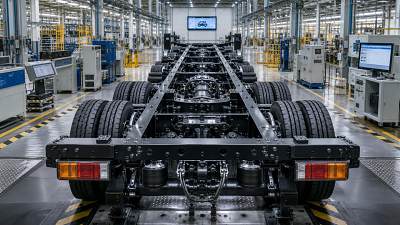
A heavy truck chassis manufacturer with R&D capability can turn a standard frame into a purpose-fit transport platform. In practice, this means the supplier can optimize frame rail thickness, crossmember layout, suspension matching, and wheelbase configuration for different use cases such as long-haul freight, mining access roads, or urban construction logistics.
For technical evaluators, this difference becomes visible in measurable areas: fatigue resistance over hundreds of thousands of kilometers, dimensional tolerance during assembly, payload distribution across 2-axle, 3-axle, or 4-axle layouts, and compatibility with engines, transmissions, and body structures from different OEM ecosystems.
From static specification to application engineering
Many suppliers can provide a drawing sheet with frame height, section modulus, and axle ratings. Fewer can explain why one chassis design performs better in a 55-ton regional haul application than in a 35-ton municipal transport scenario. R&D closes that gap by linking design data to field conditions.
A strong engineering team typically evaluates at least 4 dimensions before finalizing a chassis solution: load spectrum, road profile, superstructure integration, and service interval expectations. When these variables are studied upfront, the resulting chassis is more likely to maintain alignment, reduce uneven tire wear, and lower structural stress at key weld points.
How R&D affects durability and uptime
In commercial vehicle operations, even small structural improvements can create meaningful uptime gains. A better crossmember design, improved anti-corrosion treatment, or optimized suspension mounting geometry can reduce vibration transfer and slow down crack initiation. These changes may not always appear on a short product sheet, but they matter after 12 months, 24 months, or 300,000 km of service.
For fleets operating in ports, mines, or infrastructure projects, chassis failure rarely causes only repair cost. It can delay cargo movement, reduce vehicle availability, and disrupt delivery schedules. That is why technical evaluators often prefer a heavy truck chassis manufacturer with R&D capability over a supplier focused only on low-cost fabrication.
Key engineering outputs that indicate real development strength
- Frame strength calculation for different payload ranges such as 20–40 tons or 40–60 tons
- Finite element analysis for stress concentration around suspension brackets and crossmembers
- Road-condition adaptation for asphalt highways, gravel roads, and off-road construction sites
- Material and process selection for corrosion resistance in humid, coastal, or high-salt environments
- Interface design for body builders, hydraulic systems, and special equipment installation
The table below shows how technical evaluation criteria change when a buyer compares a basic production supplier with a heavy truck chassis manufacturer with R&D capability.
The key takeaway is that R&D capability is not an abstract advantage. It directly affects design flexibility, validation quality, and the supplier’s ability to solve fit-for-use problems before the chassis enters volume production.
What technical evaluators should examine during supplier assessment
When sourcing through a global heavy truck industry platform, technical teams usually compare several suppliers at once. The challenge is that brochures often look similar. To identify a reliable heavy truck chassis manufacturer with R&D capability, evaluators need a framework that goes beyond nominal specifications.
1. Engineering documentation depth
Ask whether the manufacturer can provide structured engineering documents rather than only sales drawings. Useful materials include general arrangement drawings, loading assumptions, welding standards, anti-corrosion process descriptions, and interface diagrams for body mounting. If tolerance control is relevant, request typical dimensional ranges such as ±1.5 mm to ±3.0 mm on key mounting positions, depending on process route and chassis size.
2. Prototype and test capability
An R&D-driven supplier should explain how a design moves from concept to validation. In many commercial vehicle projects, the process includes 3 stages: design review, prototype build, and road or bench verification. Even if a buyer does not require full certification testing, the manufacturer should show a repeatable internal procedure for checking stress points, bracket rigidity, suspension behavior, and assembly interference.
3. Cross-platform integration ability
Heavy truck chassis rarely operate as standalone components. They must integrate with powertrain systems, brake circuits, cabins, tanks, electrical harnesses, and body structures. A capable manufacturer understands this systems logic and can discuss clearances, mounting sequences, and maintenance access. That is especially important when vehicles are exported to different markets with different axle load rules, emissions packaging, or body-builder standards.
4. Change management for international orders
For export programs, a chassis project can change several times between RFQ and batch delivery. Wheelbase may shift by 200–500 mm, fuel tank position may need relocation, or suspension tuning may be adjusted for higher center-of-gravity loads. A heavy truck chassis manufacturer with R&D capability should have a defined engineering change process with revision control, approval checkpoints, and updated BOM records.
The following checklist can help technical evaluators score suppliers in a more practical and comparable way.
This type of checklist makes supplier comparison more objective. It also helps procurement and engineering teams align on the same decision criteria, reducing the risk of selecting a low-price chassis supplier that cannot support future technical modifications.
Where R&D creates value across different transport applications
The road transport equipment market is not uniform. A chassis optimized for container transport on highways is rarely ideal for tipper duty, concrete mixer use, or municipal vacuum trucks. This is where a heavy truck chassis manufacturer with R&D capability creates commercial value: by adapting the platform to operational reality instead of forcing all buyers into one standard design.
Long-haul logistics
For line-haul tractors and freight platforms, R&D often focuses on mass efficiency, torsional balance, and service accessibility. Reducing unnecessary chassis weight by even 80–150 kg can improve payload potential, but this must be done without sacrificing rigidity or braking stability. Engineering trade-offs are critical here.
Construction and infrastructure transport
Dump trucks, concrete support vehicles, and site transport units face high frame stress, repetitive shock loading, and uneven terrain. In these conditions, R&D contributes through localized reinforcement, optimized suspension match, and practical protection for exposed hoses and wiring. Service life can depend heavily on how well the chassis handles off-axis loads and repeated impact cycles.
Mining and heavy industrial routes
Mining support transport and industrial haulage often involve over-limit gradients, abrasive dust, and extended operating hours. Here, corrosion control, brake thermal management, and frame fatigue resistance become central. Technical evaluators should ask how the supplier adapts for high-dust maintenance intervals and whether inspection access is considered for components requiring service every 250–500 operating hours.
Municipal and special-purpose vehicles
Refuse collection, tankers, and service trucks demand careful body-builder coordination. Chassis design must support PTO layout, tank or equipment mounting, rear overhang balance, and turning radius needs in dense urban roads. An R&D-capable supplier can usually communicate more effectively with upfitters, which reduces integration delays during the final vehicle build phase.
Common mistakes technical teams should avoid
- Selecting a chassis only by rated payload without checking dynamic load conditions.
- Ignoring service access, which can increase maintenance labor time by 10%–20% in actual fleet use.
- Assuming one standard wheelbase suits all body configurations.
- Focusing on initial unit price while overlooking redesign cost, downtime risk, and spare parts mismatch.
These application differences explain why buyers on a global B2B sourcing platform increasingly look for suppliers that combine manufacturing with development capability. In export markets, local adaptation often matters as much as nominal chassis strength.
How to use a global B2B platform to identify the right manufacturer
A specialized global platform for heavy trucks and road transport equipment can shorten the search cycle for technical evaluators, but only if the evaluation process is disciplined. The best results usually come from combining online supplier discovery with structured technical screening and direct engineering communication.
Build a 5-step screening workflow
- Define the operating profile: payload range, road condition, annual mileage, and body integration needs.
- Shortlist suppliers by product category, export experience, and visible technical scope.
- Request engineering documents, not only catalogs or photos.
- Compare response quality on 6–10 technical questions related to design adaptation and validation.
- Review total project support, including lead time, change management, and after-sales coordination.
Questions that reveal whether R&D is real
Ask how the supplier would modify the chassis for a different center of gravity, a revised body length, or a higher front axle load. Ask what happens if tire size changes, if the body mount position shifts, or if the vehicle must operate in tropical humidity. A genuine heavy truck chassis manufacturer with R&D capability can discuss trade-offs, not just say “customization is available.”
The quality of answers often matters more than the speed of answers. A supplier that returns a thoughtful engineering reply in 5 business days may be more valuable than one that replies in 24 hours with only generic statements.
Why platform-based sourcing works for technical buyers
A focused industry platform helps evaluators compare truck chassis, complete trucks, trailers, construction machinery, and spare parts within the same ecosystem. That matters because chassis decisions are connected to the broader commercial vehicle supply chain. Buyers can review supplier breadth, identify compatible component sources, and follow market trends without switching between unrelated channels.
For international procurement teams, this also supports supplier transparency. Instead of evaluating a chassis provider in isolation, buyers can assess how well the manufacturer fits into a broader cross-border supply strategy that includes spare parts support, body-building coordination, and future product expansion.
Final considerations before making a sourcing decision
A heavy truck chassis may look acceptable on paper and still fail to meet the operational demands of logistics, construction, or industrial transport. That is why technical evaluators should treat R&D capability as a core decision factor rather than a secondary bonus. It influences structure, integration, durability, and long-term adaptability across the whole vehicle lifecycle.
When a heavy truck chassis manufacturer with R&D capability supports a project, buyers gain a better chance of matching the chassis to actual road conditions, body requirements, maintenance expectations, and export market constraints. The result is a more stable procurement outcome, fewer redesign loops, and stronger confidence in fleet performance.
For technical teams sourcing through the Global Heavy Truck Industry Platform, the most effective approach is to compare suppliers not only by price and specification, but also by engineering responsiveness, documentation quality, and application understanding. If you are evaluating chassis solutions for heavy-duty transport, municipal fleets, construction vehicles, or special-purpose truck programs, now is the right time to contact us, request technical details, and get a sourcing plan tailored to your operational needs.
Trending News
- Logging Truck Price in 2026: What Affects Total Ownership Cost?
- Crane Truck Cost Breakdown: Chassis, Boom, and Compliance Fees
- How to Compare a Logging Truck Distributor by Service Coverage
- Choosing a Water Truck Supplier for Dust Control Projects
- Water Truck Exporter Selection: Key Delivery and Compliance Risks
Tag
Recommended News
 Technology & InnovationGlobal Heavy-Duty Autonomous Trucks Near CommercializationHeavy-duty autonomous trucks are nearing commercialization — 200+ L4 vehicles deployed in Saudi & Chilean mines, delivering 120,000+ km fault-free haulage.
 Technology & InnovationWhen to Use an Excavator With Long Reach Boom on SiteEXCAVATOR with long reach boom guide: learn when it adds real value for dredging, demolition, slopes, and drainage jobs to improve safety, access, and site efficiency.
 Technology & InnovationGlobal Heavy-Duty Autonomous Truck Testing Reaches Commercial Inflection PointHeavy-duty autonomous truck testing hits commercial inflection point: 1M km L4 mining ops in Saudi Arabia & Chile — key for OEMs, mining logistics & global off-road transport.
 Technology & InnovationWhat Advanced Technology Means in Heavy Truck Chassis DesignDiscover how a heavy truck chassis manufacturer with advanced technology improves strength, durability, payload efficiency, and integration for demanding transport needs.
 Technology & InnovationChina Adds Tractor-Trailers' Battery-Swap Systems to NEV Bus Subsidy SchemeBattery-swap systems for tractor-trailers now qualify for China’s NEV bus subsidy—up to ¥32,000 per system. Key for logistics, mining & port electrification.
 Technology & InnovationPortable Construction Machinery Supplier: Where Mobility Improves Jobsite OutputConstruction machinery supplier with portable options helps contractors cut mobilization time, improve transport efficiency, and boost jobsite output across road, municipal, and multi-site projects.
 Technology & InnovationChina Adds Heavy-Duty Tractor Battery-Swap Systems to EV Bus Subsidy SchemeHeavy-duty tractor battery-swap systems now qualify for China’s 2026 EV bus subsidy—30% off, up to ¥280,000. Act before Dec 31!
 Technology & InnovationDo Energy-Saving Excavators Lower Fuel Use in Daily Jobsite Operations?Excavator manufacturer with energy-saving features: discover how smarter hydraulics, auto idle, and telematics can cut daily fuel use, improve uptime, and lower jobsite operating costs.
 Technology & InnovationL4 Autonomous Trucks Launch on Tianjin Port–Xiong’an RouteL4 autonomous trucks launch on Tianjin Port–Xiong’an route—first routine platooned operations in China’s strategic logistics corridor. Watch EU & Gulf certification unfold.
 Technology & InnovationAre Energy-Saving Excavators Worth It for Long-Term Operations?Excavator manufacturer with energy-saving features: discover if lower fuel use, reduced downtime, and stronger long-term ROI make these machines the smart choice for demanding operations.
 Technology & InnovationSouth China Pioneer Studio Wins Youth May 4th Award for Smart Truck CertificationSmart truck certification breakthrough: South China Pioneer Studio wins Youth May 4th Award for EU R155/R156 compliance — a game-changer for global陆路运输设备 exports.
 Technology & InnovationL4 Autonomous Container Trucks Begin Trial on Tianjin Port–Xiong'an CorridorL4 autonomous container trucks begin trial on Tianjin Port–Xiong'an Corridor—key milestone for cross-border logistics, heavy-equipment transport & smart intermodal supply chains.
 Technology & InnovationQuick Installation Excavators: Do They Reduce Setup Time on Real Sites?Excavator manufacturer with quick installation: discover whether fast-deploy excavators truly cut real-site setup time, lower labor costs, and improve uptime before you buy.
 Technology & InnovationModular Flatbed Trailers: When Design Flexibility Improves UtilizationFind out how a flatbed trailer supplier with modular design helps fleets boost utilization, adapt to varied loads, cut idle assets, and improve long-term ROI.
 Technology & InnovationPortable Construction Machinery: Where Flexible Equipment Saves TimeConstruction machinery supplier with portable options helps cut relocation time, improve transport efficiency, and keep projects moving faster across changing job sites.
 Technology & InnovationSemi Trailer Manufacturer with Lightweight Design: Is Lower Weight Worth It?Semi trailer manufacturer with lightweight design: discover when lower weight boosts payload, fuel savings, and fleet ROI—and when durability, compliance, and repair costs matter more.
![]() Technology & InnovationWhy Quick Installation Matters When Choosing an Excavator ManufacturerExcavator manufacturer with quick installation: discover how faster setup cuts downtime, simplifies maintenance, improves reliability, and keeps heavy equipment projects on schedule.
Technology & InnovationWhy Quick Installation Matters When Choosing an Excavator ManufacturerExcavator manufacturer with quick installation: discover how faster setup cuts downtime, simplifies maintenance, improves reliability, and keeps heavy equipment projects on schedule. Technology & InnovationHow Modular Design Changes the Value of a Flatbed Trailer SupplierFlatbed trailer supplier with modular design: discover how modular platforms cut lifecycle costs, boost fleet flexibility, and improve ROI for logistics, construction, and industrial buyers.
 Technology & InnovationHow Portable Construction Machinery for Mining Helps Remote Projects Move FasterConstruction machinery for mining helps remote projects move faster with easier transport, quick setup, and flexible deployment. Learn how to cut delays and improve site efficiency.
 Technology & InnovationTruck Tipper OEM: How Custom Body Design Changes Worksite PerformanceTruck tipper OEM solutions with custom body design can boost unloading efficiency, durability, and site safety. Learn how to compare suppliers and choose the right fit for demanding jobs.
 Technology & InnovationHow Energy-Saving Features Change Excavator Value Over TimeDiscover how an excavator manufacturer with energy-saving features can lower fuel costs, improve uptime, and boost resale value with a smart long-term buying checklist.
 Technology & InnovationDo Energy-Saving Features Really Matter in an Excavator ManufacturerExcavator manufacturer with energy-saving features: learn how to verify fuel savings, uptime, service support, and ROI before choosing the right supplier.
 Technology & InnovationKunming Blue Jacaranda-Themed Buses Launch with Domestic V2X & LMPF BatteryKunming's blue jacaranda buses feature domestic V2X & LMPF battery tech — a proven, export-ready blueprint for urban transit and airport GSE suppliers targeting Middle East & LATAM markets.
 Technology & InnovationPortable Construction Machinery: Where Flexible Equipment Delivers More ValueConstruction machinery supplier with portable options: use this practical checklist to compare mobility, setup, service, and lifecycle value for faster, smarter project decisions.
 Technology & InnovationHow Construction Machinery for Mining Is Shifting Toward Higher UptimeConstruction machinery for mining is shifting from raw power to higher uptime. Learn how smarter maintenance, diagnostics, and parts support help cut risk, control costs, and improve project performance.