Global Heavy-Duty Autonomous Trucks Near Commercialization
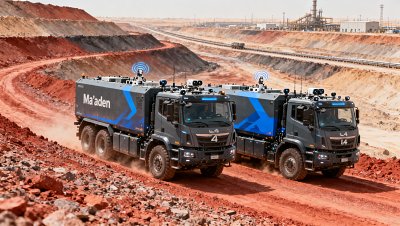
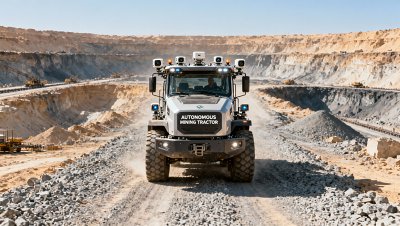
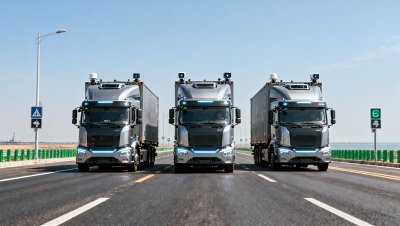
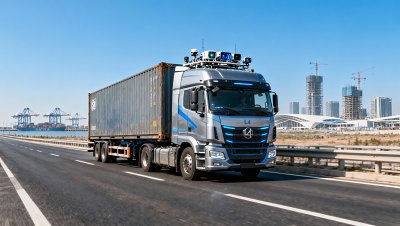
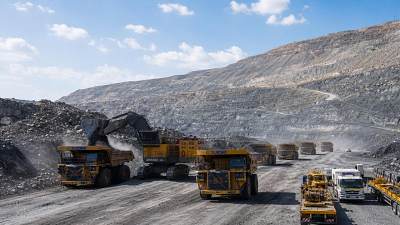
On May 20, the International Autonomous Alliance (IAA) released its 2026 Global Commercial Autonomous Driving Progress Report, confirming that Chinese L4-level autonomous heavy-duty truck systems — integrating perception fusion, mine dispatch cloud platforms, and V2X coordination modules — have entered large-scale deployment in the Ma’aden phosphate mine in Saudi Arabia and the Escondida copper mine in Chile, with over 200 vehicles operational. Average fault-free operating mileage exceeds 120,000 km. This development signals tangible progress for autonomous haulage in extreme environments and warrants close attention from mining equipment suppliers, logistics service providers, and cross-border industrial automation integrators — as it reflects an accelerating shift toward Transport-as-a-Service (TaaS) procurement models in resource-rich emerging markets.
Event Overview
According to the IAA’s 2026 Global Commercial Autonomous Driving Progress Report, published on May 20, Chinese L4-level autonomous heavy-duty truck systems have been deployed at scale — exceeding 200 vehicles — in the Ma’aden phosphorite mine in Saudi Arabia and the Escondida copper mine in Chile. The systems include integrated perception fusion, mine-specific dispatch cloud platforms, and V2X communication modules. Reported average fault-free operating mileage exceeds 120,000 km. The report notes superior performance of Chinese solutions in high-temperature, high-dust, and long-descending-slope conditions compared to comparable Western offerings.
Impact on Specific Industry Segments
Original Equipment Manufacturers (OEMs) and Tier-1 Suppliers serving mining fleets: These firms face intensified competitive pressure as autonomous-ready chassis and powertrain integration become prerequisites for new mine tenders. Impact manifests in accelerated demand for certified vehicle-to-cloud interfaces, functional safety validation for off-road autonomy, and modular retrofitting capabilities — particularly for legacy fleet upgrades.
Mining Operations & Asset Management Firms: Deployment at Ma’aden and Escondida validates TaaS as a procurement pathway — shifting capital expenditure (CAPEX) toward operational expenditure (OPEX). Impact includes revised fleet lifecycle planning, updated risk assessment frameworks for remote operations, and growing reliance on third-party uptime SLAs rather than in-house maintenance capacity.
Logistics & Haulage Service Providers in Resource Corridors: With autonomous haulage scaling in key export regions, traditional contract haulers may see contracting windows narrow — especially where mine operators consolidate transport under integrated TaaS agreements. Impact centers on renegotiation leverage, fleet technology readiness requirements, and eligibility criteria for bid participation in automated corridors.
Cross-Border Industrial Automation Integrators: As Chinese autonomous stacks gain traction in non-domestic mining jurisdictions, integrators supporting multinational miners must adapt certification workflows — including alignment with local regulatory testing protocols (e.g., Saudi SABIC standards or Chilean CODELCO technical specifications) and multilingual operational interface localization.
What Relevant Enterprises or Practitioners Should Monitor and Act On
Track official procurement language in upcoming mine tender documents
Current deployments are tied to specific operator-led pilots; the next signal will be explicit TaaS eligibility clauses or autonomy-readiness scoring weights in formal RFPs from Ma’aden, Escondida, or similar-tier assets in Oman, Peru, or Australia.
Monitor regional regulatory updates on autonomous off-road vehicle approval
Saudi Arabia’s National Transport Strategy and Chile’s Mining Innovation Framework are both undergoing revisions; any formalized pathways for type-approval of autonomous haul trucks — even for restricted zones — would lower market entry barriers for non-Chinese suppliers and accelerate parallel deployments.
Distinguish between pilot validation and commercial procurement terms
The reported 200+ units reflect operational deployment, not necessarily full commercial contracts. Enterprises should verify whether these units operate under CAPEX purchase, OPEX leasing, or hybrid revenue-share models — as each implies different scalability thresholds and service-level expectations.
Assess internal capability gaps in cloud-based fleet management integration
Chinese systems rely heavily on centralized dispatch platforms. Firms evaluating interoperability or co-deployment must audit current telemetry infrastructure, API compatibility with major cloud dispatch vendors (e.g., ABB Ability™ MineOptimize, Hexagon’s HxGN MinePlan), and data sovereignty compliance for cross-border cloud hosting.
Editorial Perspective / Industry Observation
Observably, this milestone is less about technological novelty and more about procurement model maturation: it confirms that autonomous haulage has crossed from technical demonstration into contracted, sustained operation within commercially sensitive, high-stakes environments. Analysis shows that the emphasis on extreme-condition reliability — rather than urban or highway use cases — underscores a near-term commercial pathway rooted in controlled, asset-intensive domains. From an industry perspective, this is best understood not as a broad industry inflection point, but as a targeted validation of TaaS viability in geographically concentrated, capital-constrained mining regions — where labor availability, safety liability, and energy efficiency drive adoption faster than regulatory harmonization.
Current more appropriate interpretation is that this represents a strong signal — not yet a self-sustaining trend — because deployment remains tied to single-operator initiatives and lacks multi-miner, multi-vendor interoperability standards. Sustained momentum depends on replicability beyond two flagship sites and transparency around unit economics (e.g., cost per ton-km vs. conventional haulage).
Conclusion: This deployment marks a material step toward operational acceptance of autonomous heavy-duty trucks — but primarily within vertically integrated mining ecosystems, not open-road freight. It highlights a diverging trajectory: while global road freight autonomy remains constrained by regulatory fragmentation and mixed traffic complexity, off-road autonomy is advancing through domain-specific engineering, operator-controlled environments, and outcome-oriented service contracts. For stakeholders, the takeaway is not urgency to pivot, but precision in scoping relevance — focusing on mines with high dust/heat exposure, long haul cycles, and active digital transformation mandates.
Information Source: International Autonomous Alliance (IAA), 2026 Global Commercial Autonomous Driving Progress Report, issued May 20. Note: Unit economics, contractual structures, and regulatory alignment status across additional jurisdictions remain pending further public disclosure and require ongoing observation.
Trending News
- Logging Truck Price in 2026: What Affects Total Ownership Cost?
- Crane Truck Cost Breakdown: Chassis, Boom, and Compliance Fees
- How to Compare a Logging Truck Distributor by Service Coverage
- Choosing a Water Truck Supplier for Dust Control Projects
- Water Truck Exporter Selection: Key Delivery and Compliance Risks
Tag
Recommended News
 Technology & InnovationGlobal Heavy-Duty Autonomous Trucks Near CommercializationHeavy-duty autonomous trucks are nearing commercialization — 200+ L4 vehicles deployed in Saudi & Chilean mines, delivering 120,000+ km fault-free haulage.
 Technology & InnovationWhen to Use an Excavator With Long Reach Boom on SiteEXCAVATOR with long reach boom guide: learn when it adds real value for dredging, demolition, slopes, and drainage jobs to improve safety, access, and site efficiency.
 Technology & InnovationGlobal Heavy-Duty Autonomous Truck Testing Reaches Commercial Inflection PointHeavy-duty autonomous truck testing hits commercial inflection point: 1M km L4 mining ops in Saudi Arabia & Chile — key for OEMs, mining logistics & global off-road transport.
 Technology & InnovationWhat Advanced Technology Means in Heavy Truck Chassis DesignDiscover how a heavy truck chassis manufacturer with advanced technology improves strength, durability, payload efficiency, and integration for demanding transport needs.
 Technology & InnovationChina Adds Tractor-Trailers' Battery-Swap Systems to NEV Bus Subsidy SchemeBattery-swap systems for tractor-trailers now qualify for China’s NEV bus subsidy—up to ¥32,000 per system. Key for logistics, mining & port electrification.
 Technology & InnovationPortable Construction Machinery Supplier: Where Mobility Improves Jobsite OutputConstruction machinery supplier with portable options helps contractors cut mobilization time, improve transport efficiency, and boost jobsite output across road, municipal, and multi-site projects.
 Technology & InnovationChina Adds Heavy-Duty Tractor Battery-Swap Systems to EV Bus Subsidy SchemeHeavy-duty tractor battery-swap systems now qualify for China’s 2026 EV bus subsidy—30% off, up to ¥280,000. Act before Dec 31!
 Technology & InnovationDo Energy-Saving Excavators Lower Fuel Use in Daily Jobsite Operations?Excavator manufacturer with energy-saving features: discover how smarter hydraulics, auto idle, and telematics can cut daily fuel use, improve uptime, and lower jobsite operating costs.
 Technology & InnovationL4 Autonomous Trucks Launch on Tianjin Port–Xiong’an RouteL4 autonomous trucks launch on Tianjin Port–Xiong’an route—first routine platooned operations in China’s strategic logistics corridor. Watch EU & Gulf certification unfold.
 Technology & InnovationAre Energy-Saving Excavators Worth It for Long-Term Operations?Excavator manufacturer with energy-saving features: discover if lower fuel use, reduced downtime, and stronger long-term ROI make these machines the smart choice for demanding operations.
 Technology & InnovationSouth China Pioneer Studio Wins Youth May 4th Award for Smart Truck CertificationSmart truck certification breakthrough: South China Pioneer Studio wins Youth May 4th Award for EU R155/R156 compliance — a game-changer for global陆路运输设备 exports.
 Technology & InnovationL4 Autonomous Container Trucks Begin Trial on Tianjin Port–Xiong'an CorridorL4 autonomous container trucks begin trial on Tianjin Port–Xiong'an Corridor—key milestone for cross-border logistics, heavy-equipment transport & smart intermodal supply chains.
 Technology & InnovationQuick Installation Excavators: Do They Reduce Setup Time on Real Sites?Excavator manufacturer with quick installation: discover whether fast-deploy excavators truly cut real-site setup time, lower labor costs, and improve uptime before you buy.
 Technology & InnovationModular Flatbed Trailers: When Design Flexibility Improves UtilizationFind out how a flatbed trailer supplier with modular design helps fleets boost utilization, adapt to varied loads, cut idle assets, and improve long-term ROI.
 Technology & InnovationPortable Construction Machinery: Where Flexible Equipment Saves TimeConstruction machinery supplier with portable options helps cut relocation time, improve transport efficiency, and keep projects moving faster across changing job sites.
 Technology & InnovationSemi Trailer Manufacturer with Lightweight Design: Is Lower Weight Worth It?Semi trailer manufacturer with lightweight design: discover when lower weight boosts payload, fuel savings, and fleet ROI—and when durability, compliance, and repair costs matter more.
![]() Technology & InnovationWhy Quick Installation Matters When Choosing an Excavator ManufacturerExcavator manufacturer with quick installation: discover how faster setup cuts downtime, simplifies maintenance, improves reliability, and keeps heavy equipment projects on schedule.
Technology & InnovationWhy Quick Installation Matters When Choosing an Excavator ManufacturerExcavator manufacturer with quick installation: discover how faster setup cuts downtime, simplifies maintenance, improves reliability, and keeps heavy equipment projects on schedule. Technology & InnovationHow Modular Design Changes the Value of a Flatbed Trailer SupplierFlatbed trailer supplier with modular design: discover how modular platforms cut lifecycle costs, boost fleet flexibility, and improve ROI for logistics, construction, and industrial buyers.
 Technology & InnovationHow Portable Construction Machinery for Mining Helps Remote Projects Move FasterConstruction machinery for mining helps remote projects move faster with easier transport, quick setup, and flexible deployment. Learn how to cut delays and improve site efficiency.
 Technology & InnovationTruck Tipper OEM: How Custom Body Design Changes Worksite PerformanceTruck tipper OEM solutions with custom body design can boost unloading efficiency, durability, and site safety. Learn how to compare suppliers and choose the right fit for demanding jobs.
 Technology & InnovationHow Energy-Saving Features Change Excavator Value Over TimeDiscover how an excavator manufacturer with energy-saving features can lower fuel costs, improve uptime, and boost resale value with a smart long-term buying checklist.
 Technology & InnovationDo Energy-Saving Features Really Matter in an Excavator ManufacturerExcavator manufacturer with energy-saving features: learn how to verify fuel savings, uptime, service support, and ROI before choosing the right supplier.
 Technology & InnovationKunming Blue Jacaranda-Themed Buses Launch with Domestic V2X & LMPF BatteryKunming's blue jacaranda buses feature domestic V2X & LMPF battery tech — a proven, export-ready blueprint for urban transit and airport GSE suppliers targeting Middle East & LATAM markets.
 Technology & InnovationPortable Construction Machinery: Where Flexible Equipment Delivers More ValueConstruction machinery supplier with portable options: use this practical checklist to compare mobility, setup, service, and lifecycle value for faster, smarter project decisions.
 Technology & InnovationHow Construction Machinery for Mining Is Shifting Toward Higher UptimeConstruction machinery for mining is shifting from raw power to higher uptime. Learn how smarter maintenance, diagnostics, and parts support help cut risk, control costs, and improve project performance.