How Construction Machinery for Mining Is Shifting Toward Higher Uptime
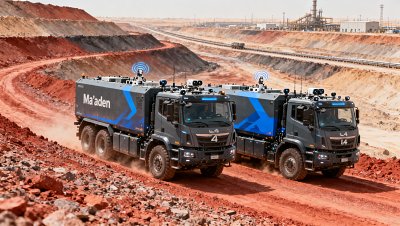
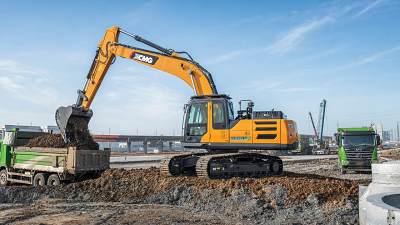
For project managers under pressure to keep schedules on track, construction machinery for mining is no longer judged by power alone. Higher uptime, faster maintenance, smarter diagnostics, and more reliable parts support are becoming critical to controlling costs and reducing operational risk. This shift is reshaping equipment selection and supplier expectations across modern mining and heavy transport projects.
For decision-makers in mining, earthmoving, and heavy transport operations, a checklist-based approach is now the most practical way to evaluate equipment. Output targets, haul road conditions, labor availability, and repair response times can vary sharply from one site to another. That means choosing construction machinery for mining based only on engine size, bucket volume, or purchase price creates avoidable risk. A structured review helps project leaders identify what directly affects uptime, service continuity, operating cost, and supplier reliability before equipment enters the field.
Why project managers should judge uptime before horsepower
In many mining and infrastructure-linked projects, a machine failure is rarely an isolated event. One disabled excavator can delay loading, disrupt truck cycles, reduce crusher feed, increase idle labor hours, and force schedule changes across related teams. This is why construction machinery for mining is shifting toward a broader value model: fewer unplanned stops, easier servicing, predictable parts supply, and stronger digital visibility.
For project managers, the practical question is not simply “Which machine is stronger?” It is “Which machine can stay available under real site conditions with the least disruption?” In land transport equipment and mining support fleets, uptime has become a strategic purchasing indicator because it links directly to daily production, fuel efficiency, labor planning, contract performance, and safety compliance.
Core checklist: what to confirm first when comparing construction machinery for mining
Before comparing brands or requesting quotations, project teams should verify a focused group of decision points. These checks help separate machines that look competitive on paper from those that can actually support continuous production.
- Planned maintenance interval: Confirm service intervals for filters, fluids, hydraulic components, undercarriage parts, and cooling systems. Longer intervals are useful only if they remain realistic under dust, heat, and heavy load conditions.
- Ease of field maintenance: Check whether service points are accessible without excessive disassembly. Machines designed for quicker ground-level access often reduce downtime significantly.
- Diagnostics and telematics: Ask whether the machine provides fault codes, remote monitoring, fluid alerts, idle tracking, and predictive maintenance indicators. Faster diagnosis means faster return to work.
- Parts availability: Review the supplier’s local or regional inventory for wear parts, hoses, seals, sensors, pumps, and electronic modules. Uptime depends more on parts access than on brochure specifications.
- Service response commitment: Confirm expected response time for technical support, onsite repair, and major component replacement. A low purchase price can become expensive if support is slow.
- Fuel and load efficiency: Compare productivity per liter of fuel, not just engine output. Efficient cycle performance supports both uptime and cost control.
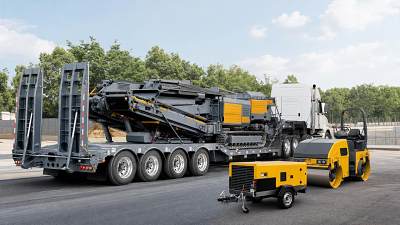
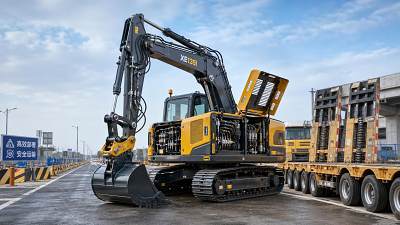
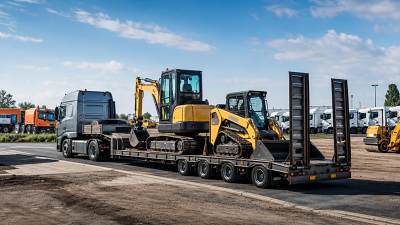
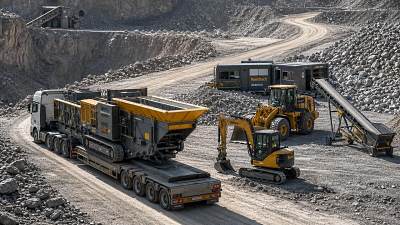
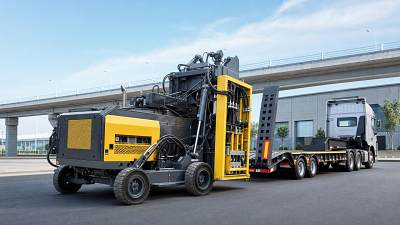
- Compatibility with transport and site logistics: Verify whether the machine can be moved, assembled, and supported using the available heavy trucks, trailers, and workshop resources on your project.
- Operator support: Machines with clear displays, training support, and stable control systems are less likely to suffer misuse that leads to avoidable downtime.
A practical evaluation table for equipment selection
When reviewing construction machinery for mining with procurement, operations, and maintenance teams, it helps to align every discussion around a common set of criteria. The table below can be used as a quick decision framework.
How requirements change by mining scenario
Not every site should use the same evaluation logic. Project managers should adjust their checklist according to material type, transport distance, terrain, and support conditions.
Remote mining sites
In remote operations, the best construction machinery for mining is often the equipment with the simplest service pathway rather than the most complex feature set. Long delivery times for parts, limited workshop tools, and scarce specialist technicians make maintainability a top priority. Machines with modular components, strong remote diagnostics, and broad parts interchangeability have a clear advantage.
High-output production sites
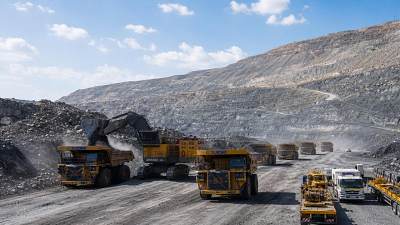
In high-volume mines, uptime must be judged in relation to cycle balance. If excavators, wheel loaders, and haul trucks are not matched correctly, bottlenecks appear even when each machine performs well individually. Project managers should review pass match, bucket-to-truck compatibility, loading time, and queuing behavior alongside maintenance indicators.
Mixed infrastructure and mining projects
Some projects combine quarry extraction, road hauling, and civil construction. In these cases, flexibility matters. Construction machinery for mining should be evaluated for transportability, attachment compatibility, and the ability to work across multiple tasks without excessive setup time. This is especially important when fleets are shared with land transport equipment and support vehicles.
Common blind spots that reduce uptime after purchase
Many equipment selections fail not because the machine is poor, but because the buying team overlooked operating realities. The following risks deserve specific attention during evaluation and contract review.
- Overvaluing purchase price: A cheaper unit with longer repair time, weak dealer coverage, or inconsistent parts support can produce a much higher lifecycle cost.
- Ignoring consumables and wear rates: Ground engaging tools, tires, tracks, hydraulic hoses, and filters can reshape maintenance budgets quickly in abrasive environments.
- Assuming standard service conditions: Dust, altitude, moisture, and haul road vibration may shorten maintenance intervals beyond catalog assumptions.
- Weak onboarding and training: Poor operator habits often lead to overheating, excessive idle time, undercarriage wear, and component stress.
- Unclear support escalation: If there is no defined path for urgent technical issues, downtime can expand while teams wait for approvals or specialist guidance.
- Disconnect between machine choice and transport support: Oversized or specialized units may create relocation, trailer loading, or workshop handling problems.
Execution checklist for procurement and project teams
To move from general interest to a sound equipment decision, project leaders should collect and compare the following information before placing an order. This turns the discussion around construction machinery for mining into an operational review rather than a sales conversation.
- Define the target production rate, duty cycle, material density, and expected utilization hours per month.
- Map the site environment, including temperature range, road quality, dust level, slope, and water exposure.
- List maintenance resources already available onsite, such as technicians, service trucks, lifting capacity, and diagnostic tools.
- Request detailed parts lead times for both routine wear items and critical failure components.
- Ask suppliers for uptime data, service case examples, and references from comparable mining or heavy transport projects.
- Review warranty terms with special attention to exclusions, response obligations, and consumable responsibilities.
- Confirm whether the equipment integrates with your fleet management or telematics reporting process.
- Estimate total operating cost across fuel, labor, maintenance, parts, training, and downtime risk.
What strong suppliers now need to prove
As buyer expectations shift, suppliers of construction machinery for mining are being evaluated on much more than inventory and pricing. Project managers increasingly expect evidence of support capability, digital transparency, and supply chain discipline. A strong supplier should be able to show product range alignment, regional service access, technical responsiveness, and practical knowledge of mining and transport workflows.
This is where specialized B2B platforms play a meaningful role. For buyers in the heavy truck, trailer, and construction machinery sectors, a professional industry platform can simplify comparison across manufacturers and suppliers, improve product discovery, and provide broader visibility into categories such as Truck Chassis & Cab, Complete Trucks, Construction Machinery, Trailers & Semi-Trailers, and Spare Parts. For project teams sourcing internationally, access to structured supplier information, industry insights, and buying guidance helps reduce uncertainty before formal negotiation begins.
FAQ: quick answers project managers often need
Is newer technology always better for uptime?
Not automatically. Advanced diagnostics, telematics, and automation can improve uptime, but only if parts, software support, and technician access are reliable in your region. The right balance depends on site support conditions.
Should total cost of ownership replace purchase price as the main benchmark?
Yes. For construction machinery for mining, total cost of ownership gives a more accurate picture because downtime, wear parts, fuel use, and support delays can outweigh the initial price difference very quickly.
How early should maintenance teams be involved in selection?
As early as possible. Maintenance teams often identify hidden issues in service access, tool requirements, parts storage, and training needs that procurement or operations teams may miss.
Final decision guide: what to prepare before the next supplier discussion
The shift toward higher uptime is changing how construction machinery for mining should be selected, compared, and managed. For project managers, the most effective approach is simple: prioritize a checklist that connects equipment performance to maintenance speed, support reliability, transport compatibility, and real operating conditions. Machines that protect schedule continuity are often the ones that deliver the best commercial value.
If you plan to evaluate suppliers or shortlist equipment, prepare the core details first: application scenario, production target, site conditions, service expectations, preferred delivery timeline, budget range, and parts support requirements. Then ask suppliers to respond clearly on configuration, uptime support model, diagnostics capability, warranty scope, spare parts availability, and fleet integration. With those answers in hand, your team can make a faster, lower-risk decision that supports both mining output and broader heavy transport project performance.
Trending News
- Truck Tipper Sourcing Checklist: Specs, Lead Time, and Compliance
- What Makes a Reliable Truck Tipper Distributor in New Export Markets
- Truck Tipper OEM or Standard Model: Which Lowers Lifetime Cost?
- Truck Tipper Bulk Order: 5 Cost Risks to Check Before Signing
- How to Vet a Heavy Truck Chassis Manufacturer With R&D Capability in 2026
Tag
Recommended News
 Technology & InnovationGlobal Heavy-Duty Autonomous Trucks Near CommercializationHeavy-duty autonomous trucks are nearing commercialization — 200+ L4 vehicles deployed in Saudi & Chilean mines, delivering 120,000+ km fault-free haulage.
 Technology & InnovationWhen to Use an Excavator With Long Reach Boom on SiteEXCAVATOR with long reach boom guide: learn when it adds real value for dredging, demolition, slopes, and drainage jobs to improve safety, access, and site efficiency.
 Technology & InnovationGlobal Heavy-Duty Autonomous Truck Testing Reaches Commercial Inflection PointHeavy-duty autonomous truck testing hits commercial inflection point: 1M km L4 mining ops in Saudi Arabia & Chile — key for OEMs, mining logistics & global off-road transport.
 Technology & InnovationWhat Advanced Technology Means in Heavy Truck Chassis DesignDiscover how a heavy truck chassis manufacturer with advanced technology improves strength, durability, payload efficiency, and integration for demanding transport needs.
 Technology & InnovationChina Adds Tractor-Trailers' Battery-Swap Systems to NEV Bus Subsidy SchemeBattery-swap systems for tractor-trailers now qualify for China’s NEV bus subsidy—up to ¥32,000 per system. Key for logistics, mining & port electrification.
 Technology & InnovationPortable Construction Machinery Supplier: Where Mobility Improves Jobsite OutputConstruction machinery supplier with portable options helps contractors cut mobilization time, improve transport efficiency, and boost jobsite output across road, municipal, and multi-site projects.
 Technology & InnovationChina Adds Heavy-Duty Tractor Battery-Swap Systems to EV Bus Subsidy SchemeHeavy-duty tractor battery-swap systems now qualify for China’s 2026 EV bus subsidy—30% off, up to ¥280,000. Act before Dec 31!
 Technology & InnovationDo Energy-Saving Excavators Lower Fuel Use in Daily Jobsite Operations?Excavator manufacturer with energy-saving features: discover how smarter hydraulics, auto idle, and telematics can cut daily fuel use, improve uptime, and lower jobsite operating costs.
 Technology & InnovationL4 Autonomous Trucks Launch on Tianjin Port–Xiong’an RouteL4 autonomous trucks launch on Tianjin Port–Xiong’an route—first routine platooned operations in China’s strategic logistics corridor. Watch EU & Gulf certification unfold.
 Technology & InnovationAre Energy-Saving Excavators Worth It for Long-Term Operations?Excavator manufacturer with energy-saving features: discover if lower fuel use, reduced downtime, and stronger long-term ROI make these machines the smart choice for demanding operations.
 Technology & InnovationSouth China Pioneer Studio Wins Youth May 4th Award for Smart Truck CertificationSmart truck certification breakthrough: South China Pioneer Studio wins Youth May 4th Award for EU R155/R156 compliance — a game-changer for global陆路运输设备 exports.
 Technology & InnovationL4 Autonomous Container Trucks Begin Trial on Tianjin Port–Xiong'an CorridorL4 autonomous container trucks begin trial on Tianjin Port–Xiong'an Corridor—key milestone for cross-border logistics, heavy-equipment transport & smart intermodal supply chains.
 Technology & InnovationQuick Installation Excavators: Do They Reduce Setup Time on Real Sites?Excavator manufacturer with quick installation: discover whether fast-deploy excavators truly cut real-site setup time, lower labor costs, and improve uptime before you buy.
 Technology & InnovationModular Flatbed Trailers: When Design Flexibility Improves UtilizationFind out how a flatbed trailer supplier with modular design helps fleets boost utilization, adapt to varied loads, cut idle assets, and improve long-term ROI.
 Technology & InnovationPortable Construction Machinery: Where Flexible Equipment Saves TimeConstruction machinery supplier with portable options helps cut relocation time, improve transport efficiency, and keep projects moving faster across changing job sites.
 Technology & InnovationSemi Trailer Manufacturer with Lightweight Design: Is Lower Weight Worth It?Semi trailer manufacturer with lightweight design: discover when lower weight boosts payload, fuel savings, and fleet ROI—and when durability, compliance, and repair costs matter more.
![]() Technology & InnovationWhy Quick Installation Matters When Choosing an Excavator ManufacturerExcavator manufacturer with quick installation: discover how faster setup cuts downtime, simplifies maintenance, improves reliability, and keeps heavy equipment projects on schedule.
Technology & InnovationWhy Quick Installation Matters When Choosing an Excavator ManufacturerExcavator manufacturer with quick installation: discover how faster setup cuts downtime, simplifies maintenance, improves reliability, and keeps heavy equipment projects on schedule. Technology & InnovationHow Modular Design Changes the Value of a Flatbed Trailer SupplierFlatbed trailer supplier with modular design: discover how modular platforms cut lifecycle costs, boost fleet flexibility, and improve ROI for logistics, construction, and industrial buyers.
 Technology & InnovationHow Portable Construction Machinery for Mining Helps Remote Projects Move FasterConstruction machinery for mining helps remote projects move faster with easier transport, quick setup, and flexible deployment. Learn how to cut delays and improve site efficiency.
 Technology & InnovationTruck Tipper OEM: How Custom Body Design Changes Worksite PerformanceTruck tipper OEM solutions with custom body design can boost unloading efficiency, durability, and site safety. Learn how to compare suppliers and choose the right fit for demanding jobs.
 Technology & InnovationHow Energy-Saving Features Change Excavator Value Over TimeDiscover how an excavator manufacturer with energy-saving features can lower fuel costs, improve uptime, and boost resale value with a smart long-term buying checklist.
 Technology & InnovationDo Energy-Saving Features Really Matter in an Excavator ManufacturerExcavator manufacturer with energy-saving features: learn how to verify fuel savings, uptime, service support, and ROI before choosing the right supplier.
 Technology & InnovationKunming Blue Jacaranda-Themed Buses Launch with Domestic V2X & LMPF BatteryKunming's blue jacaranda buses feature domestic V2X & LMPF battery tech — a proven, export-ready blueprint for urban transit and airport GSE suppliers targeting Middle East & LATAM markets.
 Technology & InnovationPortable Construction Machinery: Where Flexible Equipment Delivers More ValueConstruction machinery supplier with portable options: use this practical checklist to compare mobility, setup, service, and lifecycle value for faster, smarter project decisions.
 Technology & InnovationHow Construction Machinery for Mining Is Shifting Toward Higher UptimeConstruction machinery for mining is shifting from raw power to higher uptime. Learn how smarter maintenance, diagnostics, and parts support help cut risk, control costs, and improve project performance.