Why Truck Steel Grades Matter in Trailer Builds
In trailer manufacturing, choosing the right truck steel directly affects durability, payload, safety, and long-term operating cost. For buyers comparing a flatbed trailer supplier, bulk cement trailer options, or broader commercial vehicle parts, understanding steel grades is essential. This guide explains why steel selection matters in modern trailer builds and how it helps procurement teams, distributors, and industry evaluators make smarter sourcing decisions.
Why steel grade is a purchasing issue, not just a factory detail
Many buyers focus first on trailer dimensions, axle configuration, suspension type, and quoted price. Those points matter, but truck steel grades often determine whether the trailer remains structurally stable after 2–5 years of repeated loading, vibration, braking stress, and exposure to rain, dust, or corrosive cargo. In land transport equipment, the steel grade affects more than strength. It also influences weldability, fatigue resistance, maintenance frequency, and lifecycle cost.
For procurement teams, the problem is common: two trailer offers may look almost identical on paper, yet one uses higher-strength structural steel in the main beam while the other uses a lower-grade material with greater dead weight and less fatigue margin. The initial price difference may seem attractive, but the operating trade-off can become visible within 6–18 months under heavy-duty routes.
In practical sourcing, steel grade matters most when trailers operate under high payload cycles, rough roads, frequent loading and unloading, or regional compliance requirements. A distributor or dealer that understands this can reduce after-sales disputes, improve buyer confidence, and position products more clearly in competitive tenders.
This is especially important for international B2B sourcing. A buyer comparing suppliers across multiple countries needs a clear method to review steel selection, fabrication consistency, and documentation. The Global Heavy Truck Industry Platform supports this process by connecting buyers with suppliers across trailers, semi-trailers, truck chassis, complete trucks, and spare parts, while also helping evaluators compare product data and sourcing options more efficiently.
What steel grade changes in a trailer build
- It changes structural weight. Higher-strength steel can allow thinner sections in selected components, reducing tare weight while maintaining required load-bearing capacity.
- It changes fatigue performance. Trailers used for regional haulage, mining support, or infrastructure transport often face repeated dynamic stress rather than a single static load.
- It changes fabrication demands. Some steels require tighter control of welding procedure, heat input, and forming practice to avoid performance loss.
- It changes repair strategy. A widely available standard steel may be easier to repair in remote markets than a more specialized grade with limited local support.
For this reason, steel grade should be reviewed together with route conditions, payload pattern, trailer type, and service network. It is not a standalone technical label. It is a procurement variable that shapes operating risk.
Which truck steel grades are commonly discussed in trailer manufacturing?
In the trailer sector, buyers often encounter carbon structural steel, high-strength low-alloy steel, wear-resistant steel for selected zones, and weather-resistant steel in specific applications. The exact naming depends on region and standard system, such as ASTM, EN, or other national standards. What matters in sourcing is not memorizing every grade name, but understanding the role each category plays in the trailer structure.
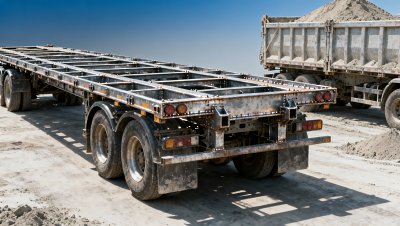
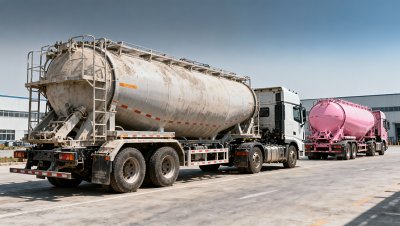
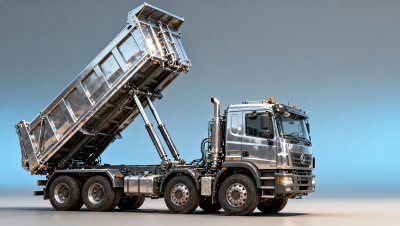
Main beams, cross members, side rails, kingpin plates, gooseneck sections, and suspension connection points do not all face the same stress. A flatbed trailer carrying steel coils, machinery, or construction materials will prioritize beam strength and fatigue resistance. A bulk cement trailer may emphasize shell design, frame support, and weight control. A tipper trailer may require different reinforcement and abrasion considerations around impact zones.
That is why a single “steel quality” claim is not enough. Buyers should ask where each steel grade is used, whether the supplier applies mixed-grade design logically, and how the fabrication process protects final structural performance. In many cases, the right answer is not the highest grade everywhere, but the appropriate grade in the right location.
The table below provides a practical comparison framework for common trailer steel categories. It is not a substitute for engineering verification, but it helps procurement teams screen offers faster and ask better questions during supplier evaluation.
For buyers, the practical takeaway is simple: ask for material allocation by component, not just one line in a brochure. A reliable flatbed trailer supplier or bulk cement trailer manufacturer should be able to explain where higher-strength steel adds value and where standard steel remains the more balanced choice.
Three questions to ask when steel names vary by market
International sourcing often involves different standard systems. To avoid confusion, ask for three items: the applicable standard, the mechanical property range relevant to the component, and the intended installation location on the trailer. This three-point check is usually more useful than comparing grade codes alone.
Also confirm whether the supplier can provide mill certificates, material traceability for key structural parts, and welding procedure information where necessary. These documents do not guarantee quality by themselves, but they improve transparency and reduce ambiguity during technical review.
How steel grades affect payload, durability, and total operating cost
For commercial trailer buyers, the most visible effect of steel selection is payload efficiency. If higher-strength steel allows a lighter frame while maintaining required performance, the operator may gain useful cargo capacity. In sectors with frequent trips, recurring route schedules, or strict axle weight management, even modest tare reduction can influence revenue over 12–36 months of service.
The second effect is durability under cyclic stress. Trailer structures rarely fail because of a single overload event alone. Problems more often begin with repeated stress concentration around welded joints, beam transitions, suspension brackets, and cross-member connections. Steel grade interacts with design geometry and welding quality, so the buyer should evaluate the complete structure rather than material in isolation.
The third effect is maintenance rhythm. A trailer used on highways may have a very different inspection pattern from one operating in quarry roads, ports, or construction access zones. In harsher duty cycles, inspection intervals may need to be planned every month or every quarter for high-stress areas. Better steel selection can reduce the probability of early cracking, distortion, or excessive wear, but only if design and manufacturing are aligned.
Cost analysis should therefore consider at least 4 dimensions: purchase price, payload opportunity, expected maintenance frequency, and downtime risk. Procurement teams that compare only ex-factory price may miss the larger commercial picture, especially for fleets running regional, cross-border, or infrastructure-related transport.
A practical comparison for commercial evaluation
The following table helps buyers compare common sourcing scenarios when evaluating truck steel in trailer builds. The values are qualitative because exact performance depends on design, load case, and fabrication quality, but the framework supports faster internal discussion between procurement, engineering, and commercial teams.
This comparison shows why the lowest-cost trailer is not always the lowest-cost solution. If route intensity is high, the total cost difference may come from extra maintenance events, reduced uptime, or lower payload efficiency rather than from the steel invoice alone.
Where cost savings are real and where they are misleading
A lower-cost steel choice can be rational for standard freight lanes, moderate payload cycles, and service areas with strong local repair access. It becomes risky when the trailer is expected to run continuously, carry dense cargo, or operate on poor road surfaces for 8–12 hours per day. In those cases, the savings may be offset by downtime and structural repairs.
Buyers should also avoid the opposite mistake: assuming that higher-strength steel automatically means longer life. If welding parameters, reinforcement details, and load distribution are poorly managed, an expensive material can still underperform. Good sourcing decisions combine material, design, and process review.
How to evaluate a flatbed trailer supplier or bulk cement trailer manufacturer
Supplier evaluation in the road transport equipment sector should move beyond catalog descriptions. When trailer steel grades are discussed, procurement personnel should review at least 5 checkpoints: material traceability, structural design logic, welding procedure consistency, anti-corrosion treatment, and after-sales technical support. These checkpoints are more predictive than general sales language.
For a flatbed trailer supplier, pay special attention to the main beam, gooseneck area, landing gear reinforcement, and deck-related cross-member configuration. For a bulk cement trailer manufacturer, the analysis should include tank or shell support structure, frame integration, stress concentration zones near mounting points, and operating conditions such as powder discharge cycles and road vibration.
Lead time is another practical issue. In many international projects, standard trailer production may follow a 3-stage process: technical confirmation, manufacturing, and pre-shipment inspection. Depending on configuration complexity and component availability, the cycle may range from 2–4 weeks for simpler orders to longer periods for custom builds. Steel grade changes can also influence procurement and fabrication scheduling.
A digital sourcing platform becomes useful here because it shortens the distance between product discovery and supplier validation. The Global Heavy Truck Industry Platform helps buyers compare trailers, truck chassis, complete trucks, and commercial vehicle parts across a broader supplier base, while also supporting market research, partner identification, and decision preparation for cross-border procurement.
A 6-point checklist for procurement review
- Ask which steel grades are used in the main load-bearing areas and request component-level mapping rather than a general description.
- Confirm whether the supplier can provide material certificates for key structural parts and whether batch traceability is maintained.
- Review welding and fabrication capability, especially for higher-strength steel sections where heat control matters.
- Check anti-corrosion practice, including surface preparation, coating system, and exposure suitability for coastal, humid, or abrasive environments.
- Clarify inspection points before shipment, such as dimensional checks, weld appearance review, axle alignment confirmation, and documentation package.
- Match the trailer design with the actual route profile, average cargo density, and loading frequency instead of using a generic “heavy duty” label.
This checklist helps business evaluators and distributors compare suppliers with more confidence. It also reduces the risk of choosing a trailer that is overdesigned for the budget or underdesigned for the job.
Standards and compliance: what should buyers verify?
In international trade, buyers should verify which material standards, welding standards, and market-entry compliance requirements apply to the destination. The relevant framework can differ by country and trailer category. It is reasonable to ask suppliers which standards they follow for steel procurement, fabrication, and inspection, and whether those documents can be matched to the destination market’s expectations.
This is not only a technical issue but also a commercial one. Delays of 7–15 days can occur when documentation, markings, or specification alignment is incomplete. Early clarification helps procurement teams avoid costly back-and-forth after production has already started.
Common sourcing mistakes, FAQs, and smarter next steps
Even experienced buyers can make avoidable mistakes when evaluating truck steel grades in trailer builds. One common error is assuming that thicker steel automatically means better durability. Thickness helps in some cases, but structural geometry, fatigue behavior, and welding quality often matter just as much. Another mistake is choosing the same steel strategy for very different applications, such as flatbed logistics, bulk powder transport, and construction support haulage.
A further issue is failing to align the quotation with the intended service pattern. A trailer operating on smooth highways for scheduled distribution has a different stress profile from one running mixed roads, uneven loading points, and stop-start duty in project transport. Procurement decisions should reflect route intensity, cargo density, environmental exposure, and local repair capability.
The following questions reflect real buyer concerns in the commercial vehicle and trailer market. They are useful for information researchers, sourcing managers, distributors, and commercial evaluators who need clearer decision criteria before requesting quotations.
How do I know if a higher-strength trailer steel is worth the extra cost?
Start with 3 indicators: route frequency, payload sensitivity, and downtime cost. If the trailer runs high-cycle operations, carries dense cargo, or loses revenue quickly when off the road, a higher-strength steel solution may justify its cost. If usage is moderate and repairs are easy locally, a standard structural steel design may be commercially sufficient.
What should I ask a flatbed trailer supplier before placing an order?
Ask for the steel grade used in the main beam, reinforcement layout, anti-corrosion method, axle and suspension configuration, and expected production cycle. Also request drawings or key dimension confirmation for cargo type compatibility. For international orders, clarify documentation and pre-shipment inspection items before deposit payment.
Are bulk cement trailer steel requirements different from flatbed trailer requirements?
Yes. A bulk cement trailer typically prioritizes structural support around the tank or vessel arrangement, weight efficiency, road vibration resistance, and compatibility with pneumatic discharge systems. A flatbed trailer places greater emphasis on deck support, beam loading patterns, cargo securing conditions, and flexibility across different freight types.
What is a reasonable supplier comparison process?
A practical process has 4 steps: shortlist products, compare structural specifications, verify documentation and production capability, then confirm delivery and after-sales support. This approach works well on B2B marketplaces because buyers can move from market research to quotation screening without losing technical detail.
Why choose us for trailer sourcing and steel-grade evaluation
For buyers in the global heavy truck and trailer sector, the challenge is rarely finding products alone. The harder task is identifying suppliers that match the application, budget, delivery schedule, and technical requirement at the same time. The Global Heavy Truck Industry Platform is built for this exact need, connecting manufacturers, suppliers, distributors, and buyers across the commercial vehicle and heavy equipment supply chain.
If you are comparing a flatbed trailer supplier, reviewing bulk cement trailer options, or screening commercial vehicle parts for distribution, the platform helps you access product categories, supplier resources, market insight, and professional buying references in one place. This is especially valuable when decisions involve multiple variables such as steel grade, structural design, delivery timing, and destination-market compliance.
You can contact us for specific sourcing support, including parameter confirmation for trailer structure, steel-grade selection discussion, delivery cycle review, custom configuration matching, documentation and certification questions, sample or specification communication, and quotation comparison across suitable suppliers. These are the areas where procurement teams often lose time, and where structured industry support creates real value.
Whether you are an information researcher, purchasing manager, business evaluator, or distributor planning your next supplier network, we can help you narrow options faster and ask the right technical questions earlier. That leads to clearer sourcing decisions, lower mismatch risk, and better commercial outcomes in the trailer and heavy truck market.
Trending News
- China's MW-Class Hydrogen Aviation Turboprop Engine First Flight
- Oil Prices Rise, Airlines Cut Capacity, Land Freight Costs Pressure
- Henan's 2026 Key Projects List: RMB 1 Trillion Investment Drives Heavy-Duty & Special Vehicle Demand
- Guangxi Xijiang Waterway Enforces Zero Discharge for Vessel Pollutants
- China Accelerates Low-Altitude Economy Clusters, Boosting Demand for Smart Airport Tugs
Tag
Recommended News
 Technology & InnovationChina's MW-Class Hydrogen Aviation Turboprop Engine First FlightChina's MW-class hydrogen aviation turboprop engine first flight — accelerating H-ICE adoption in heavy-duty trucks and export clean transport.
 Technology & InnovationAI Dispatch Platform Launched in Yangtze River Delta Heavy-Truck HubsAI Dispatch Platform transforms land transport in Yangtze River Delta — cutting empty-running by 23%. Boost visibility, reliability & ETAs for freight forwarders, ports, EV infrastructure, and exporters.
 Technology & InnovationZhouhui Auto Patents New Energy Battery Frame for Electric TrailersZhouhui Auto's new energy battery frame patent for electric trailers offers lightweight design & international safety compliance. Ideal for EU/US export models. Learn how this innovation impacts commercial EV manufacturers.
 Technology & InnovationWeichai's DPF Clogging Detection Patent Boosts Heavy Truck ReliabilityWeichai's patented DPF clogging detection technology (CN121827988A) enhances heavy truck reliability, achieving EU VI Stage D certification. A game-changer for exporters and fleet operators in emission-regulated markets.
 Technology & InnovationChina's Smart Shipping 2030 Action Plan: AI + Heavy Truck Coordination as New Export TechChina's Smart Shipping 2030 Action Plan drives AI-powered heavy truck coordination with ports, positioning Chinese logistics tech as a global export. Learn how this impacts port automation, trucking, and multimodal logistics sectors.
 Technology & InnovationWhy Truck Steel Grades Matter in Trailer BuildsTruck steel drives trailer strength, payload, and cost. Explore bulk cement trailer and flatbed trailer supplier insights plus commercial vehicle parts tips for smarter sourcing.
 Technology & InnovationIs Truck Cement OEM Better for Custom Specs and Branding?Compare truck cement OEM for custom specs, branding, truck cement price and semi trailer price. Find a trusted semi trailer supplier for bulk orders and smarter sourcing.
 Technology & InnovationTruck tipper for sale: Why hydraulic system specs are rarely disclosed — and why they matterTruck tipper for sale? Discover why hydraulic specs—critical for dump truck price, durability & performance—are rarely disclosed—and how to demand transparency.
 Technology & InnovationChina's First 10,000-Ton Pure-Electric Smart Container Ship Enters ServiceChina's first 10,000-ton pure-electric smart container ship launches at Ningbo-Zhoushan Port—integrating electric heavy-duty trucks, AGVs & marine battery storage for green port logistics.
 Technology & InnovationWhy some bulldozer factory rebuild programs skip critical frame stress testingBulldozer supplier & manufacturer insights: Why frame stress testing is skipped—and how to verify structural integrity for road construction, mining, and heavy duty trucks in Canada, SA, Australia.
 Technology & InnovationWhy BULLDOZER for road construction often fails under wet clay conditionsBULLDOZER for road construction struggles in wet clay—learn why & find certified bulldozer manufacturers, suppliers, and heavy duty trucks for sale in Canada, South Africa, Australia.
 Technology & InnovationVan trailer thermal bridging cuts refrigerated efficiency by up to 12% — where it hidesVan trailer, curtain side trailer & wing van thermal bridging cuts refrigerated efficiency by up to 12%. Discover hidden hotspots in gooseneck, axle, and stake trailer designs — and how to specify smarter.
 Technology & InnovationWater tanker residual chlorine levels drop faster in aluminum tanks vs. stainless steel — lab comparisonwater tanker material matters: stainless steel outperforms aluminum for chlorine retention. Compare van trailer, flatbed trailer, bulk trailer & more on Global Heavy Truck Platform.
 Technology & InnovationWhy some van trailers fail cold-weather testing below -20°C — material brittleness overlookedVan trailer, stake trailer, gooseneck trailer & more fail below -20°C due to material brittleness — discover why and how to source cold-certified units now.
 Technology & InnovationEXCAVATOR for demolition: When hydraulic hammer specs don’t match your site’s concrete densityEXCAVATOR for demolition? Match hydraulic hammer specs to concrete density. Get excavator for sale, price, attachment & OEM solutions—accurate construction machinery quotation guaranteed.
 Technology & InnovationWater truck OEM production timelines now include mandatory corrosion validationWater truck OEM, construction machinery OEM & crane truck OEM partners now face mandatory corrosion validation—impacting bulk order timelines, logging truck cost, and truck parts OEM durability. Act now.
 Technology & InnovationWater truck OEM design flexibility drops after first 5 units — plan accordinglyWater truck OEM flexibility drops after 5 units—optimize design, cost & lead time for water truck bulk order, construction machinery OEM, and logging truck cost savings.
 Technology & InnovationWater truck pump cavitation becomes common above 1,800m elevationWater truck pump cavitation surges above 1,800m—impacting dump truck, concrete pump truck, logging truck & other heavy duty truck operations. Discover proven mitigation strategies and altitude-certified truck parts.
 Technology & InnovationRefrigerated truck evaporator coil icing recurred despite updated defrost algorithms — what’s missing from the control logic?Refrigerated truck icing persists? Discover why garbage truck, logging truck & low bed trailer operators need multi-signal defrost logic—not just firmware updates.
 Technology & InnovationLogging truck brake fade worsened after retrofitting with electric retarders — compatibility issues missed in testing?Logging truck brake fade risks exposed after electric retarder retrofit—critical for garbage truck, water truck, low bed trailer & more. Discover compatibility gaps & proven solutions.
 Technology & InnovationMilitary truck NVH issues spike after armor retrofit—what gets overlooked in testing?Military truck NVH issues after armor retrofit? Discover overlooked vibration paths in wheel loader, crane truck, semi trailer & more—get actionable validation insights now.
 Technology & InnovationBulldozer for road construction in 2026: Are smart grading systems replacing traditional laser setups?BULLDOZER for road construction meets AI grading in 2026 — discover top bulldozer factory, distributor & ISO-certified excavator manufacturer partners globally.
 Technology & InnovationExcavator manufacturer in USA: Are Tier 5 engine options still viable for 2026 road contracts?BULLDOZER for road construction & excavator manufacturer in USA: Discover Tier 5-compliant, ISO-certified options for 2026 US road contracts—viable, verified, and future-ready.
 Technology & InnovationBulldozer for road construction: When do tracked models outperform wheeled units on gravel shoulders?BULLDOZER for road construction: Discover why tracked bulldozers outperform wheeled units on gravel shoulders—backed by ISO-certified producers, distributors & exporters worldwide.
 Technology & InnovationExcavator manufacturer for construction: When ‘heavy-duty’ labeling hides under-spec hydraulicsExcavator manufacturer for construction? Avoid under-spec hydraulics. Compare ISO-certified excavator manufacturers in USA & Germany, bulldozer OEMs, and heavy truck chassis suppliers with verified R&D and price lists.