How a Truck Cement Manufacturer Controls Tank and Discharge Quality
For quality control and safety managers, choosing a reliable truck cement manufacturer means looking beyond output to the integrity of the tank and discharge system. From material selection and welding consistency to pressure testing and flow performance, every detail affects transport safety, unloading efficiency, and long-term durability. Understanding how manufacturers control these key points helps buyers reduce risk and make smarter sourcing decisions.
Why quality control standards are rising across cement transport equipment
A noticeable shift is taking place in the road transport equipment market: buyers are no longer satisfied with a tanker that simply carries bulk cement from one site to another. They increasingly want predictable discharge performance, lower maintenance risk, traceable manufacturing records, and stronger compliance with transport safety expectations. For any truck cement manufacturer, this means quality control has moved from a back-end inspection task to a front-end competitive advantage.
This change is driven by real operating pressure. Cement tank trucks now serve more demanding logistics chains, including long-haul construction supply, mining support, municipal engineering, and regional infrastructure projects. In these applications, a failure in the tank shell, poor sealing at manholes, or unstable discharge airflow can create delays, contamination, material loss, or safety incidents. As a result, quality control personnel and safety managers are evaluating suppliers with more discipline than before.
The market signal is clear: a truck cement manufacturer is increasingly judged not only by production capacity, but by process reliability, documentation transparency, and the ability to keep tank and discharge quality consistent over time. This trend matters across the heavy truck ecosystem, especially on global B2B platforms where buyers compare suppliers across regions and need objective indicators to shorten decision cycles.
The strongest trend signals buyers should not ignore
Several practical signals show how procurement expectations are changing for bulk powder transport vehicles. These signals affect how a truck cement manufacturer designs, tests, and presents its products to international buyers.
These signals show that quality assessment is becoming more system-based. A truck cement manufacturer that cannot explain how tank fabrication connects to discharge efficiency will look weaker in front of professional buyers, especially those responsible for fleet safety, compliance, or supplier approval.
What is driving the shift in tank and discharge quality expectations
The first driver is operating complexity. Modern bulk cement logistics often involves mixed road conditions, tighter project timelines, and more frequent unloading cycles. Under these conditions, tank geometry, internal fluidization layout, and pipeline sealing have a larger effect on daily reliability than they did in lower-intensity operations.
The second driver is risk visibility. Safety incidents involving pressure systems, air leakage, or material discharge are difficult to hide in a connected market. Buyers now share supplier experiences more quickly, and a truck cement manufacturer with unstable quality can lose trust across multiple markets faster than in the past.
The third driver is digital sourcing behavior. On international B2B platforms, manufacturers are compared side by side. This makes visible details more important: whether the supplier documents material sourcing, whether weld inspection standards are explained clearly, whether pressure testing is routine, and whether discharge system performance is described in practical terms rather than sales language.
The fourth driver is a broader shift toward lifecycle thinking. Fleet operators and project contractors increasingly care about downtime, spare parts planning, driver safety, and cleaning efficiency. As a result, the quality discussion around a truck cement manufacturer is expanding from “Can it be delivered?” to “Will it remain stable after repeated use in real transport conditions?”
How leading manufacturers are tightening control over tank quality
For the tank body, quality control begins long before final assembly. Better manufacturers are strengthening control in five linked areas: raw materials, forming accuracy, welding consistency, structural verification, and finishing protection. This is where procurement teams can separate a dependable truck cement manufacturer from a supplier that mainly competes on visible price.
Material selection is now a strategic quality checkpoint
High-performing tank systems depend on steel quality that matches working pressure, transport vibration, and environmental exposure. QC teams increasingly check whether the manufacturer controls incoming material certification, thickness tolerance, and batch identification. Inconsistent plate quality can create hidden weak zones even when external appearance looks acceptable.
Welding quality is being judged by repeatability, not appearance alone
A truck cement manufacturer may show smooth weld seams, but professional buyers want more than cosmetic confidence. They look for qualified welding procedures, trained operators, controlled heat input, seam inspection routines, and corrective action records. This matters because the tank shell, cone sections, support areas, and pressure-related joints experience repeated stress during transport and unloading.
Pressure and leak testing are becoming supplier credibility tests
Tank quality is closely linked to how seriously the manufacturer treats testing. More buyers now ask whether each unit undergoes pressure retention checks, leak inspection at valves and pipe interfaces, and verification of manhole sealing. The trend is toward evidence-based approval. A truck cement manufacturer that provides clear test records lowers sourcing uncertainty for safety managers.
Surface protection matters more in cross-border and long-cycle use
Corrosion and coating durability are receiving more attention, especially where vehicles operate in humid coastal regions, dusty mines, or highly variable climates. Better tank finishing reduces structural degradation and preserves inspection visibility. This is a long-term quality issue, not only an appearance issue.
Why discharge system quality is becoming a decisive buying factor
The discharge system used to be treated as a functional add-on. Now it is becoming central to procurement decisions. For a truck cement manufacturer, the performance of air compressors, pipelines, valves, fluidized bed design, and outlet arrangement can define whether the truck delivers high real-world value.
This change comes from the economics of unloading. If discharge is slow, incomplete, or unstable, the result is not just inconvenience. It can cause queue delays at project sites, increased fuel use during unloading, extra labor intervention, and higher residual material loss. For safety managers, unstable pressure behavior also raises concern about equipment misuse and emergency response readiness.
As a result, buyers increasingly ask practical questions: How uniform is the airflow? How well are valves sealed under repeated cycling? Does the system minimize dead zones where cement collects? Can the discharge line be serviced easily? A truck cement manufacturer that addresses these questions clearly is better aligned with the current direction of the market.
Who feels these changes most strongly across the supply chain
The impact of higher tank and discharge standards is not limited to manufacturers. Different roles across the heavy truck and construction logistics chain feel the change in different ways.
For platforms serving the global heavy truck industry, this also creates a larger role for structured supplier information. Buyers increasingly need side-by-side visibility into manufacturing capability, product categories, and technical documentation so they can identify a truck cement manufacturer that matches actual risk requirements, not just general product descriptions.
How to judge whether a truck cement manufacturer is adapting well
The next phase of supplier evaluation is less about marketing claims and more about process maturity. Quality and safety teams should watch for signs that the manufacturer has upgraded both technology and management discipline.
First, assess whether the supplier can explain control points in sequence, from incoming steel inspection to final discharge testing. Second, look for consistency between product drawings, workshop practices, and inspection documents. Third, verify whether key subcomponents in the discharge system are standardized and serviceable. Fourth, ask how nonconformities are handled. A capable truck cement manufacturer should be able to describe prevention and correction, not merely promise caution.
Another useful signal is communication quality. Suppliers that understand current market expectations usually answer with operating logic: why a certain weld zone is reinforced, why a pipeline route reduces blockage risk, why a specific valve choice supports maintenance. That kind of response often indicates stronger engineering control than generic statements about durability.
Practical monitoring points for the next sourcing cycle
Looking ahead, several indicators deserve continuous attention from buyers and compliance teams when evaluating any truck cement manufacturer.
- Whether tank fabrication quality remains stable across batches, not just sample units
- Whether discharge efficiency is demonstrated under realistic use conditions
- Whether test records are complete, readable, and linked to serial or production data
- Whether the manufacturer can support parts replacement and technical response after delivery
- Whether design choices reduce operator error during unloading and inspection
These are not minor details. They reflect whether a supplier is prepared for a market where transparency, operating safety, and lifecycle reliability are becoming standard expectations rather than premium extras.
What quality and safety teams should do next
The clearest response to current market change is to upgrade supplier evaluation criteria. Instead of relying mainly on specifications and quotations, buyers should build a checklist that covers tank material control, weld verification, pressure and leakage testing, discharge system stability, maintenance accessibility, and documentation completeness. This makes it easier to compare each truck cement manufacturer on measurable risk factors.
It is also useful to align sourcing and operating teams early. Procurement may focus on cost and delivery, while safety managers focus on pressure control and reliability, and fleet teams focus on service life. Bringing these views together helps identify the supplier best suited to real operating conditions. In a competitive international market, that cross-functional discipline can prevent expensive mistakes.
For companies using a global B2B heavy truck platform, the advantage is access to a wider supplier base and more structured industry information. The key is to use that access intelligently: compare manufacturing details, request technical evidence, and judge whether each truck cement manufacturer is responding to the same industry shift toward safer tanks, more reliable discharge, and stronger process transparency.
If your team wants to better understand how these trends affect your own fleet, sourcing plan, or safety review process, start by confirming three questions: which tank failure risks are most critical in your operating environment, which discharge performance metrics matter most to your delivery cycle, and which supplier records are necessary for confident approval. Those answers will make the next sourcing decision more accurate, more defensible, and more aligned with the direction of the heavy transport equipment market.
Trending News
- Truck Trailer Exporter Comparison: Pricing, Certification, and After-Sales
- Truck Cement Exporter Selection: Compliance Points for Cross-Border Deals
- Dump Truck Distributor Trends in 2026: Margin, Stock, and Service
- How a Truck Cement Manufacturer Ensures Consistent Load Quality
- Dump Truck Bulk Order Risks: What to Confirm Before Signing
Tag
Recommended News
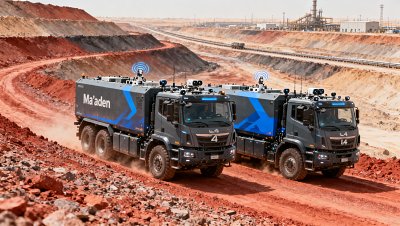
 Technology & InnovationGlobal Heavy-Duty Autonomous Trucks Near CommercializationHeavy-duty autonomous trucks are nearing commercialization — 200+ L4 vehicles deployed in Saudi & Chilean mines, delivering 120,000+ km fault-free haulage.
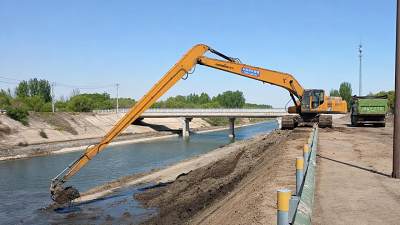
 Technology & InnovationWhen to Use an Excavator With Long Reach Boom on SiteEXCAVATOR with long reach boom guide: learn when it adds real value for dredging, demolition, slopes, and drainage jobs to improve safety, access, and site efficiency.
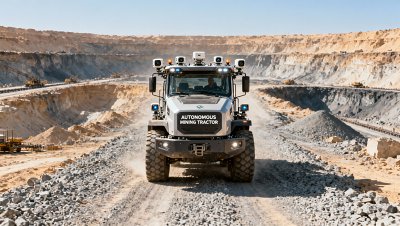
 Technology & InnovationGlobal Heavy-Duty Autonomous Truck Testing Reaches Commercial Inflection PointHeavy-duty autonomous truck testing hits commercial inflection point: 1M km L4 mining ops in Saudi Arabia & Chile — key for OEMs, mining logistics & global off-road transport.
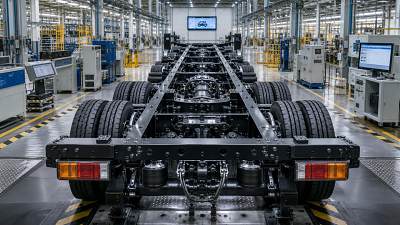
 Technology & InnovationWhat Advanced Technology Means in Heavy Truck Chassis DesignDiscover how a heavy truck chassis manufacturer with advanced technology improves strength, durability, payload efficiency, and integration for demanding transport needs.
 Technology & InnovationChina Adds Tractor-Trailers' Battery-Swap Systems to NEV Bus Subsidy SchemeBattery-swap systems for tractor-trailers now qualify for China’s NEV bus subsidy—up to ¥32,000 per system. Key for logistics, mining & port electrification.
 Technology & InnovationPortable Construction Machinery Supplier: Where Mobility Improves Jobsite OutputConstruction machinery supplier with portable options helps contractors cut mobilization time, improve transport efficiency, and boost jobsite output across road, municipal, and multi-site projects.
 Technology & InnovationChina Adds Heavy-Duty Tractor Battery-Swap Systems to EV Bus Subsidy SchemeHeavy-duty tractor battery-swap systems now qualify for China’s 2026 EV bus subsidy—30% off, up to ¥280,000. Act before Dec 31!
 Technology & InnovationDo Energy-Saving Excavators Lower Fuel Use in Daily Jobsite Operations?Excavator manufacturer with energy-saving features: discover how smarter hydraulics, auto idle, and telematics can cut daily fuel use, improve uptime, and lower jobsite operating costs.
 Technology & InnovationL4 Autonomous Trucks Launch on Tianjin Port–Xiong’an RouteL4 autonomous trucks launch on Tianjin Port–Xiong’an route—first routine platooned operations in China’s strategic logistics corridor. Watch EU & Gulf certification unfold.
 Technology & InnovationAre Energy-Saving Excavators Worth It for Long-Term Operations?Excavator manufacturer with energy-saving features: discover if lower fuel use, reduced downtime, and stronger long-term ROI make these machines the smart choice for demanding operations.
 Technology & InnovationSouth China Pioneer Studio Wins Youth May 4th Award for Smart Truck CertificationSmart truck certification breakthrough: South China Pioneer Studio wins Youth May 4th Award for EU R155/R156 compliance — a game-changer for global陆路运输设备 exports.
 Technology & InnovationL4 Autonomous Container Trucks Begin Trial on Tianjin Port–Xiong'an CorridorL4 autonomous container trucks begin trial on Tianjin Port–Xiong'an Corridor—key milestone for cross-border logistics, heavy-equipment transport & smart intermodal supply chains.
 Technology & InnovationQuick Installation Excavators: Do They Reduce Setup Time on Real Sites?Excavator manufacturer with quick installation: discover whether fast-deploy excavators truly cut real-site setup time, lower labor costs, and improve uptime before you buy.
 Technology & InnovationModular Flatbed Trailers: When Design Flexibility Improves UtilizationFind out how a flatbed trailer supplier with modular design helps fleets boost utilization, adapt to varied loads, cut idle assets, and improve long-term ROI.
 Technology & InnovationPortable Construction Machinery: Where Flexible Equipment Saves TimeConstruction machinery supplier with portable options helps cut relocation time, improve transport efficiency, and keep projects moving faster across changing job sites.
 Technology & InnovationSemi Trailer Manufacturer with Lightweight Design: Is Lower Weight Worth It?Semi trailer manufacturer with lightweight design: discover when lower weight boosts payload, fuel savings, and fleet ROI—and when durability, compliance, and repair costs matter more.
![]() Technology & InnovationWhy Quick Installation Matters When Choosing an Excavator ManufacturerExcavator manufacturer with quick installation: discover how faster setup cuts downtime, simplifies maintenance, improves reliability, and keeps heavy equipment projects on schedule.
Technology & InnovationWhy Quick Installation Matters When Choosing an Excavator ManufacturerExcavator manufacturer with quick installation: discover how faster setup cuts downtime, simplifies maintenance, improves reliability, and keeps heavy equipment projects on schedule. Technology & InnovationHow Modular Design Changes the Value of a Flatbed Trailer SupplierFlatbed trailer supplier with modular design: discover how modular platforms cut lifecycle costs, boost fleet flexibility, and improve ROI for logistics, construction, and industrial buyers.
 Technology & InnovationHow Portable Construction Machinery for Mining Helps Remote Projects Move FasterConstruction machinery for mining helps remote projects move faster with easier transport, quick setup, and flexible deployment. Learn how to cut delays and improve site efficiency.
 Technology & InnovationTruck Tipper OEM: How Custom Body Design Changes Worksite PerformanceTruck tipper OEM solutions with custom body design can boost unloading efficiency, durability, and site safety. Learn how to compare suppliers and choose the right fit for demanding jobs.
 Technology & InnovationHow Energy-Saving Features Change Excavator Value Over TimeDiscover how an excavator manufacturer with energy-saving features can lower fuel costs, improve uptime, and boost resale value with a smart long-term buying checklist.
 Technology & InnovationDo Energy-Saving Features Really Matter in an Excavator ManufacturerExcavator manufacturer with energy-saving features: learn how to verify fuel savings, uptime, service support, and ROI before choosing the right supplier.
 Technology & InnovationKunming Blue Jacaranda-Themed Buses Launch with Domestic V2X & LMPF BatteryKunming's blue jacaranda buses feature domestic V2X & LMPF battery tech — a proven, export-ready blueprint for urban transit and airport GSE suppliers targeting Middle East & LATAM markets.
 Technology & InnovationPortable Construction Machinery: Where Flexible Equipment Delivers More ValueConstruction machinery supplier with portable options: use this practical checklist to compare mobility, setup, service, and lifecycle value for faster, smarter project decisions.
 Technology & InnovationHow Construction Machinery for Mining Is Shifting Toward Higher UptimeConstruction machinery for mining is shifting from raw power to higher uptime. Learn how smarter maintenance, diagnostics, and parts support help cut risk, control costs, and improve project performance.