Modular Flatbed Trailers: When Design Flexibility Improves Utilization
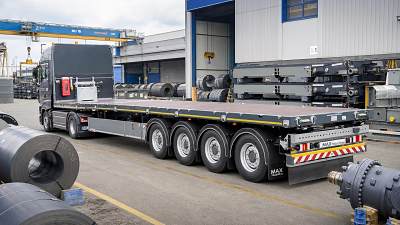
For fleet owners, project cargo operators, and procurement leaders, working with a flatbed trailer supplier with modular design can directly improve asset utilization, route adaptability, and long-term cost efficiency. As transport demands grow more complex across construction, logistics, and heavy equipment sectors, modular flatbed trailers offer a practical way to match changing load requirements without sacrificing operational flexibility.
For most decision-makers, the real question is not whether modularity sounds innovative. It is whether modular flatbed trailers can reduce idle assets, support more load profiles with fewer trailer types, and improve the return on fleet investment. In many operations, the answer is yes—provided the trailer system is engineered well, supported properly, and matched to the company’s cargo mix.
This matters because trailer utilization is rarely limited by demand alone. It is often constrained by poor fit between equipment design and real transport variability. A fixed-spec trailer may perform well in one application, yet sit underused when freight dimensions, axle requirements, loading methods, or route restrictions change. A modular approach helps close that gap.
For buyers evaluating a flatbed trailer supplier with modular design, the value goes beyond product flexibility. It also affects purchasing strategy, maintenance planning, operational resilience, and the ability to serve multiple customer segments without over-expanding the fleet. That is why modular design has become increasingly relevant in heavy haul, construction logistics, and mixed-use transport environments.
What business problem do modular flatbed trailers actually solve?
At the operational level, modular flatbed trailers solve a utilization problem. Many fleets own multiple trailer configurations because they must handle machinery one week, steel structures the next, and oversized industrial cargo after that. When each job requires a dedicated trailer, utilization becomes fragmented and capital efficiency declines.
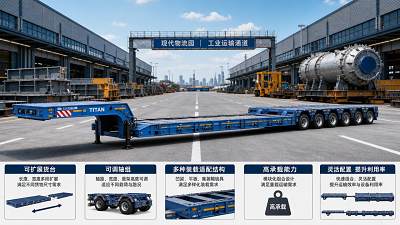
A modular trailer platform reduces that fragmentation by allowing the operator to adapt deck length, axle configuration, load support components, or extension sections according to cargo requirements. Instead of assigning different jobs to different fixed assets, the business can reconfigure one platform for a wider range of work.
For enterprise buyers, that translates into three practical advantages. First, fewer trailers may be needed to cover the same transport demand. Second, dispatch teams gain more flexibility when customer orders shift. Third, the fleet can respond faster to project-based opportunities without waiting for specialized equipment to become available.
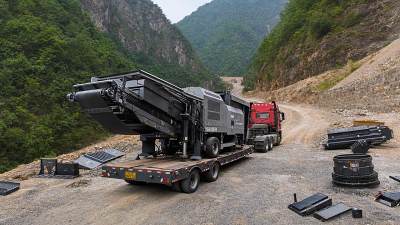
This is especially valuable in sectors where cargo dimensions and weights vary significantly, such as infrastructure construction, mining support, energy equipment transport, and machinery relocation. In these industries, equipment utilization often determines whether fleet expansion creates profit or simply adds dormant assets to the balance sheet.
Why design flexibility improves trailer utilization
Design flexibility improves utilization because transport demand is not static. Load type, center of gravity, route conditions, local regulations, and loading site constraints all change from job to job. A trailer that can be adapted to those variables stays operational more often than one designed around only a narrow use case.
Consider a fleet serving both general heavy cargo and project freight. On some days, it may need a standard flatbed setup for containerized machinery or fabricated components. On other days, it may need extended deck length, different tie-down arrangements, or axle distribution to support longer or heavier loads. A modular system makes that transition possible without replacing the base asset.
Utilization improves in several ways. Idle time drops because equipment can be reassigned more easily. Planning efficiency improves because dispatchers are not limited to rigid trailer categories. Seasonal demand swings become easier to manage because one trailer platform can cover multiple service profiles across the year.
There is also a commercial upside. When logistics providers can say yes to a broader range of jobs, they improve revenue opportunity per asset. This can be more meaningful than headline purchase price differences. A lower-cost fixed trailer that only fits one job profile may be less economical over time than a modular design that supports higher annual earning capacity.
Where modular flatbed trailers make the most sense
Not every operation needs a highly configurable trailer system. Decision-makers should first identify whether cargo diversity, route complexity, and service unpredictability are genuine business realities. Modular designs create the most value when one or more of these conditions exist consistently.
The first strong-fit scenario is mixed cargo operations. If the fleet handles construction equipment, steel products, prefabricated modules, and industrial components, fixed trailer specifications often create bottlenecks. Modular layouts help standardize the base platform while still allowing task-specific adaptation.
The second scenario is project-driven transport. EPC contractors, infrastructure suppliers, and heavy equipment distributors often face irregular shipment profiles. A modular flatbed system is useful because it can be adjusted for changing project stages, from standard material supply to oversized unit transport.
The third scenario is regional or cross-border operation with varying regulatory conditions. Axle load limits, road restrictions, and permit requirements differ by market. A trailer platform designed with configurable axle groups or dimension flexibility can help operators stay compliant without maintaining excessive equipment diversity.
The fourth scenario is growth-stage fleet strategy. Companies expanding into new cargo segments may not yet know the final demand mix. In that context, buying from a flatbed trailer supplier with modular design can reduce the risk of locking capital into narrowly specialized equipment too early.
How decision-makers should evaluate ROI
For senior buyers, the ROI case should not be built around the word “modular” alone. It should be based on measurable operating outcomes. The best procurement decisions compare total lifecycle value rather than initial purchase cost only.
Start with utilization rate. If a modular trailer increases annual working days or reduces idle periods between jobs, that gain has direct economic value. Even a modest improvement in asset use can meaningfully affect revenue per trailer across several years.
Next, evaluate fleet rationalization. Can one modular trailer replace two or three fixed-configuration units in your operation? If yes, the savings may include lower capital expenditure, reduced parking and storage burden, simpler maintenance inventory, and less administrative complexity in registration and compliance management.
Third, assess job acceptance rate. If your current fleet forces you to decline certain loads, outsource profitable jobs, or delay service because the correct trailer is unavailable, modularity may recover revenue that is currently lost. This is often overlooked in procurement discussions, yet it can be one of the strongest economic arguments.
Fourth, look at residual flexibility. In uncertain markets, assets that can serve multiple applications may hold value better than specialized units. They are easier to redeploy internally and often more attractive in secondary markets, especially when buyers want adaptable equipment rather than niche configurations.
Finally, account for support cost. A modular system only delivers ROI when spare parts, technical documentation, training, and after-sales service are available. That is why supplier capability matters as much as trailer architecture.
What to check when choosing a flatbed trailer supplier with modular design
Choosing the right supplier is not only a product decision; it is a risk management decision. The buyer must confirm that the supplier can deliver engineering reliability, regulatory understanding, parts support, and configuration guidance that matches real operating needs.
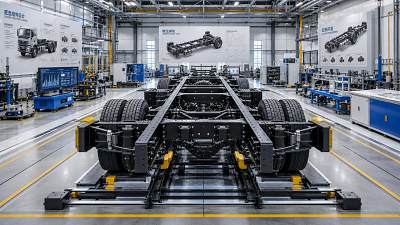
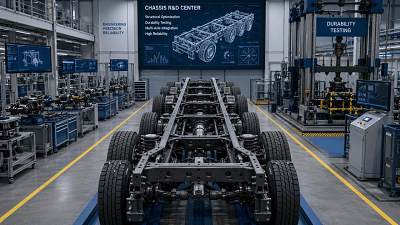
Begin with structural engineering quality. Ask how the modular sections are connected, how load distribution is validated, and what testing standards are used. A well-designed modular trailer should not compromise frame integrity, torsional resistance, or safety under variable configurations.
Then review configuration logic. Some trailers are technically modular but operationally inconvenient. If reconfiguration takes excessive labor, specialized tools, or long downtime, the practical benefit declines. The best systems are modular in ways that support real dispatch speed and workshop efficiency.
Compliance capability is equally important. Suppliers should understand regional axle regulations, gross weight rules, lighting standards, braking system requirements, and certification expectations in target markets. This is critical for cross-border buyers and distributors serving multiple countries.
After-sales support should be examined closely. Ask about spare parts lead times, service manuals, training, remote technical assistance, and warranty processes. A modular trailer platform creates value over time, so the supplier must be able to support the equipment throughout its lifecycle, not just at delivery.
Also consider customization discipline. A strong supplier can tailor modular options to the buyer’s business without turning every order into an untested prototype. The goal is controlled flexibility—enough adaptability to fit customer needs, but enough standardization to preserve reliability and maintainability.
Key operational questions buyers should ask before purchasing
Before issuing RFQs or comparing quotations, procurement teams should align internally on a few operational questions. These questions help determine whether modularity will create real value or simply add unnecessary complexity.
What percentage of annual loads fall outside the capability of your standard trailer setup? If the answer is low, a fixed design may still be sufficient. If the answer is meaningful and recurring, modularity deserves serious consideration.
How often do dispatch delays happen because the correct trailer type is unavailable? This reveals whether utilization problems are driven by demand variability rather than insufficient fleet size alone.
How much workshop time can your operation realistically support for reconfiguration? A modular concept must fit existing labor, maintenance planning, and turnaround expectations.
Do your customers value responsiveness to unusual or project-based freight requests? If customer retention or margin depends on handling non-standard loads, modular capability may support both sales growth and service differentiation.
What is your expected geographic operating range over the next three to five years? If the business may expand into markets with different road rules or transport patterns, a flexible trailer platform can reduce future fleet adaptation cost.
Common concerns and how to think about them
One common concern is that modular trailers are more complex to manage. That can be true if the system is poorly specified or unsupported. But complexity should be evaluated against fleet simplification benefits. Managing one adaptable platform may be easier than coordinating several highly specialized units with lower individual utilization.
Another concern is durability. Decision-makers may worry that modular joints, extensions, or configurable axle sections create structural weakness. This is why supplier validation, engineering documentation, and proven field performance are essential. Modularity should never come at the expense of safety margin or operational confidence.
Cost is also a frequent objection. A modular trailer may carry a higher upfront price than a basic fixed platform. However, the proper comparison is not unit-to-unit sticker price. It is total value across utilization, revenue opportunity, fleet reduction, redeployment flexibility, and lifecycle support.
Some buyers also worry about driver and technician adaptation. In practice, this can be handled through structured training, clear SOPs, and standardized reconfiguration procedures. If a supplier cannot provide those tools, that is a sign to reconsider the partnership.
How modular design fits broader fleet strategy
For business leaders, modular flatbed trailers should be viewed as part of a wider asset strategy. They are not just transport tools; they are a way to align fleet capability with volatile market demand. In industries where project cycles, equipment dimensions, and customer requirements change quickly, flexible assets provide strategic resilience.
This is particularly relevant for companies trying to balance cost control with service responsiveness. Expanding the fleet with more fixed-purpose trailers may solve a short-term bottleneck, but it can also increase underutilization risk. Modular assets offer another path: improving service range without multiplying equipment categories.
They also support smarter procurement sequencing. Instead of buying different specialized trailers at once, companies can start with a modular base platform and add compatible components as demand patterns become clearer. That staged investment approach is often attractive to financially disciplined operators.
For distributors and global B2B buyers, supplier partnership becomes even more important. A capable flatbed trailer supplier with modular design can help standardize procurement across markets, improve product fit for different customer segments, and reduce commercial risk when entering new territories.
Conclusion: flexibility only matters when it improves business performance
Modular flatbed trailers are valuable because they solve a practical business problem: how to move more types of cargo with fewer idle assets and better operational responsiveness. For fleet owners and procurement leaders, the main benefit is not technical novelty. It is improved utilization, stronger route and load adaptability, and more efficient capital deployment.
That said, modularity is not automatically the right answer for every fleet. Its value depends on cargo diversity, job variability, route complexity, and the quality of supplier support. The best purchasing decisions come from matching the trailer system to real operating patterns and evaluating ROI across the full asset lifecycle.
For companies operating in construction logistics, heavy equipment transport, project cargo, or mixed-use freight, working with a flatbed trailer supplier with modular design can be a smart way to improve both flexibility and profitability. When the design is engineered well and backed by reliable support, modularity becomes more than a feature—it becomes a utilization strategy.
Trending News
- Water Truck Factory Checklist: What to Confirm Before Factory Audit
- High-Strength Flatbed Trailers: Where Stronger Steel Pays Off
- Excavator Manufacturer in China: How to Compare Quality Across Factories
- Heavy Equipment Export to Africa: Market Openings and Compliance Challenges
- Quick Installation Excavators: Do They Reduce Setup Time on Real Sites?
Tag
Recommended News
 Technology & InnovationQuick Installation Excavators: Do They Reduce Setup Time on Real Sites?Excavator manufacturer with quick installation: discover whether fast-deploy excavators truly cut real-site setup time, lower labor costs, and improve uptime before you buy.
 Technology & InnovationModular Flatbed Trailers: When Design Flexibility Improves UtilizationFind out how a flatbed trailer supplier with modular design helps fleets boost utilization, adapt to varied loads, cut idle assets, and improve long-term ROI.
 Technology & InnovationPortable Construction Machinery: Where Flexible Equipment Saves TimeConstruction machinery supplier with portable options helps cut relocation time, improve transport efficiency, and keep projects moving faster across changing job sites.
 Technology & InnovationSemi Trailer Manufacturer with Lightweight Design: Is Lower Weight Worth It?Semi trailer manufacturer with lightweight design: discover when lower weight boosts payload, fuel savings, and fleet ROI—and when durability, compliance, and repair costs matter more.
![]() Technology & InnovationWhy Quick Installation Matters When Choosing an Excavator ManufacturerExcavator manufacturer with quick installation: discover how faster setup cuts downtime, simplifies maintenance, improves reliability, and keeps heavy equipment projects on schedule.
Technology & InnovationWhy Quick Installation Matters When Choosing an Excavator ManufacturerExcavator manufacturer with quick installation: discover how faster setup cuts downtime, simplifies maintenance, improves reliability, and keeps heavy equipment projects on schedule. Technology & InnovationHow Modular Design Changes the Value of a Flatbed Trailer SupplierFlatbed trailer supplier with modular design: discover how modular platforms cut lifecycle costs, boost fleet flexibility, and improve ROI for logistics, construction, and industrial buyers.
 Technology & InnovationHow Portable Construction Machinery for Mining Helps Remote Projects Move FasterConstruction machinery for mining helps remote projects move faster with easier transport, quick setup, and flexible deployment. Learn how to cut delays and improve site efficiency.
 Technology & InnovationTruck Tipper OEM: How Custom Body Design Changes Worksite PerformanceTruck tipper OEM solutions with custom body design can boost unloading efficiency, durability, and site safety. Learn how to compare suppliers and choose the right fit for demanding jobs.
 Technology & InnovationTruck Tipper OEM: How Custom Body Design Changes Worksite PerformanceTruck tipper OEM solutions with custom body design can boost unloading efficiency, durability, and site safety. Learn how to compare suppliers and choose the right fit for demanding jobs.
 Technology & InnovationHow Energy-Saving Features Change Excavator Value Over TimeDiscover how an excavator manufacturer with energy-saving features can lower fuel costs, improve uptime, and boost resale value with a smart long-term buying checklist.
 Technology & InnovationDo Energy-Saving Features Really Matter in an Excavator ManufacturerExcavator manufacturer with energy-saving features: learn how to verify fuel savings, uptime, service support, and ROI before choosing the right supplier.
 Technology & InnovationKunming Blue Jacaranda-Themed Buses Launch with Domestic V2X & LMPF BatteryKunming's blue jacaranda buses feature domestic V2X & LMPF battery tech — a proven, export-ready blueprint for urban transit and airport GSE suppliers targeting Middle East & LATAM markets.
 Technology & InnovationPortable Construction Machinery: Where Flexible Equipment Delivers More ValueConstruction machinery supplier with portable options: use this practical checklist to compare mobility, setup, service, and lifecycle value for faster, smarter project decisions.
 Technology & InnovationHow Construction Machinery for Mining Is Shifting Toward Higher UptimeConstruction machinery for mining is shifting from raw power to higher uptime. Learn how smarter maintenance, diagnostics, and parts support help cut risk, control costs, and improve project performance.
 Technology & InnovationHow a Truck Cement Manufacturer Controls Tank and Discharge QualityTruck cement manufacturer insights: learn how leading factories control tank strength, weld quality, pressure testing, and discharge performance to improve safety, uptime, and sourcing confidence.
 Technology & InnovationWhen Portable Construction Machinery Makes More Sense for Remote ProjectsConstruction machinery supplier with portable options: learn when compact, mobile equipment is the smarter choice for remote projects, cutting transport costs, delays, and setup time.
 Technology & InnovationWhy R&D Capability Matters in a Heavy Truck Chassis ManufacturerDiscover why a heavy truck chassis manufacturer with R&D capability delivers better reliability, customization, and long-term value. Use this guide to evaluate suppliers with confidence.
 Technology & InnovationWhy R&D Capability Matters in a Heavy Truck Chassis ManufacturerHeavy truck chassis manufacturer with R&D capability: discover how stronger engineering improves durability, customization, compliance, and fleet uptime for global B2B sourcing.
 Technology & InnovationPortable Construction Machinery for Infrastructure Projects: What Works BestConstruction machinery supplier for infrastructure buyers: discover the best portable machines for roads, utilities, and municipal projects to boost mobility, uptime, and cost control.
 Technology & InnovationWhen a BULLDOZER for Road Construction Delivers Better Site EfficiencyBULLDOZER for road construction buying guide: learn how the right machine improves grading accuracy, reduces downtime, and boosts site efficiency for faster project delivery.
 Technology & InnovationExcavator Attachment Choices That Can Slow a Job Instead of HelpingExcavator attachment mistakes can delay truck loading and raise costs. Learn how excavator bucket choice, excavator rental, excavator for sale, and excavator parts affect productivity.
 Technology & InnovationTC521 Advances Smart Heavy-Duty Truck Remote Diagnostics StandardTC521 advances smart heavy-duty truck remote diagnostics: ISO 27145-2 compliance, EU/UAE/GCC type approval readiness — act now to avoid certification delays.
 Technology & InnovationTruck control unit faults that look mechanical at firstTruck control unit faults often mimic truck steering system, truck fuel system, and truck cooling system failures. Learn how to avoid wrong truck pump parts orders and cut downtime.
 Technology & InnovationTC521 Launches Pre-Research on Remote Diagnostics Interface Standard for Smart Heavy-Duty TrucksRemote diagnostics interface standard pre-research launched for smart heavy-duty trucks — align with ACEA R19-2025 & ISO 27145 now to secure EU market access.
 Technology & InnovationMilitary truck battery systems now require dual-voltage support — legacy chargers can’t keep upHydraulic pump, fuel injection pump & truck military systems now demand dual-voltage battery support—legacy chargers fail. Upgrade for truck off road, logistics truck, and truck lowbed reliability.