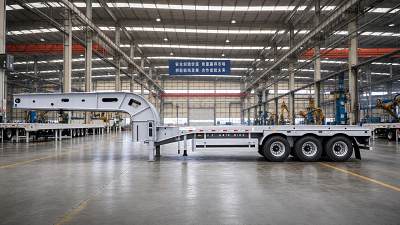
High-Strength Flatbed Trailers: Where Stronger Steel Pays Off
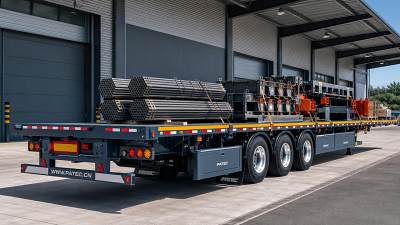
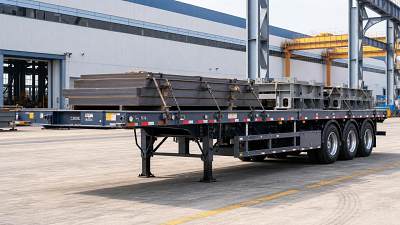
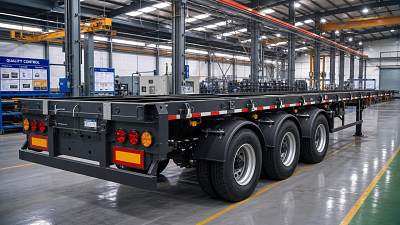
For technical evaluators comparing load capacity, tare weight, and lifecycle cost, choosing a flatbed trailer supplier with high strength steel expertise can directly affect fleet performance. In demanding transport applications, stronger steel often delivers better payload efficiency, improved structural durability, and lower long-term maintenance risk. This article examines where high-strength flatbed trailers create measurable value and what specifications truly matter.
For buyers working across logistics transport, construction support, mining haulage, and infrastructure projects, the decision is rarely about steel grade alone. It is about how material selection influences beam geometry, welding quality, fatigue life, axle loading, deck design, and maintenance intervals over 3 to 8 years of operation. A flatbed trailer supplier with high strength capabilities should therefore be evaluated not only on brochure claims, but on engineering logic, manufacturing consistency, and application fit.
In international B2B sourcing, technical teams also need a practical framework for comparing suppliers across regions. The Global Heavy Truck Industry Platform supports this process by connecting buyers with trailer manufacturers, component suppliers, and product data across the commercial vehicle supply chain. That matters when technical evaluators need to compare configurations, verify production scope, and shortlist suppliers that can support real operating requirements instead of generic catalog options.
Why High-Strength Steel Changes Flatbed Trailer Economics
In flatbed trailer design, stronger steel creates value when it allows engineers to reduce structural mass without compromising rated payload or frame integrity. In many heavy-duty transport applications, a tare weight reduction of 300 kg to 1,000 kg can make a meaningful difference in payload utilization, especially for fleets running repetitive routes with legal gross vehicle weight limits.
The benefit is most visible in the main longitudinal beams, crossmembers, gooseneck transitions, and stress concentration zones near suspension mounts. A well-designed high-strength structure may use less material in some sections while reinforcing key fatigue-sensitive areas. That is very different from simply using thinner plate everywhere, which often leads to premature cracking after 12 to 24 months in rough service.
Where the material advantage appears in real transport work
A flatbed trailer supplier with high strength engineering experience typically creates value in four measurable areas. First, payload efficiency improves because structural weight can be optimized. Second, fatigue resistance can improve if stress paths are properly controlled. Third, deck deflection under concentrated cargo loads may be reduced through better section design. Fourth, maintenance events related to frame distortion, weld cracking, and localized repairs can become less frequent.
- Higher payload potential under the same regulatory weight cap
- Lower deadweight for long-haul, steel product, machinery, and construction cargo
- Better resistance to repeated bending cycles on uneven roads
- Less risk of structural downtime during 24 to 60 months of service
These advantages are not automatic. They depend on cargo type, road profile, loading frequency, and frame design philosophy. For example, a fleet moving palletized building products on paved corridors may prioritize weight reduction, while a contractor hauling compact equipment onto partially prepared sites may prioritize local reinforcement and torsional robustness.
Comparing standard and high-strength trailer design priorities
The table below shows how technical evaluators can compare common design outcomes when reviewing standard steel and high-strength steel flatbed concepts. The aim is not to assume one approach is always better, but to identify where stronger steel can produce operational returns.
The key takeaway is that stronger steel pays off when the supplier knows how to convert material strength into a complete trailer design advantage. A flatbed trailer supplier with high strength expertise should explain the trade-off between weight, stiffness, fatigue resistance, and serviceability instead of focusing on a single strength number.
When stronger steel may not deliver full value
There are cases where the premium for advanced material may not be justified. If the fleet runs short distances, low annual mileage, and moderate load density, a conventional design may already meet total cost goals. Likewise, if overloading is common by 10% to 20%, no steel upgrade will fully compensate for poor loading discipline. Material selection cannot replace correct operational control.
Specifications Technical Evaluators Should Check First
Supplier comparison becomes more reliable when the review starts from engineering details rather than marketing language. A flatbed trailer supplier with high strength credentials should be able to describe not only nominal payload class, but also where high-strength steel is used, where conventional material is retained, and why that combination was chosen.
Core structure and load path details
For 2-axle and 3-axle flatbed trailers commonly used in road freight and project logistics, evaluators should request data on main beam height, flange and web thickness ranges, crossmember spacing, suspension bracket reinforcement, kingpin plate structure, and deck plate configuration. Even a 20 mm to 40 mm change in crossmember spacing can alter deck stiffness and long-term durability under concentrated forklift or machinery loads.
The steel grade itself should be reviewed in context. Yield strength matters, but so do notch toughness, forming behavior, weldability, and heat-affected zone control. If a supplier only advertises “high-strength steel” without identifying where it is used in the frame architecture, the technical value proposition remains incomplete.
Suspension, axle, and braking compatibility
A lighter frame is beneficial only if axle grouping, suspension travel, and braking layout remain matched to the intended duty cycle. A trailer configured for 40 to 60 tons gross application may perform very differently depending on whether it is built for highway freight, mixed regional roads, or construction-linked haulage. Technical evaluators should review axle capacity, equalization behavior, air or mechanical suspension selection, and brake chamber sizing as part of the same assessment.
Checklist for supplier technical review
The following checklist helps standardize first-round screening. It is especially useful when comparing multiple manufacturers through a digital sourcing platform and trying to narrow a long list to 3 to 5 viable candidates.
- Confirm rated payload, tare weight, and intended road condition category.
- Request beam section drawings or structural cross-section data.
- Check steel application zones, not only headline material grade.
- Review welding process control and distortion management method.
- Verify suspension and axle match to load spectrum and terrain.
- Assess service access, repairability, and spare parts availability.
This six-point review often reveals more than a generic quotation sheet. In practice, many sourcing risks come from incomplete specification alignment rather than from price alone.
Where High-Strength Flatbed Trailers Deliver the Best Return
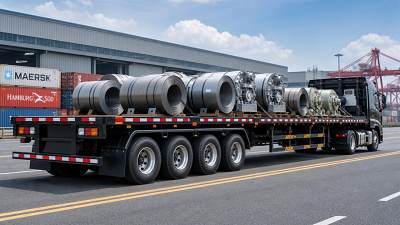
The best return usually appears in operations where each kilogram of tare weight matters or where repetitive stress cycles shorten the life of conventional frames. A flatbed trailer supplier with high strength specialization is often a stronger fit for fleets with high annual utilization, regulated axle load limits, and cargo mixes that include steel coils, precast components, containers on flat platforms, or construction equipment.
High-value operating scenarios
Three operating profiles typically justify closer consideration. The first is long-haul freight where annual mileage exceeds 80,000 km and payload density is high. The second is project cargo support where deck strength and localized reinforcement are critical. The third is cross-border transport where every additional 300 kg to 500 kg of legal payload can improve route profitability over hundreds of trips per year.
In contrast, low-mileage regional distribution with mixed, lighter cargo may not recover the higher acquisition cost as quickly. The decision should be tied to load frequency, road surface severity, and maintenance history over at least a 24-month planning horizon.
The table below maps typical use cases to specification priorities. This makes it easier for technical evaluators to match structural design choices with real-duty requirements instead of selecting the lightest trailer by default.
This comparison shows that stronger steel creates the biggest advantage when payload, duty cycle, and structural fatigue are all economically important. The lighter trailer is not always the best trailer, but in the right operating profile it can improve both utilization and maintenance outcomes.
Hidden lifecycle factors that affect return on investment
Technical evaluators should look beyond purchase price and rated tonnage. The better measure is lifecycle cost per year or per kilometer, including inspection frequency, welding repair history, bush and suspension wear, tire alignment stability, and unplanned downtime. If a stronger frame reduces even 2 to 3 structural repair events over a 5-year period, the economic case can become more compelling than the initial cost difference suggests.
How to Evaluate a Flatbed Trailer Supplier with High Strength Expertise
Supplier capability should be tested through technical communication, not just commercial responsiveness. A flatbed trailer supplier with high strength specialization should be able to discuss stress concentration management, welding sequence, tolerance control, and practical application limits. Clear answers in these areas often indicate stronger manufacturing discipline.
Questions that reveal real engineering depth
Ask where the supplier prefers to retain conventional steel instead of using high-strength material. A technically mature answer may mention repair zones, non-critical brackets, or areas where forming complexity does not justify the upgrade. Also ask how they manage weld heat input, frame straightness after assembly, and reinforcement around air suspension hangers or mechanical equalizer mounts. These are practical questions that expose whether the supplier is designing for long-term service or for quotation-stage appeal.
Useful B2B sourcing indicators
- Can the supplier provide multiple configuration options for 2-axle, 3-axle, or specialized deck layouts?
- Do they explain delivery lead time in realistic bands such as 4 to 8 weeks rather than making vague promises?
- Can they support spare parts matching for landing gear, braking, suspension, and lighting systems?
- Are technical drawings, load diagrams, and production photos available during evaluation?
Digital B2B platforms are especially useful at this stage because they let evaluators compare supplier scope, product categories, and related components in one place. For global buyers in heavy transport equipment, that reduces the time required to move from a broad search to a technically defensible shortlist.
Common sourcing mistakes to avoid
One common mistake is choosing based on the highest stated yield strength without reviewing the total structure. Another is focusing on tare weight while ignoring deck usability, lashing point layout, or repair access. A third is assuming that all high-strength designs perform the same under overload, twisting, or point-load conditions. In reality, poor stress transition design can shorten service life even when premium material is used.
A disciplined review process should combine at least four dimensions: structure, duty match, maintainability, and supplier responsiveness. When those four factors are aligned, the probability of achieving the expected lifecycle benefit is much higher.
Practical Procurement Guidance for Technical Teams
For procurement teams supporting engineering-led purchases, the best approach is to issue a clear technical requirement sheet before requesting quotations. This should define cargo type, maximum point load, average trip distance, road condition category, axle preference, deck length range, and any regulatory constraints. Even a simple 1-page specification sheet can significantly improve quotation accuracy and reduce redesign cycles later.
What to include in the RFQ package
A strong RFQ should include at least 8 technical items: target payload, gross operating limit, cargo dimensions, cargo center-of-gravity pattern, expected annual mileage, loading equipment type, terrain profile, and required component brand preferences if any. This gives each flatbed trailer supplier with high strength capabilities a fair basis to propose the right structure rather than a generic export trailer.
Decision path from shortlist to order
- Screen suppliers by product focus and engineering communication quality.
- Compare structural specifications and configuration logic.
- Review maintenance access and spare support for 24 to 36 months.
- Confirm production lead time, inspection points, and documentation package.
- Finalize the supplier whose design best matches the operating profile, not just the lowest quote.
For technical evaluators, stronger steel pays off where the design is engineered around real load paths, fatigue control, and service life. The most effective sourcing outcome comes from partnering with a flatbed trailer supplier with high strength experience that can explain material application, structural reasoning, and lifecycle implications in clear technical terms. If you are comparing suppliers for heavy-duty road transport equipment, the Global Heavy Truck Industry Platform can help you explore qualified options, review product categories, and connect with manufacturers for tailored solutions. Contact us today to discuss your requirements, request detailed specifications, or get a customized sourcing plan.
Trending News
- Water Truck Factory Checklist: What to Confirm Before Factory Audit
- High-Strength Flatbed Trailers: Where Stronger Steel Pays Off
- Excavator Manufacturer in China: How to Compare Quality Across Factories
- Heavy Equipment Export to Africa: Market Openings and Compliance Challenges
- Quick Installation Excavators: Do They Reduce Setup Time on Real Sites?
Tag
Recommended News
 Truck TechnologyHigh-Strength Flatbed Trailers: Where Stronger Steel Pays OffFlatbed trailer supplier with high strength expertise helps fleets cut tare weight, improve durability, and lower lifecycle cost. See what specs matter most before you buy.
 Truck TechnologyBulldozer for Construction: Matching Blade Type to Ground ConditionsBulldozer for construction guide: learn how to match S, U, and SU blades to soil, clay, rock, and mixed ground for better productivity, lower fuel use, and smarter equipment selection.
 Truck TechnologyWhen Fireproof Materials Add Real Value in Semi Trailer ManufacturingSemi trailer manufacturer with fireproof materials: discover how fire-resistant designs improve cargo safety, reduce risk, and support smarter sourcing decisions.
 Truck TechnologyWhat a Durable Engine Really Means in a Light Duty TruckLight duty truck with durable engine: learn how real engine durability improves uptime, fuel savings, and lower maintenance across delivery, construction, rural, and municipal work.
 Truck TechnologySemi Trailer Manufacturer With Lightweight Design: Pros, Trade-Offs, and Use CasesSemi trailer manufacturer with lightweight design: explore key benefits, trade-offs, and best-fit use cases to improve payload efficiency, durability, and lifecycle ROI.
 Truck TechnologyTruck Tipper for Construction: Key Specs That Affect Daily ProductivityTruck tipper for construction buying guide: learn which specs most affect payload, fuel use, unloading speed, and uptime to choose a safer, more productive model.
 Truck TechnologyWhy Logging Truck Manufacturer Design Matters in Tough TerrainLogging truck manufacturer design shapes safety, traction, and uptime in tough terrain. Learn what features matter most for forestry hauling and choose trucks built for real-world performance.
 Truck TechnologyWhy Logging Truck Manufacturer Design Matters in Tough TerrainLogging truck manufacturer design shapes safety, traction, and uptime in tough terrain. Learn what features matter most for forestry hauling and choose trucks built for real-world performance.
 Truck TechnologyWhy Logging Truck Manufacturer Design Matters in Tough TerrainLogging truck manufacturer design shapes safety, traction, and uptime in tough terrain. Learn what features matter most for forestry hauling and choose trucks built for real-world performance.
 Truck TechnologyAre Fireproof Materials Worth It in a Semi Trailer ManufacturerSemi trailer manufacturer with fireproof materials: discover if the added cost delivers real safety, lower risk, and better cargo protection with a practical supplier evaluation checklist.
 Truck TechnologyWhy High-Strength Design Matters in a Flatbed Trailer SupplierFlatbed trailer supplier with high strength: learn why structural design, material quality, and fatigue resistance matter for safer transport, longer service life, and lower operating costs.
 Truck TechnologyAdvanced Technology in Heavy Truck Chassis Manufacturing: What to Look ForHeavy truck chassis manufacturer with advanced technology: learn how to assess welding, materials, precision, and validation for long-haul, construction, mining, and special-purpose fleets.
 Truck TechnologyCan Fireproof Materials Improve Semi Trailer Safety in Logisticssemi trailer manufacturer with fireproof materials solutions can reduce cargo loss, improve fleet safety, and support reliable logistics. Discover how to choose the right fire-resistant trailer design.
 Truck TechnologyWhy Advanced Technology Matters in Heavy Truck Chassis ManufacturingHeavy truck chassis manufacturer with advanced technology: learn how digital design, precision welding, and rigorous testing improve durability, safety, and sourcing confidence.
 Truck TechnologyKazakhstan Extends Zero-Tariff List for China-Europe Rail Truck Parts to 2027Kazakhstan extends zero-tariff status for China-Europe rail truck parts to 2027—boosting ADAS, CAN-FD, and EBS component exports. Act now to optimize logistics & compliance.
 Truck TechnologyKazakhstan Extends Zero-Tariff for China’s Truck Parts to 2027Kazakhstan extends zero-tariff for China’s truck parts to 2027—now covering 12 intelligent vehicle control components. Boost exports, cut costs, and accelerate rail freight along the China-Europe corridor.
 Truck TechnologyWhy Lightweight Semi Trailer Design Matters More in Long-Haul OperationsSemi trailer manufacturer with lightweight design expertise helps long-haul fleets boost payload, cut fuel costs, and improve ROI with durable, compliant trailer solutions.
 Truck TechnologyTruck Trailer OEM Selection: Key Specs That Affect Service LifeTruck trailer OEM selection starts with the specs that define service life. Compare steel, axles, welding, suspension, and corrosion protection to reduce risk and choose smarter.
 Truck TechnologyTruck Tipper OEM Options Compared by Body Design and Payload NeedsTruck tipper OEM options compared by body design and payload needs. Discover the best-fit tipper for construction, mining, and transport with expert selection insights.
 Truck TechnologySASO Releases New Cybersecurity Standard for Commercial Trucks in Saudi ArabiaSASO IEC 62443-3-3:2026 mandates OTA firmware auditing for connected commercial trucks in Saudi Arabia — critical for exporters, cybersecurity providers & telematics integrators. Act now to meet Q3 2026 compliance.
 Truck TechnologyTC521 Advances Smart Heavy-Duty Truck Remote Diagnostics StandardTC521 advances smart heavy-duty truck remote diagnostics standard—aligning with ISO 27145 & EU GDPR. Critical for OEMs, telematics providers, and exporters targeting EU, ME & AU markets.
 Truck TechnologyFireproof Semi Trailers: Where the Materials Matter Most in Daily TransportSemi trailer manufacturer with fireproof materials: discover how safer flooring, wall panels, cable protection, and heat shielding reduce risk, protect cargo, and improve daily transport reliability.
 Truck TechnologyHow High-Strength Flatbed Trailers Reduce Repair Risk in Heavy Cargo TransportFlatbed trailer supplier with high strength solutions help reduce repair risk in heavy cargo transport through better durability, safer load support, and lower downtime.
 Truck TechnologyChina Advances Smart Heavy-Duty Truck Remote Diagnostics Standard for EU ComplianceSmart heavy-duty truck remote diagnostics: China's new GB/T standard aligns with EU UNECE R155/R156—key for exporters, OEMs & TSPs. Act now.
 Truck TechnologyKey Build Features to Compare in a Logging Truck ManufacturerLogging truck manufacturer comparison guide: explore chassis strength, payload, drivetrain, hydraulics, durability, and service support to choose a truck built for harsh forestry work.