Why Logging Truck Manufacturer Design Matters in Tough Terrain
When hauling timber through mud, steep grades, and remote forest roads, the quality of a logging truck manufacturer can directly affect safety, uptime, and load efficiency. For operators working in tough terrain, the right truck design is more than a specification—it is a practical advantage that improves control, durability, and daily performance. Understanding why design matters helps users choose equipment that works harder and lasts longer.
Why terrain-specific design deserves close attention
Not every forestry job site places the same demands on a truck. A machine that performs well on maintained gravel roads may struggle badly on soft forest trails, mountain switchbacks, or wet loading zones. That is why the capabilities of a logging truck manufacturer should be judged in relation to the actual working environment, not only by engine output or payload rating. Operators need equipment that matches the route, load type, weather pattern, and frequency of off-road movement.
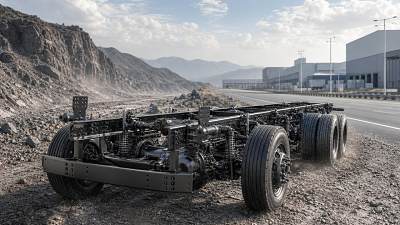
In real-world timber transport, design decisions affect more than comfort. Chassis rigidity influences stability on uneven ground. Axle layout changes traction in deep mud. Cab visibility supports safer maneuvering around loaders, stumps, and narrow crossings. Suspension tuning can reduce shock loads that damage components or shift timber unexpectedly. A capable logging truck manufacturer understands that operators are not simply driving from one warehouse to another; they are moving heavy, unstable loads through terrain that changes by the hour.
For users and operators, this means design should be evaluated as a working system. The best truck is rarely the one with the longest feature list. It is the one that protects uptime, reduces driver fatigue, maintains traction, and survives repetitive punishment without constant repairs.
Common forestry hauling scenarios and what changes in each one
A reliable logging truck manufacturer usually develops trucks around specific operating conditions. The table below shows how needs shift from one scenario to another and why design choices matter.
This scenario-based view helps explain why a skilled logging truck manufacturer does not rely on a one-size-fits-all design. Even trucks with similar payload capacity can behave very differently depending on wheelbase, driveline setup, frame reinforcement, and weight distribution.
Scenario 1: Mountain routes demand control more than raw power
In steep terrain, the most important question is not simply whether the truck can climb. It is whether it can descend safely while carrying a full timber load. Operators on mountain roads need predictable braking, stable cornering, and steering response that remains accurate on uneven surfaces. A logging truck manufacturer that designs for this scenario typically pays close attention to brake heat management, transmission ratios, and load balance across axles.
Frame strength is also critical here. Sharp turns and twisted road surfaces put high stress into the chassis. If the frame lacks the right structural reinforcement, long-term fatigue can appear around mounting points, suspension attachments, or body interfaces. Good design reduces flex where it is harmful while preserving enough resilience for uneven terrain.
For operators, useful signs of mountain-ready design include strong engine braking support, clear downhill visibility, stable cab feel during cornering, and consistent brake response over repeated descents. These traits matter more in practice than headline horsepower figures.
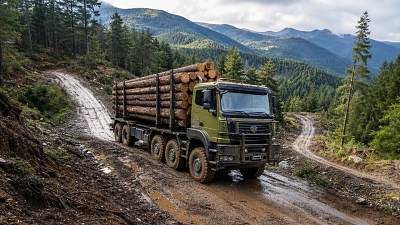
Scenario 2: Muddy and soft ground requires traction-focused engineering
In wet forestry zones, getting stuck is not just inconvenient. It wastes time, damages schedules, increases fuel consumption, and can create safety issues during recovery. In this environment, a logging truck manufacturer must prioritize driveline traction, mud clearance, underbody protection, and suspension behavior under wheel articulation.
Operators working in soft ground should look closely at axle configuration. A truck designed for heavy mud often benefits from a layout that distributes weight effectively without overloading a single axle into the ground. Differential locks, hub reduction where appropriate, and durable driveline sealing all support traction and reliability. Tire and fender spacing also matter; if mud packs tightly around components, rolling resistance rises and maintenance becomes harder.
Another design detail often overlooked is ground clearance around vulnerable components. Air lines, wiring, tanks, and steps should be placed or shielded in ways that reduce contact with debris, rocks, and ruts. A thoughtful logging truck manufacturer recognizes that one damaged line in the forest can disable an otherwise capable vehicle.
Scenario 3: Long haul forestry transport needs endurance and efficiency
Some operators spend only part of the route off-road and then travel significant highway or regional distances to mills, ports, or consolidation yards. In this mixed-use case, a logging truck manufacturer must balance ruggedness with operating economy. Too much off-road specialization can reduce fuel efficiency and increase road noise, while a road-biased design may wear out quickly on logging access roads.
Cab ergonomics become especially important in this scenario. Better seating support, visibility, control layout, and vibration isolation directly reduce fatigue during long shifts. Operators who remain more alert make fewer mistakes during loading, unloading, and narrow road maneuvers. Cooling system design is equally important because a truck may face low-speed climbing, idle time at loading points, and faster road sections all in the same day.
A strong logging truck manufacturer will therefore design not only for terrain survival but also for sustainable operating cost. Fuel-efficient engines, serviceable air filtration, and reliable drivetrain matching can deliver major value over the life of the truck.
Scenario 4: Remote operations make serviceability a design priority
Many forestry operations run far from workshops, spare parts depots, and recovery support. In these conditions, design simplicity is a serious advantage. A logging truck manufacturer serving remote users should make daily checks easier, provide accessible service points, and reduce the number of exposed or failure-prone systems.
Operators often judge this quickly in the field. Can filters be reached without excessive disassembly? Are grease points practical to access in dirty conditions? Is the cooling package easy to inspect and clean after working in dusty or debris-heavy environments? Can routine faults be diagnosed without advanced tools? These are not minor concerns. They often determine whether a truck returns to work quickly or remains parked while a small issue grows expensive.
This is also where supplier support matters. A capable logging truck manufacturer is stronger when connected to a professional sourcing and industry platform that helps buyers compare options, check supplier credibility, and locate suitable heavy truck solutions across global markets.
How design priorities differ by operator need
Even in the same region, operators may value different outcomes depending on workload and route pattern. The best design choice depends on what happens most often during the week, not only on peak-demand days.
Common mistakes when judging logging truck design
A frequent mistake is choosing a truck mainly by rated payload without considering route severity. If the road is highly rutted, narrow, or steep, a theoretically larger payload may not translate into better daily output. Another mistake is focusing on engine power while ignoring braking support, axle balance, or chassis resilience. In rough forestry work, poor control can be more costly than modestly lower power.
Some users also underestimate the effect of cab design. Visibility, mirror placement, step access, and seat support affect safety and fatigue every day. Over time, small ergonomic weaknesses slow the job and increase operator strain. An experienced logging truck manufacturer treats the cab as part of the productivity system, not just the driver compartment.
Finally, buyers sometimes overlook aftermarket support. A good design is only fully valuable when parts, technical guidance, and supplier communication remain dependable. This is particularly important for international sourcing in the land transport equipment sector.
Practical checklist before choosing a truck for tough terrain
Before comparing brands or models, operators should define their main use case clearly. Ask how much time the truck spends on steep grades, how often it enters muddy loading areas, how far it travels to delivery points, and how quickly service support can reach the site. Then discuss those conditions directly with the logging truck manufacturer or supplier.
A useful field-oriented checklist includes traction requirements, brake performance under load, chassis strength, cab visibility, maintenance access, cooling reliability, and parts support. When these factors align with the route and work cycle, the truck is more likely to deliver safe, stable, and efficient performance over time.
Frequently asked questions
Does a larger engine always mean a better logging truck?
No. In many forestry applications, traction, gearing, braking support, and chassis stability are just as important. A well-matched powertrain from a capable logging truck manufacturer often outperforms a more powerful but poorly balanced setup.
What matters most in muddy terrain?
Traction systems, axle configuration, ground clearance, and protection of vulnerable components are key. Good design reduces the chance of getting stuck and lowers damage risk during rough site entry and exit.
Why is serviceability so important in remote forestry work?
Because small failures can create long downtime when service access is limited. A logging truck manufacturer that designs for easy inspection and maintenance can save operators significant time and cost.
Choose design by scenario, not by brochure alone
In tough terrain, logging truck performance depends on how well design matches the job. Mountain roads need control and braking confidence. Muddy tracks need traction and protection. Mixed routes need a balance of ruggedness and efficiency. Remote sites need service-friendly construction and dependable supplier support. That is why the right logging truck manufacturer matters so much to operators working in real forestry conditions.
If you are comparing trucks for timber hauling, start with your actual route, load pattern, and service conditions. Then use a trusted industry sourcing channel to evaluate manufacturers, compare product strengths, and identify suppliers that understand heavy-duty land transport equipment in demanding environments. The right match will improve safety, uptime, and long-term operating value.
Trending News
- Crane Truck for Sale: Key Checks Before Comparing Price and Load Capacity
- How to Choose a Reliable Truck Cement Distributor for Stable Supply
- Truck Cement OEM vs Standard Supply: Which Lowers Quality Risk?
- Truck Cement Bulk Order: Cost Factors and Delivery Risks in 2026
- How to Evaluate a Heavy Truck Chassis Manufacturer With R&D Capability
Tag
Recommended News
 Truck TechnologyChinese Manufacturer Tops Global AWP Rankings with $780M RevenueChinese AWP manufacturer tops global rankings with $780M revenue—discover how its heavy-duty chassis innovation is reshaping陆路运输设备 supply chains worldwide.
 Truck TechnologyWhat Fireproof Materials Mean for Semi Trailer Safety and Lifecycle CostSemi trailer manufacturer with fireproof materials solutions help cut downtime, reduce repair risk, and improve resale value. Learn how smarter trailer specs lower total lifecycle cost.
 Truck TechnologyQuick Installation Excavators: Downtime vs PerformanceExcavator manufacturer with quick installation solutions help cut downtime, speed site startup, and protect performance. Compare smarter options for faster, more reliable project delivery.
 Truck TechnologyChina-Mongolia-Russia E-Waybill Mutual Recognition UpgradedChina-Mongolia-Russia E-Waybill mutual recognition upgraded: Real-time cold-chain temperature compliance now mandatory for all cross-border road transport vehicles under GB/T 39920–2021.
 Truck TechnologyMulti-Dept Initiative Adds V2X & BeiDou Modules to Cross-Border Trucking Subsidy ListV2X & BeiDou modules now subsidy-eligible for cross-border trucks—boosting smart logistics, safety, and BRI corridor compliance. Act now to align.
 Truck TechnologyL4 Autonomous Truck Chassis Emerges as Tech Export VehicleL4 Autonomous Truck Chassis: Now licensable globally for port drayage & mine transport—modular, multi-powertrain, backed by DP World & Chilean ports.
 Truck TechnologyMulti-Dept Action Adds V2X & BeiDou HD Positioning to Cross-Border Freight Subsidy ListV2X & BeiDou HD positioning now subsidized for cross-border freight trucks—key opportunity for intelligent transport equipment suppliers and OEMs.
 Truck TechnologyChina-Mongolia-Russia Corridor Upgrades to E-CMR with Real-Time Cold Chain MonitoringChina-Mongolia-Russia Corridor now mandates e-CMR + real-time cold chain monitoring for all refrigerated trailers — ensure compliance to avoid border delays and win tenders.
 Truck TechnologyBulldozer for Construction: Key Specs That Affect Earthmoving EfficiencyBulldozer for construction buying guide: compare weight, blade capacity, torque, and undercarriage specs to improve earthmoving efficiency and choose the right machine for your jobsite.
 Truck TechnologyL4 Autonomous Container Trucks Enter Trial on Tianjin-Xiongan RouteL4 autonomous container trucks begin trial on Tianjin-Xiongan route—pioneering China’s smart land transport revolution with dual-energy, licensable chassis platform.
 Truck TechnologyMulti-Dept Initiative to Upgrade Freight Hubs with V2X & BeiDouV2X & BeiDou: China’s 7-dept initiative offers up to 30% subsidies for intelligent retrofitting of cross-border road transport equipment—key for freight hubs, smart chassis, and trailer manufacturers.
 Truck TechnologyMulti-Dept Launch Freight Hub Upgrading InitiativeMulti-Dept Launch Freight Hub Upgrading Initiative boosts intelligent land transport equipment—smart loading, battery-swap stations & ETC-V2X modules for seamless, low-carbon cross-border logistics.
 Truck TechnologyWhat Advanced Technology Means in Heavy Truck Chassis PerformanceHeavy truck chassis manufacturer with advanced technology: discover how smarter frame design, suspension tuning, and braking integration improve stability, uptime, and long-term operating value.
 Truck TechnologyHigh-Strength Flatbed Trailers: Where Stronger Steel Pays OffFlatbed trailer supplier with high strength expertise helps fleets cut tare weight, improve durability, and lower lifecycle cost. See what specs matter most before you buy.
 Truck TechnologyBulldozer for Construction: Matching Blade Type to Ground ConditionsBulldozer for construction guide: learn how to match S, U, and SU blades to soil, clay, rock, and mixed ground for better productivity, lower fuel use, and smarter equipment selection.
 Truck TechnologyWhen Fireproof Materials Add Real Value in Semi Trailer ManufacturingSemi trailer manufacturer with fireproof materials: discover how fire-resistant designs improve cargo safety, reduce risk, and support smarter sourcing decisions.
 Truck TechnologyWhat a Durable Engine Really Means in a Light Duty TruckLight duty truck with durable engine: learn how real engine durability improves uptime, fuel savings, and lower maintenance across delivery, construction, rural, and municipal work.
 Truck TechnologySemi Trailer Manufacturer With Lightweight Design: Pros, Trade-Offs, and Use CasesSemi trailer manufacturer with lightweight design: explore key benefits, trade-offs, and best-fit use cases to improve payload efficiency, durability, and lifecycle ROI.
 Truck TechnologyTruck Tipper for Construction: Key Specs That Affect Daily ProductivityTruck tipper for construction buying guide: learn which specs most affect payload, fuel use, unloading speed, and uptime to choose a safer, more productive model.
 Truck TechnologyWhy Logging Truck Manufacturer Design Matters in Tough TerrainLogging truck manufacturer design shapes safety, traction, and uptime in tough terrain. Learn what features matter most for forestry hauling and choose trucks built for real-world performance.
 Truck TechnologyAre Fireproof Materials Worth It in a Semi Trailer ManufacturerSemi trailer manufacturer with fireproof materials: discover if the added cost delivers real safety, lower risk, and better cargo protection with a practical supplier evaluation checklist.
 Truck TechnologyWhy High-Strength Design Matters in a Flatbed Trailer SupplierFlatbed trailer supplier with high strength: learn why structural design, material quality, and fatigue resistance matter for safer transport, longer service life, and lower operating costs.
 Truck TechnologyAdvanced Technology in Heavy Truck Chassis Manufacturing: What to Look ForHeavy truck chassis manufacturer with advanced technology: learn how to assess welding, materials, precision, and validation for long-haul, construction, mining, and special-purpose fleets.
 Truck TechnologyCan Fireproof Materials Improve Semi Trailer Safety in Logisticssemi trailer manufacturer with fireproof materials solutions can reduce cargo loss, improve fleet safety, and support reliable logistics. Discover how to choose the right fire-resistant trailer design.
 Truck TechnologyWhy Advanced Technology Matters in Heavy Truck Chassis ManufacturingHeavy truck chassis manufacturer with advanced technology: learn how digital design, precision welding, and rigorous testing improve durability, safety, and sourcing confidence.