Truck Tipper Manufacturer Comparison: Build Quality Points That Matter
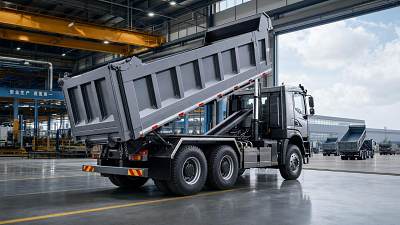
Choosing the right truck tipper manufacturer goes far beyond price. For technical evaluators, build quality determines payload stability, service life, maintenance efficiency, and long-term operating cost. This comparison highlights the manufacturing details that truly matter, helping buyers assess structural strength, material selection, welding quality, and production consistency with greater confidence.
Why build quality must be judged by application scenario
A truck tipper manufacturer may look competitive on paper, yet the right choice depends heavily on where and how the vehicle will work. A tipper used in urban construction waste transport faces frequent loading cycles, tight turning environments, and stop-start duty. A unit serving mining roads must withstand impact loading, frame twist, abrasive materials, and long daily operating hours. Agricultural bulk transport adds another set of needs, including lighter body design, corrosion resistance, and fast unloading efficiency.
For technical assessment teams, this means build quality cannot be reviewed as a single universal standard. The same body thickness, subframe layout, or hydraulic configuration may be ideal in one scenario and inefficient in another. The most reliable truck tipper manufacturer is therefore not simply the one offering the heaviest structure or the lowest price, but the one that can prove a consistent match between production method and real operating conditions.
This scenario-based approach also improves supplier comparison. Instead of relying only on catalogs, buyers can evaluate whether a manufacturer understands load distribution, road severity, corrosion exposure, unloading angle requirements, maintenance access, and expected duty cycle. These factors reveal true engineering capability far better than promotional claims.
Common operating scenarios and what technical evaluators should prioritize
When comparing any truck tipper manufacturer, start by classifying the intended operating scene. This creates a practical filter for body design, steel grade, tipping system, and quality control expectations.
Scenario 1: Urban construction fleets need durability with maneuverability
In city construction and demolition work, a truck tipper manufacturer should be judged on practical durability rather than extreme heavy-duty design alone. Vehicles often carry broken concrete, mixed soil, bricks, and wet waste. Loads are irregular, unloading locations are restricted, and the body may be cycled many times in a single shift.
Here, floor plate wear resistance becomes critical because abrasive debris can thin the body long before the frame shows failure. The rear hinge structure must be carefully reinforced, since uneven material release places stress on the back end. Evaluators should also inspect tailgate locking reliability and sealing quality, especially when wet material is transported through city roads where leakage creates compliance and safety issues.
For this scenario, a good truck tipper manufacturer usually demonstrates clean body geometry, repeatable weld quality, and sensible reinforcement instead of excessive dead weight. Maintenance access is another practical point. Urban fleets benefit from hydraulic layouts, grease points, and wear parts that can be serviced quickly with minimal downtime.
Scenario 2: Mining and quarry work demands the highest structural discipline
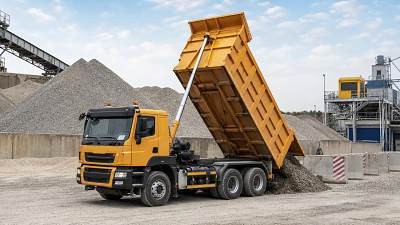
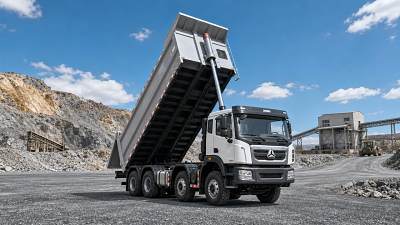
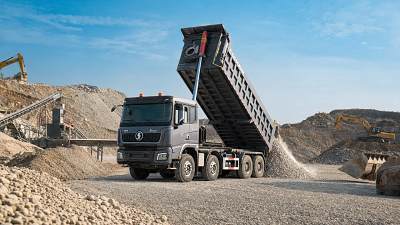
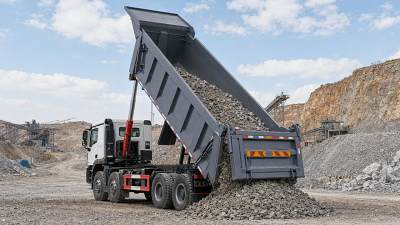
Mining and quarry operations are where differences between one truck tipper manufacturer and another become most visible. Material such as ore, blasted rock, and crushed stone creates severe impact loading. Haul roads introduce torsion, vibration, and repeated shock that expose weak joints, poor material choice, and inconsistent welding.
In this scene, technical buyers should focus first on steel grade traceability and actual structural design. High-strength steel is valuable only if the manufacturer also controls forming quality, heat input during welding, and reinforcement distribution. Over-hard material without correct processing can crack. Over-reinforcement can create local stress concentration. A reliable truck tipper manufacturer will explain how body floor, side panels, cross members, and subframe work as a system.
Hydraulic cylinder sizing and mounting geometry also matter more in mining use. Under severe loads, unstable tipping motion can increase rollover risk and accelerate pivot wear. Technical evaluators should ask for fatigue-oriented design logic, not just static load claims. Evidence such as weld procedures, NDT practices, production jigs, and field references in similar mines provides much stronger confidence than brochure specifications alone.
Scenario 3: Infrastructure projects require balance between payload and life cycle cost
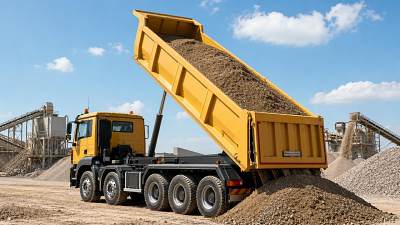
Road building, municipal projects, and general infrastructure transport usually involve high utilization and medium-to-heavy bulk materials such as sand, gravel, and asphalt-related aggregates. In these applications, the best truck tipper manufacturer is often the one that balances tare weight, body rigidity, corrosion protection, and maintenance simplicity.
Too much steel reduces legal payload and fleet economics. Too little reinforcement leads to sidewall bulging, floor distortion, and faster fatigue around mounting points. Technical reviewers should compare body-to-chassis fit accuracy, subframe straightness, and the consistency of paint or coating treatment, especially around weld seams, corners, and undersides where corrosion starts early.
This scenario also rewards manufacturers with stable production processes. If a fleet plans phased procurement over months or years, body dimensions, parts interchangeability, and repeatable hydraulic performance become essential. A capable truck tipper manufacturer should be able to maintain the same quality standard across batch orders, not only on a sample vehicle.
Scenario 4: Agriculture and light bulk transport need smart lightweight design
For grain, fertilizer, feed, biomass, and other lighter materials, the evaluation logic changes. Heavy mining-style construction may look impressive but can reduce payload efficiency. In this case, the right truck tipper manufacturer should offer optimized body volume, smooth inner surfaces, corrosion-resistant treatment, and reliable tipping angles for fast discharge.
Because these applications may be seasonal, storage conditions also matter. Moisture, chemicals, and cleaning routines can damage poor coatings quickly. Technical evaluators should inspect whether the manufacturer uses suitable anti-rust primers, cavity protection, and drainage details. Residue retention is another overlooked issue; bad internal geometry can cause material buildup, contamination, and time loss between loads.
In light bulk work, build quality is less about maximum plate thickness and more about shape accuracy, corrosion control, and efficient unloading performance. A specialized truck tipper manufacturer will understand that lower body weight must not compromise tipping stability or hinge durability.
Core build quality points that matter across all scenarios
Even though application needs differ, several manufacturing points should always be part of comparison.
Material selection and traceability
A dependable truck tipper manufacturer should identify steel grades clearly, explain where high-strength material is used, and provide material certificates when required. Evaluators should confirm whether wear areas and structural areas are designed differently rather than treated as the same.
Welding quality and distortion control
Poor weld appearance is easy to spot, but hidden inconsistency is the real danger. Ask how the manufacturer controls heat input, fixture accuracy, weld sequence, and inspection. Consistent penetration and controlled deformation are more important than cosmetic grinding.
Subframe and body integration
A tipper body is only as reliable as its relationship with the truck chassis. Mounting points, flexibility allowance, and stress transfer design must match the underlying vehicle. An experienced truck tipper manufacturer will work with chassis data instead of using a generic mounting approach.
Hydraulic and tipping stability
Cylinder quality, hose routing, pivot strength, and tipping angle all affect safety and productivity. Technical teams should verify not only component brand but also installation quality and accessibility for service.
Surface treatment and corrosion protection
A strong body can still lose value quickly if paint adhesion, blasting quality, or sealing preparation is weak. This is especially important in coastal, wet, or chemical exposure environments.
How to compare one truck tipper manufacturer against another in practice
Technical evaluators should use a structured comparison method rather than a simple price sheet. Start by matching each supplier to a real duty profile: payload type, route condition, annual mileage, tipping cycles per day, and maintenance capability. Then review factory-level evidence.
Common misjudgments when selecting a truck tipper manufacturer
One common mistake is assuming heavier always means stronger. Extra weight may reduce payload and fuel efficiency without solving fatigue issues if the design path is poor. Another error is focusing on hydraulic brand only while ignoring frame alignment, cylinder mounting, and hinge fabrication. Even premium components perform poorly when integrated badly.
Buyers also sometimes compare only nominal body dimensions and plate thickness. This misses critical factors such as steel quality, weld execution, subframe geometry, and production repeatability. A truck tipper manufacturer with moderate-looking specifications but strong engineering control can outperform a supplier offering thicker material with weak process management.
Another frequent oversight is failing to evaluate local service realities. In harsh applications, downtime cost can exceed initial purchase savings quickly. For many fleets, the better manufacturer is the one that supports spare parts, repair guidance, and technical communication effectively over the full life cycle.
Practical fit recommendations for technical buyers
If your fleet works in mixed city construction, prioritize body wear resistance, rear section durability, and service-friendly hydraulic layout. If your operation is in mining or quarry haulage, place the highest weight on structural design method, weld quality assurance, and field-proven heavy-duty references. If your projects center on roads and infrastructure, compare payload efficiency, corrosion control, and batch consistency. If the application is agriculture or light bulk movement, emphasize lightweight body optimization, anti-corrosion design, and smooth unloading.
The most effective way to choose a truck tipper manufacturer is to turn your scenario into an engineering checklist. Define material type, average density, overloading risk, road severity, weather exposure, annual utilization, and preferred maintenance intervals. Then require suppliers to respond against those exact conditions.
FAQ for scenario-based manufacturer comparison
How can I verify if a truck tipper manufacturer understands my application?
Ask for examples from similar industries, payload types, and road conditions. Strong suppliers can explain why they selected certain plate thicknesses, reinforcements, and hydraulic layouts for that scenario.
Is thicker steel always better for a tipper body?
No. Better build quality comes from correct steel grade, structural layout, and manufacturing control. Excess thickness can reduce payload and create inefficient stress distribution.
What factory evidence should technical evaluators request?
Useful evidence includes material certificates, welding procedures, inspection records, fixture control methods, corrosion treatment process details, and references from similar operating conditions.
Final decision: match the manufacturer to the duty, not just the quote
A successful truck tipper manufacturer comparison should always return to one question: how well does this build match the real duty cycle? For technical evaluators, the answer lies in scenario fit, structural logic, production consistency, and service support. By comparing suppliers through the lens of construction, mining, infrastructure, or agricultural use, buyers can move beyond surface-level specifications and identify equipment that will perform reliably over time.
For teams sourcing through a global B2B marketplace, this approach also makes supplier screening more efficient. Use your application scenario to narrow the field, request build-quality evidence tied to that use case, and compare each truck tipper manufacturer on the factors that directly influence uptime, safety, and total ownership cost.
Trending News
- Crane Truck for Sale: Key Checks Before Comparing Price and Load Capacity
- How to Choose a Reliable Truck Cement Distributor for Stable Supply
- Truck Cement OEM vs Standard Supply: Which Lowers Quality Risk?
- Truck Cement Bulk Order: Cost Factors and Delivery Risks in 2026
- How to Evaluate a Heavy Truck Chassis Manufacturer With R&D Capability
Tag
Recommended News
 Truck ReviewsLight Duty Truck With Durable Engine: What Matters MostLight duty truck with durable engine: discover the key checks for uptime, lower fuel costs, smarter maintenance, and reliable performance before you buy.
 Truck ReviewsWhat Makes a Truck Tipper for Construction Perform Better On-Site?Truck tipper for construction performance depends on site conditions, body strength, hydraulics, and traction. Learn how to choose the right model for safer, faster, more efficient jobs.
 Truck ReviewsLogging Truck Producer Comparison: Durability Issues That Affect UptimeLogging truck producer comparison guide: discover the durability issues that impact uptime, repair costs, and safety, and learn how to choose a truck built for harsh forestry transport.
 Truck ReviewsTruck Tipper for Construction: When Payload Matters More Than PriceTruck tipper for construction buying guide: learn why payload, durability, and cycle efficiency matter more than price to cut costs, boost uptime, and improve site productivity.
 Truck ReviewsCrane Truck Manufacturer Comparison for Urban Lifting and Narrow SitesCrane truck manufacturer comparison for urban lifting: discover how to choose compact, safe, high-efficiency models for narrow sites, faster setup, and reliable support.
 Truck ReviewsTruck Cement Mixer Manufacturer Comparison: Drum Design, Output, and ServiceTruck cement mixer manufacturer comparison guide covering drum design, real output, and after-sales service. Help your team compare suppliers, reduce sourcing risk, and choose with confidence.
 Truck ReviewsTruck Tipper Manufacturer Comparison: Build Quality Points That MatterTruck tipper manufacturer comparison guide: discover the build quality points that truly affect durability, payload stability, maintenance, and long-term operating cost.
 Truck ReviewsTruck Cement for Sale: How to Judge Value From Photos and Spec SheetsTruck cement for sale buyers can learn to judge true value from photos and spec sheets. Spot wear, compare capacity, and avoid costly mistakes before you contact sellers.
 Truck ReviewsLogging Truck Producer Comparison: Features That Matter in Tough TerrainLogging truck producer comparison for tough terrain: discover the features that impact traction, stability, durability, and uptime to choose the right forestry truck with confidence.
 Truck ReviewsLogging Truck Producer Comparison: Capacity, Durability, and ServiceLogging truck producer comparison guide covering capacity, durability, and service. Compare real-world fit, reduce fleet risk, and choose reliable suppliers for forestry transport.
 Truck ReviewsFlatbed Trailer Supplier With High Strength: What Really MattersFlatbed trailer supplier with high strength: learn how to assess materials, structure, compliance, and lifecycle value to choose reliable trailer partners with confidence.
 Truck ReviewsDoes Quick Installation Really Matter When Choosing an Excavator ManufacturerExcavator manufacturer with quick installation: learn why fast setup only matters when paired with reliable performance, lower downtime, operator support, and long-term jobsite efficiency.
 Truck ReviewsWhat Makes a Truck Tipper for Construction Easier to Maintain On SiteTruck tipper for construction models with easy hydraulic access, modular parts, and clear service points cut downtime, lower repair costs, and keep demanding jobsites running.
 Truck ReviewsWhat Makes a Truck Tipper Manufacturer Reliable in Heavy-Duty UseTruck tipper manufacturer selection starts with reliability. Learn how to compare steel quality, hydraulics, stability, and service support for safer heavy-duty performance.
 Truck ReviewsLogging Truck Manufacturer Comparison for Harsh Terrain WorkLogging truck manufacturer comparison for harsh terrain: evaluate durability, traction, load control, and service support to choose safer, more efficient forestry transport solutions.
 Truck ReviewsQuick Installation Excavators: Do They Really Save Time on SiteExcavator manufacturer with quick installation: learn if these machines truly cut setup delays, improve workflow, and lower site costs before you buy.
 Truck ReviewsWhat Makes a Truck Tipper for Construction Easier to Run on Busy SitesTruck tipper for construction buying guide: discover the features that make busy job sites safer, faster, and easier to manage, from stable tipping to better visibility and lower downtime.
 Truck ReviewsTruck Tipper OEM for Harsh Job Sites: What Really MattersTruck tipper OEM selection for harsh job sites starts with what matters most: durability, hydraulic reliability, safety, and support. Discover how to choose a tipper built for uptime and lower operating costs.
 Truck ReviewsHow to Judge a Logging Truck Producer by Frame and Load DesignLogging truck producer evaluation starts with frame strength and load design. Learn how to compare suppliers for safer timber transport, higher durability, and lower lifecycle costs.
 Truck ReviewsDo Quick-Installation Excavators Really Save Time on SiteExcavator manufacturer with quick installation: discover whether fast-setup excavators truly cut downtime, speed relocations, and boost jobsite productivity before you buy.
 Truck ReviewsIs a Lightweight Semi Trailer Worth It for Daily Freight Usesemi trailer manufacturer with lightweight design: learn if a lightweight semi trailer can boost payload, fuel savings, and daily freight efficiency before you buy.
 Truck ReviewsDelivery truck supplier lead times spiked in Q1 2026—not because of demand, but component traceability gapsDelivery truck supplier lead times spiked in Q1 2026—blame component traceability gaps, not demand. Discover how SHACMAN L3000, X5000, F2000, bulldozer & excavator manufacturers, and flatbed/semi trailer suppliers are restoring reliability.