Truck Cement Mixer Manufacturer Comparison: Drum Design, Output, and Service
Choosing the right truck cement mixer manufacturer can directly affect fleet efficiency, concrete quality, and long-term operating costs. For procurement professionals, comparing drum design, output capacity, and after-sales service is essential to identifying reliable suppliers and reducing purchasing risk. This guide highlights the key factors that matter most when evaluating manufacturers in the global commercial vehicle market.
Why procurement teams compare a truck cement mixer manufacturer beyond price
In the road transport equipment sector, a truck cement mixer is not only a vehicle. It is a mobile production link between batching plant, transport route, and jobsite placement. That is why selecting a truck cement mixer manufacturer requires more than comparing quotation sheets. Buyers need to judge whether the supplier can deliver stable drum performance, matching chassis integration, predictable parts supply, and technical support across different markets.
For procurement managers serving contractors, ready-mix operators, municipal engineering teams, or infrastructure fleets, the main challenge is balancing capital cost with operating uptime. A lower purchase price can quickly lose its advantage if discharge speed is inconsistent, residual concrete is high, or imported parts create long maintenance delays. In many tenders, service responsiveness matters almost as much as mixer output.
- Project timelines are tight, so equipment downtime can affect concrete delivery schedules and contractual performance.
- Operating routes vary from urban roads to rough construction access roads, which puts pressure on chassis durability and drum stability.
- Different markets may require local compliance documents, emission compatibility, or specific axle and weight configurations.
- Spare parts planning is critical because mixers combine hydraulic, structural, and drivetrain systems in one working unit.
This is where a specialized sourcing platform adds value. The Global Heavy Truck Industry Platform helps buyers compare manufacturers, vehicle categories, and supply capabilities in one place. Instead of relying on fragmented communication, procurement teams can review product ranges, supplier backgrounds, and supporting industry information more efficiently before shortlisting a truck cement mixer manufacturer.
How drum design affects concrete quality, wear, and daily output
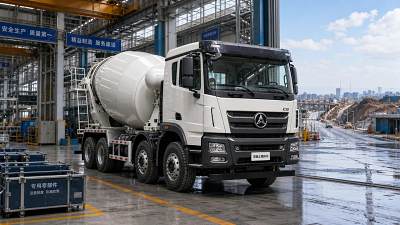
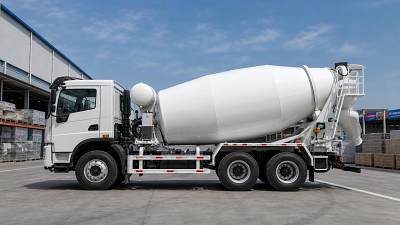
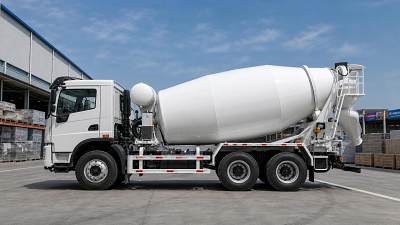
When buyers compare a truck cement mixer manufacturer, drum design should be one of the first technical checkpoints. Drum geometry influences mixing uniformity, charging speed, discharge efficiency, residual material inside the shell, and fuel consumption during transport. A well-designed drum supports consistent slump retention and reduces cleaning burden after each cycle.
Key drum design elements procurement should inspect
- Blade configuration: The angle, pitch, and shape of internal spiral blades influence how concrete is mixed and discharged.
- Drum material and thickness: Buyers should ask about wear resistance, shell thickness ranges, and reinforcement at high-stress sections.
- Residual rate: Lower residue means easier cleaning, less material waste, and lower labor time between trips.
- Center of gravity management: Better balance can improve road stability, especially on turns and uneven surfaces.
- Drive system integration: Hydraulic pump, motor, and reducer matching affects drum speed consistency and reliability.
The table below helps procurement teams compare drum-related factors when reviewing offers from a truck cement mixer manufacturer.
For buyers, the practical point is simple: a drum that mixes smoothly but discharges slowly may still reduce jobsite productivity. Likewise, a large drum without proper weight distribution can create transport and safety issues. The right truck cement mixer manufacturer should explain the design logic, not just provide a nominal capacity number.
What output capacity really means in real operating conditions
Output is often misunderstood during procurement. Many buyers focus on the advertised drum volume, but actual field output depends on road conditions, concrete specification, route distance, loading practices, and discharge time at site. A truck cement mixer manufacturer with practical application knowledge will discuss effective delivery capacity rather than only headline volume.
Questions buyers should ask about output
- What is the nominal drum volume and what is the recommended effective concrete loading volume?
- How does the manufacturer recommend matching drum size with axle configuration and legal road weight limits?
- What is the normal drum rotation range during transport and discharge?
- How does the equipment perform in hot weather, long-haul delivery, or stop-and-go urban traffic?
- Can the manufacturer adapt the superstructure to different truck chassis and regional transport requirements?
The following comparison table is useful when matching output expectations to operational scenarios and supplier offers.
This comparison shows why output should be evaluated as a fleet performance issue, not only a drum volume issue. The right truck cement mixer manufacturer will help buyers connect payload, chassis, route profile, and unloading process into one realistic productivity model.
How to compare manufacturer service, parts support, and delivery reliability
After-sales service is often the deciding factor when two suppliers offer similar technical specifications. Procurement professionals should assess service readiness before the purchase order is released. In road transport equipment, the cost of one idle mixer during peak project activity can be much higher than the price difference between two manufacturers.
Service dimensions that matter most
- Pre-sales engineering support, including chassis-mixer matching and application guidance.
- Production transparency, such as lead time confirmation, inspection milestones, and packing details.
- Spare parts availability for hydraulic components, rollers, seals, chutes, and wear items.
- Documentation support, including manuals, parts lists, and maintenance instructions in accessible language.
- Remote troubleshooting capability or local partner coordination for overseas buyers.
For cross-border procurement, the Global Heavy Truck Industry Platform makes service comparison easier because buyers can evaluate supplier scope, product lines, and trade communication efficiency in a more centralized environment. This reduces the risk of choosing a truck cement mixer manufacturer that looks competitive on paper but lacks export coordination or after-sales depth.
Buyers should also verify whether the supplier can support batch orders, special chassis requests, and regional compliance needs. Service quality is not only about warranty language. It is about whether the manufacturer can keep vehicles moving after delivery.
A practical procurement checklist for comparing suppliers
A structured checklist helps procurement teams avoid being influenced by isolated specifications. When evaluating a truck cement mixer manufacturer, use a weighted review across technical, commercial, and support categories.
Recommended evaluation checklist
- Confirm application profile: urban delivery, long-distance transport, municipal work, or heavy construction project.
- Check drum design details, material selection, and hydraulic system configuration.
- Match output requirement with legal payload, route condition, and expected trip frequency.
- Review spare parts lists, maintenance intervals, and service response commitments.
- Request documentation on dimensions, loading guidance, and optional configurations.
- Assess commercial risk, including lead time, payment terms, packaging, and shipping coordination.
If multiple suppliers pass the first review, procurement teams should compare total lifecycle value rather than unit price alone. A slightly higher cost may be justified by lower residual concrete, easier maintenance, or stronger export service. This is especially important for fleet buyers who need consistent equipment behavior across many units.
Standards, compliance, and risk points buyers should not ignore
A truck cement mixer manufacturer serving international buyers should be able to discuss general compliance topics clearly. Requirements vary by country, but procurement teams usually need confirmation on vehicle dimensions, axle load suitability, lighting configuration, safety markings, and documentation for import or registration procedures.
Common risk points during international sourcing
- Ordering a large drum capacity without checking local weight restrictions.
- Ignoring service access for hydraulic components in the destination market.
- Focusing on truck chassis brand while overlooking mixer superstructure durability.
- Failing to align the vehicle configuration with actual concrete transport distance and climate conditions.
The safest approach is to request a full configuration review before order confirmation. Buyers can use the Global Heavy Truck Industry Platform to compare supplier communication quality, request clearer product information, and reduce blind spots in technical and commercial negotiations.
FAQ: what procurement teams often ask about a truck cement mixer manufacturer
How do I compare two truck cement mixer manufacturer offers with similar price?
Start with drum design, hydraulic system matching, residual rate, and service support. Then compare delivery lead time, parts planning, and documentation quality. Similar prices can hide major differences in wear resistance, maintenance convenience, and export service capability.
Which output range is suitable for most infrastructure projects?
There is no universal answer because route distance, legal payload, and batching schedule all affect the ideal choice. For many infrastructure fleets, the right balance comes from matching effective load volume with road condition and dispatch frequency rather than simply choosing the largest drum.
What service details should be written into the purchase discussion?
Ask for spare parts scope, technical manual availability, maintenance guidance, lead time for common wear items, and communication process for warranty-related issues. For overseas buyers, also confirm packaging, shipment support, and remote technical response expectations.
Why is chassis matching important when selecting a truck cement mixer manufacturer?
The mixer drum, frame, and hydraulic system must work with axle layout, power output, and weight distribution. Poor chassis matching can reduce handling stability, increase tire wear, and create compliance issues. A capable manufacturer should explain the integration logic clearly.
Why choose us for supplier comparison and sourcing support
For buyers looking for a dependable truck cement mixer manufacturer, the Global Heavy Truck Industry Platform provides a practical sourcing environment built around the commercial vehicle and heavy equipment supply chain. Instead of searching across disconnected channels, procurement teams can compare manufacturers, product categories, and supporting market information in one professional B2B ecosystem.
We support more informed purchasing by helping buyers review supplier capabilities, identify suitable truck and mixer configurations, and access industry resources related to heavy trucks, construction machinery, trailers, and spare parts. This makes it easier to align product selection with logistics transport, infrastructure construction, mining support, and municipal engineering needs.
You can contact us to discuss
- Drum design comparison for different concrete transport scenarios.
- Output capacity selection based on route length, payload limits, and project cycle.
- Manufacturer screening by service support, spare parts readiness, and export communication.
- Lead time confirmation, configuration matching, and quotation comparison.
- Documentation, compliance questions, and sourcing options for fleet procurement.
If your team is comparing suppliers for an upcoming purchase, contact us with your required capacity, target market, chassis preference, and delivery timeline. We can help you narrow down options, clarify technical differences, and move from inquiry to supplier evaluation with greater confidence.
Trending News
- Huanggang Port Freight Operations Cease, Shenzhen-Hong Kong Cross-Border Logistics Shifts to 'East-In-East-Out, West-In-West-Out'
- Erenhot-Mongolia 24-Hour Freight Clearance Boosts Trucking Efficiency
- All 27 Cross-River Bridges of the Pinglu Canal Completed
- Nanning IRP Launches Smart EV Freight Charging & Swapping Station
- Vietnam to Enforce China's Tier 6B Emission Standard for Imported Medium/Heavy Trucks from Q3 2026
Tag
Recommended News
 Truck ReviewsCrane Truck Manufacturer Comparison for Urban Lifting and Narrow SitesCrane truck manufacturer comparison for urban lifting: discover how to choose compact, safe, high-efficiency models for narrow sites, faster setup, and reliable support.
 Truck ReviewsTruck Cement Mixer Manufacturer Comparison: Drum Design, Output, and ServiceTruck cement mixer manufacturer comparison guide covering drum design, real output, and after-sales service. Help your team compare suppliers, reduce sourcing risk, and choose with confidence.
 Truck ReviewsTruck Tipper Manufacturer Comparison: Build Quality Points That MatterTruck tipper manufacturer comparison guide: discover the build quality points that truly affect durability, payload stability, maintenance, and long-term operating cost.
 Truck ReviewsTruck Cement for Sale: How to Judge Value From Photos and Spec SheetsTruck cement for sale buyers can learn to judge true value from photos and spec sheets. Spot wear, compare capacity, and avoid costly mistakes before you contact sellers.
 Truck ReviewsTruck Tipper Manufacturer Comparison: Build Quality Points That MatterTruck tipper manufacturer comparison guide: discover the build quality points that truly affect durability, payload stability, maintenance, and long-term operating cost.
 Truck ReviewsTruck Cement for Sale: How to Judge Value From Photos and Spec SheetsTruck cement for sale buyers can learn to judge true value from photos and spec sheets. Spot wear, compare capacity, and avoid costly mistakes before you contact sellers.
 Truck ReviewsTruck Tipper Manufacturer Comparison: Build Quality Points That MatterTruck tipper manufacturer comparison guide: discover the build quality points that truly affect durability, payload stability, maintenance, and long-term operating cost.
 Truck ReviewsTruck Cement for Sale: How to Judge Value From Photos and Spec SheetsTruck cement for sale buyers can learn to judge true value from photos and spec sheets. Spot wear, compare capacity, and avoid costly mistakes before you contact sellers.
 Truck ReviewsLogging Truck Producer Comparison: Features That Matter in Tough TerrainLogging truck producer comparison for tough terrain: discover the features that impact traction, stability, durability, and uptime to choose the right forestry truck with confidence.
 Truck ReviewsLogging Truck Producer Comparison: Capacity, Durability, and ServiceLogging truck producer comparison guide covering capacity, durability, and service. Compare real-world fit, reduce fleet risk, and choose reliable suppliers for forestry transport.
 Truck ReviewsFlatbed Trailer Supplier With High Strength: What Really MattersFlatbed trailer supplier with high strength: learn how to assess materials, structure, compliance, and lifecycle value to choose reliable trailer partners with confidence.
 Truck ReviewsDoes Quick Installation Really Matter When Choosing an Excavator ManufacturerExcavator manufacturer with quick installation: learn why fast setup only matters when paired with reliable performance, lower downtime, operator support, and long-term jobsite efficiency.
 Truck ReviewsWhat Makes a Truck Tipper for Construction Easier to Maintain On SiteTruck tipper for construction models with easy hydraulic access, modular parts, and clear service points cut downtime, lower repair costs, and keep demanding jobsites running.
 Truck ReviewsWhat Makes a Truck Tipper Manufacturer Reliable in Heavy-Duty UseTruck tipper manufacturer selection starts with reliability. Learn how to compare steel quality, hydraulics, stability, and service support for safer heavy-duty performance.
 Truck ReviewsLogging Truck Manufacturer Comparison for Harsh Terrain WorkLogging truck manufacturer comparison for harsh terrain: evaluate durability, traction, load control, and service support to choose safer, more efficient forestry transport solutions.
 Truck ReviewsQuick Installation Excavators: Do They Really Save Time on SiteExcavator manufacturer with quick installation: learn if these machines truly cut setup delays, improve workflow, and lower site costs before you buy.
 Truck ReviewsWhat Makes a Truck Tipper for Construction Easier to Run on Busy SitesTruck tipper for construction buying guide: discover the features that make busy job sites safer, faster, and easier to manage, from stable tipping to better visibility and lower downtime.
 Truck ReviewsTruck Tipper OEM for Harsh Job Sites: What Really MattersTruck tipper OEM selection for harsh job sites starts with what matters most: durability, hydraulic reliability, safety, and support. Discover how to choose a tipper built for uptime and lower operating costs.
 Truck ReviewsHow to Judge a Logging Truck Producer by Frame and Load DesignLogging truck producer evaluation starts with frame strength and load design. Learn how to compare suppliers for safer timber transport, higher durability, and lower lifecycle costs.
 Truck ReviewsDo Quick-Installation Excavators Really Save Time on SiteExcavator manufacturer with quick installation: discover whether fast-setup excavators truly cut downtime, speed relocations, and boost jobsite productivity before you buy.
 Truck ReviewsIs a Lightweight Semi Trailer Worth It for Daily Freight Usesemi trailer manufacturer with lightweight design: learn if a lightweight semi trailer can boost payload, fuel savings, and daily freight efficiency before you buy.
 Truck ReviewsDelivery truck supplier lead times spiked in Q1 2026—not because of demand, but component traceability gapsDelivery truck supplier lead times spiked in Q1 2026—blame component traceability gaps, not demand. Discover how SHACMAN L3000, X5000, F2000, bulldozer & excavator manufacturers, and flatbed/semi trailer suppliers are restoring reliability.