Why High-Strength Design Matters in a Flatbed Trailer Supplier
For technical evaluators, choosing a flatbed trailer supplier with high strength is not just about load capacity—it is about long-term structural reliability, safety, and performance under demanding transport conditions. In a market where payload efficiency and durability directly affect operating results, high-strength design becomes a critical standard for assessing supplier capability, product quality, and lifecycle value.
What High-Strength Design Means in Flatbed Trailer Manufacturing
In the road transport equipment sector, high-strength design refers to the engineering approach used to improve a trailer’s ability to carry heavy or concentrated loads while maintaining structural stability over long service cycles. For a technical evaluator, this concept goes far beyond a simple specification sheet. A flatbed trailer supplier with high strength must demonstrate how material selection, frame architecture, welding quality, stress distribution, and fatigue resistance work together as an integrated system.
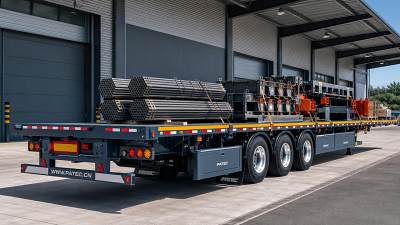
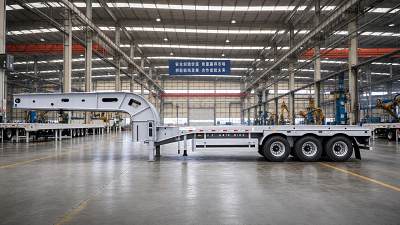
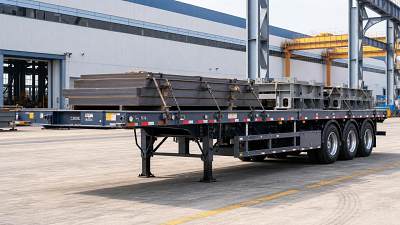
Flatbed trailers are widely used for machinery transport, steel products, containers, construction materials, agricultural equipment, and oversized cargo. These applications expose the trailer to dynamic loads, torsional stress, road impact, uneven terrain, and repeated braking force. Under such conditions, a high-strength trailer is not merely “stronger.” It is designed to resist deformation, minimize crack initiation, preserve alignment, and support safer long-distance operation.
This is why the phrase flatbed trailer supplier with high strength has growing relevance in global B2B sourcing. Buyers are no longer evaluating only price or nominal payload. They are assessing whether the supplier understands structural engineering, complies with production standards, and can deliver consistent performance across different operating environments.
Why the Industry Is Paying More Attention to Structural Strength
Global freight demand, infrastructure development, and cross-border heavy equipment movement are driving the need for durable trailer solutions. Logistics operators face pressure to improve asset utilization while reducing maintenance downtime. At the same time, transport tasks are becoming more complex, including heavier loads, longer routes, and more challenging road conditions. In this context, the quality gap between standard construction and high-strength design has become easier to measure in real operating costs.
For the Global Heavy Truck Industry Platform and its users, this trend is especially important. International buyers need a transparent way to compare suppliers, review technical capability, and identify products suited to logistics transport, mining support, municipal engineering, and construction operations. A flatbed trailer supplier with high strength is more likely to meet the expectations of buyers who prioritize service life, structural safety, and predictable total cost of ownership.
Another reason for rising attention is compliance and risk control. A structurally weak trailer may still meet a basic payload figure under ideal conditions, yet fail earlier in real-world use because of fatigue at weld zones, beam distortion, or poor load transfer. These failures increase repair costs, disrupt schedules, and create safety concerns. For technical evaluators, strength is therefore a strategic issue rather than a marketing claim.
Core Engineering Elements Behind a High-Strength Flatbed Trailer
When assessing a flatbed trailer supplier with high strength, technical teams should examine how strength is created in practice. The first area is material grade. High-tensile steel is commonly used to reduce dead weight while maintaining load-bearing capacity. However, material choice alone is not enough. Evaluators should verify whether the supplier understands yield strength, tensile strength, impact toughness, and material behavior in welded assemblies.
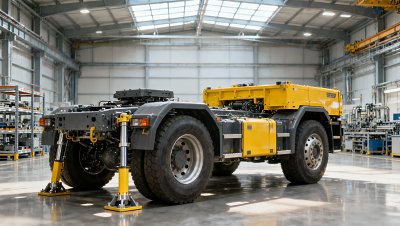
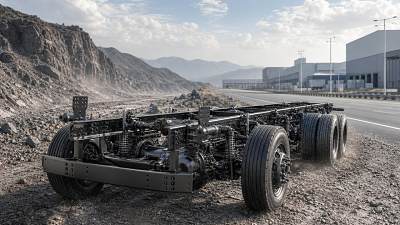
The second area is frame design. Main beams, cross members, side rails, neck structures, and suspension mounting zones must be engineered to distribute stress efficiently. A stronger trailer does not simply use more steel everywhere. In many cases, superior engineering means reinforcing the right points, optimizing section geometry, and reducing stress concentration at transition areas.
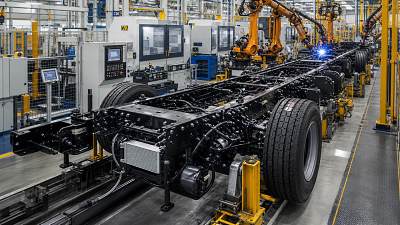
The third area is manufacturing quality. Welding process control, jig accuracy, heat input management, shot blasting, surface treatment, and dimensional consistency all influence structural performance. A technically capable supplier should be able to explain not only what design is used, but also how production preserves that design intent at scale.
The fourth area is validation. Finite element analysis, fatigue testing, road simulation, axle load verification, and field feedback are strong indicators of engineering maturity. A flatbed trailer supplier with high strength should provide evidence that the trailer has been evaluated under realistic service conditions rather than only theoretical calculations.
Industry Overview: What Technical Evaluators Usually Review
The following overview helps structure evaluation criteria in a practical way for road transport equipment sourcing and technical review.
Business Value of Choosing a Flatbed Trailer Supplier with High Strength
For fleet operators and industrial buyers, the value of high-strength design can be measured in daily operations. One major benefit is longer service life. A trailer that better resists bending, twisting, and fatigue can stay in productive use longer before structural repair becomes necessary. This directly improves return on capital investment.
A second benefit is reduced maintenance disruption. Frequent reinforcement work, cracked weld repair, or deck alignment correction takes equipment out of service. In heavy logistics and project transport, downtime can be more expensive than the repair itself. A flatbed trailer supplier with high strength helps reduce these interruptions by delivering equipment engineered for repeated, demanding use.
A third benefit is safer operation. Stable structural performance supports braking balance, axle loading consistency, cargo stability, and overall handling confidence. This is especially important for long-haul routes, heavy machinery transport, and regions with mixed road quality. Technical evaluators should see safety not as a separate issue, but as a direct result of sound structural design.
There is also an efficiency advantage. Many high-strength designs achieve a better balance between tare weight and payload capacity. Lower trailer self-weight can improve transport economics without sacrificing reliability, provided the design has been correctly validated. This balance is one of the clearest signs that a supplier has real engineering depth.
Typical Application Scenarios and Strength Priorities
Not all flatbed applications place stress on the structure in the same way. Technical assessment becomes more effective when the trailer is matched to actual operating conditions.
How Technical Evaluators Can Assess Supplier Capability More Effectively
A useful evaluation process begins with technical transparency. A credible flatbed trailer supplier with high strength should provide detailed drawings, material data, load assumptions, and manufacturing process information. If a supplier cannot clearly explain why the structure performs well, that is an early warning sign.
It is also important to compare design claims with actual use cases. Ask whether the trailer is intended for uniform loads or concentrated machinery loads, paved roads or mixed terrain, standard freight cycles or intensive industrial use. A design optimized for one environment may not deliver the same durability in another. Strong suppliers usually discuss application boundaries openly and recommend configuration changes when necessary.
Production consistency should receive equal attention. Technical strength on paper is valuable only if the factory can reproduce it reliably. Evaluators should review welding inspection methods, dimensional control procedures, supplier management for steel and components, and records from previous export or fleet projects. In a global sourcing environment, repeatability often separates mature manufacturers from opportunistic vendors.
Finally, after-sales support matters. Structural durability is influenced by maintenance practice, loading method, and operating discipline. The best suppliers support customers with service guidelines, spare parts coordination, technical communication, and continuous improvement feedback. For platform-based B2B trade, this is especially valuable because cross-border buyers need confidence not only in the initial purchase, but also in long-term cooperation.
Common Misunderstandings About High Strength
One common misunderstanding is that thicker steel automatically means better performance. In reality, excessive weight can reduce payload efficiency and may still fail to solve stress concentration problems if the structure is poorly designed. High strength is an engineering balance, not just material accumulation.
Another misunderstanding is focusing only on maximum payload figures. A trailer may carry a target load in a short-term static test but still suffer early fatigue under repeated dynamic service. Technical evaluators should therefore look for lifecycle performance indicators rather than isolated numbers.
A third mistake is ignoring manufacturing discipline. Even a strong design can lose value if weld quality is unstable, alignment is poor, or corrosion protection is inadequate. This is why selecting a flatbed trailer supplier with high strength requires review of both engineering capability and production management.
Practical Direction for Buyers Using Global B2B Sourcing Platforms
For technical evaluators using international sourcing channels, the best approach is to combine broad market visibility with disciplined technical screening. Platforms serving the heavy truck and transport equipment industry make it easier to compare manufacturers, product categories, and regional supply options. However, real value comes from using that access to request meaningful technical evidence, not only quotations.
Start by identifying the actual transport profile: cargo type, weight distribution, route condition, frequency of use, maintenance capability, and expected service life. Then shortlist each flatbed trailer supplier with high strength based on structural design maturity, relevant application references, and openness in technical discussion. This method helps avoid mismatches between operating demands and product assumptions.
In the commercial vehicle and heavy equipment ecosystem, stronger digital sourcing tools are making supplier discovery more efficient. Yet technical decision quality still depends on engineering review. The most dependable sourcing outcome is achieved when market intelligence, supplier transparency, and application-specific evaluation are combined.
Conclusion
High-strength design matters because flatbed trailers work in environments where repeated stress, heavy loading, and operational risk are unavoidable. For technical evaluators, choosing a flatbed trailer supplier with high strength means looking beyond surface specifications to understand structural logic, material quality, manufacturing consistency, and lifecycle reliability.
As global road transport equipment demand continues to expand, buyers need suppliers that can support both performance and long-term value. A disciplined technical assessment—supported by credible industry platforms, transparent documentation, and application-focused comparison—will help identify trailer manufacturers capable of meeting modern heavy-duty transport requirements with confidence.
Trending News
- Truck Cement Wholesale: What Determines Stable Delivery and Margin?
- Truck Trailer Bulk Order Cost Breakdown for 2026 Budget Planning
- Truck Trailer Sourcing: 7 Checks Before You Compare Suppliers
- Truck Trailer OEM vs ODM: Which Model Lowers Supply Risk?
- How to Evaluate a Heavy Truck Chassis Manufacturer With R&D Capability in 2026
Tag
Recommended News
 Truck TechnologyChinese Manufacturer Tops Global AWP Rankings with $780M RevenueChinese AWP manufacturer tops global rankings with $780M revenue—discover how its heavy-duty chassis innovation is reshaping陆路运输设备 supply chains worldwide.
 Truck TechnologyWhat Fireproof Materials Mean for Semi Trailer Safety and Lifecycle CostSemi trailer manufacturer with fireproof materials solutions help cut downtime, reduce repair risk, and improve resale value. Learn how smarter trailer specs lower total lifecycle cost.
 Truck TechnologyQuick Installation Excavators: Downtime vs PerformanceExcavator manufacturer with quick installation solutions help cut downtime, speed site startup, and protect performance. Compare smarter options for faster, more reliable project delivery.
 Truck TechnologyChina-Mongolia-Russia E-Waybill Mutual Recognition UpgradedChina-Mongolia-Russia E-Waybill mutual recognition upgraded: Real-time cold-chain temperature compliance now mandatory for all cross-border road transport vehicles under GB/T 39920–2021.
 Truck TechnologyMulti-Dept Initiative Adds V2X & BeiDou Modules to Cross-Border Trucking Subsidy ListV2X & BeiDou modules now subsidy-eligible for cross-border trucks—boosting smart logistics, safety, and BRI corridor compliance. Act now to align.
 Truck TechnologyL4 Autonomous Truck Chassis Emerges as Tech Export VehicleL4 Autonomous Truck Chassis: Now licensable globally for port drayage & mine transport—modular, multi-powertrain, backed by DP World & Chilean ports.
 Truck TechnologyMulti-Dept Action Adds V2X & BeiDou HD Positioning to Cross-Border Freight Subsidy ListV2X & BeiDou HD positioning now subsidized for cross-border freight trucks—key opportunity for intelligent transport equipment suppliers and OEMs.
 Truck TechnologyChina-Mongolia-Russia Corridor Upgrades to E-CMR with Real-Time Cold Chain MonitoringChina-Mongolia-Russia Corridor now mandates e-CMR + real-time cold chain monitoring for all refrigerated trailers — ensure compliance to avoid border delays and win tenders.
 Truck TechnologyBulldozer for Construction: Key Specs That Affect Earthmoving EfficiencyBulldozer for construction buying guide: compare weight, blade capacity, torque, and undercarriage specs to improve earthmoving efficiency and choose the right machine for your jobsite.
 Truck TechnologyL4 Autonomous Container Trucks Enter Trial on Tianjin-Xiongan RouteL4 autonomous container trucks begin trial on Tianjin-Xiongan route—pioneering China’s smart land transport revolution with dual-energy, licensable chassis platform.
 Truck TechnologyMulti-Dept Initiative to Upgrade Freight Hubs with V2X & BeiDouV2X & BeiDou: China’s 7-dept initiative offers up to 30% subsidies for intelligent retrofitting of cross-border road transport equipment—key for freight hubs, smart chassis, and trailer manufacturers.
 Truck TechnologyMulti-Dept Launch Freight Hub Upgrading InitiativeMulti-Dept Launch Freight Hub Upgrading Initiative boosts intelligent land transport equipment—smart loading, battery-swap stations & ETC-V2X modules for seamless, low-carbon cross-border logistics.
 Truck TechnologyWhat Advanced Technology Means in Heavy Truck Chassis PerformanceHeavy truck chassis manufacturer with advanced technology: discover how smarter frame design, suspension tuning, and braking integration improve stability, uptime, and long-term operating value.
 Truck TechnologyHigh-Strength Flatbed Trailers: Where Stronger Steel Pays OffFlatbed trailer supplier with high strength expertise helps fleets cut tare weight, improve durability, and lower lifecycle cost. See what specs matter most before you buy.
 Truck TechnologyBulldozer for Construction: Matching Blade Type to Ground ConditionsBulldozer for construction guide: learn how to match S, U, and SU blades to soil, clay, rock, and mixed ground for better productivity, lower fuel use, and smarter equipment selection.
 Truck TechnologyWhen Fireproof Materials Add Real Value in Semi Trailer ManufacturingSemi trailer manufacturer with fireproof materials: discover how fire-resistant designs improve cargo safety, reduce risk, and support smarter sourcing decisions.
 Truck TechnologyWhat a Durable Engine Really Means in a Light Duty TruckLight duty truck with durable engine: learn how real engine durability improves uptime, fuel savings, and lower maintenance across delivery, construction, rural, and municipal work.
 Truck TechnologySemi Trailer Manufacturer With Lightweight Design: Pros, Trade-Offs, and Use CasesSemi trailer manufacturer with lightweight design: explore key benefits, trade-offs, and best-fit use cases to improve payload efficiency, durability, and lifecycle ROI.
 Truck TechnologyTruck Tipper for Construction: Key Specs That Affect Daily ProductivityTruck tipper for construction buying guide: learn which specs most affect payload, fuel use, unloading speed, and uptime to choose a safer, more productive model.
 Truck TechnologyWhy Logging Truck Manufacturer Design Matters in Tough TerrainLogging truck manufacturer design shapes safety, traction, and uptime in tough terrain. Learn what features matter most for forestry hauling and choose trucks built for real-world performance.
 Truck TechnologyAre Fireproof Materials Worth It in a Semi Trailer ManufacturerSemi trailer manufacturer with fireproof materials: discover if the added cost delivers real safety, lower risk, and better cargo protection with a practical supplier evaluation checklist.
 Truck TechnologyWhy High-Strength Design Matters in a Flatbed Trailer SupplierFlatbed trailer supplier with high strength: learn why structural design, material quality, and fatigue resistance matter for safer transport, longer service life, and lower operating costs.
 Truck TechnologyAdvanced Technology in Heavy Truck Chassis Manufacturing: What to Look ForHeavy truck chassis manufacturer with advanced technology: learn how to assess welding, materials, precision, and validation for long-haul, construction, mining, and special-purpose fleets.
 Truck TechnologyCan Fireproof Materials Improve Semi Trailer Safety in Logisticssemi trailer manufacturer with fireproof materials solutions can reduce cargo loss, improve fleet safety, and support reliable logistics. Discover how to choose the right fire-resistant trailer design.
 Truck TechnologyWhy Advanced Technology Matters in Heavy Truck Chassis ManufacturingHeavy truck chassis manufacturer with advanced technology: learn how digital design, precision welding, and rigorous testing improve durability, safety, and sourcing confidence.