Chinese Manufacturer Tops Global AWP Rankings with $780M Revenue
On May 24, 2026, Access International released its 2025 Global Aerial Work Platform (AWP) Top 20 ranking — marking the first time a Chinese manufacturer claimed the No. 1 position, reporting annual revenue of USD 780 million. This milestone reflects not only scaled production capacity but also growing international recognition of China’s integrated engineering capabilities in specialized mobile equipment, particularly where heavy-duty chassis adaptation meets rapid customization demands.
Event Overview
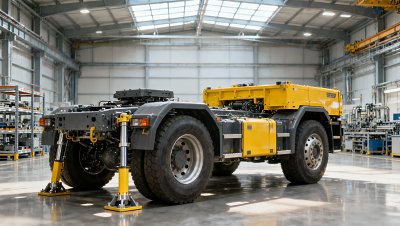
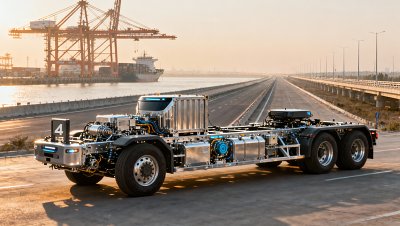
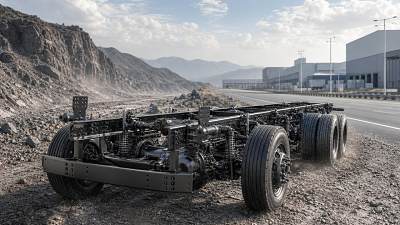
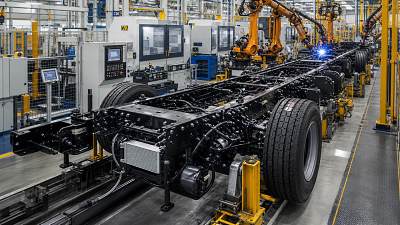
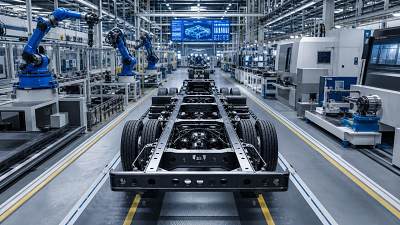
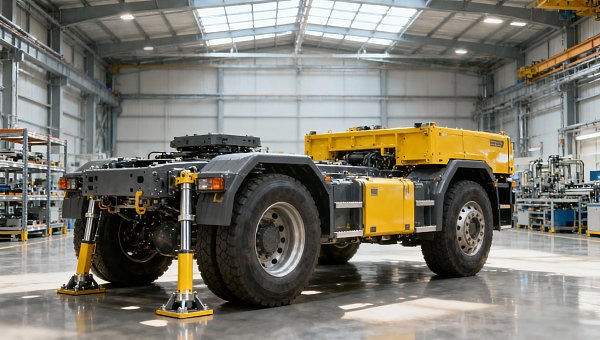
The 2025 Global AWP Top 20 list, published by Access International on May 24, 2026, ranked a Chinese manufacturer as the global leader in aerial work platform manufacturing, with reported annual revenue of USD 780 million. The company’s core technical advantage lies in its modular chassis architecture and deep compatibility with Class II and Class III heavy-duty truck chassis. It has supplied over 5,000 dedicated chassis units to major domestic construction equipment OEMs including XCMG and Zoomlion.
Industries Affected
Direct Trading Enterprises: Export-oriented distributors and integrators serving overseas infrastructure or rental markets now face revised sourcing benchmarks. Their procurement timelines, compliance expectations (e.g., EU CE/EN1915-1 adaptation), and after-sales service logistics must align with faster lead times and modular upgrade paths enabled by this chassis standardization — shifting negotiation leverage toward suppliers with proven integration agility.
Raw Material Procurement Enterprises: Suppliers of high-strength steel alloys, hydraulic components, and control electronics may see increased demand volatility. As the top-ranked manufacturer scales chassis production for both domestic OEMs and global engineering integrators, raw material buyers need to reassess minimum order quantities, delivery cadence, and certification alignment (e.g., ISO 10218 for robotic welding joints), especially for chassis subassemblies requiring structural integrity under dynamic load cycles.
Manufacturing Enterprises (OEM & Tier-1): Domestic and regional AWP assemblers relying on imported chassis platforms may experience intensified cost and lead-time pressure. Meanwhile, manufacturers capable of leveraging standardized heavy-truck chassis — especially those with existing partnerships in mining, utility, or fire-rescue vehicle sectors — gain accelerated pathways to new product variants without full ground-up development.
Supply Chain Service Providers: Third-party logistics firms, customs brokers specializing in EU/US/MENA equipment imports, and technical documentation agencies must update compliance checklists. Notably, the rise of chassis-based AWP configurations increases scrutiny on homologation documentation (e.g., type approval for axle load distribution, rollover protection structures), requiring deeper coordination between chassis suppliers and final-assembled unit certifiers.
Key Focus Areas and Recommended Actions
Evaluate Chassis Integration Pathways
Trading and manufacturing enterprises should audit current AWP platform dependencies: assess whether migrating to standardized heavy-truck chassis (especially Class II/III) improves time-to-market for regional variants — particularly for emerging markets where local service networks align with established heavy-truck dealer footprints.
Strengthen Certification Coordination Protocols
Given the modular nature of these platforms, stakeholders must formalize joint certification planning with chassis suppliers early in product development — especially for safety-critical systems (e.g., stabilizer interlocks, boom angle sensors). Delayed alignment risks retesting costs and market-entry delays in regulated jurisdictions.
Monitor Export Documentation Requirements
As more global engineering integrators adopt these Chinese-sourced chassis for localized AWP assembly, documentation workflows (e.g., origin declarations, technical file handovers, software version traceability) require standardization. Firms should pilot digital bill-of-materials (BOM) sharing with trusted partners to reduce customs clearance friction.
Editorial Perspective / Industry Observation
Observably, this ranking shift signals a broader inflection point: it is not merely about scale, but about the convergence of heavy-vehicle engineering maturity and agile special-purpose vehicle design. Analysis shows that the 5,000+ chassis deliveries to XCMG and Zoomlion represent a de facto validation loop — where volume production reinforces reliability data, which in turn strengthens international acceptance. From an industry perspective, what matters more than headline revenue is the replicability of this chassis-first model across adjacent segments (e.g., concrete pump trucks, emergency response vehicles). Current evidence suggests it is transferable — but only where regulatory frameworks permit modular certification and where aftermarket support ecosystems exist.
Conclusion
This leadership position is better understood as a validation of systemic capability — not just manufacturing output. For the global AWP ecosystem, it underscores a widening divergence between traditional ‘integrated OEM’ models and emerging ‘chassis-as-platform’ strategies. Rational observation suggests continued fragmentation in regional certification requirements will constrain near-term replication, yet accelerate long-term standardization pressure — especially among multinational rental fleets seeking cross-border fleet interoperability.
Source Attribution
Primary source: Access International, “2025 Global Aerial Work Platform Top 20 Ranking”, published May 24, 2026. Data on chassis supply volume and OEM partnerships confirmed via public disclosures from XCMG (2025 Annual Report, p. 42) and Zoomlion (Investor Briefing Q3 2025). Note: Final 2026 chassis export certification status for EU/UK/ANZ markets remains under review; updates expected by Q3 2026.
Trending News
- Truck Tipper Sourcing Checklist: Specs, Lead Time, and Compliance
- What Makes a Reliable Truck Tipper Distributor in New Export Markets
- Truck Tipper OEM or Standard Model: Which Lowers Lifetime Cost?
- Truck Tipper Bulk Order: 5 Cost Risks to Check Before Signing
- How to Vet a Heavy Truck Chassis Manufacturer With R&D Capability in 2026
Tag
Recommended News
 Truck TechnologyChinese Manufacturer Tops Global AWP Rankings with $780M RevenueChinese AWP manufacturer tops global rankings with $780M revenue—discover how its heavy-duty chassis innovation is reshaping陆路运输设备 supply chains worldwide.
 Truck TechnologyWhat Fireproof Materials Mean for Semi Trailer Safety and Lifecycle CostSemi trailer manufacturer with fireproof materials solutions help cut downtime, reduce repair risk, and improve resale value. Learn how smarter trailer specs lower total lifecycle cost.
 Truck TechnologyQuick Installation Excavators: Downtime vs PerformanceExcavator manufacturer with quick installation solutions help cut downtime, speed site startup, and protect performance. Compare smarter options for faster, more reliable project delivery.
 Truck TechnologyChina-Mongolia-Russia E-Waybill Mutual Recognition UpgradedChina-Mongolia-Russia E-Waybill mutual recognition upgraded: Real-time cold-chain temperature compliance now mandatory for all cross-border road transport vehicles under GB/T 39920–2021.
 Truck TechnologyMulti-Dept Initiative Adds V2X & BeiDou Modules to Cross-Border Trucking Subsidy ListV2X & BeiDou modules now subsidy-eligible for cross-border trucks—boosting smart logistics, safety, and BRI corridor compliance. Act now to align.
 Truck TechnologyL4 Autonomous Truck Chassis Emerges as Tech Export VehicleL4 Autonomous Truck Chassis: Now licensable globally for port drayage & mine transport—modular, multi-powertrain, backed by DP World & Chilean ports.
 Truck TechnologyMulti-Dept Action Adds V2X & BeiDou HD Positioning to Cross-Border Freight Subsidy ListV2X & BeiDou HD positioning now subsidized for cross-border freight trucks—key opportunity for intelligent transport equipment suppliers and OEMs.
 Truck TechnologyChina-Mongolia-Russia Corridor Upgrades to E-CMR with Real-Time Cold Chain MonitoringChina-Mongolia-Russia Corridor now mandates e-CMR + real-time cold chain monitoring for all refrigerated trailers — ensure compliance to avoid border delays and win tenders.
 Truck TechnologyBulldozer for Construction: Key Specs That Affect Earthmoving EfficiencyBulldozer for construction buying guide: compare weight, blade capacity, torque, and undercarriage specs to improve earthmoving efficiency and choose the right machine for your jobsite.
 Truck TechnologyL4 Autonomous Container Trucks Enter Trial on Tianjin-Xiongan RouteL4 autonomous container trucks begin trial on Tianjin-Xiongan route—pioneering China’s smart land transport revolution with dual-energy, licensable chassis platform.
 Truck TechnologyMulti-Dept Initiative to Upgrade Freight Hubs with V2X & BeiDouV2X & BeiDou: China’s 7-dept initiative offers up to 30% subsidies for intelligent retrofitting of cross-border road transport equipment—key for freight hubs, smart chassis, and trailer manufacturers.
 Truck TechnologyMulti-Dept Launch Freight Hub Upgrading InitiativeMulti-Dept Launch Freight Hub Upgrading Initiative boosts intelligent land transport equipment—smart loading, battery-swap stations & ETC-V2X modules for seamless, low-carbon cross-border logistics.
 Truck TechnologyWhat Advanced Technology Means in Heavy Truck Chassis PerformanceHeavy truck chassis manufacturer with advanced technology: discover how smarter frame design, suspension tuning, and braking integration improve stability, uptime, and long-term operating value.
 Truck TechnologyHigh-Strength Flatbed Trailers: Where Stronger Steel Pays OffFlatbed trailer supplier with high strength expertise helps fleets cut tare weight, improve durability, and lower lifecycle cost. See what specs matter most before you buy.
 Truck TechnologyBulldozer for Construction: Matching Blade Type to Ground ConditionsBulldozer for construction guide: learn how to match S, U, and SU blades to soil, clay, rock, and mixed ground for better productivity, lower fuel use, and smarter equipment selection.
 Truck TechnologyWhen Fireproof Materials Add Real Value in Semi Trailer ManufacturingSemi trailer manufacturer with fireproof materials: discover how fire-resistant designs improve cargo safety, reduce risk, and support smarter sourcing decisions.
 Truck TechnologyWhat a Durable Engine Really Means in a Light Duty TruckLight duty truck with durable engine: learn how real engine durability improves uptime, fuel savings, and lower maintenance across delivery, construction, rural, and municipal work.
 Truck TechnologySemi Trailer Manufacturer With Lightweight Design: Pros, Trade-Offs, and Use CasesSemi trailer manufacturer with lightweight design: explore key benefits, trade-offs, and best-fit use cases to improve payload efficiency, durability, and lifecycle ROI.
 Truck TechnologyTruck Tipper for Construction: Key Specs That Affect Daily ProductivityTruck tipper for construction buying guide: learn which specs most affect payload, fuel use, unloading speed, and uptime to choose a safer, more productive model.
 Truck TechnologyWhy Logging Truck Manufacturer Design Matters in Tough TerrainLogging truck manufacturer design shapes safety, traction, and uptime in tough terrain. Learn what features matter most for forestry hauling and choose trucks built for real-world performance.
 Truck TechnologyAre Fireproof Materials Worth It in a Semi Trailer ManufacturerSemi trailer manufacturer with fireproof materials: discover if the added cost delivers real safety, lower risk, and better cargo protection with a practical supplier evaluation checklist.
 Truck TechnologyWhy High-Strength Design Matters in a Flatbed Trailer SupplierFlatbed trailer supplier with high strength: learn why structural design, material quality, and fatigue resistance matter for safer transport, longer service life, and lower operating costs.
 Truck TechnologyAdvanced Technology in Heavy Truck Chassis Manufacturing: What to Look ForHeavy truck chassis manufacturer with advanced technology: learn how to assess welding, materials, precision, and validation for long-haul, construction, mining, and special-purpose fleets.
 Truck TechnologyCan Fireproof Materials Improve Semi Trailer Safety in Logisticssemi trailer manufacturer with fireproof materials solutions can reduce cargo loss, improve fleet safety, and support reliable logistics. Discover how to choose the right fire-resistant trailer design.
 Truck TechnologyWhy Advanced Technology Matters in Heavy Truck Chassis ManufacturingHeavy truck chassis manufacturer with advanced technology: learn how digital design, precision welding, and rigorous testing improve durability, safety, and sourcing confidence.