Truck Trailer OEM Selection: Key Specs That Affect Service Life
Choosing the right truck trailer OEM is critical for technical evaluators who need to balance durability, compliance, and lifecycle cost. From steel grade and axle configuration to welding quality, suspension design, and corrosion protection, small specification differences can significantly affect service life. This guide outlines the key OEM selection factors that help buyers compare suppliers more accurately and reduce long-term operational risk.
Why a checklist approach works better for truck trailer OEM evaluation
For technical assessment teams, trailer selection often fails not because the product looks weak on paper, but because a few hidden specifications were not verified early enough. A truck trailer OEM may offer similar payload, similar dimensions, and similar pricing to competitors, yet the long-term maintenance profile can be very different. The difference usually comes from structural details, material consistency, component sourcing, process control, and how well the trailer is matched to the actual route and loading pattern.
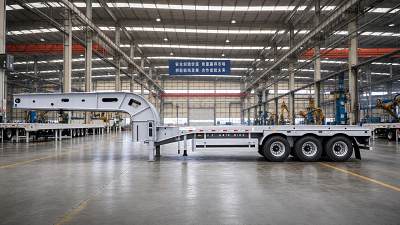
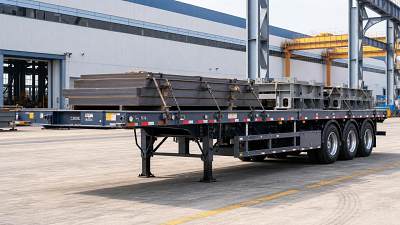
A checklist-based method helps evaluators avoid being distracted by basic brochure claims. Instead of asking only whether a supplier can build a flatbed, tipper, tanker, lowbed, or container chassis, the better question is whether the OEM can prove stable service life under your operating conditions. That means checking fatigue resistance, weld quality, anti-corrosion treatment, brake system support, spare parts access, and document traceability before making a sourcing decision.
For international buyers using a global B2B sourcing platform, this approach is even more important. Comparing multiple truck trailer OEM candidates across regions requires a standard evaluation structure. When the checklist is consistent, technical teams can compare suppliers more objectively, reduce warranty disputes, and improve total cost of ownership forecasting.
First-pass screening: the key items to confirm before deeper comparison
Before reviewing drawings or discussing customization, technical evaluators should complete a fast initial screen. This prevents time being spent on suppliers that cannot meet baseline requirements.
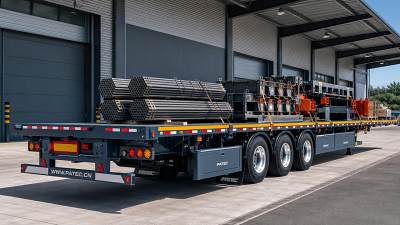
- Confirm trailer type fit: flatbed, skeletal, dump, fuel tanker, side wall, curtain side, low loader, or other special-purpose design.
- Verify target payload and real operating overload risk, not just nominal design capacity.
- Check legal compliance for the destination market, including axle load rules, braking requirements, lighting, reflective marking, and dimension limits.
- Review whether the truck trailer OEM has export experience for your region and can provide full technical files, certificates, and spare parts support.
- Confirm production consistency: prototype quality is not enough; batch repeatability matters more.
- Evaluate whether key purchased components such as axles, landing gear, suspension, kingpin, brake chambers, and tires come from stable and recognizable suppliers.
If an OEM cannot clearly answer these points at the beginning, the probability of later delays, design mismatch, or shortened service life increases significantly.
Core truck trailer OEM checklist: specifications that directly affect service life
1. Steel grade and structural design
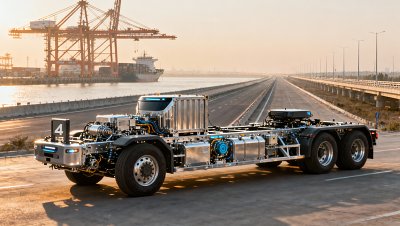
Material quality is one of the most important service-life drivers. Technical teams should not accept “high-strength steel” as a sufficient answer. Ask for exact steel grade, yield strength range, thickness distribution, and use position in the frame, cross members, side beams, and reinforcement areas. Good design is not only about using thicker steel. It is about using the correct steel in the correct stress zone to balance durability, tare weight, and repairability.
Pay special attention to beam web thickness, flange design, gooseneck reinforcement, stress concentration points around suspension hangers, and cross member spacing. A truck trailer OEM with stronger engineering capability should be able to explain why the structure suits rough roads, heavy loading cycles, or high center-of-gravity cargo.
2. Welding process and fatigue resistance
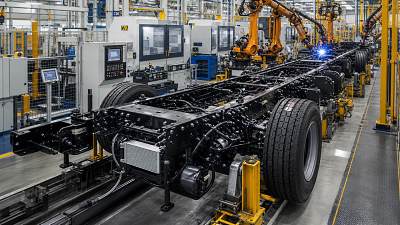
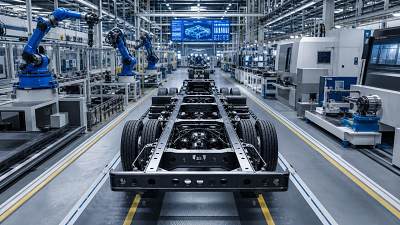
Many trailers fail from fatigue cracks long before they reach expected corrosion or wear limits. This is why weld quality deserves close review. Ask whether the OEM uses robotic welding, fixture-based positioning, weld procedure standards, and non-destructive inspection for critical joints. Visual neatness alone is not enough. Evaluators should examine weld penetration consistency, undercut risk, spatter control, heat distortion management, and joint preparation.
A reliable truck trailer OEM should identify critical fatigue areas in advance, especially suspension brackets, kingpin plate connections, rear impact structures, and hydraulic support points on dump trailers. If possible, ask for fatigue test data, field failure records, and corrective action examples.
3. Axle configuration, load distribution, and running gear
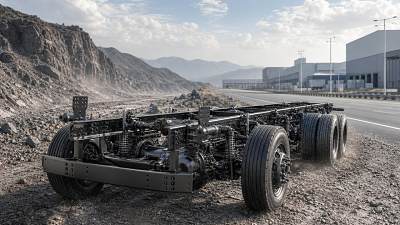
Axle quantity alone does not indicate durability. The real issue is whether axle spacing, equalization, load transfer, and matching with the frame are appropriate. Poor load distribution accelerates tire wear, bearing stress, brake overheating, and frame cracking. Technical evaluators should confirm rated axle capacity, hub type, bearing specification, brake size, and compatibility with local maintenance networks.
Also review wheel rim specifications, tire brand options, and whether the selected running gear is optimized for highway logistics, mixed-road transport, mining support, or construction site use. A truck trailer OEM serving multiple transport applications should be able to recommend different axle and wheel packages rather than one universal configuration.
4. Suspension design and road condition matching
Suspension has a direct influence on service life because it affects impact transfer into the frame. Leaf spring, mechanical suspension, air suspension, and heavy-duty bogie solutions each have advantages, but only when matched to the route. If the trailer will face unpaved roads, repeated shock loading, or severe torsion, a design optimized only for smooth highways may fail early.
Check bushing quality, hanger plate thickness, equalizer beam design, U-bolt specification, and service access for replacement. For a truck trailer OEM, strong suspension engineering is often a sign of real field experience rather than simple assembly capability.
5. Surface treatment and corrosion protection
Corrosion protection is frequently underestimated during purchasing, especially when price pressure is high. Yet coating failure can sharply reduce trailer life and resale value. Ask the OEM for a complete paint or coating process description: surface preparation, blasting standard, primer type, dry film thickness, topcoat system, cavity protection, and curing method.
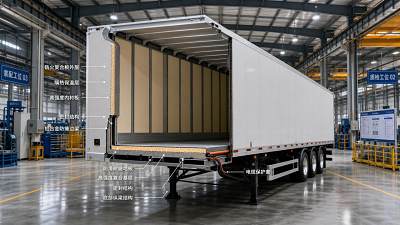
For coastal areas, chemical exposure, winter salt environments, or tanker applications, better anti-corrosion strategy is essential. Galvanized components, sealed wiring, protected air lines, and anti-rust treatment inside box sections can make a major difference. A serious truck trailer OEM should explain how its process performs in long-term outdoor service, not only how the trailer looks at delivery.
6. Braking, electrical, and safety systems
Brake system quality directly affects safety, downtime, and legal compliance. Technical evaluators should review brake chamber brand, slack adjuster type, ABS or EBS compatibility where required, air tank protection, hose routing, and parts access. Electrical reliability matters too. Poor harness protection leads to lighting failures, sensor faults, and repeated service calls.
The best truck trailer OEM candidates usually provide clear electrical schematics, standardized connectors, sealed junction boxes, and practical maintenance layouts. These details are especially important for fleet operators managing multiple trailer units across regions.
How to compare truck trailer OEM options by operating scenario
The same trailer specification does not work equally well in every application. Service life depends heavily on use conditions, so evaluation should be scenario-based.
This is why technical teams should ask each truck trailer OEM to propose not only a standard model, but also a route-based and duty-cycle-based configuration recommendation.
Commonly overlooked items that create long-term risk
- Ignoring tare weight versus structural reserve. Extreme lightweighting may reduce life under imperfect loading practice.
- Accepting unknown component brands for axles, landing gear, valves, or electrical parts without aftersales verification.
- Failing to inspect underside finishing, line routing, and hidden cavities where corrosion begins.
- Overlooking kingpin and fifth-wheel interface compatibility, which can accelerate wear and create safety issues.
- Not reviewing service manuals, parts lists, and maintenance intervals before purchase approval.
- Using one specification for all regions despite major differences in roads, climate, and enforcement standards.
These are the kinds of details that separate a low-price trailer from a high-value trailer. A capable truck trailer OEM should be transparent about these risks and able to suggest mitigation measures early.
Practical execution steps for technical evaluators
- Define the operating profile in measurable terms: payload, overload probability, annual mileage, road condition, climate, cargo type, and expected replacement cycle.
- Prepare a standard RFQ checklist for every truck trailer OEM, including material data, process data, component brands, inspection methods, and warranty terms.
- Request drawings, bill of materials, and photos of critical production stages, not just catalog images.
- Compare at least three suppliers using the same scoring matrix: structure, running gear, compliance, corrosion protection, aftersales support, and total lifecycle cost.
- If possible, conduct factory audits or remote technical inspections focused on welding control, jigs, blasting line, paint process, and quality records.
- Ask for reference cases in applications similar to yours and verify field performance where practical.
FAQ for selecting a truck trailer OEM
Is a higher steel strength always better?
No. Higher strength can reduce weight, but if design, welding, and application matching are poor, fatigue performance may still be weak. The right steel strategy depends on the duty cycle and repair environment.
Should technical teams prioritize price or specification depth?
Specification depth should come first. A lower initial purchase price from a truck trailer OEM may lead to higher tire wear, crack repair, coating failure, and downtime over the trailer’s life.
What documents should a serious OEM provide?
At minimum, ask for general arrangement drawings, major material specifications, component brand list, inspection records, compliance documents, warranty terms, and maintenance guidance.
Final selection advice and next-step questions
A strong truck trailer OEM is not defined by sales language, but by engineering clarity, production consistency, and application-fit recommendations. For technical evaluators, the best decision usually comes from checking service-life drivers in a disciplined order: structure, welding, running gear, suspension, corrosion protection, safety systems, and aftersales support. When these areas are verified together, supplier comparison becomes more accurate and procurement risk falls.
If your team plans to move forward, the most useful next discussion points are specific and practical: exact loading pattern, destination regulation, preferred component brands, required documentation, parts supply lead time, warranty scope, production capacity, and whether customization affects weight, delivery schedule, or budget. On a professional sourcing platform for the global heavy truck industry, these questions help buyers identify a truck trailer OEM that can support not just purchase completion, but reliable fleet performance over the full service life.
Trending News
- Truck Tipper Sourcing Checklist: Specs, Lead Time, and Compliance
- What Makes a Reliable Truck Tipper Distributor in New Export Markets
- Truck Tipper OEM or Standard Model: Which Lowers Lifetime Cost?
- Truck Tipper Bulk Order: 5 Cost Risks to Check Before Signing
- How to Vet a Heavy Truck Chassis Manufacturer With R&D Capability in 2026
Tag
Recommended News
 Truck TechnologyChinese Manufacturer Tops Global AWP Rankings with $780M RevenueChinese AWP manufacturer tops global rankings with $780M revenue—discover how its heavy-duty chassis innovation is reshaping陆路运输设备 supply chains worldwide.
 Truck TechnologyWhat Fireproof Materials Mean for Semi Trailer Safety and Lifecycle CostSemi trailer manufacturer with fireproof materials solutions help cut downtime, reduce repair risk, and improve resale value. Learn how smarter trailer specs lower total lifecycle cost.
 Truck TechnologyQuick Installation Excavators: Downtime vs PerformanceExcavator manufacturer with quick installation solutions help cut downtime, speed site startup, and protect performance. Compare smarter options for faster, more reliable project delivery.
 Truck TechnologyChina-Mongolia-Russia E-Waybill Mutual Recognition UpgradedChina-Mongolia-Russia E-Waybill mutual recognition upgraded: Real-time cold-chain temperature compliance now mandatory for all cross-border road transport vehicles under GB/T 39920–2021.
 Truck TechnologyMulti-Dept Initiative Adds V2X & BeiDou Modules to Cross-Border Trucking Subsidy ListV2X & BeiDou modules now subsidy-eligible for cross-border trucks—boosting smart logistics, safety, and BRI corridor compliance. Act now to align.
 Truck TechnologyL4 Autonomous Truck Chassis Emerges as Tech Export VehicleL4 Autonomous Truck Chassis: Now licensable globally for port drayage & mine transport—modular, multi-powertrain, backed by DP World & Chilean ports.
 Truck TechnologyMulti-Dept Action Adds V2X & BeiDou HD Positioning to Cross-Border Freight Subsidy ListV2X & BeiDou HD positioning now subsidized for cross-border freight trucks—key opportunity for intelligent transport equipment suppliers and OEMs.
 Truck TechnologyChina-Mongolia-Russia Corridor Upgrades to E-CMR with Real-Time Cold Chain MonitoringChina-Mongolia-Russia Corridor now mandates e-CMR + real-time cold chain monitoring for all refrigerated trailers — ensure compliance to avoid border delays and win tenders.
 Truck TechnologyBulldozer for Construction: Key Specs That Affect Earthmoving EfficiencyBulldozer for construction buying guide: compare weight, blade capacity, torque, and undercarriage specs to improve earthmoving efficiency and choose the right machine for your jobsite.
 Truck TechnologyL4 Autonomous Container Trucks Enter Trial on Tianjin-Xiongan RouteL4 autonomous container trucks begin trial on Tianjin-Xiongan route—pioneering China’s smart land transport revolution with dual-energy, licensable chassis platform.
 Truck TechnologyMulti-Dept Initiative to Upgrade Freight Hubs with V2X & BeiDouV2X & BeiDou: China’s 7-dept initiative offers up to 30% subsidies for intelligent retrofitting of cross-border road transport equipment—key for freight hubs, smart chassis, and trailer manufacturers.
 Truck TechnologyMulti-Dept Launch Freight Hub Upgrading InitiativeMulti-Dept Launch Freight Hub Upgrading Initiative boosts intelligent land transport equipment—smart loading, battery-swap stations & ETC-V2X modules for seamless, low-carbon cross-border logistics.
 Truck TechnologyWhat Advanced Technology Means in Heavy Truck Chassis PerformanceHeavy truck chassis manufacturer with advanced technology: discover how smarter frame design, suspension tuning, and braking integration improve stability, uptime, and long-term operating value.
 Truck TechnologyHigh-Strength Flatbed Trailers: Where Stronger Steel Pays OffFlatbed trailer supplier with high strength expertise helps fleets cut tare weight, improve durability, and lower lifecycle cost. See what specs matter most before you buy.
 Truck TechnologyBulldozer for Construction: Matching Blade Type to Ground ConditionsBulldozer for construction guide: learn how to match S, U, and SU blades to soil, clay, rock, and mixed ground for better productivity, lower fuel use, and smarter equipment selection.
 Truck TechnologyWhen Fireproof Materials Add Real Value in Semi Trailer ManufacturingSemi trailer manufacturer with fireproof materials: discover how fire-resistant designs improve cargo safety, reduce risk, and support smarter sourcing decisions.
 Truck TechnologyWhat a Durable Engine Really Means in a Light Duty TruckLight duty truck with durable engine: learn how real engine durability improves uptime, fuel savings, and lower maintenance across delivery, construction, rural, and municipal work.
 Truck TechnologySemi Trailer Manufacturer With Lightweight Design: Pros, Trade-Offs, and Use CasesSemi trailer manufacturer with lightweight design: explore key benefits, trade-offs, and best-fit use cases to improve payload efficiency, durability, and lifecycle ROI.
 Truck TechnologyTruck Tipper for Construction: Key Specs That Affect Daily ProductivityTruck tipper for construction buying guide: learn which specs most affect payload, fuel use, unloading speed, and uptime to choose a safer, more productive model.
 Truck TechnologyWhy Logging Truck Manufacturer Design Matters in Tough TerrainLogging truck manufacturer design shapes safety, traction, and uptime in tough terrain. Learn what features matter most for forestry hauling and choose trucks built for real-world performance.
 Truck TechnologyAre Fireproof Materials Worth It in a Semi Trailer ManufacturerSemi trailer manufacturer with fireproof materials: discover if the added cost delivers real safety, lower risk, and better cargo protection with a practical supplier evaluation checklist.
 Truck TechnologyWhy High-Strength Design Matters in a Flatbed Trailer SupplierFlatbed trailer supplier with high strength: learn why structural design, material quality, and fatigue resistance matter for safer transport, longer service life, and lower operating costs.
 Truck TechnologyAdvanced Technology in Heavy Truck Chassis Manufacturing: What to Look ForHeavy truck chassis manufacturer with advanced technology: learn how to assess welding, materials, precision, and validation for long-haul, construction, mining, and special-purpose fleets.
 Truck TechnologyCan Fireproof Materials Improve Semi Trailer Safety in Logisticssemi trailer manufacturer with fireproof materials solutions can reduce cargo loss, improve fleet safety, and support reliable logistics. Discover how to choose the right fire-resistant trailer design.
 Truck TechnologyWhy Advanced Technology Matters in Heavy Truck Chassis ManufacturingHeavy truck chassis manufacturer with advanced technology: learn how digital design, precision welding, and rigorous testing improve durability, safety, and sourcing confidence.