Truck Dumper Downtime Often Starts With One Overlooked Check
Truck dumper downtime often begins with a simple inspection that gets missed. For buyers, distributors, and fleet decision-makers, understanding how truck logging, truck excavator compatibility, truck wing structures, truck spreader systems, truck injector performance, truck steel quality, truck skeleton design, truck lighting system reliability, and truck air system condition work together can help reduce failures, improve uptime, and support smarter sourcing decisions.
In land transport equipment, a truck dumper is rarely taken offline because of one dramatic component failure alone. More often, the chain starts with a routine check that was skipped during handover, preventive maintenance, or pre-purchase evaluation. A blocked air line, weak injector spray pattern, fatigued steel section, or mismatched excavator loading profile can each create stress that accumulates over 30, 60, or 90 operating days.
For information researchers, procurement teams, commercial evaluators, and distributors, the practical issue is not only how to identify a fault, but how to source equipment and components that reduce that fault from happening in the first place. The most reliable sourcing decisions are based on system-level inspection logic rather than a single headline specification such as payload or engine horsepower.
This article examines the overlooked checks that most often precede dumper downtime, the structural and operational areas that should be reviewed before purchase, and the sourcing criteria that support better lifecycle value across heavy truck fleets, construction transport, and municipal hauling operations.
Why One Missed Inspection Turns Into Costly Truck Dumper Downtime
Truck dumper failures usually develop in stages. Stage 1 is a minor deviation: unusual lifting speed, slight body twist, delayed air response, or irregular fuel delivery. Stage 2 adds stress to nearby systems, such as the wing structure, chassis mounting points, and hydraulic movement cycle. By Stage 3, the truck is no longer losing efficiency quietly; it is losing operating hours, delivery reliability, and profit.
In practical fleet use, a pre-shift inspection may take only 10 to 15 minutes, yet the absence of that inspection can result in 1 to 3 days of downtime if damage spreads to hydraulic, structural, or air-assisted systems. For cross-border buyers and distributors, this matters because the replacement lead time for certain body parts or matching assemblies can extend from 7 days to 6 weeks depending on stock location and fabrication complexity.
Truck logging is one of the most overlooked operating controls. Without accurate logs covering payload pattern, cycle count, incline conditions, loading method, and discharge frequency, it becomes difficult to trace whether downtime came from overloading, repetitive off-angle dumping, poor site conditions, or component mismatch. A basic operating log should capture at least 6 data points per shift to support maintenance planning and warranty review.
Buyers often compare price, rated load, and delivery schedule first. Those factors matter, but they should be checked alongside structural consistency, injector behavior, lighting durability, and the condition of the truck air system. A lower upfront price can quickly lose value if repeated stoppages reduce fleet utilization by even 5% to 8% over a 12-month period.
The most common first-level inspection gaps
- Air system pressure stability is not checked before loading, even though slow pressure recovery often appears before brake and control issues.
- Injector performance is judged by fuel consumption alone, while uneven spray pattern and cold-start instability are ignored.
- Body steel and skeleton areas are visually reviewed, but weld transition zones and stress concentration points are not measured after heavy use.
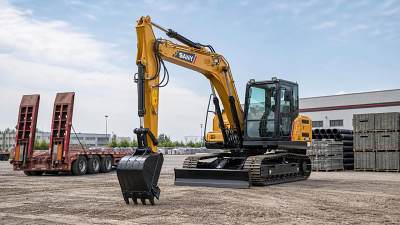
- Excavator compatibility is assumed based on bucket size, without reviewing impact angle, side loading frequency, or loading height.
When these checks are skipped, the issue is rarely isolated. One imbalance in loading, fuel delivery, or structural stress tends to move into another system. That is why procurement review should address the dumper as an integrated operating platform rather than a body assembly attached to a truck chassis.
The Overlooked Checkpoints Buyers Should Review Before Purchase
Before selecting a truck dumper or related body configuration, buyers should evaluate the equipment in terms of operating compatibility, structural life, and serviceability. A truck that looks suitable on paper may still perform poorly if its injector calibration, air line routing, steel thickness distribution, or lighting harness protection do not match real jobsite conditions.
Truck excavator compatibility is a key example. A dumper designed for balanced loading with a 20-ton excavator may experience faster body wear if it is regularly loaded by a larger excavator with a higher drop height or off-center bucket motion. Even a repeated 3% to 5% side bias in loading can increase stress on wing structures, hinge points, and the truck skeleton over time.
Truck steel quality should be reviewed beyond simple thickness claims. Buyers should ask how the steel is used in floor, sidewall, and reinforcement zones, whether abrasion-prone areas receive different plate treatment, and how the body distributes impact loads. A 6 mm floor with poor reinforcement design may underperform compared with a better-engineered combination using targeted strengthening in high-stress zones.
The truck lighting system is also a practical uptime issue, especially for mining roads, municipal hauling, and early-morning logistics work. Vibration-resistant connectors, sealed harness routing, and protected lamp placement reduce failure frequency. If a dumper operates 2 shifts per day, unreliable lighting can become both a compliance risk and a utilization problem within a few months.
Critical inspection items during sourcing
The table below outlines a practical review framework that procurement teams and distributors can use when evaluating truck dumper configurations and supplier offers.
The key conclusion is that sourcing should include operational fit, not just factory specification. A supplier able to explain component interaction, maintenance intervals, and application limits usually offers stronger long-term value than one focused only on unit price or generic payload claims.
Minimum procurement questions to ask
- What is the recommended inspection frequency for the air system, body structure, and lighting harness under heavy cycle use?
- What loading equipment range is considered suitable for this body design?
- Which structural zones are reinforced for impact and abrasion, and what thickness range is used there?
- Which replacement parts are normally stocked, and what is the typical dispatch time: 48 hours, 7 days, or longer?
How Structural Design and Component Matching Influence Uptime
Truck wing structures, truck spreader systems, and truck skeleton design all affect how a dumper behaves under repetitive loading and discharge conditions. If these elements are not aligned, the unit may still function, but it will do so with rising stress concentration, reduced stability, and a shorter service interval. This is especially important in aggregate hauling, mining support, and infrastructure projects with 20 to 50 dump cycles per day.
Truck wing structures help manage sidewall rigidity and material flow. In dumpers handling mixed loads such as gravel, wet soil, broken rock, or demolition debris, side impact can vary significantly. Poor wing structure support may lead to panel deformation, sticking material, and an uneven unloading pattern. That, in turn, can increase hydraulic strain and create unsafe off-balance discharge behavior.
Truck spreader systems are often reviewed only in specialized applications, but they matter wherever load distribution and discharge control affect productivity. In some duty cycles, a spreader-related mismatch can increase cycle time by 5 to 12 minutes per shift due to extra repositioning, manual cleanup, or repeated unloading attempts. Over 250 working days, that becomes a substantial efficiency loss.
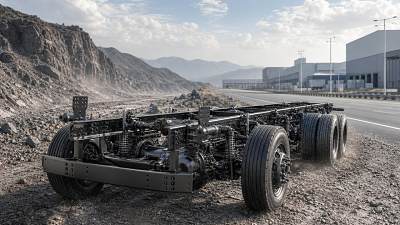
The truck skeleton is the hidden foundation of durability. Buyers should look at cross-member spacing, load path design, reinforcement around lifting and pivot zones, and compatibility with road condition severity. On rough haul roads, the difference between a well-matched and poorly matched skeleton design can appear within 6 months as cracks, loosened joints, or inconsistent dump alignment.
Comparing design priorities by operating environment
Different working conditions require different design emphasis. The table below helps decision-makers map common environments to the most relevant truck dumper design priorities.
This comparison shows why a universal truck dumper specification is rarely ideal. The right sourcing choice depends on loading method, road severity, shift length, and maintenance capacity. For distributors and agents, translating these factors into product recommendations builds stronger buyer confidence and reduces dispute risk after delivery.
Signs of poor component matching
- Body distortion appears earlier than expected, often within the first 500 to 800 operating hours.
- Material discharge becomes inconsistent, leaving residual load on one side.
- Lighting or air line failures repeat after rough-road cycles, indicating poor routing or protection.
- Fuel economy worsens while payload remains stable, suggesting injector inefficiency or engine mismatch.
Maintenance Planning, Service Readiness, and Procurement Risk Control
Even a well-built truck dumper can become a poor asset if service planning is weak. Buyers should evaluate not only equipment configuration, but also replacement part access, inspection intervals, supplier documentation, and after-sales responsiveness. In B2B purchasing, lifecycle support often determines whether a unit maintains value after 12 to 24 months of use.
Truck air system condition deserves special attention in maintenance planning. Small leaks, contamination, or valve inconsistency may not stop a unit immediately, but they often reduce control reliability and can create secondary issues across braking and auxiliary functions. A practical inspection cycle is every 2 to 4 weeks in heavy use, with shorter intervals for harsh dust or moisture environments.
Injector maintenance also belongs in procurement review because it influences operating cost, cold-start stability, and engine response under load. If a supplier cannot provide a realistic service interval or replacement path, the buyer may face unpredictable downtime later. In many commercial settings, clear maintenance guidance is as valuable as a favorable initial quote.
For distributors and commercial evaluators, service readiness should be documented during supplier comparison. That means checking whether technical drawings, wear-part lists, inspection checklists, and troubleshooting guidance are available in a usable format. A missing document can delay maintenance decisions by hours or days when a fleet is under schedule pressure.
A practical risk-control checklist for sourcing teams
- Confirm whether critical consumables and wear parts are available locally, regionally, or only through factory order.
- Ask for recommended service intervals in hours, distance, or cycle count instead of broad statements such as “regular maintenance required.”
- Review whether body, air, lighting, and injector-related troubleshooting steps are written clearly for field technicians.
- Check what inspection support is offered during the first 30, 60, and 180 days after commissioning.
Typical procurement review matrix
The following matrix helps buyers compare truck dumper offers on factors that directly influence uptime, serviceability, and operational fit.
The strongest sourcing decision is usually the one that balances specification, application fit, and support readiness. This is particularly relevant for international trade, where logistics time, spare availability, and remote troubleshooting quality can materially affect total cost of ownership.
FAQ for Buyers, Distributors, and Commercial Evaluators
How often should a truck dumper inspection be performed?
A basic pre-shift inspection should be done daily and usually takes 10 to 15 minutes. A more detailed review of the air system, lighting harness, structural stress points, and injector-related engine behavior is commonly scheduled every 2 to 4 weeks, depending on duty intensity. In high-impact environments, structural checks may need to be shortened to every 100 to 200 operating hours.
Which indicator matters most when comparing dumper suppliers?
There is no single indicator, but three factors are consistently decisive: application matching, structural design quality, and service readiness. A supplier that can explain loader compatibility, steel layout, inspection frequency, and spare part access usually provides more dependable value than one offering only a lower price or a higher nominal payload.
What are common sourcing mistakes in truck dumper projects?
Common mistakes include choosing by purchase price alone, ignoring excavator compatibility, treating lighting and air systems as minor accessories, and failing to request maintenance documents before order confirmation. Another frequent error is assuming the same body design suits both quarry work and urban construction use, even though cycle severity and impact conditions differ significantly.
How long is a typical delivery or replacement cycle?
For stocked standard components, dispatch may be possible within 48 hours to 7 days. For specialized body structures, reinforced sections, or less common matching parts, the cycle can extend to 2 to 6 weeks depending on fabrication and shipping distance. That is why procurement teams should identify critical wear items before finalizing a supplier shortlist.
Truck dumper downtime rarely begins with a major visible failure. It usually starts with an overlooked check: incomplete truck logging, poor excavator matching, weak attention to injector condition, missed air system instability, or an under-reviewed skeleton and steel structure. For B2B buyers and channel partners, these are not minor technical details; they are commercial decision points that directly affect uptime, maintenance cost, and customer satisfaction.
The Global Heavy Truck Industry Platform supports smarter sourcing by helping buyers, suppliers, distributors, and evaluators compare products, understand technical fit, and assess supplier capability across the heavy truck supply chain. If you are reviewing truck dumper options, replacement parts, or broader transport equipment solutions, now is the right time to get a tailored sourcing plan, compare qualified suppliers, and discuss the details that protect long-term operating performance. Contact us to explore more solutions and request product information suited to your market and application.
Trending News
- Low Bed Trailer Export to Southeast Asia: Specs That Avoid Clearance Delays
- Flatbed Trailer Supplier with Modular Design: Flexibility vs Maintenance Cost
- Construction Machinery Supplier for Municipal Engineering: What to Compare First
- Best Commercial Vehicle Parts for Warehouse Fleets with High Stop-Start Use
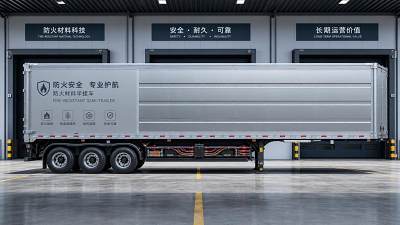
- What Fireproof Materials Mean for Semi Trailer Safety and Lifecycle Cost
Tag
Recommended News
 Truck TechnologyWhat Fireproof Materials Mean for Semi Trailer Safety and Lifecycle CostSemi trailer manufacturer with fireproof materials solutions help cut downtime, reduce repair risk, and improve resale value. Learn how smarter trailer specs lower total lifecycle cost.
 Truck TechnologyQuick Installation Excavators: Downtime vs PerformanceExcavator manufacturer with quick installation solutions help cut downtime, speed site startup, and protect performance. Compare smarter options for faster, more reliable project delivery.
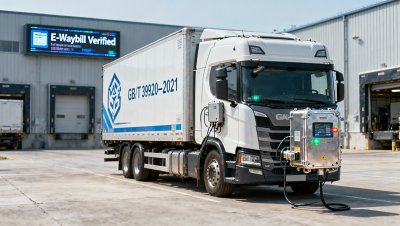
 Truck TechnologyChina-Mongolia-Russia E-Waybill Mutual Recognition UpgradedChina-Mongolia-Russia E-Waybill mutual recognition upgraded: Real-time cold-chain temperature compliance now mandatory for all cross-border road transport vehicles under GB/T 39920–2021.
 Truck TechnologyMulti-Dept Initiative Adds V2X & BeiDou Modules to Cross-Border Trucking Subsidy ListV2X & BeiDou modules now subsidy-eligible for cross-border trucks—boosting smart logistics, safety, and BRI corridor compliance. Act now to align.
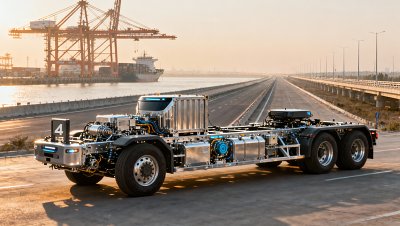
 Truck TechnologyL4 Autonomous Truck Chassis Emerges as Tech Export VehicleL4 Autonomous Truck Chassis: Now licensable globally for port drayage & mine transport—modular, multi-powertrain, backed by DP World & Chilean ports.
 Truck TechnologyMulti-Dept Action Adds V2X & BeiDou HD Positioning to Cross-Border Freight Subsidy ListV2X & BeiDou HD positioning now subsidized for cross-border freight trucks—key opportunity for intelligent transport equipment suppliers and OEMs.
 Truck TechnologyChina-Mongolia-Russia Corridor Upgrades to E-CMR with Real-Time Cold Chain MonitoringChina-Mongolia-Russia Corridor now mandates e-CMR + real-time cold chain monitoring for all refrigerated trailers — ensure compliance to avoid border delays and win tenders.
 Truck TechnologyBulldozer for Construction: Key Specs That Affect Earthmoving EfficiencyBulldozer for construction buying guide: compare weight, blade capacity, torque, and undercarriage specs to improve earthmoving efficiency and choose the right machine for your jobsite.
 Truck TechnologyL4 Autonomous Container Trucks Enter Trial on Tianjin-Xiongan RouteL4 autonomous container trucks begin trial on Tianjin-Xiongan route—pioneering China’s smart land transport revolution with dual-energy, licensable chassis platform.
 Truck TechnologyMulti-Dept Initiative to Upgrade Freight Hubs with V2X & BeiDouV2X & BeiDou: China’s 7-dept initiative offers up to 30% subsidies for intelligent retrofitting of cross-border road transport equipment—key for freight hubs, smart chassis, and trailer manufacturers.
 Truck TechnologyMulti-Dept Launch Freight Hub Upgrading InitiativeMulti-Dept Launch Freight Hub Upgrading Initiative boosts intelligent land transport equipment—smart loading, battery-swap stations & ETC-V2X modules for seamless, low-carbon cross-border logistics.
 Truck TechnologyWhat Advanced Technology Means in Heavy Truck Chassis PerformanceHeavy truck chassis manufacturer with advanced technology: discover how smarter frame design, suspension tuning, and braking integration improve stability, uptime, and long-term operating value.
 Truck TechnologyHigh-Strength Flatbed Trailers: Where Stronger Steel Pays OffFlatbed trailer supplier with high strength expertise helps fleets cut tare weight, improve durability, and lower lifecycle cost. See what specs matter most before you buy.
 Truck TechnologyBulldozer for Construction: Matching Blade Type to Ground ConditionsBulldozer for construction guide: learn how to match S, U, and SU blades to soil, clay, rock, and mixed ground for better productivity, lower fuel use, and smarter equipment selection.
 Truck TechnologyWhen Fireproof Materials Add Real Value in Semi Trailer ManufacturingSemi trailer manufacturer with fireproof materials: discover how fire-resistant designs improve cargo safety, reduce risk, and support smarter sourcing decisions.
 Truck TechnologyWhat a Durable Engine Really Means in a Light Duty TruckLight duty truck with durable engine: learn how real engine durability improves uptime, fuel savings, and lower maintenance across delivery, construction, rural, and municipal work.
 Truck TechnologySemi Trailer Manufacturer With Lightweight Design: Pros, Trade-Offs, and Use CasesSemi trailer manufacturer with lightweight design: explore key benefits, trade-offs, and best-fit use cases to improve payload efficiency, durability, and lifecycle ROI.
 Truck TechnologyTruck Tipper for Construction: Key Specs That Affect Daily ProductivityTruck tipper for construction buying guide: learn which specs most affect payload, fuel use, unloading speed, and uptime to choose a safer, more productive model.
 Truck TechnologyWhy Logging Truck Manufacturer Design Matters in Tough TerrainLogging truck manufacturer design shapes safety, traction, and uptime in tough terrain. Learn what features matter most for forestry hauling and choose trucks built for real-world performance.
 Truck TechnologyAre Fireproof Materials Worth It in a Semi Trailer ManufacturerSemi trailer manufacturer with fireproof materials: discover if the added cost delivers real safety, lower risk, and better cargo protection with a practical supplier evaluation checklist.
 Truck TechnologyWhy High-Strength Design Matters in a Flatbed Trailer SupplierFlatbed trailer supplier with high strength: learn why structural design, material quality, and fatigue resistance matter for safer transport, longer service life, and lower operating costs.
 Truck TechnologyAdvanced Technology in Heavy Truck Chassis Manufacturing: What to Look ForHeavy truck chassis manufacturer with advanced technology: learn how to assess welding, materials, precision, and validation for long-haul, construction, mining, and special-purpose fleets.
 Truck TechnologyCan Fireproof Materials Improve Semi Trailer Safety in Logisticssemi trailer manufacturer with fireproof materials solutions can reduce cargo loss, improve fleet safety, and support reliable logistics. Discover how to choose the right fire-resistant trailer design.
 Truck TechnologyWhy Advanced Technology Matters in Heavy Truck Chassis ManufacturingHeavy truck chassis manufacturer with advanced technology: learn how digital design, precision welding, and rigorous testing improve durability, safety, and sourcing confidence.
 Truck TechnologyKazakhstan Extends Zero-Tariff List for China-Europe Rail Truck Parts to 2027Kazakhstan extends zero-tariff status for China-Europe rail truck parts to 2027—boosting ADAS, CAN-FD, and EBS component exports. Act now to optimize logistics & compliance.