Key Build Features to Compare in a Logging Truck Manufacturer
Choosing the right logging truck manufacturer requires more than comparing price or delivery time. For technical evaluators, critical build features such as chassis strength, load capacity, drivetrain configuration, hydraulic system integration, and durability under harsh forestry conditions can directly affect fleet performance and lifecycle cost. This guide highlights the key factors worth comparing before making a sourcing decision.
What Technical Evaluators Are Really Comparing
When buyers search for a logging truck manufacturer, the core intent is usually practical rather than promotional. They want to identify which manufacturer can deliver a truck that performs reliably in rough forestry environments, matches payload and terrain requirements, integrates the right loading systems, and stays cost-effective over its service life.
For technical assessment teams, the main concern is not simply whether a truck looks capable on paper. The real question is whether the manufacturer’s build quality, engineering standards, and component choices will hold up under repeated heavy loads, uneven ground, weather exposure, and demanding duty cycles.
That means the most useful comparison points are the ones that reveal structural durability, system compatibility, maintainability, and real-world operating efficiency. General claims about quality or innovation matter far less than verifiable specifications, documented testing, and evidence from similar operating conditions.
Start with the Chassis and Frame Design
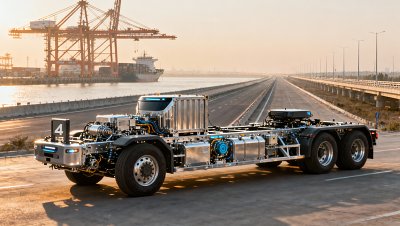
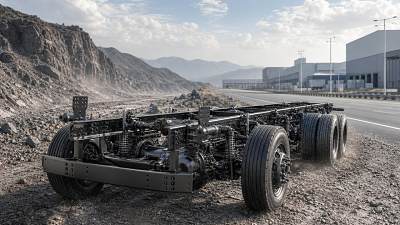
The chassis is one of the first features to compare because forestry work puts extreme stress on the frame. Logging trucks often travel on unpaved roads, deal with shifting loads, and operate in remote areas where overloading and twisting forces are common. A weak or poorly reinforced frame increases the risk of fatigue cracking, poor load stability, and shortened service life.
Ask each logging truck manufacturer about frame rail material grade, thickness, crossmember design, reinforcement strategy, and anti-corrosion treatment. High-strength steel alone is not enough. The way the frame is engineered for torsional rigidity and impact distribution matters just as much, especially for trucks operating on steep grades or off-camber forest roads.
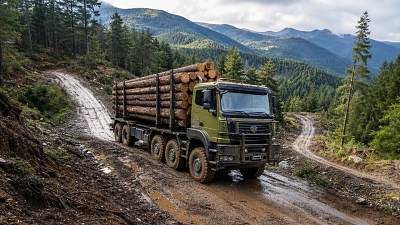
It is also important to compare whether the chassis is purpose-built for logging applications or adapted from a general cargo truck platform. Purpose-built designs often offer better axle load distribution, stronger mounting points for cranes or bunks, and improved durability in repeated off-road use.
Technical evaluators should request detailed frame drawings, stress test information, and load case data whenever available. These documents help reveal whether the truck is engineered for real forestry duty or simply marketed that way.
Compare Rated Payload Against Real Usable Capacity
Payload capacity is another major comparison point, but the headline number can be misleading. A truck may advertise a strong gross vehicle weight rating while offering less usable capacity once loaders, bunks, hydraulic equipment, guarding, and optional reinforcements are added. Technical teams need to evaluate real operational payload, not brochure payload.
Ask for curb weight in the exact configuration being quoted. Then compare axle ratings, suspension setup, and regional road compliance limits. In some markets, legal weight restrictions or road class limits can reduce the value of a truck that appears stronger in specification sheets.
Load distribution is equally important. A well-designed logging truck should support stable weight transfer across front and rear axles when carrying variable log lengths and diameters. Poor distribution can affect braking, steering precision, tire wear, and rollover risk.
Manufacturers that understand forestry applications should be able to explain how their design performs with different timber types, body setups, and loading patterns. If they cannot provide application-specific payload guidance, that is a sign the product may not be optimized for field reality.
Evaluate Drivetrain Configuration for Terrain and Duty Cycle
One of the most important differences between logging truck suppliers is drivetrain suitability. Forestry operations vary widely. Some fleets need long-haul transport from forest sites to mills, while others require short but severe off-road hauling over mud, snow, loose gravel, or steep inclines. The right drivetrain depends on those exact conditions.
Compare axle configuration options such as 6x4, 6x6, 8x4, and 8x8 based on traction, maneuverability, and payload needs. A more aggressive drivetrain may improve off-road capability but also increase fuel use, maintenance complexity, and acquisition cost. Technical evaluators should look for the best fit, not the largest specification.
Pay attention to engine torque curves, transmission ratios, transfer case design, differential locks, and final drive durability. In logging work, low-speed pulling force and gradeability often matter more than top-road speed. A truck that performs well in highway freight conditions may be inefficient or unreliable in forestry use.
Manufacturers should also be assessed on drivetrain integration quality. Well-matched engines, gearboxes, and axles reduce stress on components and improve fuel economy. Poor integration can lead to overheating, gear hunting, clutch wear, and reduced uptime in difficult terrain.
Hydraulic System Integration Is a Major Build Quality Signal
If the truck includes a loader, self-loading crane, or hydraulic support functions, hydraulic system design becomes a critical comparison factor. In many forestry applications, poor hydraulic integration causes more downtime than the truck chassis itself. This is especially true when systems are added after production without proper engineering coordination.
Technical buyers should compare pump capacity, pressure ratings, hose protection, control layout, filtration, cooling, and service accessibility. Ask whether the hydraulic package is factory-integrated, manufacturer-approved, or installed by a third-party body builder. Integration quality affects not only performance but also safety and ease of maintenance.
A strong logging truck manufacturer should be able to explain how the hydraulic system is protected from contamination, vibration, branch strike, and cold-weather performance issues. Routing and shielding matter because forestry environments are rough, dirty, and highly exposed to debris damage.
If loader operation is part of the use case, compare lifting cycle speed, stabilization design, and interaction between the hydraulic system and engine power take-off. These details directly affect loading efficiency and fuel consumption in daily operation.
Suspension, Axles, and Braking Need Close Review
Suspension and axle systems are often undercompared during sourcing, yet they strongly influence ride control, structural wear, and vehicle stability. Logging trucks work under dynamic loads that shift constantly, so suspension performance is not just a comfort issue. It affects safety, frame longevity, and tire life.
Compare whether the manufacturer uses leaf spring, heavy-duty mechanical, air suspension, or hybrid setups for the intended terrain. In harsh off-road conditions, robust mechanical systems may offer durability and simplicity. In mixed road applications, other configurations may improve stability and protect both cargo and truck structure.
Axle housing strength, hub reduction design, and sealing quality are also worth reviewing. Water crossings, mud, and debris can accelerate axle wear if components are not properly protected. Ask about axle supplier brands, field service history, and replacement part availability.
Braking performance should be assessed under full load and downhill conditions. Engine braking, retarders, anti-lock braking systems, and brake cooling capacity can all affect operational safety in mountainous forestry routes. A truck that handles payload well but performs poorly under braking creates long-term operational risk.
Durability in Harsh Forestry Conditions Matters More Than Lab Claims
A logging truck manufacturer should not be evaluated only by catalog specifications. Forestry trucks face moisture, mud, impact, wood debris, severe vibration, and extended low-speed operation. Build details that may seem secondary in standard transport become highly important in this environment.
Review corrosion protection on the frame, cab underside, electrical connectors, hydraulic fittings, and exposed fasteners. Check whether wiring harnesses are sealed and routed away from abrasion points. Protective guards for lights, tanks, hoses, and underbody components can significantly reduce field failures.
Cab mounting durability and operator environment should also be considered. Repeated vibration affects both component integrity and driver fatigue. Better insulation, seat suspension, visibility, and control ergonomics can improve productivity and reduce fatigue-related operating errors, especially during long shifts on rough roads.
Ask for evidence of performance in similar climates and forestry applications. Trucks proven in wet tropical logging areas may not perform the same way in freezing northern forests, and vice versa. Real-world references are more valuable than generic durability statements.
Maintenance Access and Parts Support Influence True Lifecycle Cost
For technical evaluators, maintenance design is one of the most practical ways to compare manufacturers. A truck that is strong but difficult to service may create excessive downtime, especially in remote logging regions. Good serviceability reduces labor time, supports preventive maintenance, and improves fleet availability.
Compare access to filters, lubrication points, hydraulic components, battery systems, brake assemblies, and drivetrain inspection areas. Evaluate whether daily checks can be done quickly and safely. Service access may seem minor during procurement, but it becomes highly visible once the truck enters full operation.
Parts availability is equally important. Ask whether critical components such as axles, suspensions, hydraulic parts, sensors, and cab elements are globally supported or regionally limited. A manufacturer with a lower unit price may become more expensive if spare parts lead times are long or dependent on a single export route.
Technical buyers should also assess service documentation, digital diagnostics, warranty scope, and training support for fleet technicians. Strong aftersales capability often separates a reliable supplier from a risky one.
Look at Manufacturing Consistency, Not Just the Prototype Specification
Another essential point when selecting a logging truck manufacturer is consistency in production quality. Some suppliers can build one strong demonstration unit but struggle to maintain the same standard across full deliveries. Technical teams should verify whether manufacturing controls support repeatable quality.
Ask about welding standards, quality inspection procedures, supplier qualification, paint process, torque traceability, and final testing methods. If possible, review factory audit results or request production line videos and sample inspection records. These details help show whether engineering quality is embedded in the process.
Component sourcing also deserves attention. A truck assembled with reputable axles, hydraulics, engines, and braking systems is usually easier to support globally than one built around inconsistent local substitutions. Evaluate both the truck and the manufacturer’s supplier ecosystem.
For fleet-scale purchases, consistency becomes even more important because maintenance planning, driver training, and parts stocking all depend on standardized builds.
Questions That Help Separate Strong Suppliers from Weak Ones
To make your comparison more objective, use a structured technical checklist during supplier evaluation. Ask each manufacturer how the truck is configured for specific forest road conditions, payload ranges, and loading equipment. Push beyond the standard brochure and request application-based answers.
Useful questions include: What is the exact curb weight of the offered configuration? Which frame reinforcements are standard? What axle and brake brands are used? Is the hydraulic system factory-integrated? What corrosion protection process is applied? What field references are available in similar forestry operations?
You should also ask for failure rate data, maintenance interval recommendations, parts lead time estimates, and warranty exclusions for forestry use. Some trucks carry strong nominal warranties but exclude the very operating conditions that define logging work.
When suppliers can answer clearly, provide supporting documentation, and discuss trade-offs honestly, they are usually better long-term partners than those relying on general sales language.
How to Make the Final Comparison
The best logging truck manufacturer is not always the one with the highest specification or the lowest price. For technical evaluators, the right choice is the supplier whose truck design best aligns with actual forestry duty, maintenance realities, legal operating limits, and total cost targets.
A practical evaluation model should compare six categories: structural build quality, real payload usability, drivetrain fit, hydraulic integration, durability protection, and service support. Weight each category according to your application. For example, steep off-road operations may prioritize traction and frame strength, while mixed road fleets may place greater emphasis on payload efficiency and fuel economy.
It is also wise to compare not just the truck itself, but the manufacturer’s ability to support customization, documentation, compliance, and global parts supply. In international sourcing, supplier reliability can be as important as product capability.
When these factors are assessed carefully, technical teams can move beyond marketing claims and select a logging truck platform that delivers dependable performance over years of demanding use.
Conclusion
Comparing a logging truck manufacturer should begin with a simple principle: forestry applications expose weaknesses quickly. That is why technical evaluators should focus on the features that most directly affect durability, payload stability, traction, hydraulic reliability, maintenance access, and lifecycle cost.
The strongest sourcing decisions come from application-specific comparison, not generic vendor ranking. A manufacturer that can demonstrate sound frame engineering, suitable drivetrain options, integrated hydraulic design, harsh-environment protection, and dependable aftersales support is far more likely to deliver long-term value.
In short, the right logging truck is not just built to carry logs. It is built to survive the conditions that come with carrying them, day after day, with minimal downtime and predictable operating cost. That is the standard worth using when you compare suppliers.
Trending News
- Logging Truck Price in 2026: What Affects Total Ownership Cost?
- Crane Truck Cost Breakdown: Chassis, Boom, and Compliance Fees
- How to Compare a Logging Truck Distributor by Service Coverage
- Choosing a Water Truck Supplier for Dust Control Projects
- Water Truck Exporter Selection: Key Delivery and Compliance Risks
Tag
Recommended News
 Truck TechnologyWhat Fireproof Materials Mean for Semi Trailer Safety and Lifecycle CostSemi trailer manufacturer with fireproof materials solutions help cut downtime, reduce repair risk, and improve resale value. Learn how smarter trailer specs lower total lifecycle cost.
 Truck TechnologyQuick Installation Excavators: Downtime vs PerformanceExcavator manufacturer with quick installation solutions help cut downtime, speed site startup, and protect performance. Compare smarter options for faster, more reliable project delivery.
 Truck TechnologyChina-Mongolia-Russia E-Waybill Mutual Recognition UpgradedChina-Mongolia-Russia E-Waybill mutual recognition upgraded: Real-time cold-chain temperature compliance now mandatory for all cross-border road transport vehicles under GB/T 39920–2021.
 Truck TechnologyMulti-Dept Initiative Adds V2X & BeiDou Modules to Cross-Border Trucking Subsidy ListV2X & BeiDou modules now subsidy-eligible for cross-border trucks—boosting smart logistics, safety, and BRI corridor compliance. Act now to align.
 Truck TechnologyL4 Autonomous Truck Chassis Emerges as Tech Export VehicleL4 Autonomous Truck Chassis: Now licensable globally for port drayage & mine transport—modular, multi-powertrain, backed by DP World & Chilean ports.
 Truck TechnologyMulti-Dept Action Adds V2X & BeiDou HD Positioning to Cross-Border Freight Subsidy ListV2X & BeiDou HD positioning now subsidized for cross-border freight trucks—key opportunity for intelligent transport equipment suppliers and OEMs.
 Truck TechnologyChina-Mongolia-Russia Corridor Upgrades to E-CMR with Real-Time Cold Chain MonitoringChina-Mongolia-Russia Corridor now mandates e-CMR + real-time cold chain monitoring for all refrigerated trailers — ensure compliance to avoid border delays and win tenders.
 Truck TechnologyBulldozer for Construction: Key Specs That Affect Earthmoving EfficiencyBulldozer for construction buying guide: compare weight, blade capacity, torque, and undercarriage specs to improve earthmoving efficiency and choose the right machine for your jobsite.
 Truck TechnologyL4 Autonomous Container Trucks Enter Trial on Tianjin-Xiongan RouteL4 autonomous container trucks begin trial on Tianjin-Xiongan route—pioneering China’s smart land transport revolution with dual-energy, licensable chassis platform.
 Truck TechnologyMulti-Dept Initiative to Upgrade Freight Hubs with V2X & BeiDouV2X & BeiDou: China’s 7-dept initiative offers up to 30% subsidies for intelligent retrofitting of cross-border road transport equipment—key for freight hubs, smart chassis, and trailer manufacturers.
 Truck TechnologyMulti-Dept Launch Freight Hub Upgrading InitiativeMulti-Dept Launch Freight Hub Upgrading Initiative boosts intelligent land transport equipment—smart loading, battery-swap stations & ETC-V2X modules for seamless, low-carbon cross-border logistics.
 Truck TechnologyWhat Advanced Technology Means in Heavy Truck Chassis PerformanceHeavy truck chassis manufacturer with advanced technology: discover how smarter frame design, suspension tuning, and braking integration improve stability, uptime, and long-term operating value.
 Truck TechnologyHigh-Strength Flatbed Trailers: Where Stronger Steel Pays OffFlatbed trailer supplier with high strength expertise helps fleets cut tare weight, improve durability, and lower lifecycle cost. See what specs matter most before you buy.
 Truck TechnologyBulldozer for Construction: Matching Blade Type to Ground ConditionsBulldozer for construction guide: learn how to match S, U, and SU blades to soil, clay, rock, and mixed ground for better productivity, lower fuel use, and smarter equipment selection.
 Truck TechnologyWhen Fireproof Materials Add Real Value in Semi Trailer ManufacturingSemi trailer manufacturer with fireproof materials: discover how fire-resistant designs improve cargo safety, reduce risk, and support smarter sourcing decisions.
 Truck TechnologyWhat a Durable Engine Really Means in a Light Duty TruckLight duty truck with durable engine: learn how real engine durability improves uptime, fuel savings, and lower maintenance across delivery, construction, rural, and municipal work.
 Truck TechnologySemi Trailer Manufacturer With Lightweight Design: Pros, Trade-Offs, and Use CasesSemi trailer manufacturer with lightweight design: explore key benefits, trade-offs, and best-fit use cases to improve payload efficiency, durability, and lifecycle ROI.
 Truck TechnologyTruck Tipper for Construction: Key Specs That Affect Daily ProductivityTruck tipper for construction buying guide: learn which specs most affect payload, fuel use, unloading speed, and uptime to choose a safer, more productive model.
 Truck TechnologyWhy Logging Truck Manufacturer Design Matters in Tough TerrainLogging truck manufacturer design shapes safety, traction, and uptime in tough terrain. Learn what features matter most for forestry hauling and choose trucks built for real-world performance.
 Truck TechnologyAre Fireproof Materials Worth It in a Semi Trailer ManufacturerSemi trailer manufacturer with fireproof materials: discover if the added cost delivers real safety, lower risk, and better cargo protection with a practical supplier evaluation checklist.
 Truck TechnologyWhy High-Strength Design Matters in a Flatbed Trailer SupplierFlatbed trailer supplier with high strength: learn why structural design, material quality, and fatigue resistance matter for safer transport, longer service life, and lower operating costs.
 Truck TechnologyAdvanced Technology in Heavy Truck Chassis Manufacturing: What to Look ForHeavy truck chassis manufacturer with advanced technology: learn how to assess welding, materials, precision, and validation for long-haul, construction, mining, and special-purpose fleets.
 Truck TechnologyCan Fireproof Materials Improve Semi Trailer Safety in Logisticssemi trailer manufacturer with fireproof materials solutions can reduce cargo loss, improve fleet safety, and support reliable logistics. Discover how to choose the right fire-resistant trailer design.
 Truck TechnologyWhy Advanced Technology Matters in Heavy Truck Chassis ManufacturingHeavy truck chassis manufacturer with advanced technology: learn how digital design, precision welding, and rigorous testing improve durability, safety, and sourcing confidence.
 Truck TechnologyKazakhstan Extends Zero-Tariff List for China-Europe Rail Truck Parts to 2027Kazakhstan extends zero-tariff status for China-Europe rail truck parts to 2027—boosting ADAS, CAN-FD, and EBS component exports. Act now to optimize logistics & compliance.