TC521 Advances Smart Heavy-Duty Truck Remote Diagnostics Standard
On April 25, 2026, the National Automobile Standardization Technical Committee (TC521) convened an emergency workshop to accelerate the development of the national standard Remote Diagnostic Data Interface for Intelligent Heavy-Duty Trucks (GB/T XXXXX–2026), with formal approval expected in Q3 2026. The move directly impacts manufacturers and exporters of intelligent heavy trucks targeting the EU market—particularly those engaged in software certification, vehicle homologation, and after-sales service systems.
Event Overview
On April 25, 2026, TC521 confirmed during an emergency workshop that the draft national standard Remote Diagnostic Data Interface for Intelligent Heavy-Duty Trucks (GB/T XXXXX–2026) will complete its reporting process in the third quarter of 2026. It explicitly requires all intelligent heavy-duty trucks exported to the European Union to support both UDS and OBD-II protocol stacks, and to reserve a compatibility path for ISO 22901-2. Vehicles failing to meet this requirement will be ineligible for EU Type Approval follow-up software update certification.
Industries Affected by This Development
Direct Exporters and OEMs Serving the EU Market
These enterprises face immediate compliance pressure: EU Type Approval now links software update certification to diagnostic interface conformance. Non-compliant vehicles risk rejection during post-homologation software validation cycles, potentially delaying or blocking market access.
Aftermarket Telematics and Diagnostic Solution Providers
Vendors supplying remote diagnostics platforms, fleet management systems, or ECU reprogramming tools must align their software stacks with dual-protocol (UDS + OBD-II) requirements—and ensure forward compatibility with ISO 22901-2’s data model and session management. Legacy OBD-II-only or proprietary interfaces may require architectural revision.
ECU and Vehicle Control System Developers
Suppliers integrating telematics control units (TCUs), gateway modules, or diagnostic servers into heavy-truck platforms must revise hardware abstraction layers and bootloader logic to accommodate dual-stack implementation and future ISO 22901-2 extension points. This affects firmware architecture, memory allocation, and communication timing design.
Certification and Homologation Service Providers
Third-party testing labs and type-approval consultants supporting EU-bound truck models must update test plans, tooling, and reporting templates to verify both protocol stack functionality and reserved ISO 22901-2 compatibility paths—not just functional compliance but structural readiness.
What Relevant Enterprises or Practitioners Should Focus On Now
Monitor Official Updates from TC521 and EU Authorities
The current announcement confirms intent and timeline—but not final technical parameters. Enterprises should track TC521’s upcoming public comment drafts (expected May–June 2026) and parallel EU Commission updates on Regulation (EU) 2018/858 Annex X revisions, which govern software update assessments.
Prioritize Protocol Stack Implementation for EU-Bound Vehicle Programs
For models scheduled for EU Type Approval between Q4 2026 and Q2 2027, dual-stack integration (UDS + OBD-II) should be treated as a mandatory functional requirement—not optional. Engineering teams should initiate interface validation using standardized UDS services (e.g., 0x22, 0x2E, 0x31) alongside OBD-II PIDs before prototype freeze.
Distinguish Between Compliance Signals and Enforceable Requirements
The mandate for ISO 22901-2 “compatibility path” is currently a design reservation—not a full implementation requirement. Analysis来看, this signals preparation for future regulatory alignment rather than immediate certification criteria. Enterprises should document architectural decisions (e.g., modifiable DTC mapping tables, extensible diagnostic session handlers) without over-engineering full ISO 22901-2 support at this stage.
Align Supply Chain Communication Early with Tier-1 Suppliers
ECU, TCU, and gateway suppliers must receive clear interface specifications—including mandatory UDS service IDs, OBD-II PID ranges, and reserved memory/communication channel allocations—by mid-2026. Procurement and engineering teams should jointly issue technical notices to avoid late-stage integration bottlenecks.
Editorial Perspective / Industry Observation
From industry perspective, this TC521 action is less a finalized regulation and more a coordinated signal—coinciding with tightening EU software update rules under the new Software Update Management System (SUMS) framework. It reflects growing convergence between Chinese standardization timelines and EU regulatory enforcement windows. Observation来看, the emphasis on dual-stack support suggests regulators anticipate transitional interoperability needs across legacy and next-gen diagnostic ecosystems. Current more appropriate understanding is that TC521 is front-loading technical harmonization to prevent export disruption—not introducing novel safety or emissions requirements, but reinforcing software-defined vehicle governance.
Conclusion
This development marks a procedural inflection point: remote diagnostics are shifting from a functional feature to a certified, cross-border interoperability requirement. For affected stakeholders, the priority is not broad strategic pivoting—but targeted, standards-aware engineering execution aligned with defined EU Type Approval milestones. The standard itself remains a work-in-progress, yet its trajectory is now clearly bounded by Q3 2026 reporting and EU SUMS enforcement cycles.
Information Source
Primary source: Announcement issued by the National Automobile Standardization Technical Committee (TC521), April 25, 2026. Note: Final GB/T number, exact technical annexes, and EU Commission alignment details remain pending official publication and are subject to ongoing review.
Trending News
Tag
Recommended News
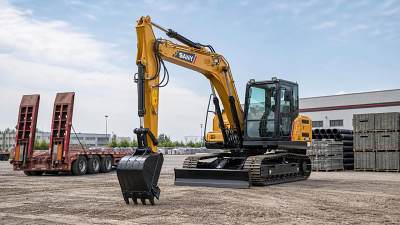
 Truck TechnologyQuick Installation Excavators: Downtime vs PerformanceExcavator manufacturer with quick installation solutions help cut downtime, speed site startup, and protect performance. Compare smarter options for faster, more reliable project delivery.
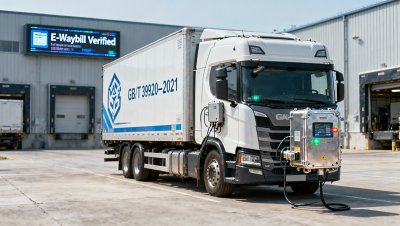
 Truck TechnologyChina-Mongolia-Russia E-Waybill Mutual Recognition UpgradedChina-Mongolia-Russia E-Waybill mutual recognition upgraded: Real-time cold-chain temperature compliance now mandatory for all cross-border road transport vehicles under GB/T 39920–2021.
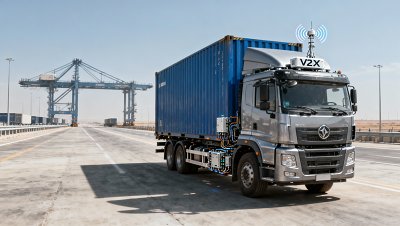
 Truck TechnologyMulti-Dept Initiative Adds V2X & BeiDou Modules to Cross-Border Trucking Subsidy ListV2X & BeiDou modules now subsidy-eligible for cross-border trucks—boosting smart logistics, safety, and BRI corridor compliance. Act now to align.
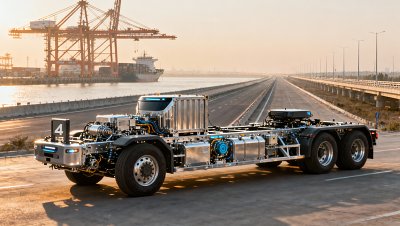
 Truck TechnologyL4 Autonomous Truck Chassis Emerges as Tech Export VehicleL4 Autonomous Truck Chassis: Now licensable globally for port drayage & mine transport—modular, multi-powertrain, backed by DP World & Chilean ports.
 Truck TechnologyMulti-Dept Action Adds V2X & BeiDou HD Positioning to Cross-Border Freight Subsidy ListV2X & BeiDou HD positioning now subsidized for cross-border freight trucks—key opportunity for intelligent transport equipment suppliers and OEMs.
 Truck TechnologyChina-Mongolia-Russia Corridor Upgrades to E-CMR with Real-Time Cold Chain MonitoringChina-Mongolia-Russia Corridor now mandates e-CMR + real-time cold chain monitoring for all refrigerated trailers — ensure compliance to avoid border delays and win tenders.
 Truck TechnologyBulldozer for Construction: Key Specs That Affect Earthmoving EfficiencyBulldozer for construction buying guide: compare weight, blade capacity, torque, and undercarriage specs to improve earthmoving efficiency and choose the right machine for your jobsite.
 Truck TechnologyL4 Autonomous Container Trucks Enter Trial on Tianjin-Xiongan RouteL4 autonomous container trucks begin trial on Tianjin-Xiongan route—pioneering China’s smart land transport revolution with dual-energy, licensable chassis platform.
 Truck TechnologyMulti-Dept Initiative to Upgrade Freight Hubs with V2X & BeiDouV2X & BeiDou: China’s 7-dept initiative offers up to 30% subsidies for intelligent retrofitting of cross-border road transport equipment—key for freight hubs, smart chassis, and trailer manufacturers.
 Truck TechnologyMulti-Dept Launch Freight Hub Upgrading InitiativeMulti-Dept Launch Freight Hub Upgrading Initiative boosts intelligent land transport equipment—smart loading, battery-swap stations & ETC-V2X modules for seamless, low-carbon cross-border logistics.
 Truck TechnologyWhat Advanced Technology Means in Heavy Truck Chassis PerformanceHeavy truck chassis manufacturer with advanced technology: discover how smarter frame design, suspension tuning, and braking integration improve stability, uptime, and long-term operating value.
 Truck TechnologyHigh-Strength Flatbed Trailers: Where Stronger Steel Pays OffFlatbed trailer supplier with high strength expertise helps fleets cut tare weight, improve durability, and lower lifecycle cost. See what specs matter most before you buy.
 Truck TechnologyBulldozer for Construction: Matching Blade Type to Ground ConditionsBulldozer for construction guide: learn how to match S, U, and SU blades to soil, clay, rock, and mixed ground for better productivity, lower fuel use, and smarter equipment selection.
 Truck TechnologyWhen Fireproof Materials Add Real Value in Semi Trailer ManufacturingSemi trailer manufacturer with fireproof materials: discover how fire-resistant designs improve cargo safety, reduce risk, and support smarter sourcing decisions.
 Truck TechnologyWhat a Durable Engine Really Means in a Light Duty TruckLight duty truck with durable engine: learn how real engine durability improves uptime, fuel savings, and lower maintenance across delivery, construction, rural, and municipal work.
 Truck TechnologySemi Trailer Manufacturer With Lightweight Design: Pros, Trade-Offs, and Use CasesSemi trailer manufacturer with lightweight design: explore key benefits, trade-offs, and best-fit use cases to improve payload efficiency, durability, and lifecycle ROI.
 Truck TechnologyTruck Tipper for Construction: Key Specs That Affect Daily ProductivityTruck tipper for construction buying guide: learn which specs most affect payload, fuel use, unloading speed, and uptime to choose a safer, more productive model.
 Truck TechnologyWhy Logging Truck Manufacturer Design Matters in Tough TerrainLogging truck manufacturer design shapes safety, traction, and uptime in tough terrain. Learn what features matter most for forestry hauling and choose trucks built for real-world performance.
 Truck TechnologyAre Fireproof Materials Worth It in a Semi Trailer ManufacturerSemi trailer manufacturer with fireproof materials: discover if the added cost delivers real safety, lower risk, and better cargo protection with a practical supplier evaluation checklist.
 Truck TechnologyWhy High-Strength Design Matters in a Flatbed Trailer SupplierFlatbed trailer supplier with high strength: learn why structural design, material quality, and fatigue resistance matter for safer transport, longer service life, and lower operating costs.
 Truck TechnologyAdvanced Technology in Heavy Truck Chassis Manufacturing: What to Look ForHeavy truck chassis manufacturer with advanced technology: learn how to assess welding, materials, precision, and validation for long-haul, construction, mining, and special-purpose fleets.
 Truck TechnologyCan Fireproof Materials Improve Semi Trailer Safety in Logisticssemi trailer manufacturer with fireproof materials solutions can reduce cargo loss, improve fleet safety, and support reliable logistics. Discover how to choose the right fire-resistant trailer design.
 Truck TechnologyWhy Advanced Technology Matters in Heavy Truck Chassis ManufacturingHeavy truck chassis manufacturer with advanced technology: learn how digital design, precision welding, and rigorous testing improve durability, safety, and sourcing confidence.
 Truck TechnologyKazakhstan Extends Zero-Tariff List for China-Europe Rail Truck Parts to 2027Kazakhstan extends zero-tariff status for China-Europe rail truck parts to 2027—boosting ADAS, CAN-FD, and EBS component exports. Act now to optimize logistics & compliance.
 Truck TechnologyKazakhstan Extends Zero-Tariff for China’s Truck Parts to 2027Kazakhstan extends zero-tariff for China’s truck parts to 2027—now covering 12 intelligent vehicle control components. Boost exports, cut costs, and accelerate rail freight along the China-Europe corridor.